Solution overview: Genetec Security Center and Ambient AI Video Analytics
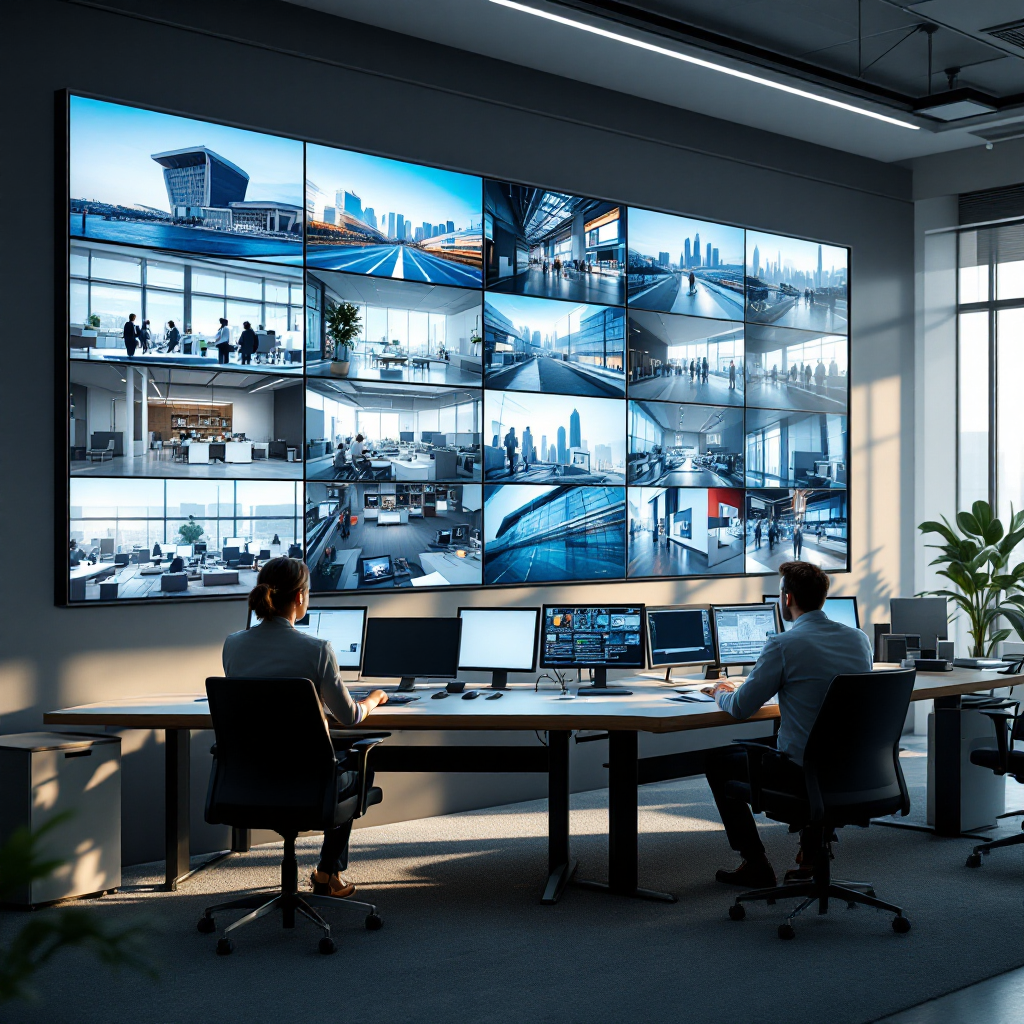
Genetec Security Center is a unified management solution that brings video, access control, and automated detection together. It acts as a modern video management system that centralizes alarms, metadata, and camera streams. Operators can view multiple camera feeds and receive real-time notifications from a single pane. For large sites, this single interface reduces response time, and it helps security teams focus on what matters.
Ambient AI video analytics describes AI that runs close to the camera or at the edge, and then feeds structured events into the VMS. This approach keeps data local, and it reduces latency while it preserves privacy. Genetec integrates ambient processing so that resources at the edge filter and enrich video before it reaches the core. The result is faster, more precise detection of potential threats and fewer nuisance alarms.
Edge-based processing handles initial detection, and centralised management keeps policies consistent across sites. The platform can detect suspicious activity, tamper, tailgate attempts, and unauthorized entry. It also captures camera integrity events so you know if a camera goes down or is obstructed. You can configure thresholds for detectors and tune sensitivity. Then you receive notifications or an alarm once the system confirms a condition. The structure supports site-level rules as well as enterprise-grade orchestration.
Market momentum for AI in surveillance is strong. The global AI-powered video analytics market was valued at USD 23.1 billion in 2024 and is projected to reach USD 106.9 billion by 2030 [Research and Markets]. For operators, the practical benefit is a move from manual review to automated incident triage, and that improves safety while it cuts monitoring costs. At Visionplatform.ai we turn existing surveillance cameras into operational sensors, and we integrate with Genetec Security Center so you can transform the data into business insights to improve operations and security.
Advanced video analytics solutions in vms
Advanced video analytics rely on deep-learning models that detect objects, classify actions, and flag anomalies. These models support object detection, loitering detection, line-crossing, and more. In a VMS, models tag metadata to video footage so operators can quickly filter events. The pipeline runs from cameras into actions and enhance automated workflows, and it enables powerful search capabilities like advanced forensic search for investigators.
Built-in analytics offered by a video management system give out-of-the-box detectors and motion detection. Third-party plugins expand detection technology with specialized classes and site-specific models. Choosing between built-in and external analytics depends on scale, customization needs, and privacy rules. For example, integrating Genetec VMS with tailored models lets teams use local datasets to improve accuracy and reduce false positives.
Deep-learning models work across multiple cameras. They aggregate metadata so you can detect patterns across a campus. Forensic workflows then speed up video review and help investigators understand what happened. When an operator needs to find a suspect, intelligent search that indexes metadata can speed up video review and speed up video to the relevant clip. Systems scale from a single site to enterprise deployments thanks to modular architecture and careful scalability planning. The video analytics market growth supports this trend, with the broader video analytics market estimated to reach USD 37.84 billion by 2030 [Grand View Research]. For niche needs, Visionplatform.ai provides an SDK and edge deployments so you can train or tune detectors on your data while keeping control of models and data.
For loitering examples and tailored detection classes, see how camera-based detection is applied in airports for persistent presence and suspicious behavior perimeter- en rondhangdetectie.
AI vision within minutes?
With our no-code platform you can just focus on your data, we’ll do the rest
Features and benefits of kiwivision video analytics and automation
KiwiVision Video Analytics and KiwiVision™ Video Analytics modules include object classification, crowd density, abandoned object detection, and more. These modules offer enterprise-grade detection technology that helps operators detect suspicious activity quickly. Combined with Genetec, these modules feed metadata and alarms into the security center so teams can act fast. The suite provides actionable events that reduce time spent watching live feeds and increase investigative throughput.
Automation plays a central role. A detection triggers a workflow, and the workflow escalates an alarm, opens a case, or notifies a responder. Rules-based automation maps detections to escalations. For instance, an abandoned object in a transit hub can create an alarm, mark the nearest cameras, and push a notification to the on-duty team. Automation reduces human error, and it ensures consistent response across shifts.
Quantitative gains matter. AI-based object detection in modern systems cuts false alarms significantly, and that reduces operator fatigue [Hanwha Automatic Incident Detection]. Reduced false alarms let teams handle more genuine incidents with the same staff. In practice, this means fewer wasted patrols and fewer escalations for benign events. Alarms in Genetec Security Center become more meaningful, and investigators spend less time chasing noise. Visionplatform.ai complements this by allowing models to be tuned on your footage so you get accurate data and fewer false positives. The combination of tuned models and automation provides actionable insights and better ROI for security investments.
Finally, operators benefit from tailored notification logic and escalation thresholds. You can lock down restricted areas, detect tailgate events, and track tamper attempts. Each event is wrapped in metadata so you understand context and can make informed decisions.
Streamline and simplify surveillance for operational efficiency
Streamline workflows and simplify incident handling with automation and dashboards. Genetec and integrated analytics convert video footage into structured events, and dashboards show occupancy, camera integrity, and ongoing incidents. A clear dashboard reduces cognitive load for operators, and it helps managers track key metrics like response time and downtime.
Automation links detection to documented procedures. When the system automatically detects a perimeter breach or an unauthorized access, it can create a ticket and notify the right teams. Receive real-time messages or receive notifications via mobile. Real-time alerts go to patrols, and they include linked video clips so responders understand context before they arrive. This reduces unnecessary dispatches and speeds up reaction.
Rules-based workflows simplify investigations. Metadata lets investigators filter by object class, time-of-day, and location. The system can also run advanced forensic search across thousands of hours of footage to find matching behaviors. That helps to understand what happened and where. For teams that need detailed operational reporting, structured events can be exported to business systems so cameras power KPIs and dashboards.
Measurable improvements include shorter investigation times, fewer false alarms, and better occupancy management. For example, by combining automated detection with dashboards you can monitor occupancy levels and heatmap views to manage crowding at terminals heatmap-bezettingsanalyse. The end result is improved operational efficiency and a simpler security posture that links video to actions across the enterprise.

AI vision within minutes?
With our no-code platform you can just focus on your data, we’ll do the rest
Key market application and use cases with video analytics
Key market application areas span public safety, retail, transportation, and critical infrastructure. In public safety, video analytics monitor restricted areas, detect perimeter intrusion, and manage crowds. Systems can detect unauthorized persons in restricted zones, and they can flag tailgate events at controlled doors. Use cases include perimeter breach detection and rapid response at high-risk sites. For airport deployment examples like ANPR/LPR or vehicle classification see our ANPR page ANPR/LPR op luchthavens.
Retail uses include loss prevention, customer flow analytics, and heat-mapping. Vision teams can use metadata to understand occupancy, customer paths, and dwell time. This information turns cameras into sources of business insights to improve layout, staff allocation, and checkout placement. The same metadata also supports security responses to shoplifting or suspicious behavior.
Transportation and critical infrastructure benefit from license plate recognition, perimeter control, and crowd density detection. KiwiVision and other analytics can automatically detect abandoned object scenarios, and they can alert operators to potential threats. For forensic needs and fast incident review, advanced forensic search helps investigators locate relevant clips across many cameras. For airport-specific functions like people detection or crowd density, see related resources on our site such as people counting and crowd density examples mensen tellen op luchthavens and menigdetectie en dichtheidsbewaking.
Across industries, accurate detection reduces downtime and improves safety. Analytics that automatically detects actionable incidents free security personnel to focus on priority events. The scalability of modern solutions ensures that whether you deploy on a single site or across a global estate, you maintain consistent detection policies and centralized oversight.
AI and video management system: Driving next-gen video analytics
AI-driven architectures combine edge inference with centralized analytics to create predictive, contextual systems. Emerging trends include predictive insights that detect patterns before incidents escalate, and fusion with IoT sensors for richer context. Integration with building management and OT systems extends the value of camera data beyond traditional security roles. For example, streaming structured events can inform SCADA or BI systems so cameras become true sensors for operations.
Genetec and other vendors are moving toward platforms that transform the data into actionable metrics. Vendors provide SDKs and APIs so you can build custom detectors or connect third-party applications. Visionplatform.ai emphasises model ownership and on-prem processing so customers keep accurate data and comply with regulations like the EU AI Act.
Scalability ensures you can add multiple cameras and keep consistent detection. The solution supports enterprise-grade deployments and delivers cost-effectiveness through edge-first processing. It also supports intelligent search and metadata export so teams can speed up video review and build reports. To help achieve this, systems include threshold tuning, detector calibration, and flexible workflow rules. The future will include more natural language interfaces for search and better automation across security infrastructure so operators can make better decisions faster.
Finally, the industry expects continued growth: the surveillance technology market expands through 2025 and beyond as AI-powered platforms mature [Business Research Company]. As platforms evolve, integration, SDK access, and local model training will remain key to turning camera data into accurate data and business insights to improve safety and operations. The route forward will marry cameras into actions and enhance situational awareness while keeping control of models, data, and compliance.
FAQ
What is Genetec Security Center and how does it differ from a traditional VMS?
Genetec Security Center is a unified management solution that combines video, access control, and analytics in one platform. Unlike a traditional VMS, it integrates alarms, metadata, and automation to support enterprise workflows and centralized policy management.
How does ambient AI video analytics work at the edge?
Ambient AI video analytics processes video close to where it is captured, often on edge devices or local servers. This reduces latency and bandwidth, and it helps keep sensitive footage and metadata within your environment.
Can I use KiwiVision Video Analytics with Genetec?
Yes. KiwiVision Video Analytics modules are compatible with Genetec and can feed classified events, crowd density metrics, and abandoned object alarms into the security center. That enables automated workflows and more meaningful alarms.
How do I reduce false alarms in my surveillance system?
Reducing false alarms involves tuning detection thresholds, using site-specific models, and applying edge filtering before sending events to the core. Training models on your own footage and setting sensible detector thresholds both help to improve accuracy.
What internal integrations are common with video analytics platforms?
Common integrations include ANPR/LPR, access control, building management, and BI systems. Visionplatform.ai also streams events over MQTT so cameras contribute to dashboards and operational KPIs.
How quickly can operators receive real-time alerts from analytics?
With edge inference and proper workflow rules, teams can receive real-time alerts in seconds. The exact time depends on network and processing configuration but systems are designed to minimise latency.
Can existing cameras be used with advanced analytics?
Yes. Many analytics packages run on streams from standard ONVIF or RTSP cameras, so you can reuse existing camera infrastructure and avoid costly rip-and-replace projects.
What are typical use cases for airports?
Airports commonly use people detection, ANPR/LPR, crowd detection, abandoned object detection, and perimeter monitoring. See our pages on specific airport solutions for more detail.
Do AI-powered analytics comply with data protection rules?
On-prem and edge processing helps compliance by keeping data local and allowing full control of datasets. Transparent model management and auditable logs also support regulatory requirements like the EU AI Act.
How can I learn more or test analytics on my site?
Contact solution providers who offer demos and pilot programs that use your footage. A pilot lets you evaluate detector accuracy, workflow fit, and the integration with your VMS and security infrastructure.