AI i Bosch Center for Artificial Intelligence: napędzanie badań nad modelami wizja-język-działanie
The Bosch Center for Artificial Intelligence sits at the intersection of applied research and industrial product development. Bosch has set a clear AI strategy that spans sensor fusion, perception, and decision-making layers, and the center coordinates research across those areas. Bosch’s work aims to move models from academic benchmarks into systems that run in vehicles and factories, and that means building tools that are safe, explainable, and verifiable.
Early milestones include prototype vision language systems that link visual inputs with contextual text, and experiments that connect perception to action planning. These efforts rely on a mix of large foundation model research and task-specific engineering so that a language-capable model can interpret a scene and propose next steps. For example, Bosch created pipelines that let an AI describe an anomaly, propose a remediation step, and pass that suggestion to control logic for follow-up.
This integration benefits supplier and OEM workflows. Bosch wants partners to reuse models across vehicle classes and factories, and Bosch aims to help development and deployment scale with consistent tools. The Bosch Group brings operational scale, data variety, and engineering rigor, and it supports partnerships such as work with CARIAD and other OEM teams to harmonize interfaces for ADAS and beyond. The approach reduces friction between prototype and start of production by aligning research with production constraints.
Practically, this strategy shortens time to a working ADAS product and improves the driving experience by providing richer scene descriptions for both driver displays and control systems. Dr. Markus Heyn captured the intent clearly: „Sztuczna inteligencja, a w szczególności modele wizja‑język, to nie tylko technologiczne ulepszenie; to zasadnicza zmiana w sposobie, w jaki rozumiemy i wchodzimy w interakcję z naszym otoczeniem.”
modern ai and vision-language-action models: foundations for industrial use
Modern AI stacks connect perception, language, and control. A vision language pipeline combines image encoders with language decoders and a planning layer so the system can describe scenes and suggest actions. This vision language action model supports use cases such as inspection, anomaly detection, and interactive assistance on the factory floor. Research in this area has shown large improvements on image-text matching and scene description tasks, and industry pilots report measurable operational gains. For instance, pilot projects documented up to a redukcję czasu inspekcji o 15% i wzrost dokładności wykrywania wad o 10%.
Architectures start with a vision encoder that converts images into feature vectors, then add a foundation model that aligns visual tokens with language tokens. The pipeline uses fine-tuning on curated datasets and combines supervised labels with weakly supervised web-scale data. Teams also apply automated red teaming to surface failure modes; that technique builds challenging instructions and tests the model’s robustness under adversarial prompts. As one seminar explained, „Automatyczne red‑teaming z modelami wizja‑język przesuwa granice możliwości AI, symulując złożoność rzeczywistych scenariuszy.”

Language models provide contextual grounding, and recent VLMS show strong performance when paired with task-specific modules. Bosch research emphasizes explainable outputs so operators and software engineers can validate decisions. This blend of computer vision and natural language processing reduces ambiguity in complex scenes and speeds troubleshooting during development and deployment in 2025.
AI vision within minutes?
With our no-code platform you can just focus on your data, we’ll do the rest
end-to-end ai software stack: building ai-based adas solutions
Building ADAS requires an end-to-end AI architecture that moves from raw sensors to decisions. The software stack layers include sensor drivers, perception models, intent estimation, trajectory planning, and an execution module. Each layer must run within latency budgets, and each must expose interfaces for verification by software engineers and safety teams. In practice, developers use modular stacks so they can upgrade a perception model without changing the planner.
Sensor inputs feed a perception pipeline that detects vehicles, pedestrians, and objects. The system then uses language-aware components to produce human-readable explanations for alerts. This capability helps operators and testers understand why the ADAS system made a call. Vision-language-action modules can act as a secondary monitor, flagging edge cases for retraining and improving explainable AI traces.
Edge compute strategies deliver real-time inference at the vehicle level, and teams balance cloud training with on-device execution to respect privacy and latency constraints. The end-to-end ai approach favors deterministic interfaces so that validation, certification, and start of production steps proceed smoothly. Bosch is bringing proven engineering practices to these stacks while integrating generative AI to help craft context-aware prompts and summaries inside development tools.
For ADAS software, safety rules couple with action planning to prevent unsafe commands. Vendors must validate both perception and planner outputs against test suites. Companies such as ours, visionplatform.ai, complement vehicle stacks by adding an on-prem, explainable reasoning layer that turns detections into searchable narratives and operator guidance. This approach supports higher performance and consistent handling of alarms in control rooms while keeping video and metadata on site.
vision-language-action in assisted and automated driving: from concept to deployment
Vision-language-action ties perception to human-centric explanations and control. In assisted and automated driving, these models help with lane keeping, pedestrian recognition, and hazard communication. A model that describes the environment can feed richer inputs to a driver display, a voice assistant, or the motion planner. That dual output—text for humans and structured signals for controllers—improves overall situational awareness.
Automated red-teaming is essential here. Teams create adversarial scenarios, and they check the system’s responses for safety failures. This method reveals blind spots in language-conditioned controls and yields improvements before road trials. For example, Bosch integrates red-teaming into validation pipelines to stress model outputs under complex, ambiguous scenes.
Level 3 capabilities require clear boundaries for human takeover, and vision-language-action models help by generating just-in-time instructions for drivers. These instructions can be verbal, visual, or both, thus improving the driving experience while lowering cognitive load. The models also support advanced driver assistance systems by providing contextual descriptions when sensors detect occluded pedestrians or erratic driving behavior.
Transitioning from assisted to autonomous driving needs rigorous testing across vehicle classes and conditions. Partnerships in the automotive industry, including work with Volkswagen teams and consortiums like the Automated Driving Alliance, align standards and interfaces. In deployment, teams combine real-world data collection with simulated stress tests to reach production readiness while preserving explainable traces for audits and regulators.
AI vision within minutes?
With our no-code platform you can just focus on your data, we’ll do the rest
adas to automated driving: real-time vision-language integration
Moving from ADAS to automated driving demands low-latency perception and robust policy logic. Real-time constraints shape model design, and developers pick inference engines that meet millisecond budgets. Edge devices host optimized networks while cloud services support retraining and fleet updates. This hybrid model solves bandwidth and privacy issues while keeping decision loops local.
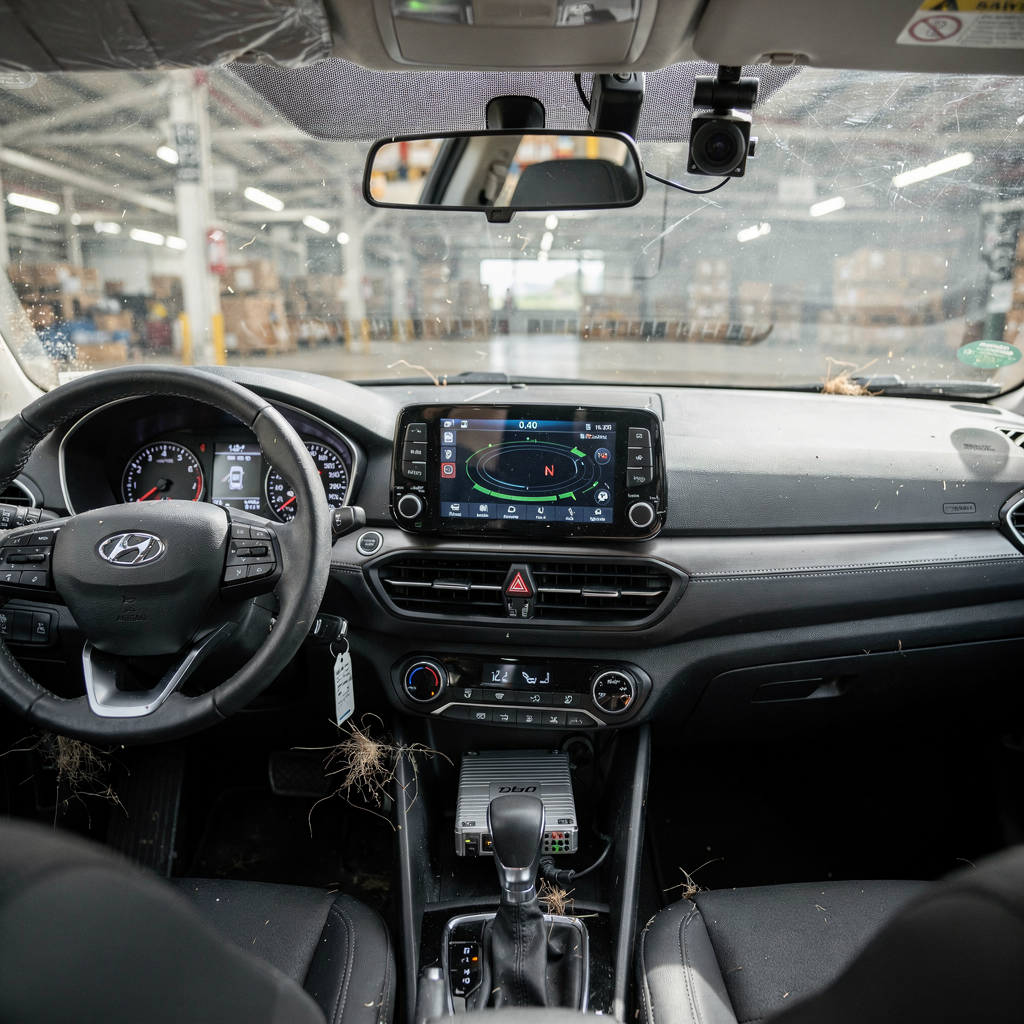
Practical metrics matter. Trials report reductions in reaction times and improvements in detection accuracy when language-aware perception augments classic classifiers. For example, supplementing an object detector with textual scene descriptions can reduce false positives and shorten operator verification time. Teams measure success with objective metrics and user-focused indicators, like trust and clarity of alerts.
To achieve low-latency inference, developers deploy quantized, pruned models and use specialized accelerators. The end-to-end stack must expose telemetry so teams can monitor drift and request retraining. This approach supports continuous improvement and helps fleet managers push over-the-air updates when necessary. When systems act, they must also explain why; explainable AI traces and audit logs let stakeholders verify decisions and maintain compliance with emerging regulations.
As products move into production, an ADAS product that integrates language outputs can support voice assistant features and infotainment use cases while keeping safety-critical controls isolated. This separation lets teams innovate on user interaction without compromising the core motion stack. The net effect is an adaptable ADAS software ecosystem that reduces operator uncertainty and improves handling of complex events during everyday driving.
fleet management at scale: ai-based automated driving optimisation
Scaling vision-language-action across a fleet requires data aggregation, continuous learning, and over-the-air orchestration. Fleet managers collect labeled incidents, anonymize recordings, and distribute curated datasets for retraining. This workflow makes models more robust across global markets and diverse conditions. It also supports energy efficiency and route planning improvements that cut fuel consumption.
Operating at scale needs a scalable infrastructure that handles thousands of vehicles and millions of events. The AI stack must support secure updates, rollback mechanisms, and clear audit trails for each change. Fleet operators use metrics such as detection accuracy, false alarm rates, and time-to-resolution to measure improvements. In controlled pilots, integrating vision-language-action led to concrete gains in incident handling and maintenance scheduling.
Data governance matters. On-prem deployments and edge-first strategies protect privacy and help comply with region-specific rules. For companies managing control rooms, a platform that turns detections into human-readable descriptions and automated actions reduces operator load and improves response consistency. visionplatform.ai, for example, provides on-prem VLMs and agent tooling so fleets can keep video and models inside their environments, avoiding unnecessary cloud exposure.
Finally, sustainable deployment focuses on lifecycle efficiency. Updating models across a fleet yields higher performance and longer service life for hardware. Actionable outputs let teams automate routine procedures via AI agents, and those agents can perform low-risk tasks autonomously while escalating complex cases. The result is a leaner operations model that reduces costs and supports predictable start of production cycles for new vehicle features.
FAQ
What is a vision-language-action model?
A vision-language-action model links visual perception with language and action planning. It produces textual descriptions and recommended actions from camera inputs so systems can explain and act on what they see.
How does Bosch use vision-language models in vehicles?
Bosch integrates these models into research and pilot projects to improve inspection, interpretation, and driver guidance. Bosch applies automated red-teaming to stress-test models before on-road validation (źródło).
Are vision-language systems safe for automated driving?
They can be, when paired with rigorous validation, explainable traces, and safety rules. Automated red-teaming and production-grade testing help uncover failures early, and Bosch’s methods emphasize such testing.
What role does edge computing play in ADAS?
Edge compute enables low-latency inference and keeps safety-critical loops local. This reduces reaction times and preserves privacy by avoiding constant cloud streaming.
Can fleet operators update models over the air?
Yes, secure over-the-air updates allow continuous learning and rapid rollout of fixes. Robust orchestration ensures traceability and rollback capability during updates.
How do vision-language models help control rooms?
They convert detections into searchable descriptions and recommended actions, which reduces operator workload. This capability supports faster decisions and scalable monitoring.
What is explainable AI in this context?
Explainable AI produces human-readable reasons for its outputs, making it easier for operators and auditors to trust and verify system behavior. Trace logs and natural language summaries are common tools.
How does Bosch collaborate with OEMs?
Bosch partners with OEMs and software teams to align interfaces and validate ADAS features. Collaborations include standardization efforts and joint pilot programs in the automotive industry.
Are these systems reliant on cloud processing?
Not necessarily; many deployments use on-prem or edge-first designs to protect data and meet compliance needs. This setup also lowers latency for time-critical functions.
Where can I learn more about real-world deployments?
Look at Bosch annual reports and conference proceedings for pilot results and benchmarks, and review seminar materials that discuss automated red-teaming and datasets (przykład, raport roczny Boscha).