Overview of ai Integration with milestone XProtect
First, let’s define what the AI layer is and why teams add it on top of a VMS like milestone xprotect. The intelligence layer combines computer vision, machine learning, and sensor fusion to turn raw video into actionable insights. For operators, that means real-time alerts and contextual descriptions rather than isolated detections. visionplatform.ai turns existing cameras and VMS systems into AI-assisted operational systems by adding a vision language model and AI agents that interpret and explain events. For example, the VP Agent turns detections into natural-language descriptions so operators can search across cameras using natural language.
Next, the AI connects to milestone xprotect through lightweight agents and APIs. The milestone vms ai agent or the visionplatform.ai control room ai agent streams events, metadata, and short video snippets to the AI processing stack while preserving data sovereignty. This approach allows xprotect as a central hub to remain the source of truth. An agent provides structured access to events, and that structured feed can be consumed by ai agents and genai for assisted workflows and reasoning.
Also, benefits are immediate. Real-time situational awareness scales across many camera feeds. False alarms decrease because the system correlates multiple signals before creating an alert. Operators interact with video differently; cameras become sources of understanding rather than simple motion triggers. For airports, a proven result is a measurable improvement in baggage hall occupancy management, with some deployments reporting a roughly 20% efficiency gain en análisis del flujo de pasajeros.
Finally, integration must be planned. The agent suite for milestone xprotect and the visionplatform.ai agent suite for milestone expose device information through the milestone and provide information through the milestone api so that workflows can automatically enrich metadata. The result is a more reliable, auditable, and searchable archive that supports forensic review and faster incident management. As one expert wrote, “The AI performance on today’s cameras matches what was previously only achievable by human operators” SourceSecurity, and that capability is now accessible without rewriting the VMS.
On-Premise vs Cloud management Options
First, decide between on-premise and cloud video streaming. On-premise keeps data control local and supports strong data sovereignty. It reduces video to the cloud risk. For sensitive enterprise and critical infrastructure environments, on-premise preserves compliance and lowers exposure. visionplatform.ai emphasizes on-premise and on-prem AI capabilities to keep video, models, and reasoning inside the customer boundary. This approach helps organizations meet strict rules like the EU AI Act and other privacy regulations.
Next, cloud options offer scalability and remote access. Cloud architectures simplify management and allow elastic processing of many video streams during spikes. However, cloud video streaming introduces latency and can raise costs for storing video. For many sites, a hybrid architecture provides the best balance. Hybrid models send metadata and small clips to cloud services while keeping full-resolution video on-premise. This lets teams use scalable decision-support while maintaining control over raw footage.
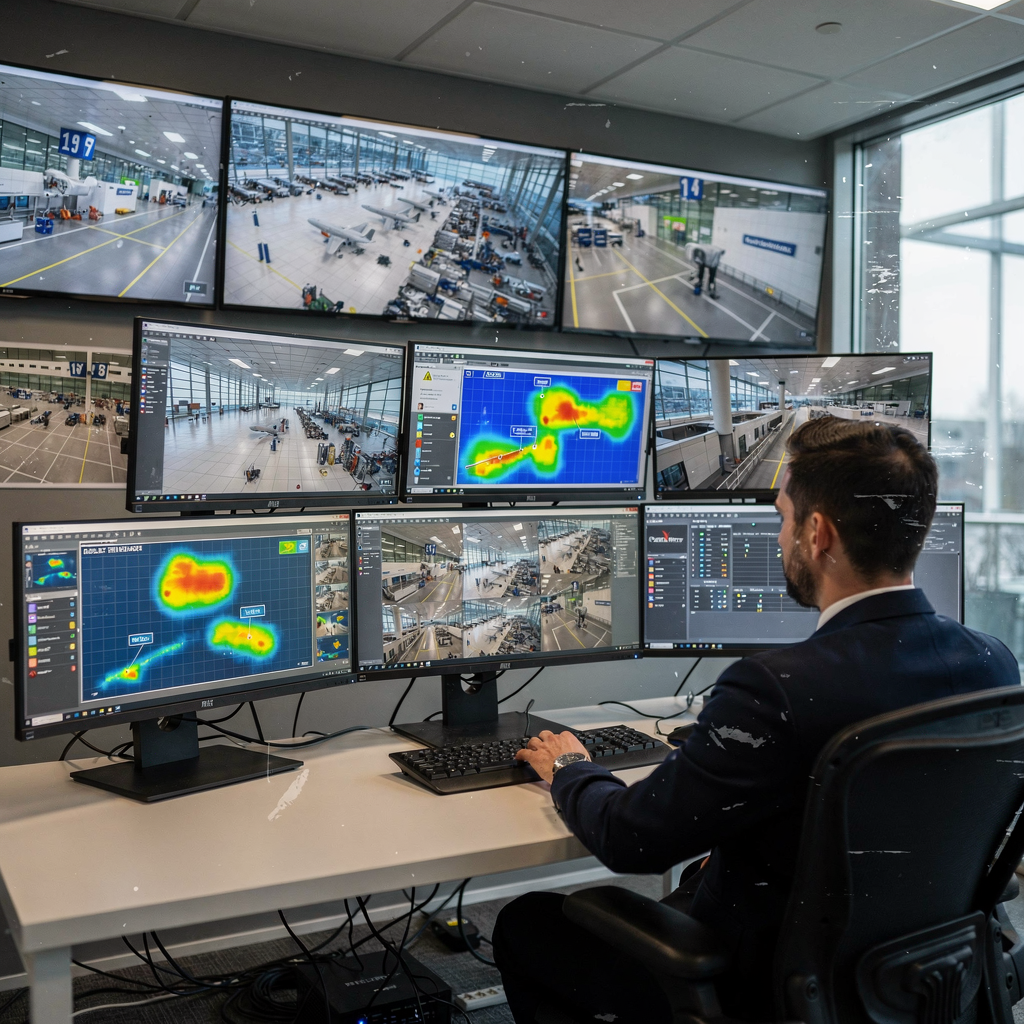
Then, consider control room orchestration. Hybrid control rooms often run an orchestration layer or control room software that manages alerts and routes video to operators. The management client must support failover, load balancing, and resource monitoring so that latency stays low and reliability stays high. In practical settings, teams deploy edge devices for initial inference and server-side clusters for more complex processing. That split supports on-premise inference and cloud-assisted analytics where permitted.
Finally, network and security matter. Design for adequate bandwidth between cameras, edges, and servers. Use encrypted links, strict configuration policies, and audit logs. The right setup reduces attack surface and ensures that incident management workflows remain intact. For airport and campus scenarios, connect with access control systems to enrich events and support coordinated responses. For more on occupancy and counting, see the people-counting use case conteo de personas en aeropuertos.
AI vision within minutes?
With our no-code platform you can just focus on your data, we’ll do the rest
Real-Time Analytics: ai-Driven Video Insights
First, AI-driven video insights change how teams view occupancy and flow. Occupancy tracking and passenger-flow analytics provide minute-by-minute metrics that control rooms can use to reduce congestion and improve resource allocation. In airports, these analytics have improved baggage hall occupancy management by about 20% in measured deployments estudio de caso. That statistic highlights how combining camera data with sensor fusion leads to concrete operational gains.
Next, behavior detection helps in high-risk zones. AI models can detect loitering, tailgating, and aggressive motion patterns and convert those detections into human-readable insights. The system flags anomalies and provides context so operators can interpret incidents rapidly. For forensic review, natural-language descriptions speed searches across hours of footage. Operators can run queries that search across cameras for specific behaviors or patterns and then jump directly to relevant clips.
Then, anomaly alerting reduces false positives. By correlating video analytics with access control logs and environmental sensors, the platform distinguishes normal from suspicious activity. As one technical guide points out, “Effective integration with Milestone XProtect is crucial for leveraging AI analytics without compromising system performance or data integrity” especificación técnica.
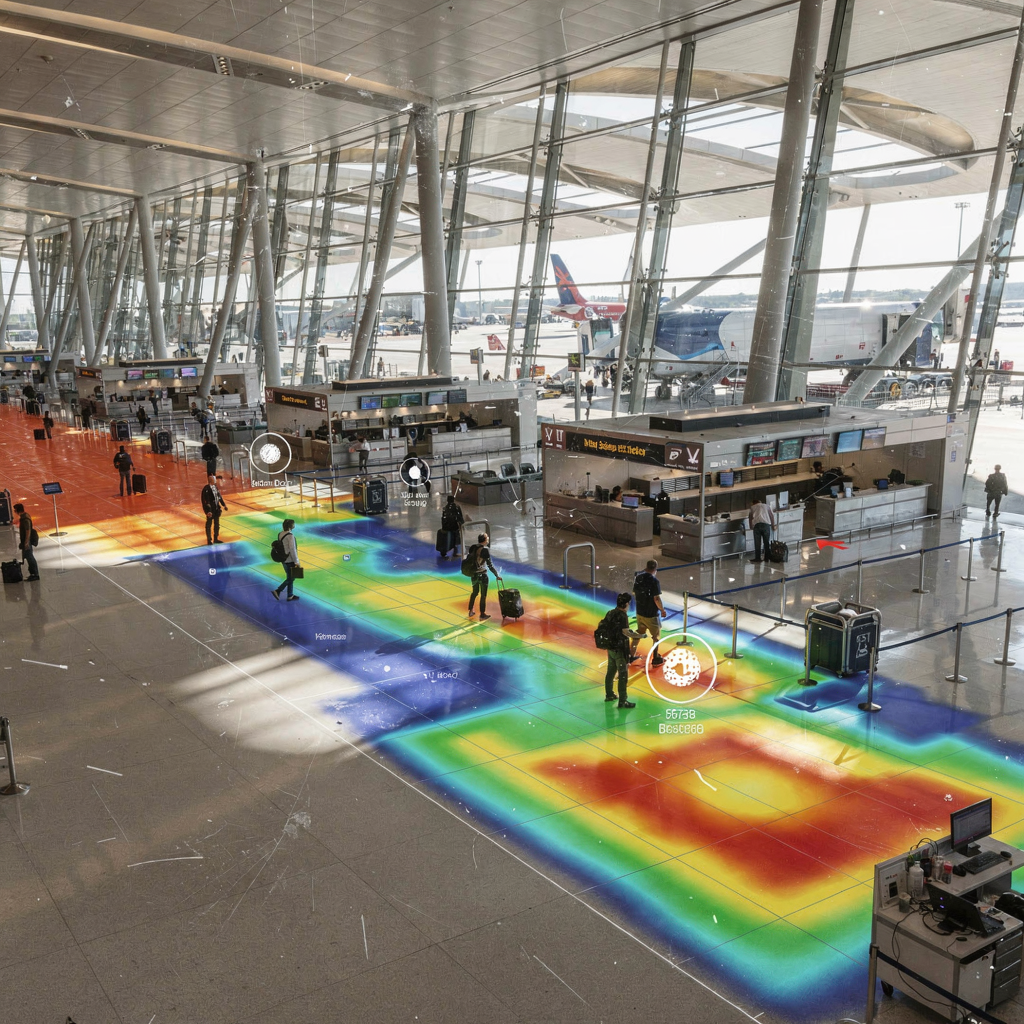
Also, the VP Agent Search and VP Agent Reasoning features provide text-based forensic tools and assisted decision-making on top of raw detections. That means operators can review footage with context, receive recommended responses, and follow pre-defined workflows. For crowd and density analytics, teams can inspect heatmaps and crowd detections to manage peak flows; see crowd detection and density resources detección y densidad de multitudes. This mix of real-time and historical insights supports more accurate, faster decisions.
milestone XProtect Data Flow and Processing
First, map the flow. Video ingestion begins at the camera and moves to edge devices or NVRs. The system extracts metadata and tags events as they occur. These metadata streams then feed AI models for real-time inference. The agent provides structured access to events and device information through the milestone and curates information through the milestone api so downstream services can act.
Next, outline the AI agent suite architecture. Edge processing handles initial detection to preserve bandwidth and reduce latency. Server-side analysis performs deeper reasoning, historic correlation, and long-term storage. The VP Agent Suite supports both modes. The visionplatform.ai vlm agent converts video into descriptive text via a vision language model and streams that output to agents that can automatically enrich incident records. This split reduces load on the VMS while enabling advanced processing where needed.
Then, manage data integrity. Use checksums, tamper-evident logs, and strict retention policies to maintain evidentiary value. Audit trails must capture every action an agent or operator takes. Systems that add reasoning must not overwrite original footage. Instead, they append structured metadata and preserve raw streams. For orchestration and incident management, operational databases should store event vectors and timestamps so analysts can reconstruct sequences precisely.
Finally, ensure stability. Design for failover, use load balancing, and monitor resource consumption. The management client must surface system health, camera states, and device connectivity. Forensic capabilities improve when video analytics and event handling include searchable descriptions and text-based summaries. Also, consider compliance: maintain data control and adhere to data sovereignty requirements while keeping latency and reliability predictable.
AI vision within minutes?
With our no-code platform you can just focus on your data, we’ll do the rest
Security Use Cases: ai and milestone in Action
First, campus security benefits from perimeter monitoring with early-warning triggers. AI models detect intrusions, unauthorized access, and suspicious loitering. The platform correlates video with access control events so teams can act faster. For perimeter breach approaches and triage, see perimeter-breach-detection detección de brechas perimetrales.
Next, post-pandemic health compliance uses thermal people detection and body-camera data. Thermal sensors and on-device analytics verify occupancy and detect elevated temperature patterns while respecting privacy policies. The system can flag health-related anomalies without sending raw video externally. For thermal use cases, read more at thermal people detection detección térmica de personas.
Then, border control and high-security checkpoints use AI to improve detection accuracy and reduce false alarms. Industry reports show modern AIoT systems can reach human-level performance for many detection tasks SourceSecurity. That leads to measured reductions in false positives and higher throughput at controlled entry points. For ANPR/LPR and vehicle workflows, see our vehicle detection resources detección y clasificación de vehículos.
Also, the system supports forensic investigations. AI-generated metadata and vision language model summaries make it faster to interpret incidents and review footage. This not only speeds up response but also improves the quality of incident reports. The platform adds reasoning to detections, which helps interpret incidents and recommend actionable next steps. Operators can follow a clear audit trail and maintain full control over data and models while leveraging automation to scale.
Best Practices for system management and ai Performance
First, schedule regular model updates, validation, and retraining cycles. Models degrade over time if environments change. Align retraining with seasonal patterns, new camera placements, and updated procedures. Regular validation against ground truth reduces drift and improves accuracy. In enterprise and critical infrastructure environments, test updates in a staging setup before full rollout.
Next, design for scalability. Use load balancing, failover, and resource monitoring to keep processing predictable. For control room scenarios, deploy the orchestration layer to route alerts and maintain operator workflows. Also, instrument incident management and operational databases so that the system can automatically populate reports and support downstream analytics. The management client should make system health and configuration visible to support staff and integrators.
Then, focus on compliance and governance. Ensure GDPR compliance, maintain audit trails, and enforce data-retention policies. Data sovereignty and data control are key for many customers. Keep video and metadata on-premise by default and use text-based summaries for external sharing. This approach reduces risk while still enabling collaboration across teams.
Finally, follow secure deployment practices. Harden device access, update firmware, and monitor camera states. Define permissions so that AI agents act within clear boundaries. For custom workflows, build policies that let the agent suggest actions but require human confirmation for high-risk cases. Agents and GenAI can elevate decision-making, but maintaining full control and clear audit trails remains the right balance. For operators who need quick search and forensic capabilities, VP Agent Search enables search across cameras using natural language and reduces time to review footage.
FAQ
What is an AI layer on top of Milestone XProtect?
An AI layer is software that analyzes video and sensor data to produce insights, alerts, and contextual descriptions. It sits on top of Milestone XProtect and consumes events and metadata to provide assisted decision-making on top of existing video analytics.
How does on-premise compare to cloud deployment?
On-premise keeps video and models inside your environment for greater data control and lower latency. Cloud can scale more easily but may introduce data sovereignty and cost considerations; hybrid setups often balance both options.
Can AI reduce false alarms?
Yes. By correlating multiple signals and applying contextual reasoning, AI can filter out benign events and reduce false alarms. Proven deployments have shown significant reductions when AI-driven workflows are applied.
Does this integration support forensic searches?
It does. Vision language models convert video into searchable descriptions, so operators can perform natural-language queries and rapidly review footage. This capability transforms long manual reviews into efficient investigations.
What network requirements should I plan for?
Plan for bandwidth between cameras, edge devices, and servers, and include redundancy for critical links. Use encrypted channels and monitor latency and reliability to meet operational needs.
How often should AI models be retrained?
Retraining frequency depends on environmental changes and operational cycles. Perform validation regularly and retrain after major changes like new camera placements, seasonal shifts, or updated procedures.
Can AI agents act autonomously?
Yes, with governance. Agents can recommend actions, pre-fill reports, or, for low-risk scenarios, execute predefined workflows automatically. Always design audit trails and escalation rules to maintain oversight.
Is data stored in the cloud by default?
No. Many solutions, including on-prem options, keep video and models local by default to protect data sovereignty. Cloud storage is optional and should be used only when it aligns with policy and regulation.
How does the system integrate with access control?
The AI layer can correlate video analytics with access control events to enrich context and reduce uncertainty. This helps interpret incidents and supports coordinated responses across systems.
What benefits do operators see immediately?
Operators gain faster verification of alarms, improved situational awareness, and reduced manual steps. The system adds reasoning to detections and helps teams interpret incidents so they can act with more confidence and speed.