Trasforma le operazioni della sala di controllo con un copilota potenziato dall’IA
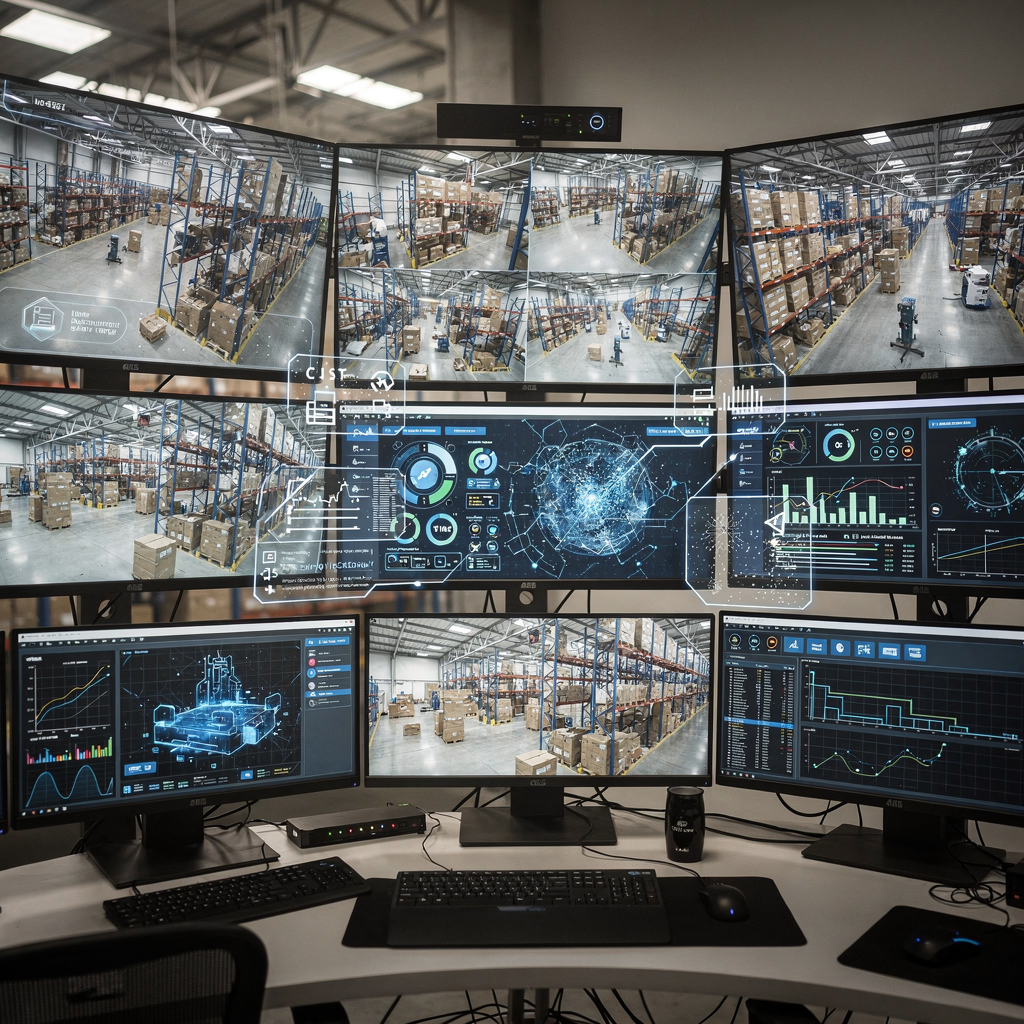
First, AI transforms how a control room ingests real-time signals from sensors, cameras, and IoT devices. AI reads video streams, telemetry, and logs, then converts raw input into concise insights. Also, it correlates events across sources so teams see context rather than isolated alerts. In practice, an AI co-pilot sits beside human operators and highlights anomalies, trends, and likely causes within seconds. For example, predictive alerts can flag rising vibration and temperature trends before a component fails. This reduces downtime by up to 30% when operators act on early warnings, according to industry analysis mostrando fino al 30% in meno di tempo di inattività.
Next, secure workflows keep data in the site boundary and meet strict rules. For organisations that must keep video and metadata private, on-prem solutions prevent data leaving the environment. visionplatform.ai designed its VP Agent Suite so video, models, and reasoning stay inside by default. As a result, teams can embed governance and maintain compliance with EU rules and internal policy. Also, the approach lowers cloud egress costs and legal risk.
Then, the AI co-pilot reduces routine tasks. It can automate checks, pre-fill incident reports, and retrieve relevant camera clips in seconds. This helps human operators focus on judgement and right decisions under pressure. The AI provides a clarity that modern control rooms need while keeping human oversight intact. Finally, the platform supports secure APIs and edge deployment so infrastructure remains robust and auditable.
Manutenzione predittiva e rilevamento delle anomalie con un agente IA per il monitoraggio
First, an AI agent analyses historical and live metrics such as vibration, temperature, and throughput to detect subtle patterns. Then it scores trends and issues a timely anomaly notice so engineers can schedule pre-emptive repairs. For example, continuous monitoring of motor vibration paired with temperature data often reveals bearing wear weeks before failure. Also, predictive maintenance driven by AI can lower unplanned outages substantially. Industry sources report operational cost savings of 20–25% for organisations that adopt AI agents for control room tasks segnalando una riduzione del 20–25%.
Next, the agent synthesises multiple signals to reduce false positives. It interprets video events from CCTV and pairs those with machine telemetry to verify incidents. For instance, a notification about a stopped conveyor can be verified by camera evidence before triggering a full shutdown. visionplatform.ai’s VP Agent Reasoning demonstrates how video, VMS data, and procedures combine to explain why an alarm matters. This reduces alarm fatigue and helps teams prioritise effectively scopri come la ricerca forense supporta la verifica.
Then, cost benefits follow from fewer manual inspections. For many sites, routine walk-arounds drop while uptime improves. Also, a proactive stance extends asset life and reduces spare-part expense. Finally, this approach fits within a larger digital maintenance strategy and supports strategic planning for spare parts and workforce scheduling.
AI vision within minutes?
With our no-code platform you can just focus on your data, we’ll do the rest
Supporto alle decisioni e automazione: usare un assistente IA per gestire i flussi di lavoro del team e aiutare le decisioni degli ingegneri
First, an AI assistant ingests complex datasets and produces clear recommendations for action. It prioritises incidents, suggests mitigation steps, and ranks which tasks need attention right now. Also, when a pump shows rising vibration, the assistant provides a root-cause hypothesis, the likely failure mode, and suggested next steps. This kind of decision support reduces cognitive load on operators and helps teams make the right decisions faster.
Next, task automation lightens routine work. The assistant can auto-generate shift reports, pre-fill incident forms, and notify external teams. In addition, automatic retrieval of relevant clips and logs allows investigators to see context at the right time. For customers using visionplatform.ai, VP Agent Actions can execute safe, policy-bound steps such as notifying an engineer or closing a false alarm with an explanation. This reduces time per alarm and helps teams reduce workload.
Then, dashboards present real-time KPIs and recommended actions. Engineers and supervisors can filter by severity, asset, or location. Also, the ai assistant highlights dependencies and suggests who should own a task. This improves cross-functional collaboration and boosts productivity. Finally, the combined human operators and AI workflow creates a resilient environment where automation supports human judgment without removing control.
Costruire fiducia e migliorare la risposta nelle operazioni in sala con un assistente IA
First, trust depends on transparency and explainability. Operators often reject systems that cannot explain a detection. Therefore, agents must provide reasoning, confidence scores, and provenance for data. As one study found, users raised concerns about data privacy, transparency, and bias, so these aspects must be addressed secondo la ricerca qualitativa sulla percezione degli utenti. Also, governable AI and audit trails help maintain accountability.
Next, bias mitigation and model explainability are core best practices. Teams should log model decisions and enable human review. In emergency scenarios, rapid context matters. AI can speed response by up to 40% in disaster response when it synthesises multiple feeds mostrando tempi di reazione migliorati. As a result, lives and assets may be saved by earlier, informed action.
Then, training and feedback loops build operator confidence. Regular drills, guided prompts, and post-incident reviews teach teams how to interpret recommendations. Also, human-in-the-loop oversight ensures AI suggestions remain aligned with policy and judgment. Finally, design for clarity means UI shows what the AI used to reach its conclusion, which strengthens trust and enables teams to act under high-pressure conditions.
AI vision within minutes?
With our no-code platform you can just focus on your data, we’ll do the rest
Integrazione digitale aziendale e casi d’uso per strumenti IA e IA generica nei team di sicurezza
First, AI must integrate with existing SCADA, VMS, and access control systems. For example, pairing video analytics with access logs helps verify unauthorised entries. visionplatform.ai exposes VMS data as a real-time datasource for AI agents and supports access control correlation vedi come funziona il rilevamento degli accessi non autorizzati. Also, linking with ANPR feeds enables vehicle workflows and operational escalation scopri l’integrazione ANPR.
Next, practical use cases include intrusion detection, anomaly scoring, and automated alert routing. Security teams can route verified events to the right responder based on severity. In addition, CCTV and forensic search can retrieve footage with natural language queries to speed investigations esempio di ricerca forense. This enables faster collaborative incident handling across departments.
Then, scaling across sites requires standardised integration and robust infrastructure. Enterprises should deploy edge processing where video stays on-site to keep data secure. Also, central dashboards aggregate KPIs from many sites, creating enterprise-level resilience. Finally, these integrations support broader digital transformation, helping security and risk teams move from reactive to proactive monitoring.

Prezzi, abbonamenti e prompt engineering nelle soluzioni copilota Microsoft ChatGPT
First, pricing models vary between per-seat subscription and enterprise-wide agreements. Organisations often weigh subscription costs against expected uptime gains and reduced labour. Next, total cost of ownership must include custom setup, ongoing support, and model updates. For many buyers, a subscription plus professional services eases deployment and adoption.
Then, prompt engineering makes chat-based assistants useful in a control room. Teams can craft prompts that reflect site procedures, asset names, and escalation rules. Also, fine-tuning ChatGPT-style models with domain vocabularies reduces confusion and improves accuracy. Microsoft and other vendors offer tools to integrate chat-centric assistants into workflows, and customers can deploy ai in on-prem or hybrid architectures to meet compliance needs. In addition, using governable AI patterns preserves auditability and reduces legal risk.
Finally, practical advice: pick a licence that supports the expected usage, design prompts that encode policies, and plan for incremental rollout. This approach optimises adoption and ensures the co-pilot and co-pilot features deliver measurable value. A clear pricing strategy and prompt governance enable teams to scale confidently while keeping data secure and systems reliable.
FAQ
What is an AI co-pilot for a control room?
An AI co-pilot is an intelligent assistant that works alongside human operators to interpret data and suggest actions. It helps verify detections, prioritise incidents, and speed decision making.
How does predictive maintenance work with an ai agent?
Predictive maintenance uses historical and real-time metrics to forecast failures before they occur. This lets teams schedule repairs proactively and reduce unplanned downtime.
Can AI reduce operational costs in a control room?
Yes, organisations using AI agents have reported cost reductions in the 20–25% range due to fewer manual checks and less downtime. These savings come from automation and more targeted maintenance.
How do you maintain data secure on AI platforms?
Keeping processing on-prem, implementing encryption, and strict access control protect sensitive video and telemetry. In addition, audit logs and transparent configurations support regulatory requirements.
What role does explainability play for operators?
Explainability helps operators trust AI recommendations by showing why a decision was made. This supports faster adoption and better human-in-the-loop outcomes.
How do AI tools integrate with legacy VMS and SCADA systems?
Integration uses APIs, MQTT, webhooks, and VMS connectors to bring data into an agent-ready platform. This allows AI to reason over video, telemetry, and access logs together for richer insights.
Are there specific use cases for security teams?
Yes. Typical use cases include intrusion detection, unauthorized access correlation, and automated alert routing. These use cases reduce false alarms and speed response times.
How important is prompt engineering for chat-based assistants?
Prompt engineering ensures the assistant understands local vocabularies, procedures, and escalation rules. Well-crafted prompts reduce ambiguity and improve accuracy in high-pressure scenarios.
What are the main deployment options for an AI co-pilot?
Deployments include on-prem edge servers, hybrid setups, and cloud-hosted models when permitted. Many organisations choose on-prem for compliance and to keep video inside their environment.
How do teams measure success after deploying an AI co-pilot?
Success metrics include reduced downtime, faster incident response, lower operational costs, and operator satisfaction. Regular reviews and feedback loops help refine the system over time.