queue: Identifying Bottlenecks and Their Causes
In manufacturing, a queue describes work-in-progress accumulation at a station. A queue appears when items wait for processing because the downstream capacity cannot keep pace. First, identify the station where jobs in the queue pile up. Next, map the process step by step. Then, collect timestamps for arrivals and departures. This approach reveals where the queue forms and why it grows.
Research shows that bottleneck wait times can add significant delay. For example, one study found excessive waiting time at bottlenecks can increase total cycle time by up to 30% Identificazione dei ritardi e dei colli di bottiglia nei processi produttivi. Therefore, identifying the queue early is important. Bottlenecks reduce throughput, throw off delivery schedules, and waste labour and machines. In practice, the effect appears across small job-shop lines and large, automated lines alike. For instance, a job-shop simulation demonstrated targeting bottlenecks could reduce overall production time by about 15–20% Identificazione dei colli di bottiglia in un job-shop basata sulla simulazione. That result directly links queue control to faster deliveries and better resource utilisation.
To diagnose causes, inspect cycle time, setup time, equipment faults, and staffing. Use simple observations, and then validate them with data. In addition, check whether arrival patterns create periodic surges. Also track the average number of items waiting so you can prioritise fixes. If variability drives the queue, apply queuing theory or queuing models to estimate how changes alter behaviour Sistema di code – una panoramica. Finally, connect video sensors to trigger counts and timestamps for richer context. Visionplatform.ai turns existing CCTV into operational sensors that detect people and events in real time, so you can monitor queue behaviour at a visual process step and make informed decisions about staffing and resource allocation.
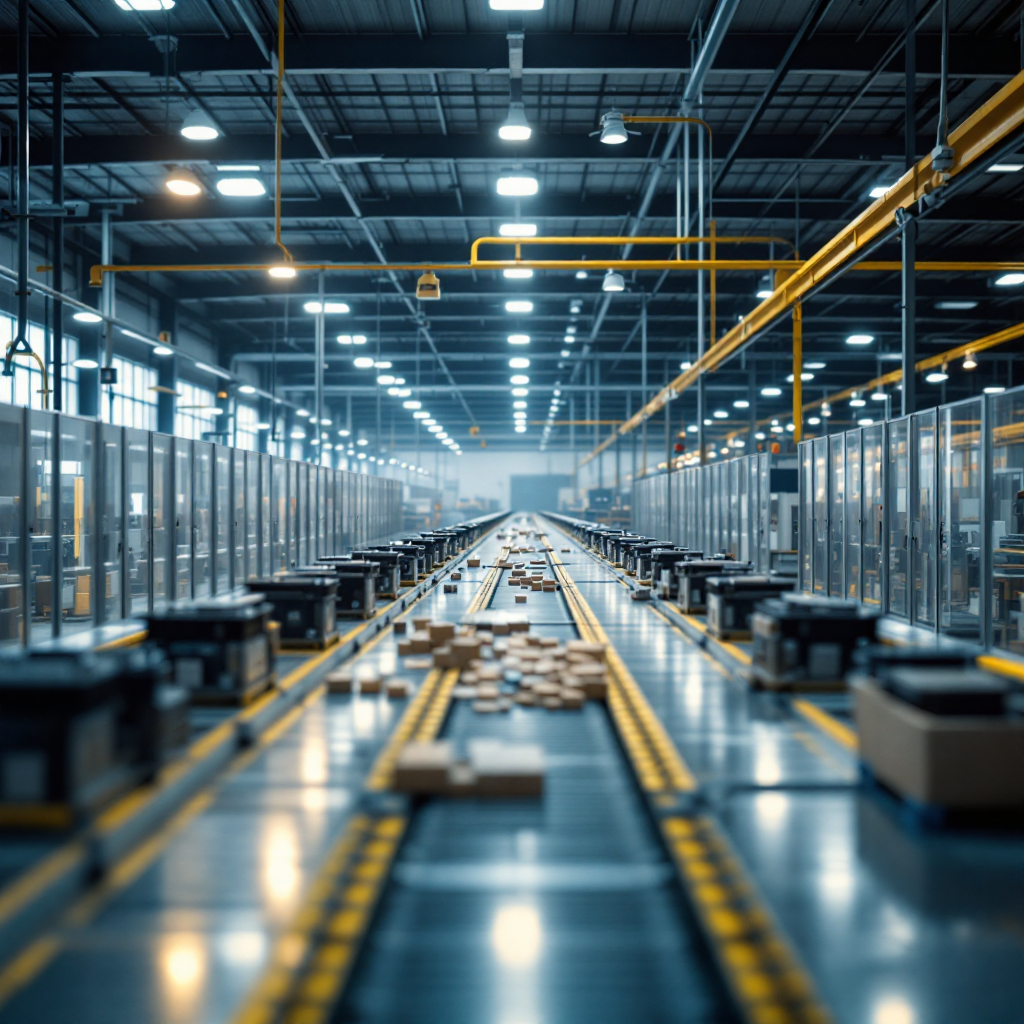
wait time and metric: Measuring Delays and Performance
Wait time denotes the period an item spends waiting before processing. The metric helps you quantify delays and prioritise improvement. Key measures include cycle time, queue size, throughput, and service time. Cycle time combines processing and wait time to show how long a part spends in the system. Also track average wait time, queue time, and throughput to spot deteriorating performance. Dashboards should present these metrics in real time so teams can act fast.
Quantitative studies highlight the benefit of cutting delays. For example, removing specific waits in a shop floor produced a 15–20% reduction in production time in simulations Identificazione dei colli di bottiglia in un job-shop basata sulla simulazione. Likewise, time-prediction research stresses the importance of including wait time for accurate cycle time estimates Metodi di previsione del tempo in produzione − una revisione esplorativa. Consequently, a clearer metric set leads to better scheduling and fewer late deliveries.
Real-time measurement relies on integrated sensors, PLC signals, and timestamps from MES or a queue management system. For instance, cameras plus an event stream can detect when a part arrives at a station and when it leaves. This produces an accurate queue length and a record of actual wait times. Also, a management system can compute rolling averages, flag peak times, and display a live Gantt view. Use a regression model or a simple moving average to smooth noisy arrival data. In addition, combine key performance indicators with alerts so staff can reallocate resources immediately when a queue grows. With proper data analytics and short feedback loops, teams can reduce wait and keep throughput steady. Our platform integrates with VMS and streams events for dashboards, so operators can see queue changes and make informed decisions without toggling multiple tools.
AI vision within minutes?
With our no-code platform you can just focus on your data, we’ll do the rest
real-world arrival and distribution: Understanding Production Variability
Arrival patterns on the shop floor rarely stay constant. Sometimes many parts arrive in bursts. Sometimes arrivals come one by one. Understanding the arrival distribution lets planners set capacity and buffer levels. In practice, planners test several possible distribution shapes. Common models include Poisson arrivals and exponential service for simple systems, while Weibull and other distributions model more variable real-world behaviour. For example, semiconductor final testing studies found waiting times often follow a Weibull distribution, which captures skew and long tails Metodi di previsione del tempo in produzione.
Using the right distribution matters for capacity planning and for arrival rate estimates. If arrivals follow a poisson pattern, you can apply classical formulae to estimate the average number waiting and predict when queues will spike. Conversely, if the distribution of queue times shows heavy tails, you need larger buffers or dynamic scheduling. Also, arrivals and exponential service times assumptions can simplify early modelling. Meanwhile, empirical fits to historical timestamps improve accuracy. For instance, a model that fits a Weibull distribution will better capture extreme wait events and thus reduce surprise bottlenecks.
When you model the arrival rate and service-time distribution, plan for peak times and setup time effects. Use queuing theory to calculate metrics that otherwise remain hidden, such as the average number in a regular queue and the probability that a job will leave the queue within a given period. In addition, combine video-derived counts with machine logs to validate distributional assumptions in the real-world. This hybrid approach improves predictions of queue and supports smarter staffing. Finally, mixing analytical models and observed distributions supports the theory of constraints: identify the longest queue and attack it, then repeat. That method helps to optimize production speed and to preserve throughput across the line.
machine learning approaches: Predicting Queue Length and Arrival Rate
Machine learning approaches can predict queue length and arrival behaviour from past records. Supervised machine learning, time-series forecasting, and regression models all play a role. For short horizons, time-series models such as ARIMA, LSTM, or boosted trees often beat simple averages. For classification or regression tasks such as predicting whether a queue will exceed a threshold, use a regression model or a classification algorithm. In either case, training and test data must represent peak times and slow periods. Use historical data plus recent timestamps to capture seasonal effects.
Input features matter. Typical features include arrival timestamps, processing durations, current WIP level, setup time, and recent throughput. Also include sensor events such as machine idle signals and operator presence. A well-designed feature set supports accurate predictions of queue and can flag when jobs in the queue will exceed target limits. For example, targeted ML delivered 15–20% improvement in cycle-time estimates in controlled studies when models used processing and wait time together Identificazione dei colli di bottiglia in un job-shop basata sulla simulazione. In addition, research notes that “By leveraging these AI findings with business context and priorities, manufacturers can significantly improve efficiency and reduce delays” Utilizzare l’IA per individuare i colli di bottiglia dei processi e migliorare l’efficienza.
When you deploy machine learning models, validate them against actual wait times and adjust for concept drift. Use cross-validation and monitor average error and other diagnostics. Furthermore, combine ML outputs with rules from traditional queuing models to maintain interpretability. Supervised machine learning helps manage near-term queues, while probabilistic forecasts provide a confidence range so planners can make informed decisions. Lastly, accurate predictions of queue let automated scheduling systems reallocate workers and machines ahead of surges, which helps minimize wait times and stabilise throughput.

AI vision within minutes?
With our no-code platform you can just focus on your data, we’ll do the rest
queue management system: Implementing Real-Time Flow Control
Adapting a queue management system from service industries offers immediate benefits in manufacturing. A digital queue system that tracks arrivals, current WIP, and service times can automatically prioritise tasks. In service industries, these systems already reduce customer wait times by directing flow. Similarly, in manufacturing, a queue system aligns resources, reduces idle time, and smooths line balancing. Moreover, a connected queue management system improves visibility so teams can act quickly.
Integration matters. Connect the queue management system to sensors, PLCs, MES, and cameras to stream live events. For example, Visionplatform.ai can turn existing CCTV into operational sensors that publish counts and detections to dashboards and MQTT sinks. That feed updates the management system and enables dynamic allocation. Next, the system can trigger resource allocation commands when a queue grows. It can also advise when to change the sequencing on a scheduling system to prevent expected congestion.
Benefits include fewer stoppages and better resource allocation. A live queue view highlights where to deploy operators or to run a secondary process. Also the system can call preventive maintenance when abnormal queue behaviour suggests a machine problem. With real-time feedback, teams can reduce wait and keep throughput steady. In short, a modern queue management system helps manage flow, supports efficient queue management, and links operational metrics to KPIs that matter for OEE and delivery performance.
machine learning models in a management system: Integrating AI for Cycle-Time Optimisation
Embedding machine learning models into a broader management system turns predictions into action. Deploy models that predict queue growth, recommend resource allocation, and drive predictive maintenance triggers. For example, a management system might use a regression model to forecast queue time for the next hour. Then it can assign operators or shift tasks to alternative machines to avoid a bottleneck. This loop closes the gap between insight and intervention, and it helps optimize production in real time.
Practical examples include predictive scheduling and dynamic resource allocation. A production scheduler uses ML outputs to change task sequencing before queues exceed thresholds. Meanwhile, predictive maintenance models detect vibration or temperature patterns and schedule repairs before failures increase wait in the queue. These actions reduce lead times and improve operational efficiency. In addition, combining ML with rule-based logic preserves reliability while delivering gains from machine learning models. When you embed models in a management system, monitor model drift, retrain on labeled events, and keep an audit trail for compliance.
Deployment challenges exist. You need good historical data and regular event feeds. Data quality and labelled examples are crucial, and training and test data should reflect the full range of conditions. Also ensure edge and on-prem options to keep data local and compliant with EU AI Act constraints. Visionplatform.ai supports on-prem processing so teams retain control of video data while publishing structured events to a management system. Finally, estimate ROI by comparing reduced idle time and improved throughput with the cost of sensors and models. Many manufacturers report quick payback when models produce accurate queue predictions and the scheduling system follows recommended reallocations.
FAQ
What is a queue in manufacturing?
A queue is the accumulation of work-in-progress at a specific process step where parts wait before service. It signals a mismatch between arrival and service capacity and is important to identify to reduce wait time and improve flow.
How do you measure wait time on a production line?
Measure wait time by capturing timestamps for arrival and service start at each station, then compute the difference. Use dashboards or a queue management system to plot cycle time, queue size, and average wait time for continuous monitoring.
Can machine learning predict queue growth?
Yes. Machine learning approaches such as supervised machine learning and time-series models can predict queue length and arrival rate using historical data. They require quality training and test data and work best when combined with physical sensors and PLC inputs.
What distribution models describe waiting behaviour?
Common models include Poisson arrivals and exponential service for simple cases and Weibull for more variable waits. Choosing the right distribution improves capacity planning and the accuracy of predictions of queue.
How does a queue management system help manufacturing?
A queue management system provides real-time visibility of arrivals and queue time, and it can trigger resource allocation or preventive maintenance. Integrating cameras and MES enables fast responses to surges and helps reduce wait times.
What inputs does a regression model need to predict queue time?
Typical inputs include arrival timestamps, processing durations, current WIP level, setup time, and recent throughput. Including sensor events and operator presence boosts the accuracy of predictions of queue and related metrics.
How do you integrate video into queue detection?
Use camera analytics to detect parts, pallets, or operator presence and stream events to your management system. Visionplatform.ai converts existing CCTV into operational events so you can combine visual counts with MES data to improve actual wait times measurement.
What is the role of queuing theory in practical operations?
Queuing theory offers analytical tools to estimate metrics such as the average number waiting and probability of delays. It complements machine learning by providing interpretable baselines and helping to select appropriate buffer sizes.
How quickly can reducing queues affect throughput?
Improvements can appear within days once you identify and fix a bottleneck, and studies report production time reductions of 15–20% after targeted interventions. Long-term gains grow as you refine models and workflows.
Why is data quality important for queue predictions?
Models rely on accurate timestamps and labels; noisy or missing data lead to poor predictions and unreliable alerts. High data quality supports accurate predictions of queue and helps teams make informed decisions.