hanwha vision and the evolution of video surveillance
Hanwha Vision has grown into a leader in AI-driven imaging. First, the company positions itself as a fornecedor global de soluções de visão. Next, its cameras and systems influence global video surveillance deployments. For example, the Wisenet line captures a wide set of use cases. In particular, Wisenet and the Wisenet 9 P Series reflect a mix of performance and sustainability que “minimiza o ruído de vídeo e maximiza os detalhes”. Also, the P Series shows Hanwha Vision’s commitment to trustworthy AI and energy-efficient design.
Wisenet ai camera options appear across industry verticals. The X Series offers modular options for complex sites. Meanwhile, the X Series and the p series support flexible deployments. The X Series supports purpose-built optics and plug-in modules. Similarly, series cameras can be mixed to match budgets and coverage. Then, security teams can choose edge or server processing. As a result, deployments range from small sites to large campuses.
Hanwha Vision’s product breadth helps integrators build scalable solutions. For instance, the x series and the p series support integration with major VMS platforms. In addition, the cameras support Milestone XProtect and Genetec Security Center plug-ins for simplified integration. This compatibility lowers integration cost and speeds roll out.
Analytics plays a central role in this evolution. Also, edge-based video analytics pushes intelligence to the camera. Consequently, operators get more timely alarms and searchable metadata. At the same time, the market for AI video analytics is expanding. According to market data, the segment reached roughly USD 9.40 billion in 2024 and it continues to grow. Finally, for organisations upgrading to advanced video surveillance, Hanwha Vision offers a balanced path from traditional CCTV to intelligent, efficient monitoring.
AI analytics and video analytics fundamentals
AI in modern cameras combines neural networks, optical design, and edge compute. First, cameras capture cleaner images. Then, AI models run on the camera or at the edge. This approach reduces bandwidth and accelerates processing. For example, Hanwha Vision uses AI noise reduction to lower picture size and enhance detail. Also, this method cuts bandwidth and storage needs, improving overall system economics.
Edge-based video analytics turns each camera into an operational sensor. Consequently, video streams become actionable data. Also, searchable metadata makes forensic search faster. For example, Visionplatform.ai turns existing CCTV into a sensor network. We stream structured events to dashboards and MQTT for business use. Next, analytics reduce operator load and help staff focus on exceptions. In addition, this model supports GDPR and EU AI Act readiness when processing stays on-prem.
Deep learning drives object detection and classification in modern deployments. For instance, models can detect people and vehicles. Also, models can read license plates when paired with ANPR/LPR components. As a result, a single camera can support security and business intelligence tasks. Further, AI analytics supports real time decision making and automated alerts. The combination of on-device processing and server analytics forms a hybrid analytics solution that balances speed and scale.
AI vision within minutes?
With our no-code platform you can just focus on your data, we’ll do the rest
Intelligent video detection and attribute extraction
Intelligent video systems detect and classify people, vehicles, and other detected objects. First, these systems use attribute extraction to add searchable details. For example, they can extract clothing colour, bag presence, and direction of travel. Also, they can list object types such as bikes, cars, and trucks. Consequently, the data supports watchlists and forensic search. For complex sites, you can combine multiple attributes to create precise rules.
Object detection and loitering detection work well in crowded environments when models run at the edge. In addition, AI to identify behaviour helps teams spot suspicious behavior before incidents escalate. For example, systems can trigger an alert when someone loiters at an access control point. Then, guards receive a short event summary and an image stub. Also, attribute extraction supports people and vehicles correlation across cameras, which improves situational awareness.
Advanced analytics also supports specialized cases. For instance, systems can detect slip and fall detection in busy concourses. Likewise, people counting metrics support flow management in terminals. For security teams, tools that detect and classify people reduce the time to resolve incidents. Also, the ability to configure custom alarm rules makes events actionable for both security personnel and operations teams.
Hanwha Vision cameras feed rich metadata into VMS platforms. Many sites use searchable metadata to speed investigations. Also, you can integrate with third-party dashboards for business intelligence. For readers looking for airport-specific examples, see our people detection and people counting case pages for practical deployments: detecção de pessoas, contagem de pessoas, and detecção de permanência suspeita. Finally, attribute extraction makes alerts more precise and helps analytics reduce false alarms when properly tuned.
Enhancing image clarity with noise reduction and compatibility
Noise reduction improves image clarity in low-light and high-traffic areas. First, it removes grain while preserving edge detail. Then, video codecs compress the improved frames more efficiently. As a result, bandwidth and storage drop without losing evidence quality. For example, Hanwha Vision’s AI noise reduction delivers both detail and reduced picture size. This capability matters in large camera estates where bandwidth and storage are constrained.
Compatibility with existing surveillance systems is also key. For instance, Hanwha cameras support common standards to ease integration. Furthermore, many sites want to reuse their VMS. In such cases, a video security system that supports ONVIF and major VMS plug-ins simplifies deployment. For sites that need ANPR, support for license plates reading is available via add-ons and integrations. Also, cloud-based and hybrid analytics layers can sit on top of on-prem cameras to add new capabilities without ripping out hardware.
Sightmind integration yields cloud analytics for certain workflows. At the same time, organisations can keep sensitive processing on-prem. For privacy and compliance, that choice reduces data egress risks. In addition, image processing workflows can generate searchable metadata for rapid forensic search. This capability helps teams find events across thousands of hours of footage. Also, careful optical design and sensor selection improve base image quality. Finally, compatibility with existing infrastructure reduces cost and disruption during upgrades.
AI vision within minutes?
With our no-code platform you can just focus on your data, we’ll do the rest
Operational efficiency and ai-powered monitoring
AI-powered monitoring can reduce live patrols while improving response times. First, automated detection routes alerts to the right team. Then, security personnel see event snapshots and context. As a result, teams can prioritise real incidents instead of chasing false alarms. For example, tailored models help reduce false alarms by focusing on relevant object types. Also, systems can publish events to dashboards for business intelligence and operations monitoring.
Real-time alert management helps teams act faster. Also, a clear dashboard gives shift leaders an immediate view of outstanding events. For example, Visionplatform.ai streams events via MQTT so operations systems can consume them. Next, that data helps maintenance, logistics, and safety teams. In addition, AI security cameras and edge-based systems provide continuous detection without overloading central servers.
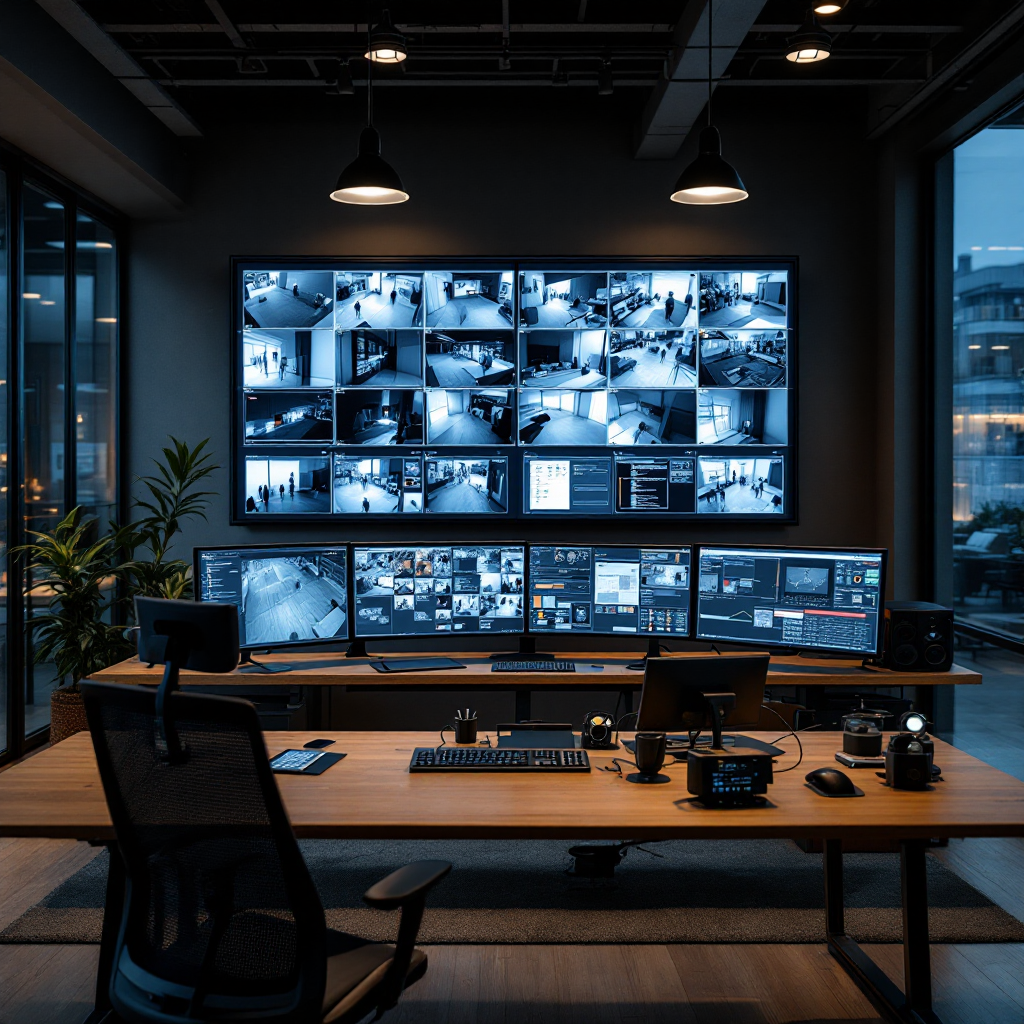
Operational insights come from structured metadata and analytics reduce manual work. For instance, combining people counting with threat detection supports capacity planning and emergency response. Also, teams can use the data for shift scheduling and resource optimisation. Overall, these capabilities raise enhance safety while lowering cost. In short, using AI to identify patterns and stream events makes cameras practical sensors for both security and wider operations.
Future trends in AI video surveillance
Sustainability and trustworthy AI are central to future camera development. For example, the p series emphasises energy efficiency and transparent model behaviour. Also, using synthetic data and generative workflows supports continuous improvement while maintaining compliance. These trends help organisations meet environmental goals and regulatory requirements.
Scalable deployments will mix edge-based processing with cloud orchestration. First, small sites will use purpose-built edge devices. Then, large estates will combine edge intelligence with central analytics for correlation across sites. Also, upgrades will favour modular designs so series upgrades are straightforward. For example, many operators will adopt scalable pipelines that allow thousands of video streams to be managed from a common control plane. In addition, plug-in modules and open APIs will encourage third-party innovation and better integration with access control and incident management.
Emerging innovations include generative artificial intelligence for synthetic training data and enhanced image restoration. Moreover, advances in model efficiency will let more analytics run on lower-power devices. At the same time, cybersecurity will remain a core concern. Therefore, future systems will include hardened firmware, secure update mechanisms, and auditable logs to meet compliance needs. For integrators and security teams, the next decade will focus on building systems that go beyond security to provide situational awareness, safety and business intelligence. Finally, integration paths with platforms like Genetec Security Center will remain important for enterprise-grade orchestration.
FAQ
What is AI video analytics and why does it matter?
AI video analytics uses machine learning models to analyze video in order to detect objects, behaviours, and events. It matters because it converts raw video streams into searchable metadata and actionable alerts that save time and reduce operational costs.
How does Hanwha Vision fit into modern surveillance strategies?
Hanwha Vision provides a range of cameras and analytics that support edge and server deployments. Their product lines, including the P Series and X Series, offer options for performance, sustainability, and integration with major VMS platforms.
Can AI reduce false alarms on my site?
Yes. When tuned to site conditions, analytics reduce false alarms by focusing detection on relevant object types and behaviours. Additionally, custom rules and attribute extraction help filter spurious events before they reach security personnel.
Are existing cameras compatible with new AI tools?
Many modern AI layers support ONVIF and standard video feeds so they can work with existing cameras and VMS. For enhanced features such as license plates, some sites add specialized modules or use higher-resolution streams.
What role does edge-based processing play?
Edge-based processing runs analytics close to the camera to reduce bandwidth and latency. It also helps keep sensitive footage on-prem, which can support GDPR and EU AI Act compliance for organisations.
How do organisations use metadata from analytics?
Searchable metadata supports forensic search, reporting, and dashboards for business intelligence. For example, metadata enables rapid retrieval of events, people counting trends, and correlation across cameras.
Can AI analytics support operations beyond security?
Yes. Analytics can stream events to operations, maintenance, and logistics systems via MQTT or webhooks. This helps teams use cameras as sensors for KPIs and efficiency improvements.
What are the primary cybersecurity considerations?
Secure firmware updates, encrypted communications, and audited logs are essential. Also, keeping processing on-prem and controlling datasets reduces exposure when deploying advanced analytics.
How does Visionplatform.ai complement camera systems?
Visionplatform.ai converts CCTV into an operational sensor network that detects people, vehicles, ANPR/LPR, PPE, and custom objects. It integrates with VMS platforms to stream events to dashboards and business systems so teams get actionable intelligence.
Where can I learn more about specific detections like loitering or ANPR?
For detailed use cases and product guides, see our loitering detection and ANPR resources. For example, learn about loitering detection at detecção de permanência suspeita or ANPR implementations at ANPR/LPR em aeroportos.