Modern security with security center saas by genetec
Genetec has long led thinking in integrated security. The Security Center SaaS offering modernises how organisations manage cameras and access. It scales on demand. It updates continuously. It minimises downtime. These traits meet modern security requirements. They also support operational resilience.
Modern security needs include scalability, continuous updates, and minimal downtime. First, platforms must scale to handle large numbers of cameras and large volumes of video. Second, platforms must receive continuous updates to address new threats. Third, systems must avoid interruptions that put people and property at risk. A cloud-native Security Center SaaS delivers these things. It centralises video management and policy enforcement. It simplifies maintenance for security teams.
For organisations considering a move, a SaaS model offers clear benefits. It centralises video management and video footage. It reduces the operational burden of maintaining on-prem servers. It also enables faster rollouts of advanced features. At the same time, some customers prefer on-prem or hybrid options. visionplatform.ai supports both approaches, and it helps customers keep sensitive video local while adding AI value. This hybrid approach balances regulatory needs and innovation.
Costs also matter. A SaaS model shifts capital expense into operational expense. It reduces upfront security investments and allows predictable monthly billing. For enterprises managing many locations, this simplifies budgeting. For operators, a unified interface reduces task switching. It keeps the operator focused on what matters most: situational awareness and response.
Finally, open architecture matters. Platforms that support APIs, third-party integrations, and custom agents reduce vendor lock-in. They also increase the lifespan of hardware. Genetec’s approach to integration supports a wider ecosystem. This makes Security Center SaaS suitable for sensitive sites and large-scale deployments. For more specific analytics like loitering detection, see real examples of deployment in field settings such as loitering detection in airports. The platform supports people counting and other sensors to meet real needs.
AI-driven video analytics solutions for physical security
Vision-language models and AI reshape how we detect threats. They connect what a camera sees to what an operator needs to know. AI-driven detection can identify intrusions, loitering, and unattended objects. It can also spot people bypassing access control. This approach reduces manual review. It also increases consistency in detection.
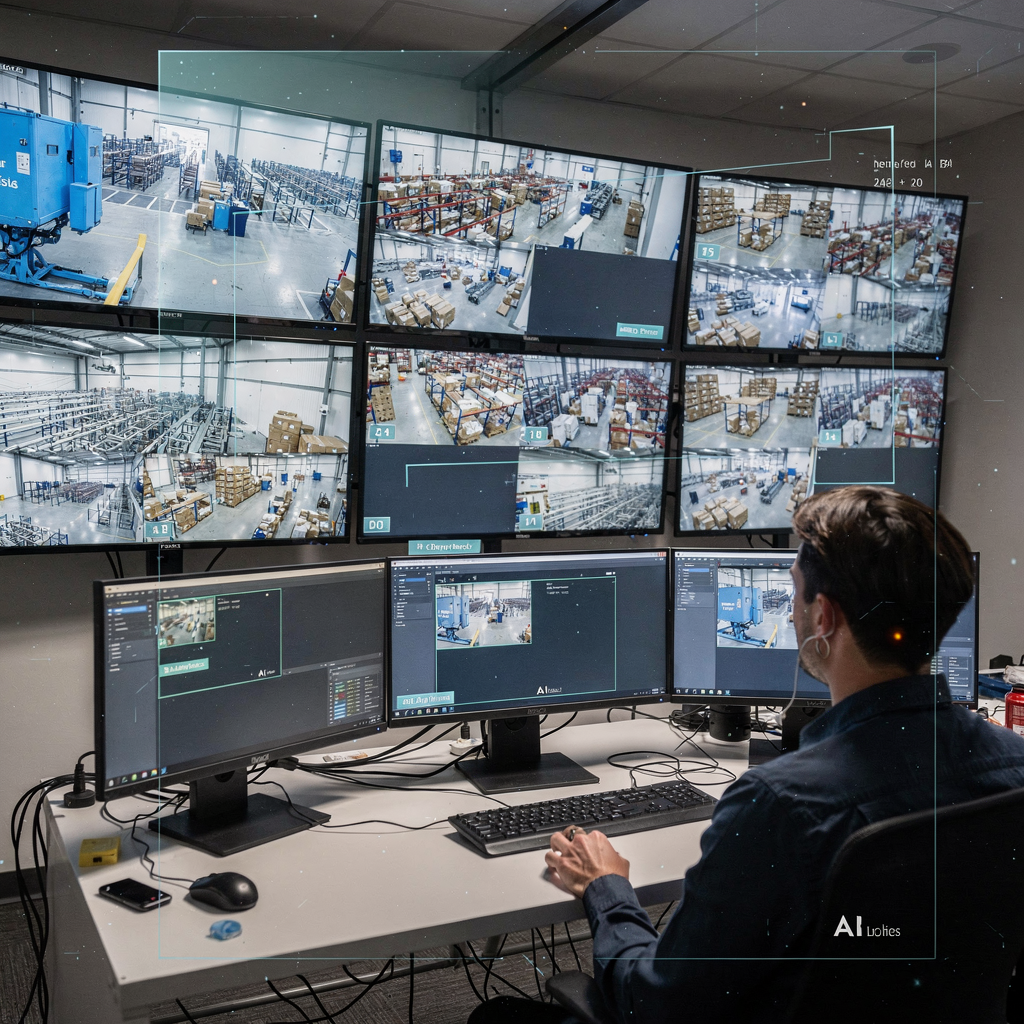
Vision-language models let systems explain what they see. They produce human-readable descriptions. That helps operators verify alarms faster. When a model labels someone as loitering near a gate, contextual text clarifies why. It explains duration, posture, and related sensor data. In doing so, it reduces false alarms. Studies report that organisations using advanced analytics cut manual review time by 30–40% (30–40% reduction). This yields clear operational benefits and lower costs.
Also, integrating contextual semantics helps. Correlating movement patterns with time of day and access control logs reduces noise. For example, linking a person at a delivery dock with a logged delivery pass prevents unnecessary escalation. An ai-powered system will cross-reference metadata and confirm relevance. This lowers unnecessary dispatches and supports audit trails.
Real-time alerts and retrospective analytics work together. Real-time triggers keep teams aware of unfolding events. Retrospective search helps investigators find patterns over days and weeks. Together they improve situational awareness. For perimeter protection, advanced analytics detect patterns consistent with a breach and can alert teams instantly. For specific perimeter analytics, see practical implementations such as perimeter breach detection in airports. These deployments illustrate how AI augments physical security.
AI vision within minutes?
With our no-code platform you can just focus on your data, we’ll do the rest
Advanced video analytics and video management in genetec security center
Deep learning powers the most capable models today. Convolutional and transformer architectures detect objects, faces, and anomalies. They learn to detect patterns across many scenarios. This improves detection of non-standard behaviour. For example, object recognition combined with temporal analysis finds a suspicious left object. Such capabilities reduce time to verify incidents.
Seamless video management is essential. Automated tagging and indexing make large volumes of video searchable. A robust system stores video footage securely and indexes content based on semantic descriptions. This creates value for investigators and compliance teams. It also supports content based retrieval. Operators can find footage by describing events in natural language rather than hunting for camera IDs.
Edge inference and cloud processing must be balanced. Edge-based models reduce latency. They enable immediate site-level responses. Cloud processing allows heavier models and aggregated learning. A hybrid deployment strategy often fits best. It keeps critical processing on-site while leveraging central resources for long-term analytics and model updates. visionplatform.ai emphasises on-prem Vision Language Model options to keep video local and compliant with regional security policies and data protection rules.
For many sites, pairing edge detection with centralised video management lowers cost while preserving responsiveness. This preserves operational continuity and reduces bandwidth needs. For vehicle-focused examples, see vehicle detection and classification in airports. For forensic retrieval, integrated indexing supports fast searches across days of footage. These tools improve the productivity of every operator on duty.
Finally, organisations benefit from open architecture. APIs, webhooks, and MQTT event streams allow integration with other systems. They enable automation and richer incident contexts. This architecture supports better lifecycle management of security data and more resilient deployments. It also aligns with enterprise security platforms and modern IT operations.
Intelligent search and language model for AI-enhanced investigations
New tools change how investigators work. An intelligent search interface lets an investigator ask for “all unattended packages near Gate B.” The system returns relevant clips. It shows summaries and timestamps. That cuts time-to-resolution dramatically. New intelligent search gives investigation teams concise entry points into evidence. In fact, new intelligent search gives investigation a practical boost that changes workflows.

Language model capabilities turn visual events into summaries. They produce incident reports and transcripts in natural language. This helps non-technical stakeholders read findings quickly. A language model can summarise a ten-minute clip into a one-paragraph incident timeline. Summarization reduces the cognitive load on investigators. It also standardises reporting across teams and shifts.
Intelligent search speeds investigations. It uses semantic indexing, not just timestamps. That means a query like “person climbing fence after hours” finds relevant clips without exact tags. The approach helps detect suspicious activity across many cameras. It supports complex queries, such as “find every instance where a person crossed a restricted line and stayed for more than 30 seconds.” For forensic search examples, see how systems work in constrained environments like forensic search in airports.
These features change metrics. Investigations that once took hours can finish in minutes. Reports show 20% faster model training and 30–40% lower manual review time in similar AI deployments (multimodal gains) (operational reductions). The improved workflow helps operators focus on decisions, not searches. It also supports auditability and regulatory compliance. These advances represent new investigation capabilities in security at scale.
AI vision within minutes?
With our no-code platform you can just focus on your data, we’ll do the rest
Intelligent automation and automation workflows in security center
Intelligent automation connects detection to action. It moves from alerting to orchestrating responses. Automation can generate a preliminary incident report. It can also recommend who should be notified. In higher-risk scenarios, automated incident handling follows policy and escalates as required. This reduces delay and ensures consistent application of procedures.
Define a typical workflow. First, a detection triggers verification using video and access control logs. Next, the system decides whether to notify an operator or auto-execute a response. Then, the agent may lock down an access control point or reassign camera focus. Finally, the system logs actions and pre-fills reports. This loop saves time and reduces repetitive tasks for staff.
Automation must remain auditable and configurable. Policies dictate when actions are automatic and when human approval is required. This preserves trust and accountability. Integration points include environmental sensors, alarms, and third-party response systems. For example, a detected perimeter breach could trigger a camera PTZ re-aiming action and a door lock via access control integration. visionplatform.ai supports these flows and exposes events for downstream systems.
Sample automations include dynamic camera re-aiming, automated access-control lock-down, and priority-based alerting. These workflows reduce false positives and support faster responses. They also free operators to handle complex incidents. The result is better operational efficiency. As one senior product group director might summarise, automation must be safe, transparent, and measurable.
Use cases for operational efficiency in security center saas
Use cases span retail, transport hubs, and critical infrastructure. In retail, systems track occupancy levels and people counting to support store safety. In transport hubs, analytics manage crowd flows and detect unattended items. In critical infrastructure, models monitor perimeters and detect patterns consistent with tampering. Each use case highlights measurable outcomes.
Key performance indicators show impact. Industry reports document a 30–40% reduction in manual review time when combining vision-language descriptions with traditional analytics (30–40%). They also indicate efficiency gains when multimodal sources are fused, improving prediction or detection accuracy by up to 15% (up to 15%). Additionally, adopting large language model approaches accelerated data integration by roughly 20% in related domains (20% faster).
Calculating ROI considers resource savings and faster incident response. Reduced manual review lowers labor costs. Faster time-to-resolution reduces risk and liability. Better search capabilities cut hours from investigations. Also, improved compliance reduces fines and regulatory exposure. These benefits justify security investments in modern solutions.
Examples include people counting and occupancy analytics to manage capacity. They also include ANPR and vehicle analytics to secure delivery zones. For object-left-behind detection, see practical deployments of object detection in busy hubs. These solutions strengthen the security posture and enable teams to detect patterns they previously missed. In short, AI and modern platforms transform surveillance into a proactive security platform. For perimeter and intrusion examples in airports, explore perimeter and intrusion resources such as intrusion detection in airports.
FAQ
What is a vision-language model and how does it help security?
A vision-language model combines image understanding with text generation. It converts visual events into human-readable descriptions. This helps investigators find and verify incidents faster. It also supports summarization and report generation for operators.
How does Security Center SaaS improve modern security?
Security Center SaaS centralises video management and reduces maintenance overhead. It scales with demand and delivers continuous updates. This keeps deployments current and reduces downtime.
Can AI reduce false alarms in my deployment?
Yes. AI reduces false alarms by correlating visual cues with contextual data. It cross-checks access control logs and environmental sensors. This reduces unnecessary dispatches and helps operators prioritise real threats.
Are automated workflows safe for critical sites?
Automated workflows can be safe when they follow defined security policies and audit rules. Human-in-the-loop options preserve oversight for high-risk actions. Systems also keep logs and allow configurable escalation paths.
What is the role of a language model in investigations?
A language model summarises video events and creates readable incident reports. It supports natural language queries so investigators find relevant clips quickly. This reduces time-to-resolution and improves consistency.
How do I balance edge inference with cloud processing?
Edge inference keeps latency low for immediate responses. Cloud processing supports heavy analytics and aggregated model updates. A hybrid approach often provides the best balance for performance and cost.
Can these solutions work with existing VMS and sensors?
Yes. Modern platforms use open architecture and APIs to integrate with VMS, access control, and sensors. They stream events for orchestration and reporting and support third-party systems.
What operational metrics improve after deploying AI?
Typical improvements include reduced manual review time and faster investigations. Studies show 30–40% reductions in review time and up to 15% better accuracy when using multimodal data. These gains translate to lower costs and better response.
How do I protect privacy while using these models?
Protect privacy by keeping video and models on-prem where required and by applying access controls. Configurable retention policies and audit logs also help meet regulatory requirements and reduce data exposure.
How can I learn how AI will fit my site?
Start with a pilot deployment that focuses on key use cases like perimeter breach detection or people counting. Evaluate metrics such as detection accuracy and time-to-resolution. visionplatform.ai and similar vendors can help design a phased deployment that aligns with your security investments.