AI and avigilon in acc Video Management
AI agents in Avigilon Control Center act as active watchers and decision helpers. They analyze feeds and then flag potential issues for the security operator. The Avigilon Control Center platform is video management software that processes streams and metadata. In practice, these AI agents run models that classify people and objects, and they score behavior against rules. The software uses machine learning models to process feeds from linked cameras, and it does so at scale and with low latency. This architecture helps reduce operator fatigue, and it reduces time wasted on false positives, and it raises the quality of situational awareness.
In a live site, the operator’s workflow shifts from scanning many screens to verifying a short list of validated events. Visionplatform.ai complements this by adding a reasoning layer that turns detections into explanations and suggested actions. For example, when a detection occurs, the system can correlate it with access logs and dashcam footage, and it can present the right information so an operator can decide fast. This integration with Avigilon creates a richer stream of inputs and a more useful incident summary.
Machine learning models run on recorders and edge devices and they index events for later search. The models support analytics tools designed to detect irregular movement, and they enable faster forensic review. You can also use appearance search to find past sightings of a person or vehicle. For organizations that need searchable histories, see our forensic search use cases for airports for an applied example: forensic search in airports.
ACC supports rules engines and event triggers, and it can orchestrate alert workflows to external responders. At the same time, solutions are responsibly built so privacy controls and audit logs protect data. Industry reporting notes that Avigilon’s video technology forms part of Motorola’s offerings, and this portfolio includes cameras and VMS infrastructure that scale across sites as described by Motorola Solutions. The result for security teams is fewer distractions and more time to focus on critical events.
Enhancing video analytics and video security with avigilon ai
Avigilon AI and related appliances bring pre-set rules for common perimeter risks. The system ships with presets for loitering, intrusion, and abandoned-item detection. These presets let integrators tune thresholds for each camera location. In addition, AI-powered analytics run on purpose-built hardware to classify behavior, and they feed real-time alerts to operators.
Detection accuracy improves with these calibrated models. In fact, corporate reporting cites detection accuracy rates exceeding 90% in identifying suspicious behaviors and objects, which trims false alarms and improves response focus (detection accuracy figure). That statistic illustrates how advanced analytics reduce manual review time, and it supports faster intervention.
The platform integrates rules-based detection with ai-powered analytics. When the system sees suspicious activity it creates a targeted alert and attaches the video clip. The security team then sees an incident card with recommended next steps. This process helps teams respond to incidents up to 50% faster, according to reported improvements in response times (response time improvement). The software uses analytics to help triage events, and it reduces workload per incident.

Security operators benefit from analytics software to detect anomalies in movement and object patterns. At the same time, there are risks to address. Some vendors have struggled with data ingestion vulnerabilities that could expose footage or metadata, and planners must harden systems accordingly (technical issues reference). To mitigate risk, sites should deploy hardened appliances and follow patching schedules.
If you want real examples, our work with airports shows how loitering detection and object-left-behind rules reduce investigative load. Learn more about loitering detection and practical tuning at loitering detection in airports. By combining calibrated rules with ai video analytics software, teams get fewer false positives and higher confidence in each alert.
AI vision within minutes?
With our no-code platform you can just focus on your data, we’ll do the rest
Integrating acc™ software and avigilon unity for end-to-end security solution
Integration between ACC and Avigilon Unity creates an end-to-end workflow from alarm to review. The acc™ platform receives event triggers from cameras and analytic appliances, and it forwards alarms to command-and-control interfaces. When a rule fires, the acc™ software records the clip and marks the incident for operator review. The combined setup supports workflows that orchestrate evidence collection, and they preserve chain-of-custody metadata for audits.
One practical feature is appearance search. The Avigilon appearance search function helps investigators find where a subject moved across cameras. In mixed environments this feature speeds up investigations. For high-volume environments, the acc™ + Avigilon Unity pairing can scale to thousands of cameras and maintain a consistent audit trail. This architecture lets teams run forensic searches faster and with repeatable results.
In police and public safety use cases, video systems help with virtual patrols and retrospective searches across linked feeds. Academic analysis finds that AI agents embedded in VMS enable officers to scan many camera feeds for relevant events during post-incident review (legal and operational analysis). That scanning reduces time spent locating proof, and it supports first responders during follow-up operations.
For campus deployments, an end-to-end flow looks like this: a sensor detects suspicious movement; the acc™ software tags the clip; Avigilon Unity routes the event to on-call teams; and a recorder archives the footage. In a recent campus case, teams used appearance search and timed alerts to locate an entry point and then confirm identity using access logs. The workflow shows how video management systems and access logs work together to produce actionable intelligence and a reproducible incident record.
To explore practical integrations for airports, see our vehicle and pedestrian detection case studies such as vehicle detection and classification: vehicle detection and classification. These integrations reduce time to evidence and increase efficiency in investigations.
Leveraging security camera systems, cctv and avigilon alta for robust video infrastructure
Choosing cameras affects bandwidth, storage, and analytic performance. Fixed IP cameras work well for long-term monitoring of entrances, and mobile cameras fit vehicle or body-worn use. Avigilon Alta models provide high-resolution imaging and onboard processing options for edge analytics. When paired with the right network, they deliver clear daytime and low-light performance.
Large-scale CCTV deployments need careful planning. First, calculate bandwidth per stream and plan for peak usage. Then, size storage for retention policy and forensic search needs. Many sites use network video recorders and cloud gateways for hybrid retention. For strictly local retention, an NVR or recorder must support enough simultaneous streams and handle motion-indexed storage.
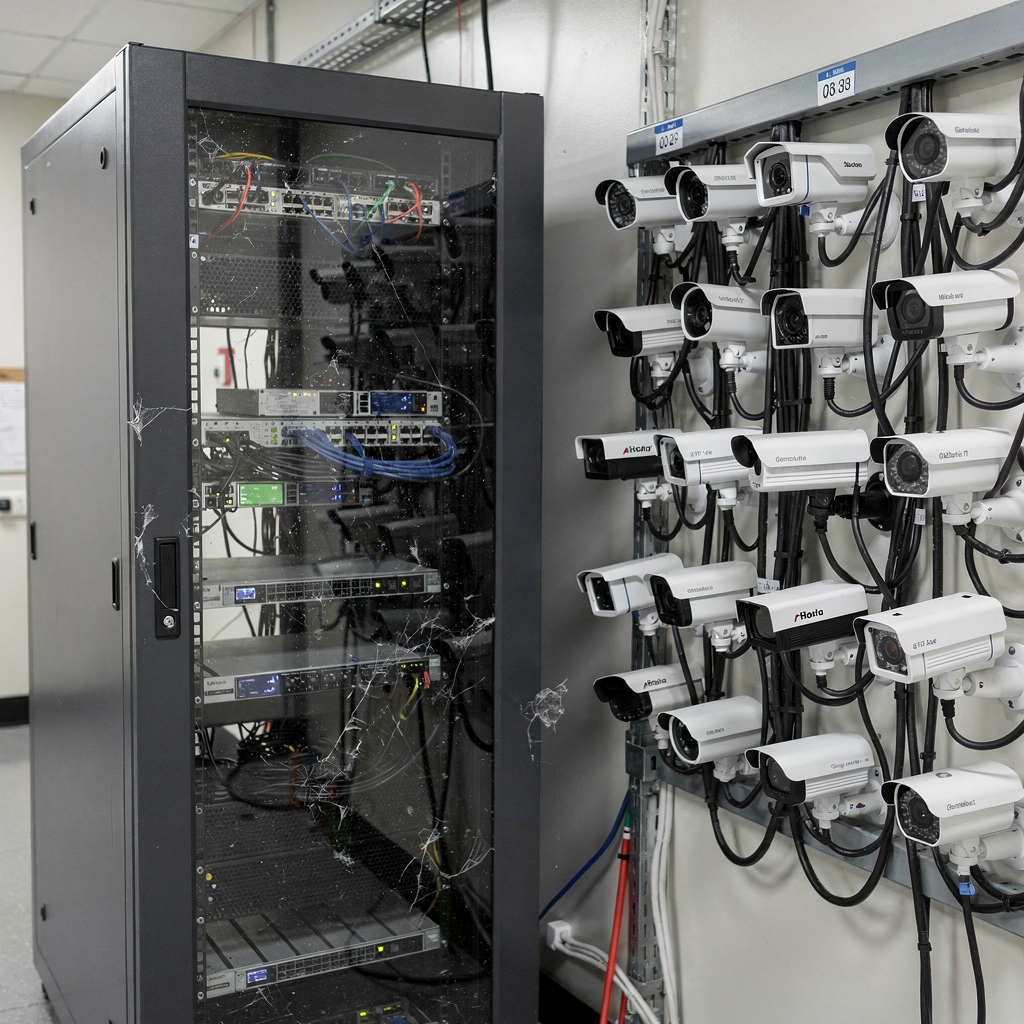
Best practices include redundancy, segmented networks for camera traffic, and enterprise-grade security on VMS endpoints. Video infrastructure must include secure provisioning and certificate management. To support forensic workflows, systems should index people and vehicles as structured metadata so teams can query events quickly. If you need examples of perimeter and intrusion detection setups look at our perimeter breach and intrusion solutions: intrusion detection in airports.
For high-availability, distribute storage and use multiple recorders to avoid single points of failure. Use scalable architectures and verify that your NVR hardware supports the desired retention. In designs that must comply with strict data rules, avoid moving video to public clouds and prefer on-premise video options. This reduces transfer risk and supports compliance while keeping operational costs predictable.
AI vision within minutes?
With our no-code platform you can just focus on your data, we’ll do the rest
Automating access control and access control systems in a unified security system
Video analytics and access control unite to improve secure identification at doors and gates. When a person presents a credential, the system verifies identity with camera evidence and facial recognition, and it logs the event for review. This combined approach reduces tailgating and unauthorized entry while speeding throughput at secure checkpoints.
Access control solutions now extend beyond card readers. They include biometric checks, video verification, and integrations with visitor management systems. By pairing access control systems with analytics, teams can automate entry checks and record license plates at vehicle gates. For airports, that pairing helps operators verify badge use and detect suspicious activity at restricted zones. Learn more about unauthorized access detection use cases here: unauthorized access detection in airports.
Automation can also streamline audit trails. When a rule flags a mismatch between badge use and a registered identity, the system creates a security event and attaches video evidence. These events form a searchable incident record, and they support compliance reviews. The system can also automate notifications to first responders when critical events occur, and it can pre-fill incident forms to speed reporting.
In practical terms, facial recognition and license plate logging both reduce manual checks. These features feed into workflows that recommend actions or that escalate to human review. That way the security team receives right information with each alert, and they can respond to incidents with better context.
On-premise deployment: acc™ on-premise by motorola solutions
On-premise deployments remain popular for organizations that need tight data control. An on-premise install hosts acc™ components inside the customer perimeter, and it runs models locally to avoid cloud transit. This approach supports EU-style data controls and reduces exposure risk.
Hardware requirements include GPU-capable servers for real-time analytics and recorders sized for retention needs. The architecture supports both edge-inference appliances and centralized servers. When sites require hybrid setups, Avigilon Cloud Services can augment local systems for remote viewing, but many customers choose on-premise video to limit data movement and to keep full ownership of footage.
Cybersecurity is critical. Hardened networks, role-based access, and encrypted storage defend footage and metadata. Regular updates and monitoring reduce the attack surface. Use enterprise-grade security practices and audit logs so every access to footage is recorded and reviewed. Visionplatform.ai’s VP Agent Suite can operate fully on-prem and help orchestrate verified responses while keeping data in-scope.
Support and upgrades typically come from certified partners. In large installations, Motorola Solutions’ professional services can assist with installation and lifecycle updates. For sensitive deployments, configure redundancy and scheduled backups. Finally, train operators on incident workflows so they can use actionable intelligence effectively and increase efficiency during critical events.
FAQ
What are AI agents in Avigilon Control Center?
AI agents are software components that analyze video streams and metadata to identify suspicious activity. They automate routine detection and provide recommended next steps so operators can act faster.
How accurate are Avigilon’s AI detections?
Avigilon reports high accuracy, with detection accuracy rates cited above 90% for common behaviors and objects (source). Accuracy depends on camera placement, scene complexity, and model tuning.
Can Avigilon systems run on-premise only?
Yes. ACC supports on-premise deployments so video and models stay inside a customer’s environment. This setup supports stricter data governance and faster local processing.
How do AI agents reduce operator workload?
Agents filter and prioritize events, and they attach contextual evidence so operators need to review fewer clips. They also recommend actions and can pre-fill reports to save time.
Are there risks with AI-powered systems?
Like any networked system, AI-powered deployments must be hardened against data ingestion vulnerabilities and unauthorized access. Follow vendor guidance and patch management to reduce risk (technical issues reference).
What is appearance search and how does it help?
Appearance search indexes visual features so users can find a person or vehicle across multiple cameras. It speeds investigations by reducing manual timeline scanning and by locating subjects quickly.
How does access control integrate with video?
Access control events can be correlated with camera footage to confirm identity and to detect tailgating. This combination creates audit trails and improves response to suspicious activity.
Can Avigilon analytics detect license plates?
Yes. Systems can capture license plates for gates and vehicle checkpoints, and they can match plates against watchlists for rapid identification.
What are best practices for large CCTV deployments?
Plan bandwidth and storage for peak conditions, use redundant recorders, and segment camera traffic on the network. Index events and metadata to speed forensic search and to reduce retention costs.
How can visionplatform.ai add value to an Avigilon deployment?
visionplatform.ai adds a reasoning layer that turns detections into human-friendly descriptions and decision support. That extra layer reduces false alarms and guides operators to the right information so they can respond faster and more consistently.