ai: Transforming Video Content into Semantic Data
AI systems now turn raw frames into searchable meaning. For decades, traditional keyword search and frame-based indexes limited retrieval to tags and timestamps. Today, semantic analysis links objects, actions, and context so users can query high-level concepts like “person riding a bicycle.” Also, systems apply object-level labels and action descriptors to create rich annotations that map intent to timecodes. For example, a pipeline may first run an object module, then an action recognizer, and finally a contextual filter. This two-stage flow uses deep learning and transformer blocks to combine per-frame features with temporal context. Furthermore, convolutional layers extract spatial cues while transformer attention pools temporal signals for sequence reasoning. The result is a structured index that supports natural language queries and few-shot learning for new event classes. In practice, such methods have raised retrieval precision by 15–30% over keyword-only baselines on benchmark studies. Also, industry systems achieve object recognition accuracy above 90% and event recognition accuracy above 85% in recent evaluations. These figures help justify investment in richer annotations for long-term archives. At visionplatform.ai we turn existing cameras and VMS into AI-assisted operations. Our VP Agent Search makes recorded archives searchable with human language queries such as “loitering by the gate.” To learn about forensic search in operational settings, see our forensic search resource forensic search in airports. Also, annotations produced by AI enable downstream tasks like incident summarization and automated tagging for compliance. In addition, the pipeline supports adaptive model updates, quantization for edge inference, and modular model swapping without reindexing entire archives. Finally, this shift from pixel-matching to concept-based indexing creates more accurate and faster retrieval for real-world surveillance and media workflows.
digital twin: Enhancing Real-time Insights and Data Fusion
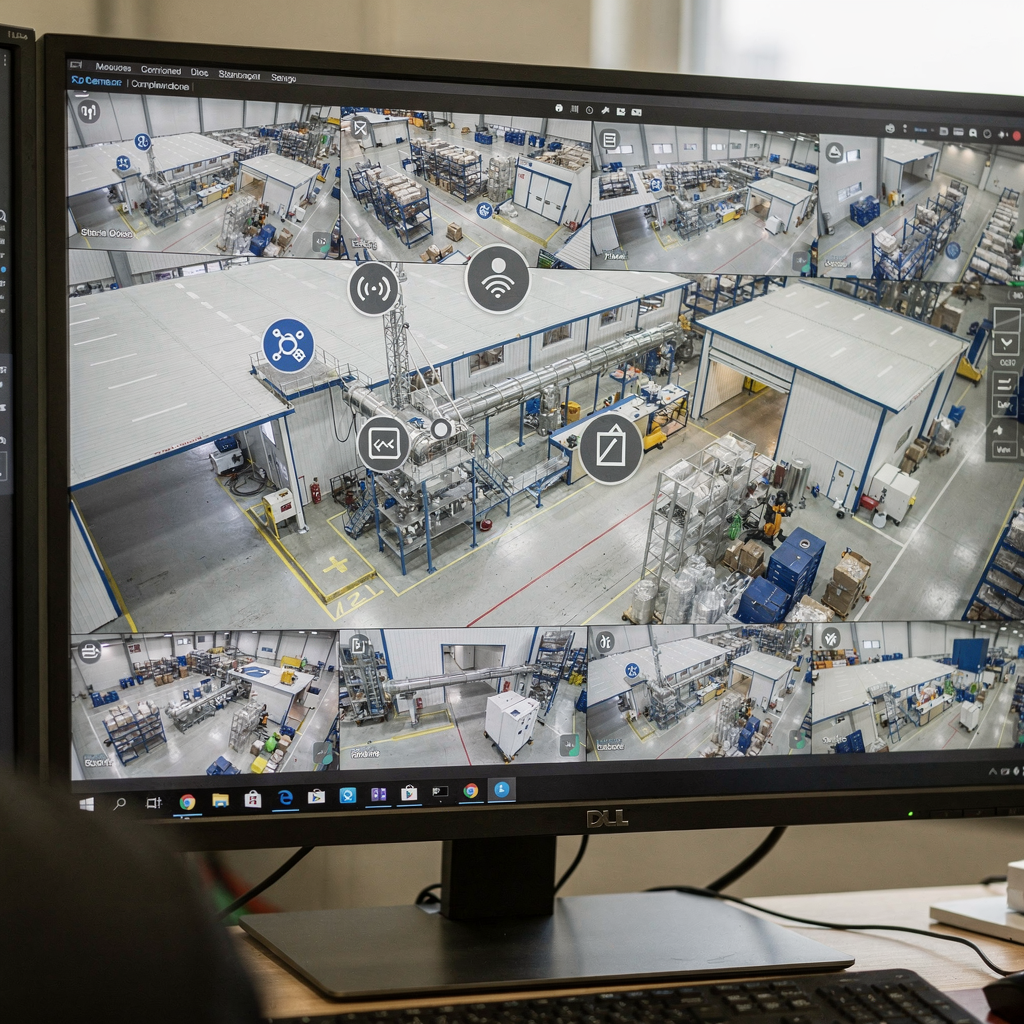
The digital twin approach pairs live camera feeds with a virtual model of the environment. First, a virtual layout is fed with positional data and metadata. Then, live streams synchronize with the map to provide context-aware alerts. Also, this setup fuses camera views with additional sensor inputs so that analysis is grounded in location and rules. For example, a camera and a door sensor together confirm an unauthorized access event. This fusion of sources yields richer scene interpretation and fewer false positives. Digital twin models can represent assets, zones, and rules. They support adaptive zones that change by shift, by task, or by event. Bosch has explored digital twin ideas in connected systems, and vision teams leverage such models for safer sites. A digital twin helps scale the reasoning layer from single streams to full-site workflows. In operational control rooms, the twin provides a single interface to monitor and query distributed feeds. Also, it enables predictive overlays, where likely next positions of moving objects are estimated. For multisensor fusion, combining audio, thermal, and depth sources increases robustness under poor lighting. Industry benchmarks show that multisensor fusion improves retrieval precision while supporting real-time indexing at 20–30 fps on optimized hardware. At the same time, an on-prem platform avoids exposing video to third-party clouds. Visionplatform.ai keeps models, video, and reasoning inside the customer environment to meet EU AI Act constraints and to preserve data sovereignty. The digital twin concept also reduces operator workload by presenting verified, contextual alarms instead of raw flags. Consequently, teams can act faster and with more confidence. Finally, the twin supports integration with business systems so alerts can trigger workflows across an enterprise ecosystem.
AI vision within minutes?
With our no-code platform you can just focus on your data, we’ll do the rest
bosch: Pioneering Semantic Video Search Solutions
Bosch has long invested in AI and perception research. The bosch group and bosch global teams invest in research fields that span perception, inference, and system reliability. Also, bosch research publications highlight how object and event pipelines improve surveillance and industrial automation. Bosch’s labs combine deep learning models with engineering-grade platforms to ship reliable components. In interviews, experts emphasize the move from pixel matching to concept reasoning. For instance, a lead researcher described how semantic understanding changes operations from reactive to proactive. Also, partnerships with academic groups and industry consortia accelerate progress and set benchmarks. Public studies indicate that semantic methods outperform keyword-driven approaches in retrieval precision and speed on shared datasets. Bosch’s patent portfolio covers architectures for multimodal fusion, modular model updates, and optimized inference on embedded hardware. Meanwhile, open collaborations enable cross-pollination with startups and platform vendors. Bosch’s approach aims to integrate perception with automation and the broader products and services landscape for transportation and facilities. In operational terms, semantic annotations can be shared as structured records in a searchable database. Also, Bosch has explored use cases that include smart surveillance, manufacturing process monitoring, and fleet-level incident analysis. To illustrate real-world impact, Bosch has applied semantic pipelines to smart parking, pedestrian safety projects, and predictive maintenance. The company focuses on creating modular stacks that support compression, quantization, and hardware acceleration. At the same time, the goal is to keep inference fast and scalable for on-prem deployments. Overall, Bosch balances research rigor with production engineering to move video-based insights from lab demos into persistent operational value. For readers curious about related people analytics, see our people detection page people detection in airports.
artificial intelligence: Core Technologies in Object and Event Recognition
Artificial intelligence blends neural networks with task-specific heuristics to recognize objects and events. Convolutional neural layers remain a staple for spatial feature extraction. Also, transformer modules now model long-range temporal dependencies across frames. Together they enable pipelines that detect objects, label actions, and summarize sequences. For instance, a two-stage detector first proposes regions and then classifies actions within a temporal window. This two-stage pattern balances speed with accuracy. Deep learning remains central, but hybrid approaches combine rule-based filters to enforce safety constraints. Event recognition pipelines ingest per-frame features, apply temporal aggregation, and then run an inference module to decide if an alarm is warranted. Benchmarks show object accuracies above 90% and event accuracies above 85% in recent papers. Also, careful model quantization and pruning allow deployment to edge GPUs while keeping response times low. Many systems use adaptive thresholds and few-shot learning to add classes with minimal data. In addition, generative pretraining for vision language models helps with natural language search and explanation. Computer vision teams design evaluation suites to measure precision, recall, and latency. For example, precision gains from semantic indexing compared to keyword-only systems are often in the 15–30% range across datasets. In production, an engineer tunes inference to balance throughput and energy. Also, transformer-based encoders can run on accelerators to support near real-time response. Finally, the pipeline must integrate with VMS and control-room interfaces. This restores context for operators so that alarms are not just signals but explained situations. For additional details on thermal and people-focused sensors, explore our thermal people detection resource thermal people detection in airports.
AI vision within minutes?
With our no-code platform you can just focus on your data, we’ll do the rest
automotive: Applications in Driver Assistance and Autonomous Driving
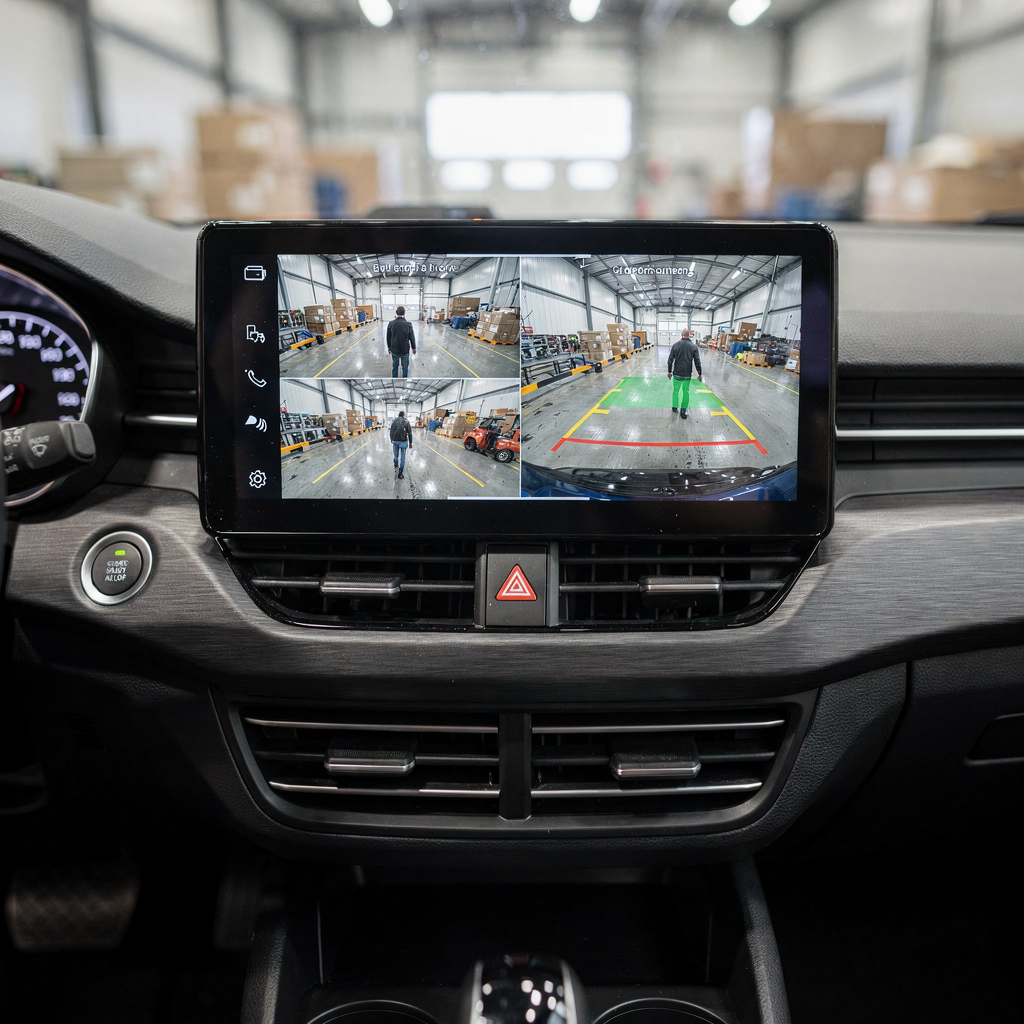
Semantic search and scene understanding directly improve driver assistance and automated driving features. AI models label pedestrians, cyclists, and traffic actors. Also, semantic context distinguishes an intentional turn from a sudden evasive maneuver. This reduces false positives and supports smoother guidance. For example, driver assistance systems can query past clips to confirm a near-miss pattern. In parking use cases, semantic indexes accelerate retrieval of incidents like curb contacts or parking-lot collisions. Bosch’s sensor suites combine cameras, radar, and lidar to cross-validate observations and to provide redundancy for safety-critical functions. Also, automated driving stacks rely on semantic maps and labels to plan safe actions. The integration of semantic annotations into the automated driving pipeline supports better situational awareness and more reliable decision making. Vision models trained for road scenes benefit from few-shot learning to adapt to new environments. In turn, this reduces the need for massive labeled datasets. The automotive industry increasingly treats video-based telemetry as part of the vehicle’s digital twin and as a source for fleet learning. Also, data compression and on-device quantization let vehicles retain privacy while sharing anonymized insights for continuous improvement. Real-world performance targets include low-latency inference and high recall for critical classes. For practical airport vehicle analytics and classification, see our vehicle detection and classification resource vehicle detection classification in airports. Finally, integrating semantic search into maintenance workflows enables better root-cause analysis and faster repairs across a vehicle fleet.
scalable modeling: Building Robust and High-performance Search Architectures
Scalable modeling for video search combines distributed processing, modular services, and hardware acceleration. First, an end-to-end design pipelines capture, preprocess, index, and serve queries. Also, sharded databases store annotations, thumbnails, and compact embeddings for fast retrieval. Edge nodes run quantized inference for initial filtering, while centralized servers perform heavier reasoning and long-term aggregation. This hybrid cloud-edge strategy reduces bandwidth and preserves privacy. For large deployments, batching and asynchronous jobs keep indexing rates at 20–30 fps per optimized node. Also, retrieval architectures use approximate nearest neighbor search over embeddings to serve queries in milliseconds. Scalable systems support model swapping, incremental reindexing, and adaptive thresholds. In addition, adaptive compression of image data reduces storage while preserving search quality. Architects choose transformer or neural encoders depending on latency budgets and task complexity. Robust pipelines include monitoring, A/B testing, and rollback mechanisms for model updates. This ensures reliability and helps maintain precision over time. Moreover, scalable designs often expose APIs and interfaces so third-party automation can trigger workflows. For instance, an event can push an entry into an incident management database and also call external BI tools. Collaborative ecosystems form when vendors support common integration patterns and open connectors. visionplatform.ai focuses on a modular VP Agent Suite that keeps processing on-prem and offers tight VMS integration. Also, the suite supports agent-based reasoning, so alarms are explained and can drive actions. Cost efficiency improves when inference is scheduled, models are quantized, and hot-indexing is limited to relevant clips. Finally, measurable retrieval precision gains and lower operator time per incident justify investments in scalable stacks for long-term operations.
FAQ
What is semantic video search?
Semantic video search indexes video by meaning rather than by raw frames or tags. It uses AI to label objects, actions, and context so users can query high-level situations.
How does a digital twin help video analytics?
A digital twin maps live feeds to a virtual model of the environment. This mapping enables fused context, reduced false alarms, and more actionable alerts for operators.
What core AI models power object and event recognition?
Convolutional and transformer-based models form the backbone of modern object and event recognition. These architectures balance spatial encoding with temporal reasoning for sequence tasks.
Can semantic search run on edge hardware?
Yes. Through model quantization and pruning, inference can run on edge GPUs or specialized accelerators to support real-time indexing and low-latency queries.
How does Bosch contribute to semantic video technology?
Bosch invests in research and development across perception and systems engineering. Their work spans prototypes, patents, and collaborations that move semantic methods into production.
What are common applications in automotive?
Semantic search aids pedestrian detection, incident retrieval, and automated parking analysis. It also supports fleet-level investigations and maintenance workflows.
How does fusion improve search accuracy?
Fusion combines camera inputs with sensors and metadata to confirm events and reduce false positives. This multimodal approach yields more reliable alerts and higher precision.
Is on-prem deployment possible for semantic search?
Yes. On-prem deployment keeps video and models inside customer environments, which supports compliance and reduces cloud exposure risks.
How does visionplatform.ai enhance traditional surveillance?
visionplatform.ai converts detections into context and reasoning, enabling natural language search and AI agents that help operators verify and act. This reduces alarm fatigue and speeds incident handling.
What benchmarks demonstrate semantic search benefits?
Public benchmarks show object accuracy above 90% and event accuracy above 85%, with retrieval precision gains of 15–30% over keyword-only systems according to recent studies.