ai and computer vision for contamination detection with artificial intelligence
AI and computer vision change how teams handle contamination on the line. First, manual inspection relied on human eyes, shift schedules, and spot checks. Workers scanned products slowly, and fatigue often led to missed defects. In contrast, AI systems run continuous inspections and flag anomalies instantly. For example a Visionplatform.ai deployment can turn existing CCTV into a practical sensor and support people detection in airports to show how cameras act as operational sensors for other environments people detection in airports. This comparison shows clear benefits of automated checks over manual sampling.
Computer vision inspects pixels, contours, and patterns to detect foreign material or spoilage. Convolutional techniques extract edges, and an applied convolutional neural network or artificial neural network identifies shapes that match contaminant classes. These networks use model training and a learning model tuned for your site. As a result, AI detects small foreign objects faster than manual methods. Studies report large gains: automated inspection can reduce contamination-related errors by up to 70%, and throughput often improves significantly 30–40%.
Real-time feedback keeps a production line safe and efficient. When a camera flags a contaminant, the system generates an alert for operators and triggers control measures. Visionplatform.ai streams events so alarms feed operations, not just security, which helps a quality control team act immediately. In settings like food production, this early detection lowers product recalls and protects product quality. Also, vision systems and machine vision enable continuous checks without destructive sampling, which supports higher quality assurance at scale.
Finally, combining AI with simple analytics and model performance monitoring gives teams the tools to tune systems over time. The result is a practical computer vision solution that supports inspection systems across industries. For readers who want a view into camera-based PPE workflows, see our page on PPE detection PPE detection in airports, which shows how tailored models improve accuracy in situ.
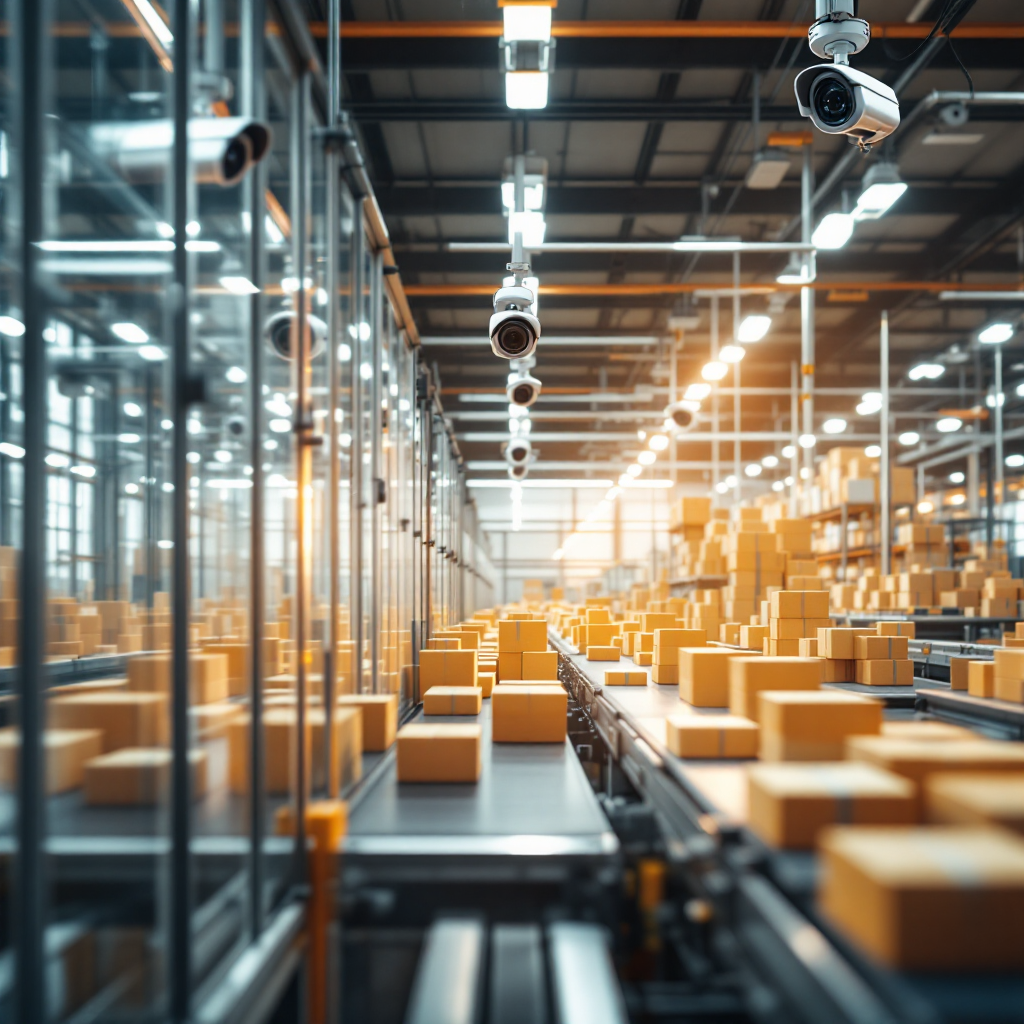
Automate defect detection and contamination with vision ai
Automate inspection to reduce error and increase consistency. Human inspectors work hard, yet mistakes happen. Vision AI runs the same checks every minute and maintains consistent thresholds. It removes subjective judgment and supports a defect detection solution that logs every anomaly. In practice, that means fewer missed contaminants and fewer surprise recalls. For instance, pilots in food production using AI-powered systems report fewer product recalls, and Deloitte notes pilots with substantial recall reductions real-time detection of food defects and contamination using computer vision.
Key algorithms include convolutional networks and deep residual networks. Convolutional layers learn edges and textures, while deep residual designs speed up learning in deep neural networks. These approaches form deep learning and machine strategies, and they support defect detection and classification tasks. At scale, a deep learning model processes thousands of points per hour. The network model, when tuned, improves detection accuracy and reduces false positives.
Studies confirm strong outcomes. Automated inspection reduces contamination errors by up to 70% in head-to-head comparisons with manual methods automated computer vision inspection. A modern defect detection system also shortens downtime and boosts throughput. Deployments that combine edge processing with local model training keep data on-prem and support compliance. Visionplatform.ai focuses on this practical path by letting customers pick, retrain, or build new models on their own footage, avoiding vendor lock-in and improving site-specific accuracy.
To build a robust solution, pick an ai model with clear metrics and then run model training with representative samples. Inspectors should feed images that include common contaminant scenarios. This process helps a model was trained on realistic faults and therefore improves real-world detection. Use a defect detection system as part of broader quality control, and integrate alerts into dashboards so operators see issues and act without delay.
AI vision within minutes?
With our no-code platform you can just focus on your data, we’ll do the rest
Real-time object detection for quality control
Real-time processing matters on high-speed production lines. Machines move fast, and inspections must keep pace. Object detection models must process frames quickly to avoid bottlenecks. Models like YOLO and Faster R-CNN form the backbone of modern quality control workflows. YOLO prioritizes speed, and Faster R-CNN emphasizes accuracy. Choosing between them depends on latency targets and the need for fine-grained bounding boxes.
Real-time solutions use optimized pipelines that run on edge GPUs or servers. For example, Visionplatform.ai supports deployments on NVIDIA Jetson or GPU servers, which enables real-time inference and keeps data in your environment. This setup provides the responsiveness required for automated reject decisions and immediate operator alerts. Studies show real-time monitoring can increase throughput by roughly 30–40% while catching contaminants earlier How Computer Vision in Manufacturing Is Reshaping Production.
Balancing accuracy and speed requires careful selection of an ai model and tuning for domain-specific challenges. Use a lightweight network model for simple detection needs and deeper models for complex classification or small-part detection. Convolutional architectures often serve as feature extractors in these pipelines. Then leverage model performance metrics to iterate. Include metrics such as precision, recall, and latency when assessing models.
Finally, integrate detection into broader production processes and management systems. Stream structured events to SCADA or BI, and let operations act. Visionplatform.ai recommends streaming events via MQTT so that camera data powers KPIs and operational dashboards. This pattern turns video into a sensor and supports intelligent and automated solutions across plants. For teams focused on operational anomalies, see our process anomaly detection page for context process anomaly detection in airports.
Use case: waste management and environmental monitoring
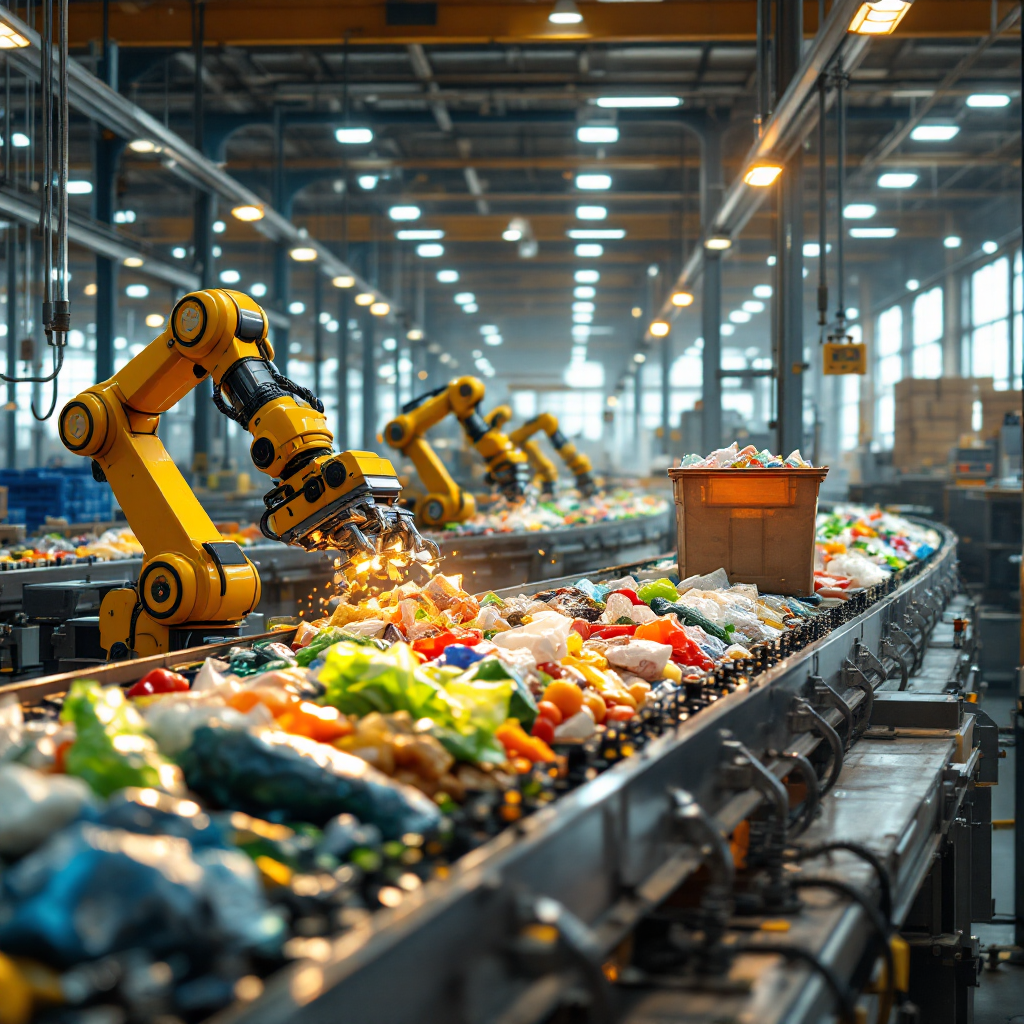
One practical use case is automated waste sorting. Waste streams often contain contaminants that harm recycling value. Vision AI classifies materials and identifies hazardous items. A waste management solution can remove contaminants automatically, reduce waste generation, and protect downstream processes. Using a vision system, conveyors route items to different chutes in real time, which improves material recovery and reduces costs.
Environmental monitoring also benefits. Cameras and sensors detect spills, oil sheens, or suspicious discharge points. Coastal monitoring and pollution tracking use multispectral cameras and simple RGB feeds to spot environmental pollution early. For instance, an integrated inspection approach enables coastal monitoring of shorelines for debris and oil. This early detection reduces environmental damage and supports fast response.
Continuous, non-invasive inspection matters in both examples. Vision systems monitor without interrupting flow. They avoid destructive sampling and provide richer contextual information than spot checks. When an AI-powered system flags a contaminant, it can trigger containment steps and log events for audits. This continuous log supports compliance and helps environmental monitoring efforts meet regulatory needs.
Waste management teams often pair vision with analytics to measure improvements. The waste management solution reports on contamination rates and helps adjust sorting policies. As a use case, many facilities achieve better downstream quality of products and lower safety hazards when intelligent and automated solutions guide sorters. Integrating vision solutions into management systems and control measures creates a loop that improves both operations and environmental outcomes.
AI vision within minutes?
With our no-code platform you can just focus on your data, we’ll do the rest
ai technology and ai model selection for effective detection
Choosing the right AI technology depends on accuracy, latency, and robustness. Teams must evaluate ai models for the task at hand. Criteria include detection accuracy, false positive rates, and compute cost. For fast production lines, low latency matters. For contamination that can be tiny or subtle, focus on high-resolution inputs and stronger models.
Current ai technology trends include edge inference, federated training, and hybrid pipelines that mix cloud and on-prem processing. Applied AI that keeps data local supports GDPR and the EU AI Act. Visionplatform.ai emphasizes on-prem and edge-first deployments to help customers own their data and comply with regulation. When selecting models, consider model performance and the cost of retraining. A learning model that is easy to update reduces downtime and improves long-term reliability.
Data quality matters. Use the METRIC framework to assess visual data and guarantee trustworthy outputs METRIC-framework for assessing data quality. Good datasets reduce bias and make detection technology more reliable. Also attend to adversarial risks and security. Researchers warn about attacks that can fool vision pipelines Attacking Artificial Intelligence: AI’s Security Vulnerability. Build compliance programs and monitoring to protect models.
When you pick a model, document its training history and evaluate a deep learning model on both lab and field tests. Include a defect detection system in the test plan and validate performance on representative contaminant types. Combine classifiers for detection and classification where needed. For teams exploring edge options, consider the trade-offs between a convolutional neural network that favors accuracy and lighter ai models that favor speed. Finally, include explainable artificial intelligence methods so operators can understand why a model flagged a contaminant and trust the system.
Future research directions and how ai detects contamination
Future directions include multispectral imaging and sensor fusion to improve sensitivity. Combining cameras with chemical sensors or spectral bands helps identify contaminants invisible to RGB cameras. Research on sensor fusion and deep neural networks will expand detection capabilities. The application of deep learning to multispectral inputs promises earlier and more reliable alerts.
Explainable approaches will also grow. Explainable artificial intelligence helps operators trust AI when it flags a contaminant. Transparent models provide visual evidence and reasoning that match operator expectations. This trust matters in regulated industries such as healthcare and food production, where safety issues carry real risk.
Other future research topics include automated model retraining, continual learning, and resilient architectures that resist adversarial attacks. Researchers will explore how to train a model on heterogeneous site data and then validate that the model was trained correctly. As systems mature, an ai detects more types of contaminants across more contexts. The path moves toward fully autonomous quality control systems that integrate with management systems and operations.
Finally, future applications will merge computer vision solution design with operational workflows so that cameras act like sensors and feed analytics into business systems. This applied ai perspective reduces manual review and improves the quality of products. Teams that invest in model training, robust monitoring, and explainability will be best placed to capture the benefits of AI and the advancements in AI needed for safe, scalable contamination detection.
FAQ
What is AI contamination detection?
AI contamination detection uses algorithms and cameras to identify unwanted material or defects. It automates inspection so teams can detect contaminants faster and more consistently than manual checks.
How does computer vision identify contaminants?
Computer vision analyzes image patterns, textures, and shapes using trained models. Convolutional layers extract features, and classification or bounding-box models mark likely contaminants for operator review.
Can computer vision work in real-time on high-speed lines?
Yes, with optimized models and edge hardware, computer vision supports real-time inference. Systems like YOLO prioritize speed while deployments on GPUs maintain low latency for quick alerts.
What industries benefit most from this technology?
Food production, manufacturing, healthcare, and waste management see large gains. These sectors need continuous checks to protect public safety and product quality.
How does AI help reduce product recalls?
AI improves early detection and flags contaminated items before they ship. This reduces the likelihood of recalls and helps maintain product quality across batches.
Are there security risks with vision AI?
Yes, adversarial attacks can target vision models, and data handling raises compliance questions. Organizations should apply security controls and monitored retraining to mitigate risks.
What is the METRIC framework and why is it important?
The METRIC framework guides assessment of data quality for trustworthy AI. It helps teams ensure training data matches real-world conditions so models perform reliably.
Can existing CCTV be used for contamination detection?
Often, yes. Platforms that convert CCTV into operational sensors let teams reuse footage for model training and real-time alerts. This approach reduces deployment cost and speeds integration.
How does explainable AI support contamination detection?
Explainable AI shows why a model flagged an item by highlighting image regions or giving confidence scores. This transparency helps operators validate detections and trust automated systems.
What future research will improve contamination detection?
Future research will focus on sensor fusion, multispectral imaging, resilient models, and continual learning. These advances will expand detection accuracy and support new applications such as coastal monitoring and environmental pollution tracking.