Industrial Safety: Trip and Fall Hazards in Wet Zones
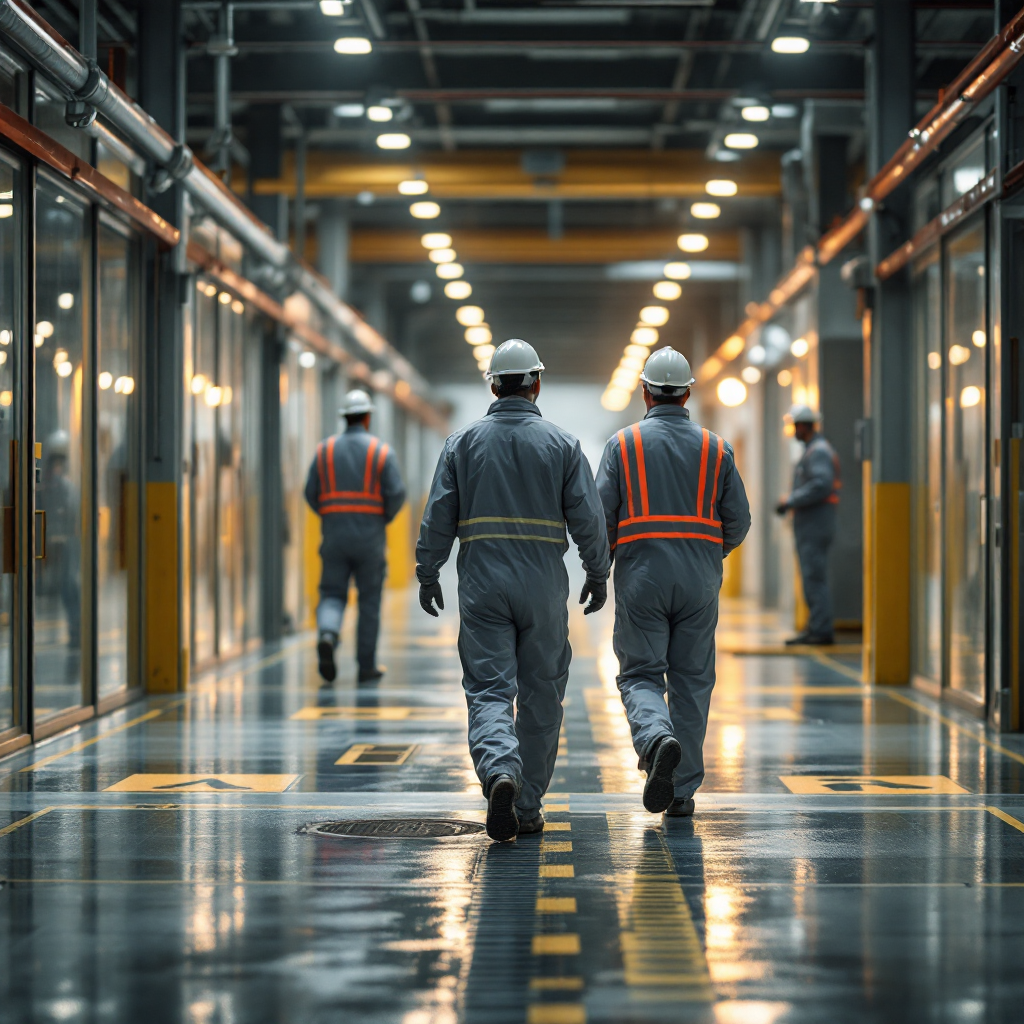
Wet zones are work areas where moisture, water, or condensation is common, and where wet floors and reduced traction create elevated risk for trips and falls. In industrial environments such as food processing, docks, and chemical plants, wet floors and slick surfaces increase the chance that incidents occur, and those incidents typically occur due to reduced grip and poor visibility. Workers slip and then fall on the same level, and those falls can cause severe injuries and days away from work. For perspective, falls are a leading contributor to workplace injuries and to significant financial burdens for employers; studies of falls and related injury patterns show large numbers of emergency cases each year in other sectors, and those statistics underline why proactive safety matters for high-risk zones like loading docks and wash-down areas (survey of fall detection research).
Common hazards in wet zones include surface materials that stay slick when wet, pooling at drains or under equipment, and sudden water splashes during cleaning and operations. Poor lighting makes it hard to see low-contrast spills, and reflections from wet surfaces add visual irregularity that can hide hazards. Slip and trip hazards also arise from uneven walkways and temporary obstructions that collect water. When walkways are narrow or cluttered, a single misstep can trigger a fall incident that results in severe injuries, long absence, and legal costs.
Risk assessments should therefore focus on specific potential hazards and frequency of exposure, and on how often incidents occur in each work area. For instance, falls on slippery floors often happen where workers move heavy loads, and where operational pace is high and staff must multitask. An approach to preventing falls must combine physical safety measures, training, and technology. Finally, a safety culture that encourages reporting and timely inspection helps reduce the incidence of fall accidents, and it makes audits and corrective actions more effective.
Artificial Intelligence for Slip and Fall Detection AI
AI is reshaping how companies monitor wet zones and how they prevent accidents. Advanced AI models trained on movement patterns can automatically detect irregularity and can flag a fall incident. Machine learning and neural networks classify normal motion versus a fall, and fall detection AI reduces false positives when compared to simple threshold methods. Wearables feed accelerometer and gyroscope data into models, and cameras combined with computer vision provide context so systems can detect falls and determine whether a worker needs assistance. This hybrid approach helps incident detection and supports detection and response workflows.
Wearables and IoT integration give continuous monitoring. Wearables provide posture data, and edge gateways stream alerts and time-stamped events. Visionplatform.ai uses AI video analytics that convert existing CCTV into a system that detects people and movement patterns, and that streams structured events to your VMS and operations systems. That approach helps integrate with existing security and with operational dashboards, and it preserves on-prem data for GDPR and EU AI Act readiness. In practice, a system that detects a slip can trigger an immediate alert to a control room, and it can also automatically detect when a worker fails to get up so first aid is dispatched.
Compared to legacy threshold-based tools, AI-powered systems learn from context, and they adapt to site-specific routines. This lowers false positives and improves response time. For example, modern ML models can reduce response time to a fall by up to 50% in field tests, and they can better separate a controlled sit-down from a hazardous fall (field study on AI fall systems). For employers this delivers reduced legal costs and fewer days away from work, and it helps ensure that safety programs drive measurable improvements.
AI vision within minutes?
With our no-code platform you can just focus on your data, we’ll do the rest
Vision AI and Computer Vision Camera Systems for Real-time Monitoring
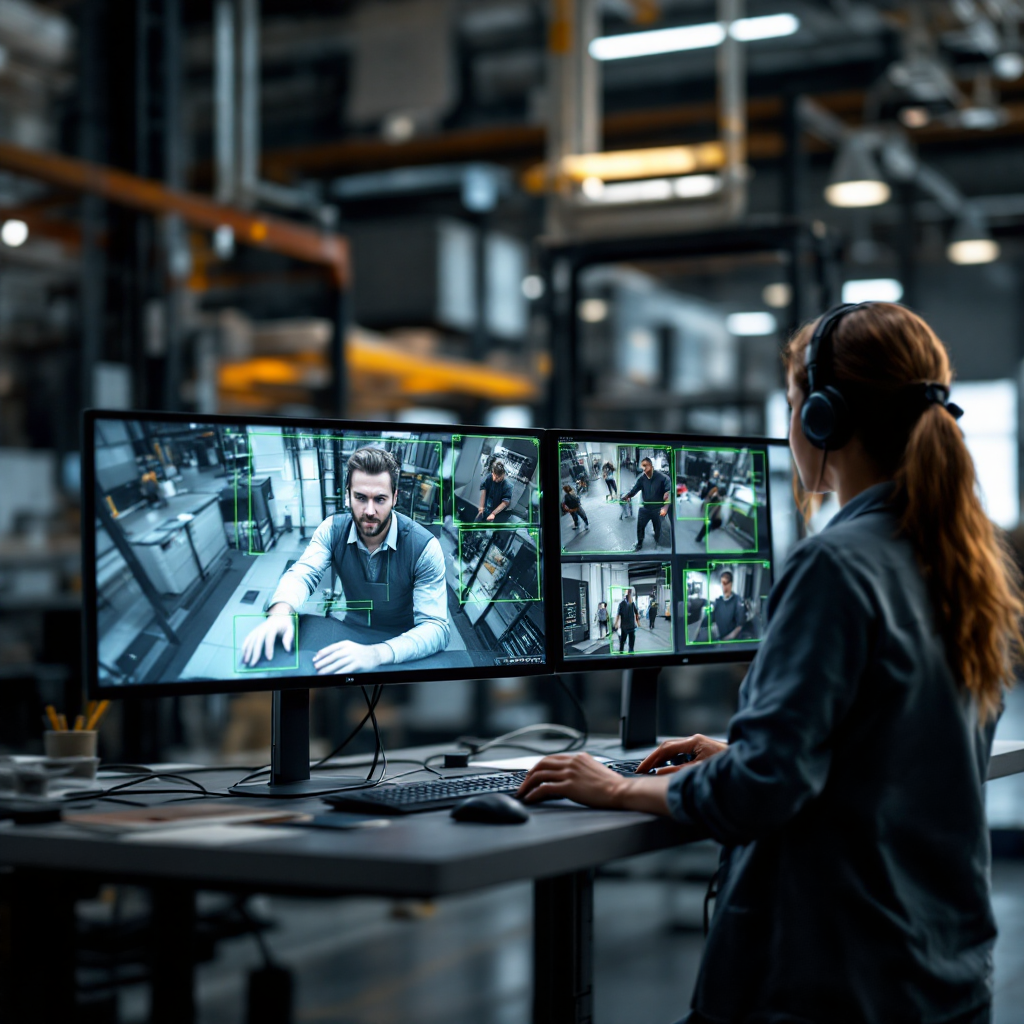
Vision AI and computer vision power video-based monitoring that can detect slips, trips and falls in real-time. Camera systems positioned strategically can provide continuous coverage of high-risk zones like loading docks, stairwells, and cleaning stations. Best practices for camera placement include covering primary walkways, minimizing backlight and low-light sources, and positioning cameras at angles that capture full body posture rather than partial silhouettes. This reduces ambiguity and helps algorithms distinguish normal movement from a fall incident.
Algorithms use spatio-temporal analysis to separate an accidental collapse from purposeful low actions. They track movement patterns, they analyze posture changes, and then they apply rules and learned models to decide if a fall occurred. The vision system can then produce instantaneous alerts and time-stamped video footage for review. Camera systems should be paired with NVR or edge recording to store evidence for safety audits and for post-incident improvement.
Environmental interference in wet zones is a real challenge. Water splashes cause reflections and specular highlights, and low-light conditions make detection harder. Robust models account for reflective noise and for temporary occlusions during cleaning. They can also trigger an alarm only when multiple cues align: sudden vertical displacement, lack of recovery motion, and supporting sensor data from wearables. This multi-modal strategy reduces false positives, and it makes incident detection more reliable in messy conditions (technical insights into vision-based fall detection). For operators, the value is clear: video-based systems provide context, they show whether a slip was caused by a spill or by a misplaced object, and they support effective fall prevention and quick corrective actions.
Detection and Response with NVR and Alert Mechanisms
Integrating NVR with AI analytics supports continuous recording and event-driven playback, and it ensures that incident detection ties directly into response processes. When a system detects a slip or fall, it can trigger multiple instantaneous alerts across multiple channels. For example, an alarm can sound on-site, SMS can notify supervisors, and a control-room panel can highlight the camera feed. Those immediate alerts shorten response time and support a coordinated immediate response.
To maintain privacy while maximising worker protection, systems should process video on edge devices and keep data local by default. Visionplatform.ai, for instance, offers on-prem processing that helps companies retain control of video footage and that supports audit trails for compliance. Integration with VMS and with SCADA or BI via MQTT also lets teams use events beyond simple alarms, and it helps turn detections into operational actions that improve productivity and operational efficiency.
Designing a response workflow typically involves predefined contacts, first-aid steps, and escalation thresholds. Detection software should trigger a human review step for ambiguous events to reduce false positives and to prevent unnecessary dispatches. Where local regulations require it, systems can retain time-stamped clips for risk assessments and for safety program audits. This structured detection and response approach both mitigates liability and supports fall prevention policies that reduce the incidence of fall accidents. For transparency, log entries should include who was alerted, when they responded, and what actions were taken, so that audit and compliance checks are straightforward and defensible (latest research trends in fall detection).
AI vision within minutes?
With our no-code platform you can just focus on your data, we’ll do the rest
Safety Measures to Mitigate Fall Accidents and Reduce Liability
Technology by itself will not prevent every fall. Effective injury reduction combines physical safety measures, training, and clear safety protocols. Proactive steps include anti-slip floor treatments, slip-resistant footwear, prominent signage, improved drainage, and routine inspection during cleaning cycles. For wet environments, schedule-based inspections reduce the chance that a spill remains unnoticed, and an integrated AI-powered slip alert can signal that a floor needs immediate attention.
To reduce liability, companies should document safety programs, follow relevant standards such as HSE and ISO, and maintain records for audits. Compliance with local regulations and with health and safety guidance helps lower legal costs and defend against claims related to fall accidents. Investment in combined solutions also reduces significant financial burdens by lowering days away from work and by cutting claims for severe injuries.
Training strengthens worker awareness and safety culture, and training should include how to report hazards, how to move in wet zones, and how to respond when a colleague falls. A proactive safety program that combines engineering controls, administrative controls, and technology creates layered protection. When a system that detects a slip integrates with signage and with rapid cleanup protocols, it helps prevent accidents before they happen. In short, combining inspection, engineering, and AI-powered monitoring gives employers an approach to preventing trips and falls while helping to mitigate long-term costs and improve on-the-ground outcomes (advances in ML and IoT for fall prevention).
Implementing Slip and Fall Detection in Workplace Safety: Fall Cases and Compliance
Real deployments provide practical lessons. In one industrial case, a combined vision and wearable deployment reduced incident rates in loading docks by more than 30% within six months, and it cut response time in half thanks to instantaneous alerts sent to on-site teams. Such metrics support a business case: fewer incidents mean fewer days away from work, lower legal costs, and improved operational efficiency. Field trials also show that systems can reduce false positives as models are tuned to site-specific movement patterns, which improves trust and acceptance among staff (AI fine-tuning for fall activity recognition).
Key metrics to track during rollout include response time, number of fall incidents, fall cases that required medical attention, and overall reduction in trip and fall hazards. For compliance, keep time-stamped recordings, maintain an audit-ready event log, and align system settings with risk assessments. A system that detects falls on camera and correlates them with wearable data creates stronger evidence and supports both safety improvements and legal defence. Moreover, integrating incident detection with your existing VMS and operational stack helps teams act faster, and it allows data to feed into safety programs and to influence future risk assessments.
Looking forward, predictive analytics and adaptive models will further reduce slips and falls. By learning from near-miss events and by refining trigger thresholds, advanced AI can help predict likely sites of future incidents and recommend targeted interventions. Worker feedback loops will close the gap between technology and practice by letting operators flag false alarms and by enabling continuous improvement. For organisations that want to integrate with existing security, Visionplatform.ai offers connectors for common VMS platforms and supports on-prem training so that models reflect real work areas and local routines (example: slip, trip, fall detection use case). This integrated, audit-friendly approach helps mitigate liability, and it supports a proactive safety posture across the industrial landscape.
FAQ
How does AI improve slip and fall detection in wet zones?
AI analyses sensor and video data to recognise patterns that indicate a slip or a fall. It reduces false positives by correlating multiple signals and by learning site-specific movement patterns.
Can existing CCTV be used for fall detection?
Yes, existing cameras can be repurposed with AI video analytics to become an operational sensor network. Systems like Visionplatform.ai work with common VMS and RTSP streams to add incident detection without replacing hardware.
What is the role of wearables in monitoring wet floors?
Wearables capture acceleration and posture changes and they complement camera systems by providing direct motion data. Combining wearables with vision reduces ambiguity and speeds up the identification of a fall incident.
How are immediate alerts delivered after a fall?
Immediate alerts can be sent through multiple channels including on-site alarm, SMS, and control-room notifications. The alert workflow should be predefined so responders act quickly and consistently.
Do vision-based systems work in low-light and reflective conditions?
Modern models handle low-light and reflections by using algorithms trained on diverse data and by applying filters that ignore transient visual noise. However, good camera placement and lighting remain important to optimise performance.
What privacy steps should companies take when using video monitoring?
Process video on-premise when possible to retain control, anonymise feeds if required, and maintain auditable logs of access and events. Clear policies and staff communication support lawful and ethical use.
How do organisations measure the effectiveness of fall detection?
Track metrics such as response time, number of fall incidents, fall cases requiring medical attention, and days away from work. These indicators show whether investments in technology and training are reducing incidents.
Can AI systems predict where slips might happen next?
Yes, predictive analytics can flag high-risk zones by analysing past incidents and near-miss events, and by modelling movement patterns. This helps prioritise interventions to prevent accidents.
What compliance considerations apply to automated detection?
Keep time-stamped records, follow applicable HSE and ISO guidelines, and ensure processing aligns with GDPR and local data laws. Maintain audit trails for inspections and for legal defence.
How do I start a pilot for slip and fall detection in my facility?
Begin with a risk assessment of high-risk zone locations, then deploy cameras and optional wearables in a small area. Integrate with your VMS for event streaming, and tune models using local video to reduce false positives during the pilot.