detection with ai in traditional systems: Enhancing smoke detection
Traditional smoke detectors and ventilation alerts rely on simple thresholds and particulate sensors. For years, conventional smoke and heat detectors triggered a fire alarm when particulate concentration or temperature crossed a set value. However, traditional systems can struggle in environments where steam, fog, or dust frequently appears. As a result, they often cause false positives and interruptions to operations. Also, the cost of repeated evacuations and unnecessary shutdowns can be high for large facilities.
Detection with AI shifts this model. First, AI learns patterns across multiple inputs. Then, it separates signs of smoke from steam and fog by using texture, motion, and spectral cues. For example, a system trained on both visible smoke and steam can recognize smoke plumes and distinguish them from transient steam trails. This ability reduces false alarms and speeds correct response. In practice, AI smoke detection can reduce false alarm rates by up to 40% when compared to conventional smoke methods, according to comparative analyses that discuss particulate monitoring and control. Also, AI supports early detection of smoke by flagging subtle visual cues before particulate sensors trigger.
In settings like nuclear ventilation, precise recognition matters, because ventilation alerts must be reliable to protect complex infrastructure. A Defueled Safety Analysis Report describes how separate fire detection processes interact with ventilation systems in regulated facilities. Therefore, deploying AI alongside traditional smoke detectors improves situational awareness and operational continuity. Also, Visionplatform.ai uses existing CCTV and camera feeds to turn a camera into a sensor that feeds AI models on-prem, helping to keep data private and compliant while reducing false positives. For readers who want to explore how AI integrates with people and thermal systems, see our work on thermal people detection in airports and how vision data becomes operational.
sensor and camera integrations for ai-powered detection solution
Optical sensor arrays and cameras make up the eyes of an ai-powered detection solution. In practice, IP camera and CCTV networks provide live video feeds that AI can analyse for visible smoke, smoke plumes, or steam. Also, gas sensors add chemical specificity. Together, these inputs form a multimodal detection module that interprets the scene, notes signs of smoke, and flags anomalies to operators. Computer vision plays a central role as a method to recognize smoke trails and the difference between steam and smoke or flame.
Data fusion ties the pieces together. First, the camera system supplies colour, motion, and texture. Then, gas readings confirm combustion byproducts. Finally, thermal inputs add temperature context, helping to separate smoke and heat from mere humidity. This fusion reduces false positives and lets AI estimate both location and severity. As a result, a detection solution that combines sensors and AI provides richer situational awareness than any single input.
From raw input to classified output, the processing pipeline runs as follows. Live video frames arrive, then preprocessing normalises brightness and removes lens artefacts. Next, computer vision models propose regions of interest, and a classifier scores likelihoods for smoke and flame. After that, a decision layer uses gas readings and temporal consistency checks to decide whether to escalate. If the system decides a real fire exists, it triggers a fire alarm, sends real-time alerts to operations, and adjusts ventilation automatically. For deployments that must keep data local, Visionplatform.ai enables on-prem processing so operators can own models and events, and stream structured events to SCADA or BMS via MQTT. For use cases that rely on searching past footage or creating operational KPIs, our platform integrates with existing VMS and supports forensic search as described on our forensic search in airports page.
AI vision within minutes?
With our no-code platform you can just focus on your data, we’ll do the rest
ai fire and smoke detection with real-time alert: Safeguarding ventilation systems
Machine learning models for fire and smoke detection train on diverse datasets so they can generalise across scenarios. Typically, models include convolutional backbones for image features and temporal modules to capture movement. Also, models learn to identify visible smoke, smoke plumes, smoke trails, and subtle early signs such as small wisps or discoloured air. In addition, classifiers can be trained to ignore steam from HVAC systems so that alerts remain meaningful.
When an AI system detects an anomaly, it generates a timestamped event and evaluates confidence scores. If the event meets escalation thresholds, the system will send a real-time alert to operations dashboards and emergency personnel. Real-time alerts integrate with ventilation controls so that fans, dampers, or exhausts can respond automatically. For example, a ventilation control may increase exhaust in the affected zone while maintaining containment in adjacent zones. Also, events can escalate to a fire alarm and to emergency responders when confidence is high.
Industrial case studies demonstrate the impact. In one large facility, integrating AI-based smoke detection with ventilation control reduced particulate incidents by about 25% according to particulate emissions control research that analyses measurement improvements. In another safety-critical environment, separate fire detection for ventilation ducts was highlighted in regulatory documents detailing system interactions. Also, Visionplatform.ai helps operators convert CCTV into actionable events so that cameras act as operational sensors and not just passive recorders. In short, AI systems enable faster recognition, automated ventilation adjustments, and better situational awareness to ensure safety while avoiding unnecessary evacuations.
ai smoke detection to detect fire: Minimising false alarms in smoke detection system
Statistical evidence supports the claim that AI reduces false alarms. Studies show reductions of up to 40% in false alarms when AI augments conventional detection, which directly lowers interruption costs and improves trust in alerts on particulate control methods. Also, AI provides finer discrimination between smoke and steam, so maintenance teams respond to real events rather than chasing false positives.
Comparing AI smoke detection against traditional sensors highlights trade-offs. Traditional smoke detectors react to particulate thresholds and heat. They may not recognize visible smoke patterns or thermal anomalies until the event progresses. Conversely, ai smoke detection uses visual cues and temporal behaviour to recognize smoke and flame early. In addition, AI can be tuned on-site to recognise site-specific patterns and reduce false positives in busy industrial zones. This decreases unnecessary maintenance calls for local teams and extends intervals between intrusive inspections.
Impact on evacuation and maintenance procedures follows. With fewer false alarms, evacuation drills stay meaningful and staff respond more reliably. Also, maintenance schedules shift from reactive checks to condition-based routines, which saves labour and reduces downtime. In regulated environments, documented reductions in false positives improve compliance and operational continuity. For readers planning an AI retrofit, our platform demonstrates how to reuse existing camera infrastructure and keep model training local, which aligns with GDPR and EU AI Act considerations and helps ensure safety without adding vendor lock-in.
AI vision within minutes?
With our no-code platform you can just focus on your data, we’ll do the rest
ai detects hazards: Extending to wildfire detection and early warning
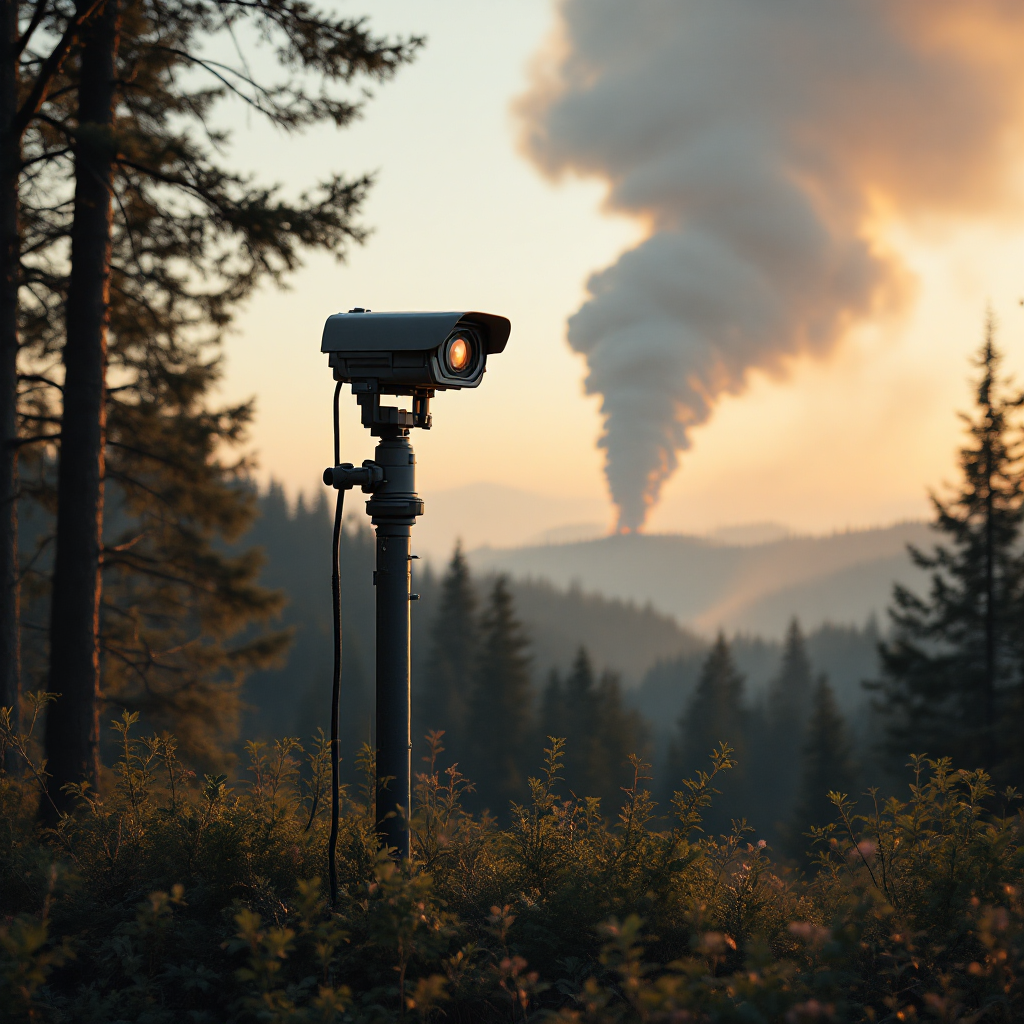
Adapting indoor AI models for outdoor wildfire detection requires different sensors and training data. In wildfire monitoring, algorithms focus on early wildfire cues such as small visible smoke, smoke plumes rising above vegetation, and thermal hotspots. Also, wide-area camera networks and specialised sensors form the backbone of a wildfire detection network. A successful design uses sparse high-quality feeds that cover key corridors and ridge lines where smoke often first appears.
Designing a sensor network for wide-area coverage involves a mix of fixed ip camera towers, thermal imagers, and air-quality monitors. These sensors feed video analytics and thermal analysis to detect early signs of combustion. For early wildfire, the pipeline emphasises persistence checks, false positive suppression, and geolocation of the detected smoke so that emergency responders can act promptly. Early warning protocols then inform local fire authorities and community alert systems. These protocols should define thresholds, escalation paths, and integration points with regional wildfire response centres.
Wildfire detection and monitoring also need to consider wildfire risk and environmental conditions. In many jurisdictions, early warning systems tie into official wildfire response frameworks; they alert emergency responders and fire authorities quickly. Also, situational awareness improves when AI streams structured events from cameras and sensors to control rooms. Adopting these measures can materially improve detection system utilization for wildfire threats while keeping data under local control for compliance. For readers exploring how vision can be operationalised across security and operations, examine our approach to turning CCTV into sensor data for enterprise use.
intelligent fire safety solutions: Integrating detector, cctv and traditional sensors into an ai-powered fire detection system
An architecture for a unified safety solutions platform brings together detector types, CCTV, and traditional sensors. First, edge nodes run models near the camera to provide real-time detection and to minimise data leaving the site. Then, a central orchestration layer correlates events, logs decisions for audit, and streams structured events to business systems. This architecture supports a safety system that can both escalate to a fire alarm and publish MQTT events for operations dashboards.
Ensuring interoperability matters. Many sites use legacy VMS, traditional smoke detectors, and PLC-based ventilation control. Therefore, the platform must support ONVIF/RTSP cameras, IP camera integration, and common control protocols. Also, to ensure safety and compliance, models and logs should remain on-prem or in a customer-controlled environment to support EU AI Act readiness. Visionplatform.ai follows this pattern by enabling model choice, local training on VMS footage, and event publication for SCADA and BMS consumers.
Future trends include edge computing, IoT integration, and autonomous ventilation control. Edge inference lowers latency for real-time detection and allows immediate automated actions when an ai system detects a hazard. In addition, combining video analytics with gas sensing and thermal inputs creates resilient fire detection solutions that reduce false positives and improve emergency response. Finally, intelligent fire safety solutions will expand from alarms to operational automation: cameras will act as sensors for manufacturing KPIs, OEE, and occupancy analytics while also protecting assets and people. For operations teams considering deployment, reviewing existing camera capabilities such as people detection or PPE detection can help justify camera upgrades and multi-use instrumentation; see our work on people detection in airports for practical examples of dual-use vision systems.
FAQ
How does AI distinguish between smoke, steam, and fog?
AI uses visual patterns, motion over time, color and texture to distinguish smoke from steam and fog. Also, combining video with gas and thermal readings increases confidence and reduces false positives.
Can existing CCTV cameras support smoke detection?
Yes. Existing cameras can supply live video feeds for computer vision models to analyse visible smoke and smoke plumes. For best results, cameras with clear views and adequate frame rates improve early detection.
What are typical false alarm reductions when adding AI?
Studies report reductions in false alarms of up to 40% when AI augments traditional methods for particulate monitoring. This figure depends on site conditions and training data quality.
How do AI alerts interact with ventilation controls?
AI can generate real-time alerts that trigger automated ventilation adjustments, such as increasing exhaust or closing dampers to contain smoke. Also, alerts can be routed to operations dashboards and to emergency response teams.
Are there privacy or compliance concerns with video-based detection?
Yes. Processing video on-prem and keeping data in customer control helps meet GDPR and EU AI Act requirements. Visionplatform.ai supports on-prem inference to keep data and models local.
Can the same system be used for indoor smoke detection and wildfire monitoring?
Core AI techniques can adapt, but outdoor wildfire monitoring needs wider coverage, thermal sensors, and specialised training data for vegetation smoke plumes. Also, integration with local early warning protocols is essential.
How fast can AI detect fire compared to traditional sensors?
AI can often recognize visible smoke patterns and early signs before particulate thresholds trigger conventional detectors, enabling earlier response. However, AI works best when fused with other sensors for confirmation.
Does AI eliminate the need for traditional smoke detectors?
No. AI complements traditional smoke detectors and can reduce false alarms, but certified detectors and fire alarm infrastructure remain core to regulatory compliance. AI adds situational awareness and operational automation.
How are false positives handled to avoid unnecessary evacuations?
Decision logic uses temporal consistency, multimodal confirmation, and confidence thresholds to suppress false positives. Also, tailored site training reduces nuisance alerts so evacuations only occur for confirmed events.
Where can I learn more about integrating AI with existing security and operations systems?
Explore vendor resources that show how cameras become sensors and how events stream to SCADA, BMS, and dashboards. For examples of multi-use vision systems and forensic search capabilities, see our pages on forensic search in airports, thermal people detection in airports, and fire and smoke detection in airports.