AI-powered dashboard brings measurable visibility to boost real-time insights
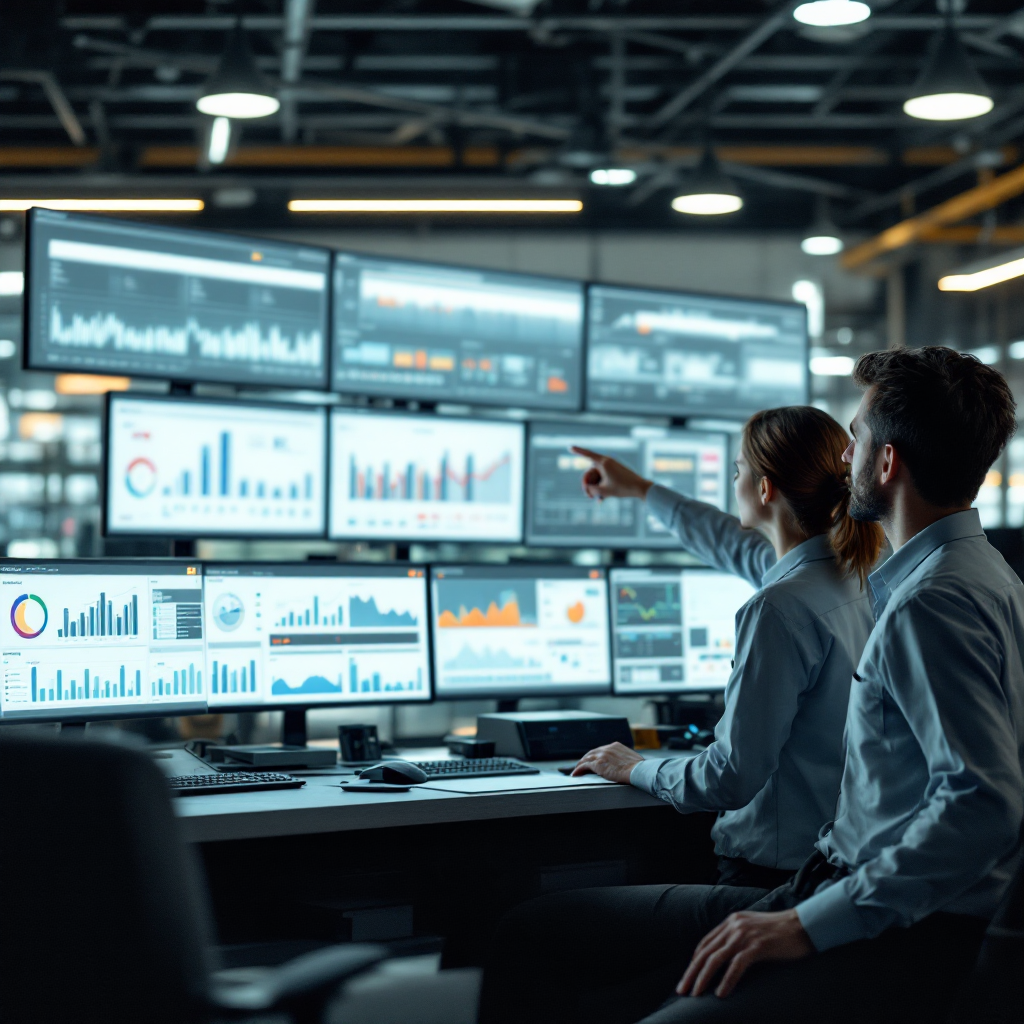
AI-powered dashboards collect and present operational data from many sources. Also, they convert CCTV, sensor feeds, and PLC outputs into a single dashboard view. Next, teams can see line speed, stop count, and OEE in one place. For example, Visionplatform.ai turns existing CCTV into an operational sensor network and streams events to dashboards so you get measurable KPIs and a single source of truth. In addition, this approach helps sites use historical data and real-time data together to spot trends and act quickly.
Dashboards do more than show numbers. They fuse video analytics with sensor telemetry and queue data to surface actionable events. Also, when a camera sees a stopped vehicle or idle conveyor, the event appears alongside vibration and temperature readings. Then, operators receive an alert and can adjust allocation or dispatch support. This seamless data flow provides real-time visibility into production and reduces the reliance on manual checks. For instance, AI video analytics can reduce congestion detection time by up to 40% when applied to traffic flows, giving planners faster insight into slowdowns and stoppages (Beating traffic congestion using AI video analytics – Erabyte).
Also, dashboards can display derived KPIs that matter to manufacturing. For example, overall equipment effectiveness (OEE) ties availability, performance, and quality into a single metric. Then, operators watch OEE trends to minimize inefficiency and improve throughput. Furthermore, dashboards support threshold-based alerts so teams only act on meaningful problems. Next, an operator can click from a KPI to the forensic video clip to see the exact moment a conveyor slowed or a worker paused. This traceability reduces investigation time and improves data quality. Also, for airports and large sites, integration with people counting and crowd density analytics provides context to flow issues; see people-counting-in-airports for more on integrating camera-derived counts (people counting in airports).
Finally, adopting an AI-powered dashboard helps organizations adapt to variability. Also, it makes the dashboard a hub for automation and SOP triggers. In addition, the same platform that reduces false alarms in security can stream structured events for operations, enabling teams to optimize workflows and boost situational awareness. For practical examples of operationalization with camera-as-sensor use cases, the Visionplatform.ai approach shows how to integrate video into BI and SCADA systems and reduce manual checks while improving overall efficiency.
Automate root cause analysis using AI agents to detect anomalies
AI agents monitor streams continuously and automatically identify unusual patterns. Also, they combine video, sensor, and historical data to flag an anomaly that needs attention. For example, an agent can track line currents and cycle time to spot a sudden drift in performance. Then, it alerts engineers and populates a structured incident with video, timestamps, and correlated sensor traces. This method speeds up root cause analysis and reduces mean time to repair.
Also, automation of workflows matters. When an AI agent flags a deviation, it can create a workflow ticket, assign it to the right crew, and attach evidence. Therefore, teams reduce investigation time by up to 50% because they no longer chase context across silos. In logistics, dashcams and AI agents have cut delivery delays by about 15–20% by alerting drivers to slowdowns and incidents in real time (AI Dashcams Cut Delivery Delays and Route Errors Fast). Also, that immediate feedback supports corrective actions and better SOP adherence.
AI agents leverage machine learning models deployed at the edge to preserve data privacy and minimize latency. Also, agents can run simple threshold checks, perform pattern recognition, or execute more advanced causal inference to propose root cause candidates. For instance, Visionplatform.ai streams events from detection models directly to MQTT so agents can correlate a vehicle stop with upstream sensor warnings and an electrical current spike. Next, the agent can suggest the likely root cause and recommend a corrective action. This pattern supports faster remediation and lower operational costs.
Also, anomaly detection helps protect throughput. A single unexpected vibration signature on a motor might predict an imminent failure. Then, an agent triggers a targeted inspection instead of a full-line shutdown. In manufacturing, fusing video and structured sensor inputs allows automatic identification of misalignment or worn tooling before it cascades into a stoppage (AI detection of idle equipment in slaughter lines). Finally, adopting ai agents helps teams act proactively, minimize unplanned downtime, and maintain higher overall equipment effectiveness through faster, data-driven root cause analysis.
AI vision within minutes?
With our no-code platform you can just focus on your data, we’ll do the rest
Production line optimisation through line balancing
Balancing a production line improves throughput and reduces waste. Also, a production line distributes tasks across stations to match takt time and minimize queues. In practice, imbalance creates local congestion, longer cycle time, and variability in work-in-progress. Therefore, teams use predictive AI models to suggest allocation changes. For example, models analyze historical data and real-time monitoring to foresee where a station will fall behind and recommend adjustments to workload. This data-driven approach lets operators dynamically adjust task allocation to maintain flow.
Next, line balancing can use both heuristics and machine learning. Also, simple approaches rebalance tasks by moving smaller operations to idle stations. Meanwhile, predictive methods use machine learning to forecast cycle times for different SKUs, then solve an optimization problem to maximize throughput. For instance, redistributing workload based on model output can yield measurable gains. One case study showed a 20% uplift in output by redistributing workload across stations and adjusting staffing. Also, this method improved speed and accuracy of scheduling and helped maintain consistent quality.
Also, balancing reduces the chances that a single bottleneck will stall the whole line. Teams that integrate AI models with their MES or SCADA can run continuous simulations and propose changes in real time. Furthermore, the platform can automatically adjust thresholds and alert operators when misalignment appears. For sites with complex material flow, linking line balancing to logistics and supply chain visibility lets planners see upstream delays that will affect line cadence. For an overview of how real-time data transforms broader emergency and flow planning, see approaches that combine satellite and camera feeds for situational awareness (How AI and Real-Time Data Are Transforming Disaster Response).
Finally, adopting ai for line balancing drives continuous improvement. Also, teams can run A/B tests on proposed allocations and measure OEE changes to validate impact. Over time, models refine their recommendations by learning from outcomes and historical data so the process improves automatically. As a result, sites can continuously improve throughput and reduce downtime while maintaining quality and meeting production targets.
Automated visual inspection and defect detection with computer vision models
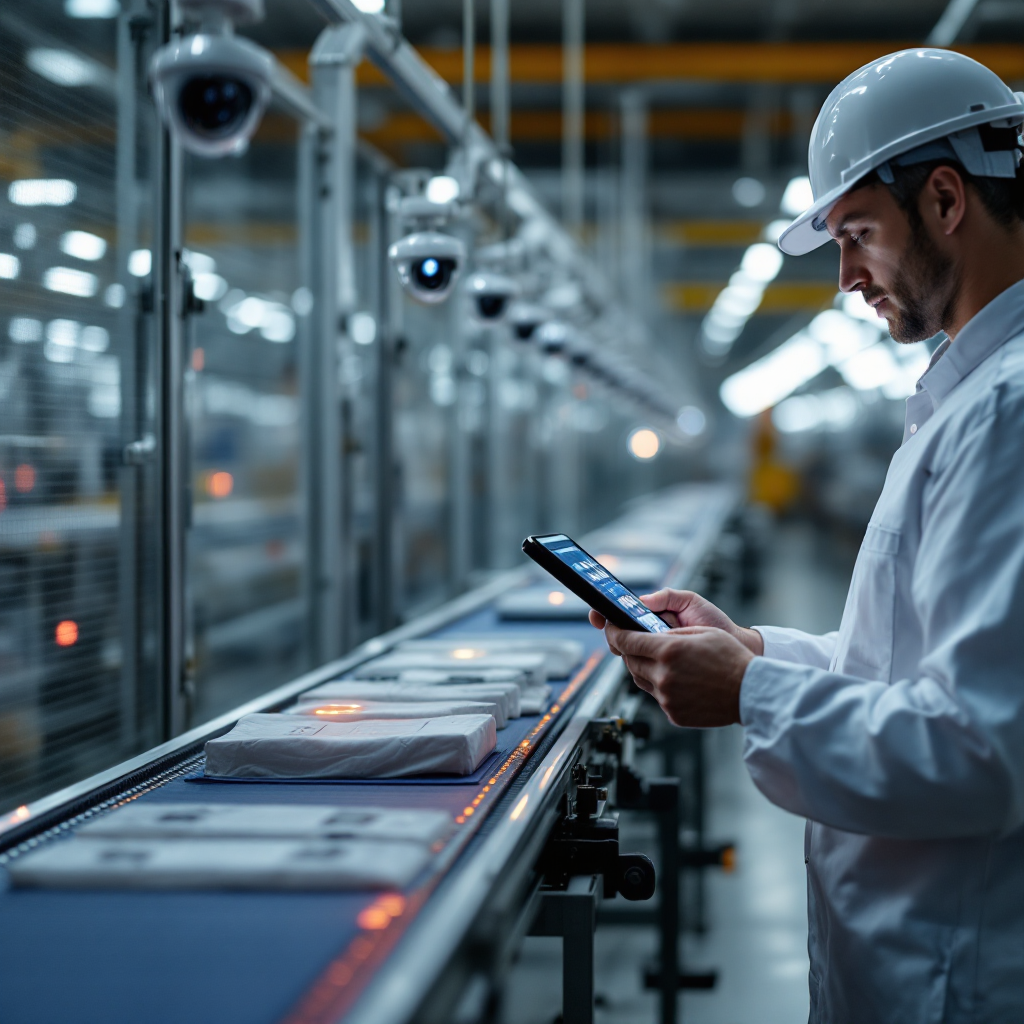
Computer vision models change how teams perform inspection. Also, automated visual inspection replaces manual scrutiny with repeatable, high-speed checks. For example, camera stations scan each part and apply defect detection models to flag scratches, misalignment, or missing components. Then, the system routes defective items for rework or removal. This approach improves speed and accuracy over manual checks and scales from single-camera setups to full multi-station lines.
Also, scalable deployment matters. Sites often start with a single camera to validate the model and then expand. Visionplatform.ai supports flexible model strategies: pick a model from a library, extend classes on your data, or build from scratch using footage in your private environment. This flexibility helps keep data on-prem and supports data quality checks during training. In addition, computer vision models can integrate with line sensors and PLCs so that a visual flag correlates with cycle time or torque readings. This correlation helps to automatically identify the most impactful defects.
Also, several studies show automated inspection improves detection accuracy compared to manual checks. For instance, visual models catch subtle inconsistencies that human inspectors might miss over long shifts. Then, when an error rate drops, operational efficiency rises and scrap falls. Furthermore, combining vision with machine learning makes inspection standards consistent, which supports continuous improvement and predictable outcomes. For more on how AI-based traffic analytics speed detection, see examples where video analytics reduced congestion detection time by as much as 40% (Beating traffic congestion using AI video analytics – Erabyte).
Also, automated visual inspection reduces unplanned downtime by catching emerging defects early. For instance, a small misalignment detected repeatedly at a station may indicate tooling wear. Then, teams can schedule maintenance proactively and avoid a full stop. Finally, automated visual inspection ties into process anomaly detection and broader quality control regimes so teams can act fast and keep throughput steady. For related anomaly and process monitoring in large sites, see process-anomaly-detection-in-airports for integration patterns (process anomaly detection in airports).
AI vision within minutes?
With our no-code platform you can just focus on your data, we’ll do the rest
Detecting bottleneck and process bottlenecks in the supply chain to reduce downtime
Spotting a single bottleneck differs from finding process bottlenecks across a network. Also, a single constraint might be a slow machine. Meanwhile, process bottlenecks are systemic and trace back through suppliers, inbound logistics, and scheduling. Therefore, real-time monitoring that links the shop floor to the supply chain helps teams understand the true cause of stoppages. For example, AI that merges video with logistics and supply chain telemetry can trace delays caused by a late inbound truck to increased queue times on the line.
Also, connecting line-level events with upstream KPIs makes it possible to identify bottlenecks faster. For instance, an AI agent can correlate increased stop count on a line with a drop in inbound parts or longer changeover times. Then, the system recommends adjustments in allocation or scheduling to compensate. This leads to lower unplanned downtime and fewer cascading effects. In some implementations, AI-based detection of idle equipment improved operational efficiency by up to 30% by preventing slowdowns from escalating (AI detection of idle equipment in slaughter lines).
Also, the supply chain view benefits from trend analysis and historical data. By analyzing patterns over time, AI models can predict where delays will originate and suggest alternative routing or buffer strategies. In addition, integrating ANPR/LPR or vehicle detection and classification gives insight into site access timing and its impact on the line; learn more about vehicle analytics use cases at vehicle-detection-classification-in-airports (vehicle detection and classification in airports). Also, proactive alerts help planners reduce the risk of full stops by recommending temporary reallocations or expedited shipments when needed.
Finally, when teams use these insights, they improve process improvements across departments. Also, logistics and supply chain coordination reduce delays and improve throughput. As a result, sites can expect to reduce unplanned halts and save operational costs. For broader evidence that AI improves routing and on-time delivery, see studies showing a 25% improvement in on-time deliveries using forecasting and route optimization (7 Ways AI Automation Reduces Supply Chain Delays).
Scalable quality control: embrace AI for operational efficiency
Embrace AI across multiple lines to scale quality control and drive continuous improvement. Also, a single validated model can serve several stations once you confirm data quality and SOP alignment. Next, teams can deploy models on edge devices or central servers depending on latency and compliance needs. For sites concerned with sovereignty and EU AI Act readiness, on-prem processing ensures data stays local and auditable. Visionplatform.ai supports this approach by keeping training and inference within the customer environment so teams own their models and datasets.
Also, scalable deployments reduce operational costs by standardizing checks and enabling remote monitoring. For example, automated visual inspection can spot inconsistencies or misalignment repeatedly and at high speed. Then, the system flags items, updates the OEE metric in the dashboard, and triggers a maintenance workflow. This seamless loop makes it easier to continuously improve. Furthermore, machine learning models can improve over time via retraining on labeled examples provided by operators, which helps reduce false positives and improves defect detection performance.
Also, adopting ai across sites helps companies optimize resource allocation and staffing. For instance, when one line shows elevated scrap rates, the system can deploy a technician or increase quality oversight. Next, these actions reduce rework and maintain throughput. Also, linking quality control with process anomaly detection and people- or crowd-density metrics can uncover human factors behind errors; see people-detection-in-airports for examples of camera-driven operational inputs (people detection in airports).
Finally, measurable outcomes follow scalable quality control. Also, sites often report improved overall equipment effectiveness and lower operational costs after rolling out automated checks. In addition, consistent inspection reduces variability, supports continuous improvement, and makes SOPs enforceable. As teams embrace AI, they become more agile, can adapt schedules dynamically, and are able to reduce unplanned downtime through faster detection and prescriptive workflows.
FAQ
What is real-time detection of line slowdowns or stoppages?
Real-time detection uses AI models and sensors to spot slowdowns or stoppages as they happen. It combines video, sensor, and historical data to provide actionable insight so teams can respond quickly.
How does an AI-powered dashboard improve visibility?
An AI-powered dashboard aggregates events from cameras and sensors into one view. It gives operators measurable KPIs, reduces manual checks, and speeds response through clear alerts and drill-down video.
Can AI identify the root cause of a stoppage?
Yes. AI agents correlate multiple data streams to support root cause analysis. They propose likely causes and attach video and sensor evidence for faster investigation.
What role do computer vision models play in defect detection?
Computer vision models perform automated visual inspection to find defects at line speed. They improve consistency and can scale from single cameras to multi-station deployments.
How does line balancing with AI increase throughput?
AI analyzes cycle times and workload to suggest task reallocation so takt time stays balanced. That reduces queues, improves throughput, and helps maintain steady work-in-progress.
Will AI reduce my unplanned downtime?
Yes, by detecting early signs of failure and triggering maintenance, AI can reduce unplanned downtime. It also helps teams proactively adjust allocation and scheduling to keep lines running.
Is on-prem AI better for compliance?
On-prem processing keeps video and training data local, which helps with data protection and compliance concerns. Many enterprises prefer this to minimize risk and meet regulatory requirements.
How do AI agents integrate with existing workflows?
AI agents can publish events to MQTT, create tickets in maintenance systems, or trigger SOPs. This integration ensures alerts become actionable tasks that teams can manage in their normal tools.
What measurable benefits can companies expect?
Companies often see faster detection times, fewer route delays, and improved OEE. Studies show up to 40% faster congestion detection and 15–20% fewer delivery delays in relevant deployments.
How do I start adopting AI for my production line?
Start with a pilot: pick a high-impact station, validate a model, and connect cameras to a dashboard. Then, scale gradually while improving data quality and retraining models for site-specific conditions.