vision ai and ai-powered object detection in bottle inspection
Vision AI now runs on bottling lines to speed up quality inspection and prevent hazards. First, cameras and lighting capture each glass bottle as it travels on a conveyor belt. Next, AI pipelines apply image processing and object detection models to every frame. This setup keeps up with high production speed and ensures consistent screening for visible defects and foreign objects. Many manufacturers pair vision ai with existing CCTV or machine vision cameras to avoid costly rewires, and to leverage footage already on site.
AI-powered object detection boosts speed and accuracy by combining fast neural networks with deterministic rules. For example, YOLO and SSD deliver sub-30ms inference per image on edge GPUs, which supports real-time throughput. Faster-RCNN often gives higher detection accuracy for small anomalies, so production teams choose models based on trade-offs between speed and precision. Standards in the field confirm the role of these model families in modern object detection research (Role of Artificial Intelligence in Object Detection: A Review).
To hit quality control targets, teams tune thresholds and run parallel checks. They monitor recall and precision closely, because a missed glass fragment or a false reject both harm the line. AI systems reduce manual inspection load and can significantly reduce product recalls when correctly deployed. In fact, studies show image-based systems can exceed 95% accuracy in defect detection, and some models approach 98% for foreign object identification in controlled tests (Machine learning algorithms for manufacturing quality assurance).
Training and validation matter. Companies feed labeled frames of intact bottles, cracked bottles, and frames with glass fragments into deep learning pipelines. Then they validate on unseen mixes of packaged food and beverage to avoid bias. In addition, teams constantly update models to handle new bottle shapes, labels, and filling states. Visionplatform.ai recommends keeping models local to address EU AI Act concerns and to keep data private while integrating events into business systems for broader operational use.
Finally, this chapter highlights why a practical ai solution for bottle inspection combines mature models, careful data curation, and system integration. When teams pick the right balance, they improve product integrity, build consumer trust, and reduce risks to consumer health.
computer vision and x-ray inspection to detect glass bottle defects
Computer vision identifies surface defects like chips, cracks and discoloration quickly and with high resolution. Cameras placed above and below bottles capture multiple views. Then, AI models scan for bottle defect signatures and compare each item against baseline templates. For difficult-to-detect faults, teams add x-ray imaging to reveal internal cracks or trapped glass fragments that optical cameras miss. X-ray inspection complements visible-light images and extends detection capabilities to transparent flaws.
In practice, a hybrid inspection system fuses visible, near-infrared, and x-ray feeds to form a complete picture. Sensors feed frames to an on-prem AI pipeline where detection algorithms run. This sensor fusion reduces false positives and boosts detection performance on common glass faults. When a system flags a suspicious signal, the line either diverts the bottle or triggers a manual check. A robust setup includes redundant cameras, controlled lighting, and calibrated x-ray sources to avoid blind spots.
Camera placement follows proven rules. Place a top camera to inspect the neck and cap area. Add side cameras for label and body coverage. Use backlighting for crack contrast and ring lights for surface scratches. For x-ray, position the unit after fill and cap stages so the beam captures internal inclusions and foreign materials in the headspace. This arrangement prevents undetected glass fragments from entering packaged food and beverage batches.
Systems in glass production benefit from standardized test wafers and sample bottles to tune sensitivity. Teams measure detection accuracy and adjust filters to balance throughput with safety. The integration of AI with IoT telemetry also helps. For example, linking x-ray event logs with line speed and torque data identifies when mechanical faults cause a spike in defects. This practice drives faster root-cause analysis and fewer stoppages. Industry research also supports combining AI and IoT to improve responsiveness and resilience (Artificial Intelligence and Internet of Things Integration in …).

AI vision within minutes?
With our no-code platform you can just focus on your data, we’ll do the rest
ai detection process for foreign object detection and foreign objects removal
The detection process begins with image capture. Cameras take synchronized frames as bottles move past fixed stations. Next, the AI pipeline pre-processes images to normalize exposure and remove glare. Then, models run inference to classify each bottle as pass, suspect, or fail. When the system labels an item as containing foreign objects, the control logic activates a rejection mechanism. That mechanism can be an air blast, a mechanical diverter, or an automated arm that removes the suspect bottle.
Training deep learning models to spot glass shards and other materials requires curated datasets with many variations. Teams include images of metal fragments, label debris, and common glass shards. They also add hard negatives, like reflections and label edges, to teach the model what not to flag. Transfer learning helps when labeled samples are scarce. Small-sample approaches and attention mechanisms can boost model performance on rare foreign matter, as recent work shows (AI-aided New Detection Tech That Could Change Surveillance Forever).
Automation of removal mechanisms minimizes line disruption. A rejection window must match conveyor timing precisely. Integrating the AI solution with production equipment controllers ensures rejects occur safely. For high-speed lines, low-latency edge inference on GPUs or accelerators keeps removal aligned with the conveyor belt. Visionplatform.ai recommends streaming structured events via MQTT so plant systems log rejects and track defect clusters, which aids continuous improvement.
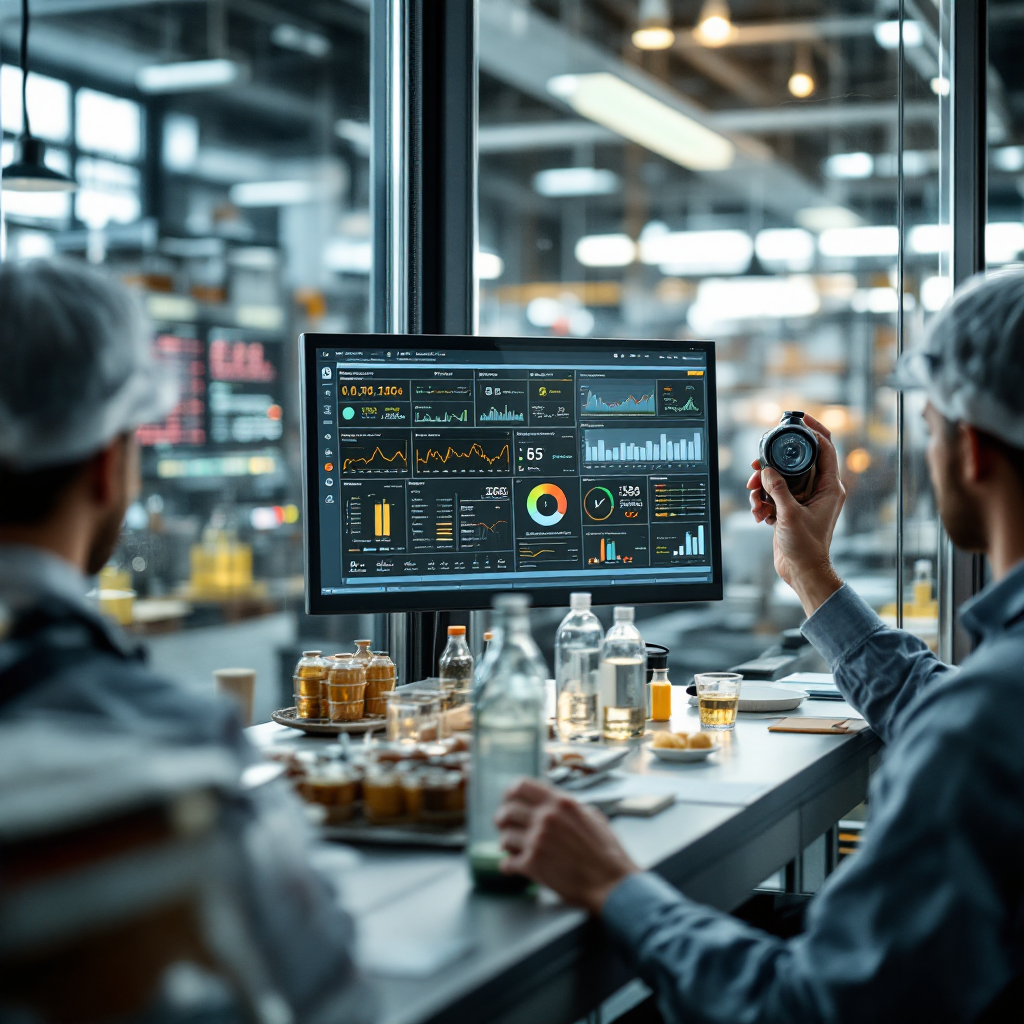
Finally, operators monitor foreign object detection trends on dashboards. They drill down into suspect frames to validate model decisions and to retrain when required. This feedback loop reduces false alarms and raises detection reliability. As a result, teams maintain product quality and protect consumer trust while keeping throughput stable.
defect detection measures to manage foreign object contamination
Setting clear defect detection measures helps teams manage foreign object contamination systematically. First, establish benchmark metrics like throughput, recall, precision and reject rate. Aim for defect detection accuracy that balances safety and yield. Many facilities target greater than 95% overall detection for critical contaminants while tuning models to keep false rejects acceptable. Research supports high accuracy for AI-based systems in manufacturing quality control (Machine learning algorithms for manufacturing quality assurance).
Second, reduce false positives and false negatives through tiered decision logic. For example, a primary AI model can flag suspect bottles. Then a secondary, higher-precision pass verifies the alarm before rejection. This two-stage approach reduces unnecessary waste while keeping safety high. Third, use controlled sampling and manual inspection to validate model drift. Coupled with training and validation procedures, this practice preserves detection reliability over time.
Continuous monitoring and feedback loops create an effective defense against contamination. Events stream to centralized dashboards so technicians spot spikes in foreign object contamination quickly. Linking those spikes to production conditions, such as temperature or equipment vibration, helps root-cause analysis. In addition, predictive maintenance routines reduce the likelihood that a worn nozzle or defective filler will shed glass or metal fragments into the flow.
Quality inspection teams must also align with food safety standards and quality management systems. Regular audits, documented training, and calibrated test artifacts keep the inspection systems honest. When needed, temporarily suspend lines and run diagnostic sequences to verify detection across the full range of expected bottle defects. By combining automated detection with human oversight, manufacturers protect product integrity and lower risks to consumer health.
AI vision within minutes?
With our no-code platform you can just focus on your data, we’ll do the rest
integrating inspection data to improve detection and reduce contamination
Centralized dashboards unify inspection systems and provide fast insights. They collect events from cameras, x-ray modules, and sensors and present trends to ops teams. Through dashboards, technicians can filter by defect type, station, or time window. This visibility accelerates root-cause analysis and reduces repeat contamination events. In practice, teams link camera events to PLC and SCADA data for context on machine state and line speed.
IoT telemetry enhances contamination insights. Sensors report vibration, torque, and temperature, and AI correlates these signals with detection events. For example, a sudden rise in micro-crack detections may follow a torque spike on a capping machine. With this information, maintenance crews act proactively. The link between AI and IoT improves uptime and can significantly reduce unplanned stoppages.
Predictive analysis then forecasts when a station will likely produce more defects. Models trained on integrated inspection and telemetry data produce alerts before failure. This predictive maintenance strategy keeps lines running longer between interventions. It also helps plan spare parts and reduces repair time.
Visionplatform.ai supports streaming structured events to MQTT and integrating with existing VMS to reuse archived video for retraining. Teams gain the ability to search past events and to build tailored models on-site. By keeping data local, manufacturers meet compliance requirements while improving detection capabilities steadily. In the end, integrating inspection data powers smarter decisions and a safer production environment.
performance metrics for ai-powered defect and foreign object detection
Key indicators measure how well AI-powered inspection performs. Throughput tracks items per minute and sets expectations for latency. Recall measures how many true defects the system finds. Precision measures how many flagged items were actually defective. Downtime reduction shows the operational value of predictive maintenance and fewer manual checks. Good systems balance recall and precision to avoid costly product recalls and to protect consumer trust.
Case studies from food and pharmaceutical lines report strong ROI after AI deployment. In some implementations, manufacturers saw defect detection rates exceed 95%, which led to fewer recalls and lower scrap rates. A quoted industry study notes that “The synergy of mixed reality and computer vision significantly elevates the efficiency and reliability of traditional inspection methods, ensuring safer products for consumers” (Validating the Use of Smart Glasses in Industrial Quality Control).
Teams also measure detection of glass and metal fragments separately, since each contaminant has different signature characteristics. For example, x-ray excels at detecting dense metal fragments, while image-based systems better spot surface chips or label-tucked shards. Combining these modalities increases overall detection capabilities and reduces false negatives.
Looking ahead, real-time analytics and adaptive learning models will make inspection systems more responsive. As models learn from new events, they improve detection performance and reduce operator workload. For operations already using camera networks, platforms that turn CCTV into operational sensors provide a path to scale. Visionplatform.ai makes that path practical by streaming detections into business systems and by allowing models to train on your own VMS footage while keeping data local and auditable.
FAQ
How does AI detect glass fragments on a production line?
AI combines high-resolution imaging with trained models to spot shapes and textures associated with glass fragments. Then systems verify the candidate with secondary checks or x-ray data to reduce false positives.
What role does x-ray play in bottle inspection?
X-ray reveals internal inclusions and transparent flaws that visible cameras cannot see. It pairs with computer vision to give a fuller view of the bottle’s integrity.
Can AI run in real-time on high-speed bottling lines?
Yes. Modern edge GPUs and optimized models support real-time processing, enabling inline rejection and minimal latency. Throughput planning ensures the detection system keeps pace with production speed.
How do you reduce false alarms in foreign object detection?
Use tiered verification, add sensor fusion with x-ray or IoT data, and retrain models with hard negatives. Continuous monitoring and manual validation also help fine-tune thresholds.
What metrics should operations track for inspection?
Track recall, precision, throughput, reject rate, and downtime reduction. These metrics link inspection performance to operational and business outcomes.
Is it possible to use existing CCTV for bottle inspection?
Yes. Converting CCTV into an operational sensor network lets teams reuse footage for model training and forensic search. Platforms like Visionplatform.ai enable that integration while keeping data local and auditable (forensic search).
How does IoT telemetry help reduce contamination?
IoT telemetry provides context like vibration and temperature, which AI correlates with inspection events. This helps teams perform predictive maintenance and prevent sources of contamination.
Can AI help avoid product recalls?
By improving detection rates and enabling fast corrective actions, AI can significantly reduce the chance of contaminated items reaching customers and thus reduce product recalls. Strong audit trails and validated models further protect consumer trust.
What is the best model family for bottle inspection?
Choice depends on the trade-off between speed and detection performance. YOLO and SSD favor speed, while Faster-RCNN can improve small-defect recall. Many teams test multiple ai models to find the right fit.
Where can I learn more about anomaly detection and integrating vision data?
Explore resources on process anomaly detection and PPE or object workflows to understand broader integration patterns. For example, see guides on integrating visual events into operations (process anomaly detection) and examples of object-class detection like PPE (PPE detection).