The Role of terminal in Process Anomaly Detection
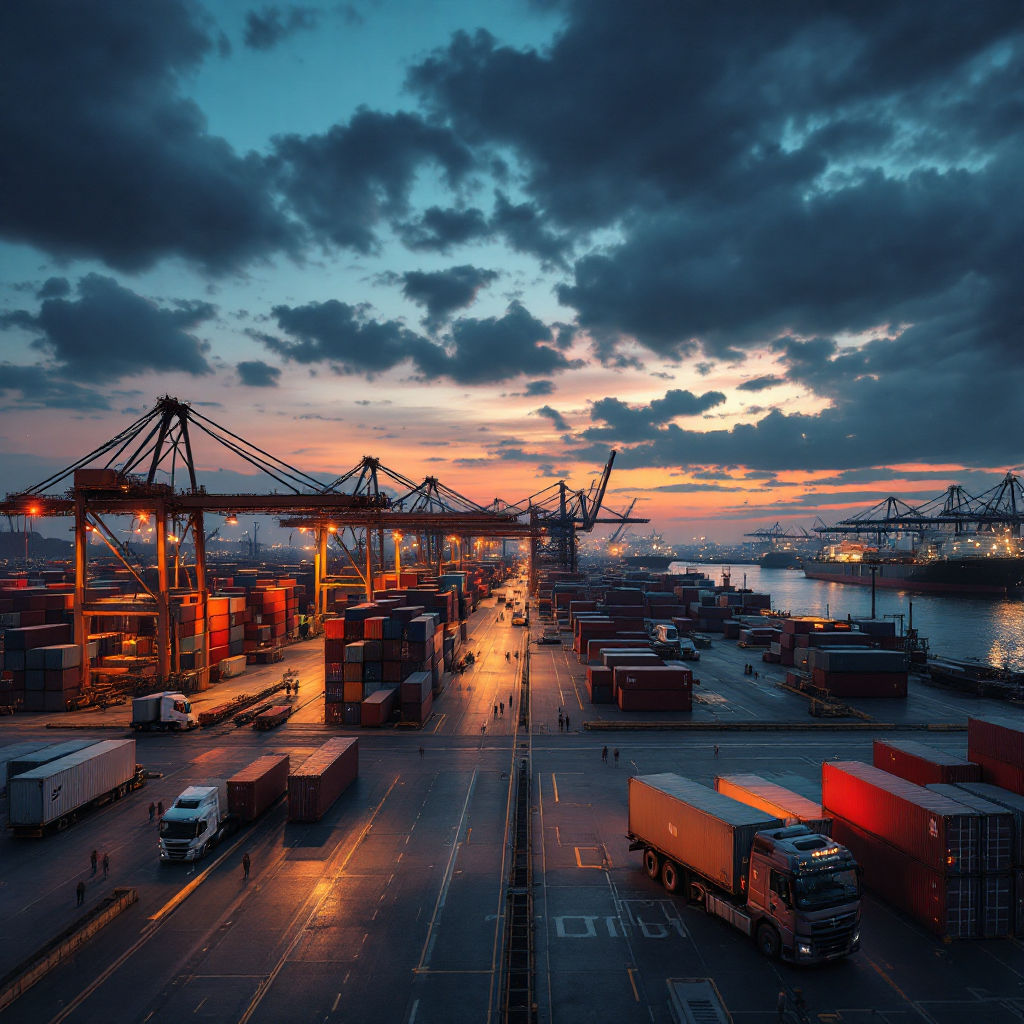
Ports and terminals form the backbone of global commerce. They move raw materials, finished goods, and energy across continents. Therefore, port authorities and operators face constant pressure to keep flows steady. Daily, thousands of calls by cargo ships and thousands of container moves take place. For example, AIS feeds can track thousands of vessels and their trajectories in a single day, providing granular visibility into marine traffic patterns Understanding and Predicting Port Congestion with Machine Learning. Consequently, terminals must spot deviations fast. Early warnings limit equipment failures and reduce costly downtime. In addition, they help avoid security breaches and slowdowns that ripple across supply chains.
First, terminal operations combine berth planning, yard handling, and gate processing. Next, cranes, straddle carriers, trucks, and shore power systems operate in tightly choreographed sequences. If any link breaks, throughput declines. As a result, a single abnormality in container handling or an abnormal vessel approach can delay dozens of ships and close terminals to inbound traffic. Thus, integrating process monitoring with operational workflows is essential. Anomaly detection tools give teams the context they need. For instance, process baselining of vessel arrivals and cargo lifts helps staff act before minor issues escalate. Second, data-driven systems produce both alarms and structured events. Visionplatform.ai turns CCTV into an operational sensor network to stream such events via MQTT so security and operations can react in real time while keeping data on-premise for compliance.
Therefore, ports can optimize resource allocation and accelerate incident response. Studies in industrial settings show that real-time detection techniques can reduce incident response times by up to 40% AI-based real-time anomaly detection in industrial engineering. In practice, terminals that combine vessel movement monitoring with cargo handling signals create a more resilient port area. Finally, port management, from berth scheduling to rail and truck interfaces, benefits when anomalies are caught early. For many global ports, the margin between smooth operations and congestion depends on the ability to identify and act on potential anomalies quickly.
Data Volume and Complexity at the terminal: AIS, Sensors and Logs
Terminals ingest huge volumes of data every hour. Sources include Automatic Identification System feeds, container-tracking platforms, IoT sensors on cranes, CCTV, and machine logs. AIS data streams provide vessel position, speed, heading, and identifiers. When combined with yard telemetry and gate timestamps, these feeds form a rich mosaic of operational signals. For context, modern ports can generate terabytes of telemetry daily from such sources, driven by constant vessel movement and container cycling Understanding and Predicting Port Congestion with Machine Learning.
However, volume is only part of the challenge. Heterogeneity complicates integration. Different vendors use distinct formats. Some sensors report at sub-second cadence while others push hourly aggregates. As a result, data engineers must harmonize timestamps, align geographical coordinates, and normalize identifiers such as MMSI and container IDs. For this reason, historical ais data and operational logs must be cleaned before any modeling. In addition, terminals must respect privacy and regulations. Visionplatform.ai helps by keeping video processing on-premise and streaming only structured events to downstream systems, which reduces data egress and aids EU AI Act readiness.
Consequently, analytics teams build pipelines for ingestion, enrichment, and storage. Big data platforms store time-series traces and event streams. Then, analytics and visualization tools run queries for KPIs and performance metrics. Real-time systems must balance latency and accuracy. On one hand, low-latency feeds enable early warnings for an abnormal vessel approach or a sudden crane fault. On the other hand, high-fidelity historical records enable reliable verification of subsequent incidents. For example, combining AIS data with spatial logs and CCTV-derived events allows teams to simulate berth occupancy and optimize gate throughput. Therefore, many ports use a hybrid approach: they run edge filtering for immediate alarms while sending summarized data to a central lake for longer-term analysis. Finally, this layered architecture supports both operational efficiency and risk management across the waterway that the terminal serves.
AI vision within minutes?
With our no-code platform you can just focus on your data, we’ll do the rest
Machine Learning Methods for terminal Anomaly Detection
Statistical and AI techniques power modern detection systems. For structured telemetry, Mahalanobis distance and sliding-window Granger causality help flag outliers and causal shifts in process variables PDF Towards Novel Statistical Methods for Anomaly Detection in Industrial Processes and Process-Aware Anomaly Detection in Industrial Control Systems Using Granger Causality. Additionally, hybrid models that combine smoothing filters with variance inflation factors improve robustness in noisy environments. These approaches supply explainable scores that operations teams can interpret. In terminals, such methods can identify a slow crane cycle, an unexpected idling truck, or a sudden change in vessel ETA patterns.
In parallel, artificial intelligence methods extend capabilities. Supervised learning fits labeled failure cases and predicts specific fault types. Unsupervised learning and deep learning find novel patterns without labels, which is important because labeled incidents are rare in complex terminals. For example, clustering algorithms can classify inbound truck arrival patterns and highlight deviations that suggest congestion or fraud. Importantly, researchers report accuracy above 90% in some industrial and IoT settings when combining statistical and AI techniques Accurate and fast anomaly detection in industrial and IoT environments. Consequently, such performance metrics indicate strong potential for port operations.
When teams integrate CCTV-derived events, vision analytics add context. Visionplatform.ai provides real-time detections of vehicles, PPE, and custom objects, allowing CCTV to feed structured events into anomaly detection model pipelines. As a result, an algorithm can correlate a slow crane cycle with a safety event or a sudden spike in gate dwell time. Therefore, combining sensor streams and video events enables predictive alerts, such as early warnings of equipment failure or a security breach. Finally, to keep models reliable, practitioners use cross-validation and operational verification to ensure a trained model adapts to seasonal patterns and shifting vessel mixes. In sum, both classical algorithms and modern learning algorithms play complementary roles in making terminals more resilient, efficient, and safer.
Process-Aware Frameworks for terminal Detection
Process-aware frameworks establish a baseline of normal operations. First, they model vessel arrival patterns, crane cycles, yard moves, and gate throughput. Next, they create workflows that map how containers move from ship to yard to truck or rail. By representing these sequences, platforms can compare live behavior against expected timelines. If a truck misses a scheduled pickup window or a berth occupancy deviates from the plan, the system raises an alarm. For instance, sliding-window Granger causality helps reveal causal links between telemetry streams, letting analysts identify which parameter shift caused a subsequent anomaly Process-Aware Anomaly Detection in Industrial Control Systems Using Granger Causality.
Furthermore, process baselining must account for seasonality and weather. For example, Mediterranean ports show different traffic patterns in summer compared with winter. Therefore, adaptive baselines that incorporate historical data and current ship size distributions yield fewer false positives. In practice, terminals that implement such baselines reduce downtime and improve throughput. One study in industrial engineering noted response time reductions of up to 40% when teams acted on real-time alerts AI-based real-time anomaly detection in industrial engineering. As a result, terminals can prioritize maintenance and reduce high impact delays.
Case studies show meaningful gains. For example, a container terminal that combines AIS feeds with yard telematics and CCTV-driven event streams achieved more predictable berth turnarounds. The system could classify an abnormal vessel approach and correlate it with gate congestion. Consequently, operations staff reallocated cranes and accelerated truck processing. Also, process-aware tools help with verification and post-incident root cause analysis. By replaying the sequence of events, teams can refine parameters and simulate alternative scheduling. Finally, process-aware detection supports both tactical responses and strategic planning. It helps port management tune KPIs, optimize berth allocation, and integrate terminal operating systems with external stakeholders like rail operators and truck fleets.

AI vision within minutes?
With our no-code platform you can just focus on your data, we’ll do the rest
Cybersecurity Integration in terminal Anomaly Monitoring
Cyber threats now target ports with increasing frequency. Therefore, cybersecurity must integrate with anomaly monitoring. The IAPH guidelines emphasize that “the data their organizations generate, process, and analyze are critical assets for operational security and efficiency” IAPH Cybersecurity Guidelines for Ports and Port Facilities. Consequently, security teams treat telemetry and video streams as high-value assets. They implement access controls, encryption, and audit logs to avoid data leakage. In many terminals, CCTV and VMS systems are tied to operational decision-making. Thus, protecting them becomes part of port management.
Common attack vectors include credential theft for terminal operating systems, tampering with crane PLCs, and spoofed AIS messages that create false situational awareness. As a result, anomaly systems must flag not only physical and process abnormalities, but also signs of malicious manipulation. For example, sudden inconsistencies between AIS tracks and camera observations may indicate spoofing. Here, combining CCTV-based detections with AIS data helps detect potential anomalies in a cyber-physical context. Visionplatform.ai helps by keeping video processing on-premise and publishing only structured events to authorized systems. This reduces exposure while still enabling collaborative incident response.
Therefore, ports should adopt custom defences. Each port uses different vendors and unique workflows. Thus, a one-size-fits-all security posture will fail. Instead, operators deploy adaptive detection rules and layered monitoring that include network telemetry, OT signals, and camera events. Additionally, sharing anonymized indicators of compromise across port authorities improves situational awareness across the maritime community. Finally, building an incident playbook that integrates operational, security, and vendor teams accelerates recovery. Consequently, this integrated approach reduces the boundary between IT and OT while strengthening overall resilience.
Future Directions and Best Practices for terminal Detection
Looking ahead, several trends will transform how ports run anomaly systems. First, edge and on-prem compute will accelerate real-time performance and lower bandwidth needs. Second, digital twins that simulate berth and yard activity will help operators forecast congestion and simulate alternative allocations. Third, federated learning can enable collaborative model training across global ports without sharing raw data. For example, collaborative training can improve a trained model for abnormal vessel approaches while preserving privacy. In addition, graph-based models can represent spatial and temporal relationships between cranes, trucks, and vessels.
Best practices start with data fusion. Combine AIS feeds, historical ais data, CCTV events, and machine logs early in a unified pipeline. Next, implement layered alerts: immediate local alarms at the edge and aggregated insights in the central lake. Also, keep models transparent and subject to verification. A single mis-tuned parameter can create false positives that erode trust. Therefore, include human-in-the-loop feedback to refine thresholds and classification rules.
Finally, adopt a checklist for scaling anomaly systems. First item: ensure on-prem processing for sensitive video to ease compliance. Second item: integrate camera-as-sensor events into port management and KPIs. Third item: plan for adaptive baselining and seasonal retraining. Fourth item: design interfaces that let operations act on alerts directly, for example by automatically adjusting berth allocations or ramping up yard crews. Visionplatform.ai supports many of these practices by converting CCTV into structured streams and integrating with VMS and SCADA systems. By following these steps, ports can transform data into timely, actionable insights that enhance operational efficiency and risk management for a more resilient shipping industry.
FAQ
What is the role of anomaly detection in ports?
Anomaly detection helps operators spot deviations from normal vessel movement and cargo handling patterns. As a result, teams receive early warnings that let them intervene before small issues become high impact disruptions.
Which data sources are most useful for terminal monitoring?
Key sources include AIS data, container-tracking systems, IoT sensors on cranes, gate logs, and CCTV-derived events. Combining these feeds gives a fuller picture of terminal activity and supports more accurate alerts.
How does CCTV contribute to detection of anomalies?
CCTV, when processed with on-prem vision analytics, supplies object events like vehicle detection, PPE compliance, and abnormal vessel handling at the berth. These structured events correlate with telemetry to reveal issues faster.
Are machine learning methods reliable for port environments?
Yes, when combined with statistical techniques and robust verification. Studies show accuracy exceeding 90% in analogous industrial and IoT settings, but models require careful tuning and validation before deployment.
How can terminals defend against cyber threats that mimic operational faults?
Integrate cyber monitoring with physical sensors and video. Cross-check AIS positions against camera feeds and employ audit logs to trace anomalies. Sharing indicators among port authorities increases situational awareness.
What is a process-aware framework?
A process-aware framework models expected workflows such as vessel arrival sequences and container moves. It then compares live data to those baselines and raises alerts when deviations suggest a problem.
How does Visionplatform.ai fit into port systems?
Visionplatform.ai turns existing CCTV into an operational sensor network that streams structured events to VMS and business systems. It supports on-prem processing for GDPR and EU AI Act compliance and helps integrate camera events into operations.
Can anomaly systems reduce downtime at container terminals?
Yes. Real-time alerts and predictive analytics can reduce incident response times and allow pre-emptive maintenance, which translates into fewer crane stoppages and faster berth turnarounds.
What future technologies will influence terminal detection?
Edge computing, digital twins, federated learning, and graph-based models will enhance modeling and predictive capacity. These technologies also help simulate scenarios and improve optimization.
How should ports start implementing anomaly detection?
Begin with a pilot that fuses AIS data, key sensors, and some CCTV streams. Then iterate: add adaptive baselining, human review, and integration with terminal operating and port management systems to scale up effectively.