perimeter security in port and terminal environments
In ports and terminals, the word perimeter means more than a fence. It covers the physical fence line, gates, access control points, CCTV, and the network edges where OT and IT meet. Ports act as logistics hubs and handle high-value cargo. They therefore count as critical infrastructure for trade and national security. For that reason, operators must prevent unauthorized access and monitor for suspicious activity around restricted areas.
Risk data underscores the urgency. One study rated operational technology compromise in ports at 98 out of 100. Also, that same research projects a 150% rise in incidents by 2025. Ports and terminals must therefore treat perimeter security as a strategic priority. In addition, the increase links to more IoT devices and expanded wireless sensor deployments that can create new attack vectors.
Ports combine complex workflows, legacy control systems, and real-time operations. Consequently, a perimeter security system must protect both physical barriers and the networks that control cranes, gates, and sensors. Furthermore, monitoring must span long perimeters and extensive perimeters around yards, berths, and container stacks. Operators also need situational awareness for cargo lanes, hangar areas, and passenger zones when terminals serve ferry or cruise functions.
Finally, stakeholders should plan layered defenses. For example, integrate CCTV with analytics, fiber-optic sensors, and radar systems. Also, provide early warning and robust security management that can scale. Visionplatform.ai helps sites by turning existing CCTV into an operational sensor network. The platform can integrate with VMS and stream events so teams can act quickly and reduce dwell times.

perimeter fence: fence types and welded mesh configurations
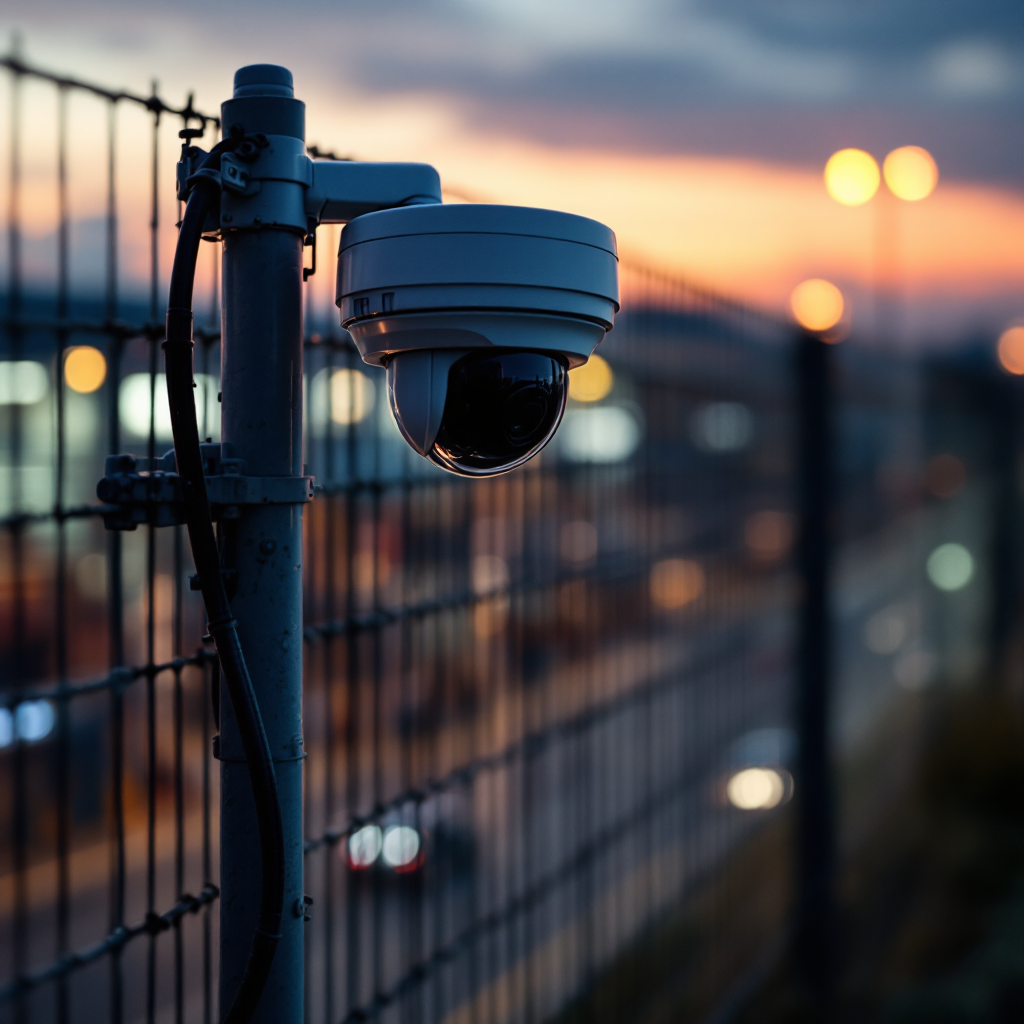
A perimeter fence remains the first line of defense at ports. Common fence types include chain-link, palisade, and welded mesh. Chain-link offers low cost and easy repair. Palisade provides higher tamper resistance and a more hostile appearance. Welded mesh strikes a balance. Welded mesh gives clear sight lines for CCTV and video analytics, while it resists cutting and scaling better than chain-link. As a result, many operators choose welded mesh for high security areas and sensitive areas around berths.
Welded mesh also reduces blind spots for video surveillance and analytics, so CCTV and video surveillance and analytics perform better. Additionally, fence-mounted technologies such as fence-mounted sensors and fiber-optic sensors work well on welded mesh. These sensors detect vibration, cutting, or attempts to climb. A setup that combines fence intrusion detection with CCTV can identify and then verify intrusion attempts more quickly.
However, marine environments create installation and maintenance challenges. Salt spray and corrosion can degrade posts, gates, and fasteners. Power supply for fence-mounted sensors and radars must be durable. Seismic movement and shifting ground can affect buried cable and buried detection systems. Therefore, operators should select corrosion-resistant materials and schedule regular inspections. Also, include a plan for replacement of wear-prone elements, particularly near berths where waves and wind create extra stress. Finally, maintenance teams should train security personnel to spot early signs of tamper or damage so they can prevent unauthorized access and respond before an intruder reaches restricted areas.
AI vision within minutes?
With our no-code platform you can just focus on your data, we’ll do the rest
perimeter intrusion detection system and pids: Key technologies
A perimeter intrusion detection system combines multiple sensor types to provide continuous coverage along a boundary. PIDs use sensors to detect movement, vibrations, or breaches and then generate an alert for security management. PIDs range from simple vibration detectors to advanced fiber-optic or radar systems that cover long perimeters. Each approach offers trade-offs in cost, detection range, and susceptibility to false alarms.
Common sensors include Doppler radar systems, passive infrared and fiber-optic sensors. Radar systems can detect movement beyond the fence and provide coarse tracking of potential threats. Passive infrared sensors perform well for warm targets at short ranges. Fiber-optic intrusion detection and fiber-optic sensors are excellent for fence-mounted or buried cable installations and can be designed to detect cutting or climbing along a fence line. Multiple sensors working together reduce false positives and give richer context for an alert.
Integration matters. PIDs must integrate with access control, CCTV, and OT networks. When you integrate analytics and VMS, you get verified alerts rather than raw triggers. Additionally, a perimeter intrusion detection system should be scalable to cover both short gates and extensive perimeters. Note that wireless sensor networks provide flexibility, but they also introduce cyber-physical vulnerabilities. For example, packet injection or spoofing can disable a sensor network. Research on wireless sensor risk explains these weaknesses and the need for hardened protocols here.
surveillance for intrusion detection and airport perimeter monitoring
Video plays a central role in modern perimeter surveillance. Thermal cameras, CCTV, and video analytics provide 24/7 monitoring and can detect unauthorized access or suspicious activity beyond conventional daylight hours. Thermal imaging works well in darkness and through light fog. Video analytics can flag loitering, detect attempts to climb, and identify people or vehicles that cross into restricted areas. Airports use similar systems to secure runways and perimeter roads, and ports benefit by adopting those best practices.
Airports use layered systems that combine radars, cameras, and sensors to identify potential threats before they reach the fence. For comparison, airport perimeter security often includes runway-side radars and continuous video feeds to protect passenger safety. Miami International Airport and other large hubs show how integrated systems and trained staff improve detection and response. In ports, the same approach helps prevent smuggle attempts and secures cargo lanes.
When sensors detect movement, analytics prioritise alerts based on rules and context. Low false and verified detections go straight to security personnel as high-priority alerts. Less certain triggers may invoke video review or a patrol dispatch. This tiered approach reduces fatigue from false alarms and improves response times. If you want applied examples of these integrations in airport contexts, read our piece on intrusion detection in airports for more detail.
AI vision within minutes?
With our no-code platform you can just focus on your data, we’ll do the rest
new perimeter intrusion detection and security solution advancements
Next-generation solutions lean on AI and zero-trust frameworks. AI-driven analytics can reduce false alarms and identify suspicious activity more reliably. For example, Visionplatform.ai applies on-prem AI to convert existing CCTV into sensors that detect people, vehicles, and custom objects in real-time. The result is better situational awareness and fewer unnecessary patrols. In addition, zero-trust marine cyberdefense concepts help protect IoT communications and limit lateral movement in OT networks, as described in recent research here.
Wireless sensor networks offer simpler deployment and scalable monitoring for long perimeters. However, they bring new attack surfaces. Reports highlight threats such as spoofing and denial-of-service against wireless nodes, so designers must harden networks and validate sensors regularly. Cloud-based management and remote diagnostics provide convenience and faster deployment, but many operators prefer edge processing to keep data local and reduce compliance risk. Visionplatform.ai supports on-prem processing to help teams retain control over models and data.
Emerging technologies to enhance perimeter surveillance include radar fusion, fiber-optic systems that detect cutting, and advanced video analytics that classifies intruder behavior. These elements together identify and responds faster to intrusion attempts and provide early warning for security teams. Also, combining access control logs with video events and sensor alarms gives a fuller picture and helps prevent security breaches before they escalate.
perimeter security solutions: airport security and port intrusion case studies
Real-world incidents show how gaps appear. Major ports have seen breaches where attackers exploited legacy OT access or bypassed physical barriers. Airports face similar threats when intruders reach the runway or perimeter road. One study found that the average time to detect a breach in complex infrastructures can exceed six months according to NATO analysis. This long dwell time gives adversaries time to move laterally and disrupt operations.
Case studies show that combining multiple sensors with verified video alerts reduces dwell times. For example, fiber optic intrusion detection paired with CCTV limits false alarms, while fence intrusion detection coupled with patrol dispatch shortens response times. Airports and ports that invest in training and integrated security management report faster containment and clearer ROI. Metrics such as reduced unauthorized access events, fewer operational disruptions, and lower insurance risk demonstrate value.
Lessons learned include hardening existing security systems, keeping data local, and ensuring teams can act on live feeds. Also, owners should include redundancy for power supply and communications to prevent single points of failure. For those seeking practical airport-to-port parallels, our article on perimeter breach detection in airports provides transferable tactics. Lastly, operators should plan phased deployment that first secures sensitive areas and then scales to extensive perimeters to achieve continuous coverage and long-term resilience.
FAQ
What is the definition of perimeter in port and terminal contexts?
The perimeter includes the physical fence line, access gates, CCTV coverage, and the network boundaries that support operational systems. It covers both physical and cyber edges where an intruder or an attack could reach critical infrastructure.
How do welded mesh fences help port security?
Welded mesh improves visibility for cameras and resists cutting and scaling better than chain-link. It also supports fence-mounted sensors and fiber-optic sensors, which can be designed to detect cutting or climbing.
What role do PIDs play in protecting terminals?
PIDs combine multiple sensors to detect intrusion and then issue an alert for verification and response. They help provide early warning, reduce false alarms, and connect to access control and CCTV for situational awareness.
Which sensors detect movement best at night?
Thermal cameras and infrared devices are effective in low light and darkness. Radar systems also detect movement beyond the fence and can track targets in a wide area.
Are wireless sensor networks safe to deploy?
Wireless sensor networks enable scalable deployment, but they introduce cyber-physical vulnerabilities such as spoofing and packet injection. Proper encryption, hardened protocols, and regular validation are essential to reduce risk.
How can AI reduce false alarms?
AI-driven analytics learn to distinguish between wildlife, weather effects, and real intruder behavior. When deployed on-prem, AI can process video in real-time and stream verified events to security teams, improving response accuracy.
What can ports learn from airport perimeter security?
Airports use layered defenses that fuse radar, cameras, and sensors to protect runways and passenger zones. Ports can adopt similar fusion strategies to protect berths, yards, and restricted areas against smuggle or intrusion attempts.
How long does it take to detect a typical breach?
Detection times vary, but some analyses show average detection can exceed six months in complex infrastructures. Reduced dwell time requires integrated detection, verified alerts, and rapid response capabilities.
What integration should a modern system include?
Integrations should include VMS, access control, OT monitoring, and dispatch systems. Tools like Visionplatform.ai help integrate video with analytics and stream events into the broader security stack for operational use.
How should an operator prioritize investments in perimeter security?
Start by protecting sensitive areas and then scale to cover extensive perimeters. Invest in technologies that reduce false alarms and improve real-time verification, and include plans for maintenance and power redundancy.