Understanding thermal, thermal image and detection fundamentals in warehouses
Thermal sensing begins with infrared radiation. Objects emit infrared energy as a function of their surface temperature. Therefore, a thermal image translates that emission into a color or grayscale map that shows temperature differences. In practice, thermography gives teams a non-contact way to view surface temperature across large areas. For accurate temperature measurement, calibration and emissivity settings must match the object type. Also, properly calibrated readings allow reliable measurement of subtle temperature changes that precede failures in equipment or building envelopes.
Next, consider how heat moves through fabric and structure. Thermal bridges and poor insulation create paths for thermal energy to escape. Where a cold joint meets a warm interior, a thermal anomaly appears on the thermal image. That anomaly can point to a drafty door, an uninsulated roof junction, or damaged insulation in a storage area. Industry estimates show that thermal leaks can account for 20–30% of heating costs, so the stakes are real; early identification helps cut energy waste and reduce energy bills (study).
For image capture, technicians use handheld units, fixed mounts, or drone-mounted imagers. A thermal imaging camera typically records at specific wavebands. Then, software converts raw frames into thermal image maps. During capture, focus, distance, and angle matter. Also, reflective surfaces need attention. For consistent results, teams schedule inspections under stable environmental conditions. In addition, they follow a procedure: plan the route, set emissivity, capture reference spots, and log readings for trend analysis.
Finally, basic analysis sorts pixels into zones and flags deviations. Many teams combine thermographic inspection with conventional sensors to validate findings. For example, an infrared sensor near electrical cabinets can confirm a hot spot and trigger an alarm or maintenance ticket. At this stage, object detection from video can add context by linking a heat signature to a specific machine. For readers who want to see how video can act as an operational sensor, our platform shows how existing CCTV supplies real-time events and reduces false alarms through site-specific models process anomaly detection.
Leak inspection and early fire detection: identifying energy loss and fire hazards
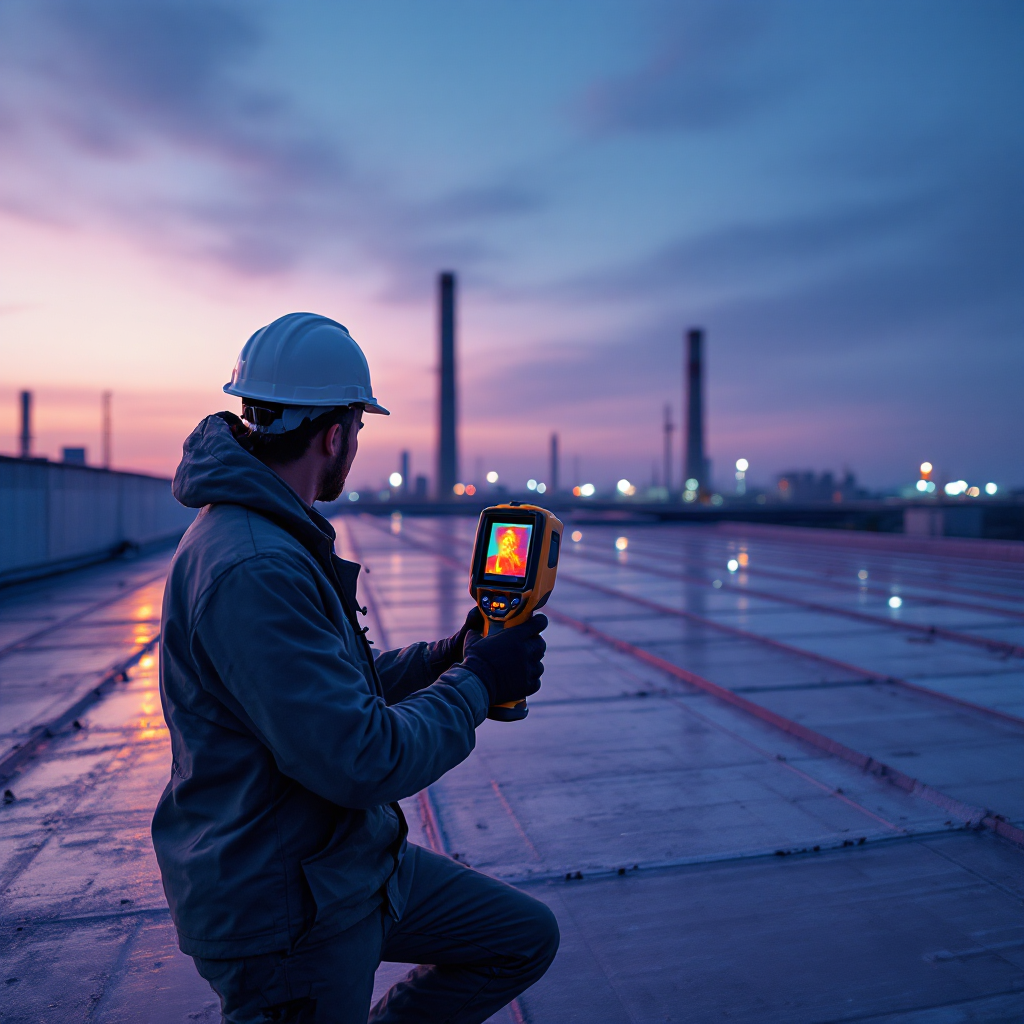
Wall penetrations, roof seams, and loading bays are common leak points. Cracked seals around doors and damaged insulation at skylights create thermal anomalies that show up as cooler or warmer zones on a thermal image. By focusing inspections on these areas, teams can reduce energy loss and lower energy demand. Early detection of a leak helps reduce energy consumption and cut energy waste. In fact, targeted fixes may deliver measurable energy savings that show on monthly energy bills.
Hotspots in electrical panels or near motors can signal an overheat condition that precedes ignition. An early fire indicator may appear as small localized heat before smoke develops. That is why early fire detection matters for plant safety. Thermal imaging detects these temperature increases sooner than conventional smoke detectors, and when combined with an alarm workflow it can trigger a rapid response. As one review notes, “Thermal imaging allows us to see what the naked eye cannot — identifying hidden faults before they escalate into costly downtime or dangerous incidents” study.
Practical inspection programs pair scheduled thermography with continuous monitoring. During scheduled inspection, a thermographer documents surface temperature, notes thermal bridges, and records anomalies for repair. Continuous temperature monitoring complements periodic checks. For example, a distributed infrared sensor array or a monitoring system tied to thermal imaging cameras to detect developing issues can send alerts when a critical temperature threshold is crossed.
To prevent fires in storage facilities with flammable inventory, teams use thermal checks near high-risk zones. They also review trend analysis to spot slow-developing heat buildup. These measures help prevent fires by allowing interventions before a thermal event becomes a fire. For more on integrating vision-based detection with safety workflows, see our piece on fire and smoke integration used in complex sites fire and smoke detection.
AI vision within minutes?
With our no-code platform you can just focus on your data, we’ll do the rest
Infrared cameras and detection system: selecting the right tools
Selecting the right hardware starts with resolution and sensitivity. Handheld units suit targeted inspection tasks. Fixed thermographic cameras provide continuous coverage of critical corridors or electrical rooms. Drone-mounted systems scan roofs and hard-to-reach exteriors quickly. Each form factor has trade-offs in range, pixel density, and deployment cost. For general warehouse needs, teams often choose thermal cameras with good NETD sensitivity so small temperature differences register reliably.
System components include data acquisition, edge processing, and an alerting layer. A well-architected detection system captures frames, extracts temperature maps, applies analytics, and streams events to operations. For many sites, integrating with existing VMS adds value. Visionplatform.ai converts video into structured events and streams those events over MQTT so alarms and maintenance workflows can use them. That approach reduces false alarms and helps teams operationalize vision data beyond security.
When you specify hardware, consider field of view and spectral range. A mid-wave imager works well for indoor scans, while long-wave instruments often serve exterior inspections. Also, include non-contact capabilities for temperature measurement where touching equipment is unsafe. In high-voltage areas, choose units that meet safety standards and that pair with remote detectors to keep staff at a safe distance.
Finally, pair cameras with analytics. Advanced AI and algorithmic filters reduce noise and false positives. An ai-powered pipeline can rank alerts by severity and context, such as the presence of people or stored goods. For teams that want to expand visual analytics, object detection and people-aware filters help prevent nuisance alerts and keep focus on real risks. Our platform can run models on-prem to meet EU AI Act concerns while publishing events for operational dashboards people detection.
Hot spot and hot spot detection: pinpointing equipment overheating
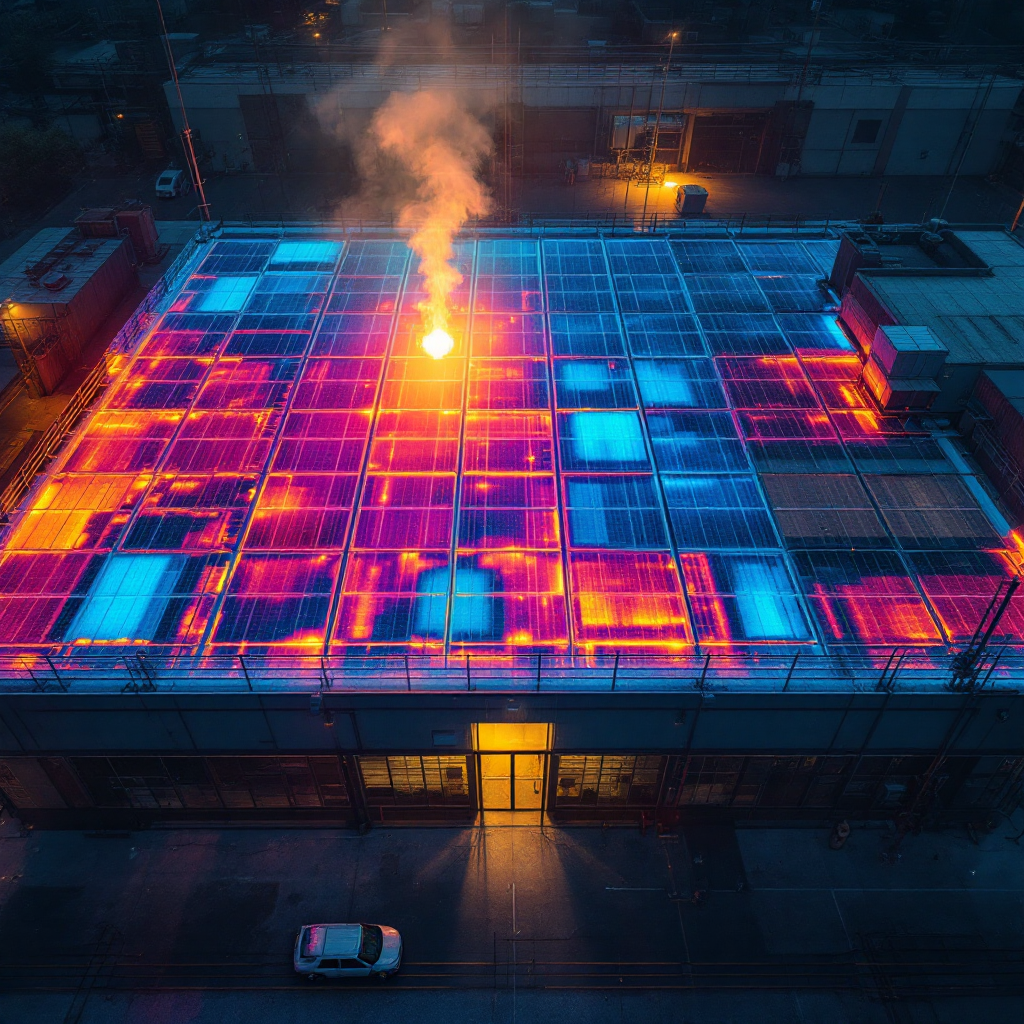
Hot spots arise from electrical faults, bearing failure, or friction. Loose electrical connections and overloaded circuits generate localized heat that a thermal camera makes visible. In motors, worn bearings cause heat buildup at specific points. Detecting these issues early reduces the chance of a component failure that causes downtime. Indeed, studies report that thermal imaging combined with AI can exceed 90% accuracy in identifying such faults in industrial environments research.
To set thresholds, calibrate to baseline temperatures for given equipment under normal load. Then, define a critical temperature above which intervention is required. Thermographers establish those thresholds during an initial inspection and then tune them as trend data accumulates. For many teams, a two-tier threshold works well: a warning range that triggers increased inspection and a critical range that triggers immediate maintenance.
Hot spot detection is most effective when paired with context. For example, linking a hotspot to a conveyor motor that has historically trended warmer or to electrical components near a loading area makes prioritisation clear. Automated models can rank alerts so maintenance crews focus on items that most threaten operations. This approach reduces false alarms and improves response time.
Case studies show practical benefits. In manufacturing and storage, targeted thermography cuts unplanned downtime by enabling timely repairs. Predictive maintenance programs that include thermal scans extend equipment life and reduce part replacement costs. To learn how video analytics can augment thermal checks and feed into maintenance workflows, read about our occupation and heatmap analytics that help plan inspections heatmap occupancy analytics.
AI vision within minutes?
With our no-code platform you can just focus on your data, we’ll do the rest
Proactive detection and predictive maintenance: boosting plant safety
AI-driven analytics turn thermal data into actionable events. Advanced AI models analyse patterns, filter noise, and recognise anomalies automatically. An ai-driven pipeline looks for localized heat, rapid temperature increases, and unusual trend deviations. When the system spots a risk, it issues an alarm and logs the event for review. This proactive detection shortens the window from issue emergence to response. Consequently, teams can act before a small fault becomes a system failure.
Predictive maintenance uses historical temperature trends to forecast failures. For example, trend analysis can show a motor that has steadily warmed over weeks. Maintenance crews can replace bearings at a convenient time, avoiding costly downtime. Predictive maintenance also reduces the volume of routine checks and focuses effort where it yields the most benefit. That improves plant safety and lowers maintenance costs across an operation.
Real-time temperature monitoring paired with AI reduces false alarms by correlating thermal events with video-based context. For instance, if a heat signature aligns with a forklift in operation, the system may suppress an alarm. Conversely, if a heat spike occurs near waste storage with highly flammable material, the system escalates immediately. This nuanced response helps prevent damage and supports fire prevention measures.
Finally, integration matters. Systems that stream events to building-management and SCADA systems close the loop between detection and action. Visionplatform.ai supports on-prem analytics and publishes structured events to MQTT so operations and security teams share the same situational picture. This cross-functional visibility helps teams deliver faster, safer responses and reduces the chance that a thermal event turns into a crisis.
Integrating sensor networks for continuous detection of leaks and hot spots
Distributed sensors make continuous monitoring feasible across large warehouses. Deploying a mesh of temperature sensors, infrared nodes, and cameras creates redundancy. Even when half the sensors fail, advanced spatial-temporal techniques such as Space-Time Kriging can localise thermal hotspots with high recall rates. One study reports up to 95% precision and 88% recall under sensor loss conditions research.
When designing a network, balance density and cost. Place more sensors near electrical panels, processing lines, and flammable materials. Elsewhere, a lighter sensor grid suffices. Also, mix sensor types. An infrared sensor complements contact-based temperature sensors by covering wide surfaces quickly. Together, they offer both accurate temperature points and scanning coverage.
Integration with a monitoring system and building-management software allows automated workflows. Alerts can trigger HVAC adjustments to reduce thermal leaks and lower energy use. For example, if sensors detect a persistent cold patch along a loading bay door, the system can flag it for repair and log expected energy loss. That supports efforts to reduce energy costs and to cut energy waste across the estate.
Finally, modern deployments couple sensor data with advanced ai-powered analytics to detect subtle temperature variations and to prioritise responses. Combining thermal cameras, sensors, and video analytics produces a robust, layered defence against both energy loss and the risk of fire. For technical teams looking at implementation, studies on AI and IoT integration demonstrate how to scale from pilot to enterprise-level monitoring while keeping data local and auditable reference.
FAQ
What is the difference between thermal imaging and thermography?
Thermal imaging is the process of creating images that represent temperature differences. Thermography is the science and practice of measuring and interpreting those thermal images. Both terms are related, but thermography emphasises measurement, logging, and analysis.
How often should thermal inspection be performed?
Inspection frequency depends on risk and asset criticality. High-risk zones like electrical rooms benefit from weekly or monthly checks, while low-risk storage areas may be on a quarterly schedule. Continuous monitoring with sensors reduces the need for very frequent manual inspections.
Can thermal systems detect a leak before energy bills rise?
Yes. Thermal surveys find insulation failures and thermal bridges early, which can prevent long-term energy loss and reduce energy bills. Early corrective action helps cut energy waste and improve efficiency.
Do thermal cameras replace smoke detectors?
No. Thermal cameras provide early-stage heat detection and complement conventional smoke detectors. They can detect heat and localized temperature increases before smoke appears, which supports early fire prevention and faster response.
Are thermal systems safe for electrical systems monitoring?
Yes, when used correctly. Non-contact thermal imaging allows inspection of electrical components from a safe distance. Ensure operators follow electrical safety protocols and use appropriate PPE during inspection.
How accurate is temperature monitoring with thermal imaging?
Accuracy depends on calibration, emissivity settings, and environmental factors. With proper setup, thermal imaging provides reliable temperature measurement suitable for trend analysis and anomaly detection. It is excellent for identifying relative changes even when absolute values vary slightly.
Can AI improve hotspot detection?
Yes. Advanced AI and ai-driven analytics reduce false alarms and prioritise meaningful events. AI models can combine thermal trends with video context to decide when to alert maintenance or security teams, improving speed and accuracy.
What role do sensors play alongside thermal cameras?
Sensors offer continuous numerical readings at fixed points and validate thermal camera findings. Combined, they provide both broad coverage and precise point data, improving overall detection reliability and enabling proactive detection workflows.
How do I prioritize maintenance from thermal alerts?
Prioritisation uses severity thresholds, trend data, and context. Set warning and critical thresholds during baseline scans. Then, use analytics to rank alerts by potential impact on operations and safety, focusing resources where the risk is highest.
Can existing CCTV cameras be used for thermal monitoring?
Standard CCTV cannot measure temperature, but video analytics can augment thermal data by providing object context. Visionplatform.ai turns existing CCTV into an operational sensor network that streams events and reduces false alarms, so teams can correlate thermal alerts with people, vehicles, or objects in the scene forensic search.