detection, thermal imaging and ai in manufacturing safety
Manufacturers need reliable detection of human presence on the shop floor, and AI-driven thermal imaging offers a practical path. AI models inspect infrared frames and then flag people, and they do so even when lighting fails. In heavy industry, visible light often cannot be trusted because of dust, smoke, or glare. Unlike traditional cameras, thermal systems sense temperature differences and can detect workers in total darkness or in obscured conditions. This gives operations teams a way to monitor human traffic and to reduce the risk of collisions with automated equipment.
Thermal imaging maps heat patterns so that AI can identify a person by their heat signature. A thermal camera mounted near a conveyor or robot cell will pick up heat that human bodies emit and then feed that data to models that classify movement and posture. These models are useful for access control, for ensuring safe distances around welding cells, and for closed-loop safety interlocks that stop motion when a person is too close. For a concrete performance benchmark, one recent study reports a sensor-only system achieving an F1-score of 93.08% in equipment monitoring, a result that underlines how reliably thermal detection can perform in industrial settings F1-score 93.08%.
Thermal imaging also supports compliance and incident forensics. When an alarm triggers, operators can review time-stamped thermal frames and structured events. Visionplatform.ai helps customers turn existing CCTV into operational sensors so you can apply tailored AI to site-specific rules and keep data on-prem. That approach helps avoid vendor lock-in and keeps audit trails local, which supports GDPR and EU AI Act needs. In human-robot collaboration trials, thermal inputs improved safe stop response and worker tracking; researchers describe using thermal feeds to enhance interaction safety human–robot collaboration.
Detection systems must also manage false positives and false negatives. False negatives in particular create safety risk because missed workers increase the chance of accidents. Engineering teams address that by combining refined models with regular calibration, and by testing under adverse weather and extreme lighting conditions. For broader industry context and dataset development that improves model robustness, see recent dataset work on thermal person detection in complex terrain dataset extension.
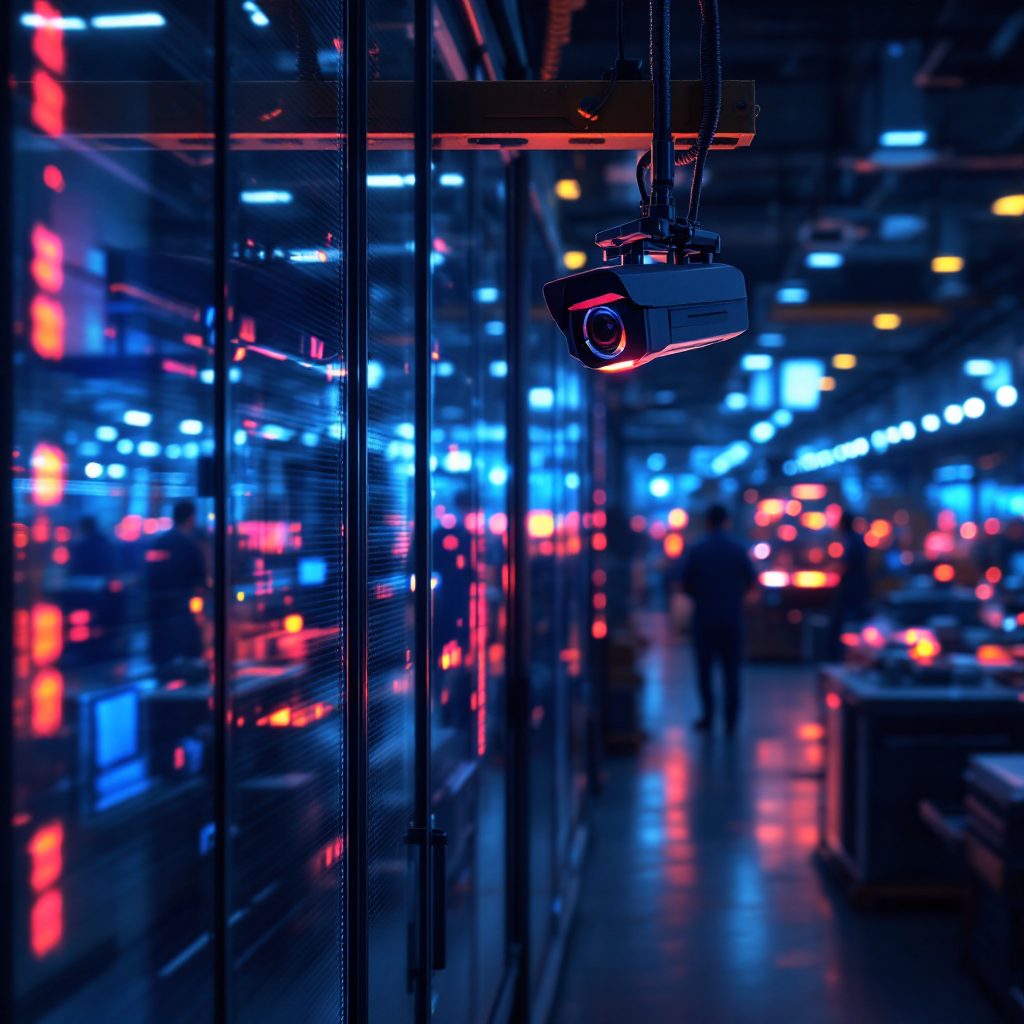
thermal detection: how thermal sensor systems detect people
Thermal sensor systems detect people by capturing infrared radiation and converting it into a temperature map. A thermal sensor or thermal camera measures the heat emitted by objects and then the AI model examines temperature patterns to classify a human outline. This approach works because humans usually emit a steady heat signature that contrasts with colder machinery or ambient surfaces. Thermal detection reduces dependence on optical performance and so it performs well when visible light is poor or when glare overwhelms an optical feed.
At a system level, processing pipelines take frames from a thermal camera and apply preprocessing to compensate for temperature fluctuations and thermal clutter. Then an AI-based classifier proposes candidate bounding boxes and a tracking layer follows movement across frames. Careful tuning of thresholds reduces false positives that come from hot equipment. Engineers address class imbalance during training so that the model does not ignore sparse human examples among abundant machinery heat. One study showed sensor-only detection significantly outperforms naive multimodal schemes for trustworthy equipment monitoring sensor-only advantage.
Performance metrics matter. Precision, recall, and the F1 score measure how well a monitoring system finds persons without crying wolf. In manufacturing, the cost of missed detections is high, so teams bias models toward fewer false negatives while preserving overall accuracy. Thermal systems can detect workers who wear insulating PPE or who stand partially occluded. They also help identify individuals with elevated body temperature in health screening workflows, without contact. Thermal cameras detect people across a range of distances depending on lens and resolution.
Thermal inspection extends beyond safety into quality control and defect detection. A thermal camera can spot hot spots on a press or on injection molding tools, and it can reveal temperature differences that precede a failure. That ability supports preventive maintenance and reduces downtime. When paired with a compact edge scanner and local AI, factories get a high-performance monitoring system that acts fast and that keeps data private.
AI vision within minutes?
With our no-code platform you can just focus on your data, we’ll do the rest
integration of sensor data with infrared thermal imaging
Integration of thermal sensor outputs with plant IT is essential for an operational solution. Raw infrared frames need context from PLCs and from the floor layout so that AI can map a thermal hit to a safe zone or to a restricted area. Systems that combine video events with MES and SCADA provide dashboards that operators use to act fast. Visionplatform.ai emphasizes streaming structured events over MQTT so cameras act like sensors and send actionable information to dashboards, to BI tools, and to security stacks.
Edge computing reduces latency. When an alarm must trigger an immediate motor stop, local inference is preferable to cloud inference. Placing models on an industrial server or on an NVIDIA Jetson ensures sub-second responses. That architecture also helps meet EU AI Act expectations by keeping data on-prem. For robust performance, integration includes environmental compensation to handle thermal clutter created by heated equipment. Calibration routines adapt to ambient temperature and to changing emissivity on surfaces so the AI keeps its detection capabilities reliable.
Infrared thermal imaging provides a complementary stream to optical feeds. A fusion strategy that weights thermal more heavily in obscured conditions and optical more in clear views yields better overall results than simple concatenation. Yet, some research finds that focused, well-tuned thermal models often beat naive multimodal merges for specific equipment monitoring tasks focused thermal models. For teams that want to explore people counting and occupancy analytics, an internal resource on people-counting solutions gives real examples from transport hubs and can translate to factories people counting examples.
Integration also opens workflows for preventive work. Thermal feeds feed maintenance analytics that predict bearing failures or overheating circuits. Those insights help reduce the risk of unplanned downtime and support a proactive approach to plant care. Cloud-only options exist, but on-prem edge processing keeps models controllable and keeps data within policy boundaries.
thermal inspection with thermal camera for non-contact worker monitoring
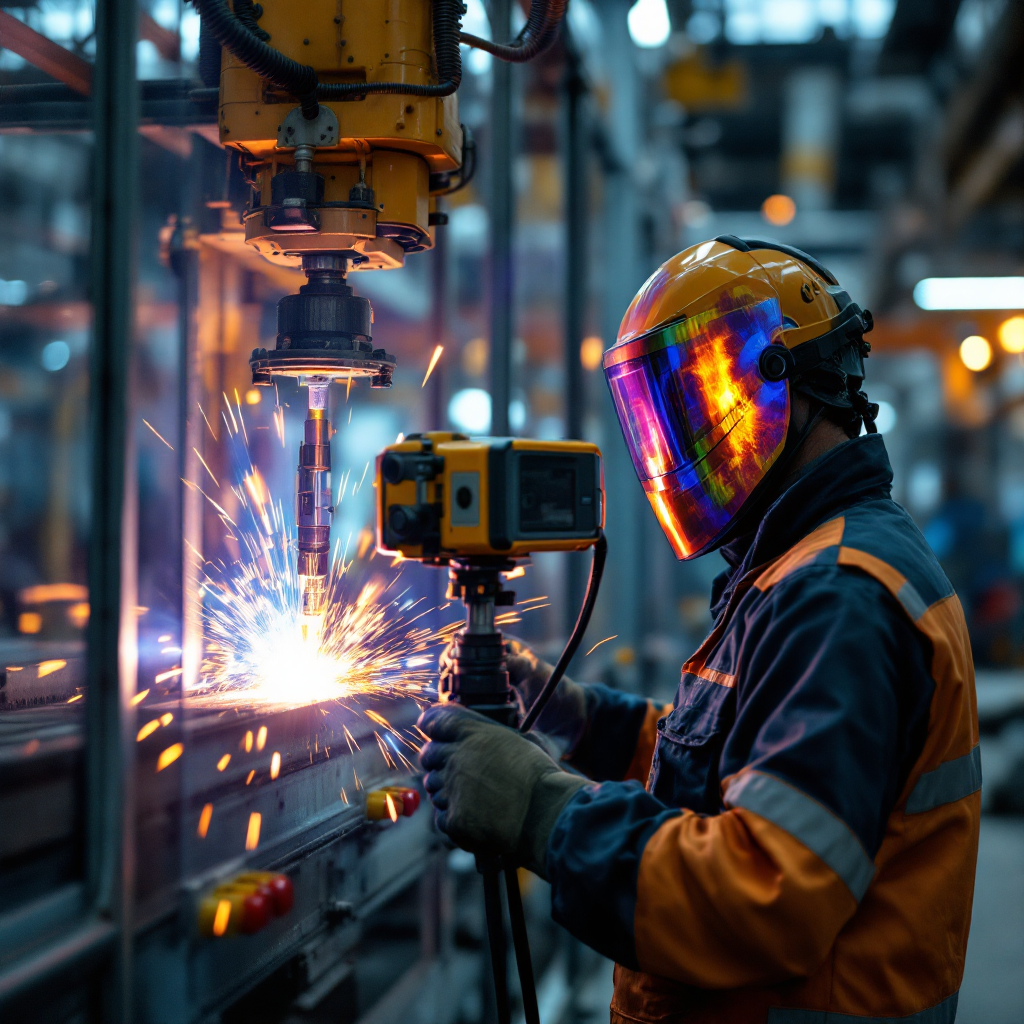
Thermal inspection with a thermal camera is a non-contact way to monitor workers and their environment. These systems measure surface temperatures and then AI interprets the scene for safety and for process control. Many sites install thermal cameras to monitor weld stations, and to warn when someone approaches a hot process. The cameras detect heat signatures emitted by objects, and they alert operators when a human enters a defined perimeter.
In welding areas, a thermal inspection setup can enforce safe distances so that sparks and spatter do not reach a person. It can also trigger local ventilation or an interlock if temperatures rise above programmed limits. For quality control, thermal inspection helps spot defective joints where heat distribution looks abnormal. Use thermal feeds together with inspection rules to reduce defects and to protect people from burns. Automated alerts and event logs provide clear evidence for incident investigations.
Thermal cameras detect elevated body temperature when configured for health screening, but they should not replace clinical devices. For monitoring workflows, non-contact sensing speeds checks and avoids manual checks that slow production. A thermal sensor can flag an abnormal temperature and then route the event to security or to occupational health. This approach proved useful in the COVID-19 pandemic and remains a low-cost screening tool when required.
For sites wanting to trial thermal inspection, start with a pilot over one production line. Deploy a few thermal cameras and link events to a dashboard. That lets teams measure false alarm rates, tune detection thresholds, and then scale. For implementation details that bridge security and operations, see how Visionplatform.ai turns cameras into operational sensors and streams structured events into existing systems turn cameras into sensors.
AI vision within minutes?
With our no-code platform you can just focus on your data, we’ll do the rest
use cases: people counting, burglar alarms, weld monitoring and iot solutions
Thermal solutions serve a wide range of use cases on the factory floor. For occupancy management, people counting with thermal data helps balance workflows and improves evacuation planning. For perimeter security, thermal sensors feed intrusion detection that works at night and in poor lighting, which enhances traditional burglar alarms. In welding and hot-process areas, thermal monitoring enforces safe clearances and prevents equipment damage that arises from unsafe proximity.
Thermal systems can detect issues before they escalate. A thermal scanner that watches a motor housing will report rising patterns that suggest a failing bearing. That kind of defect detection reduces downtime and prevents secondary damage. When thermal outputs join IoT platforms, analytics can correlate temperature patterns with production KPIs to improve overall equipment effectiveness. Integration with PLCs and MES enables closed-loop responses, such as slowing a conveyor or pausing a press when a hot zone appears.
Across diverse environments, infrared cameras offer reliable performance unlike traditional optical systems that depend on visible light. Thermal devices work in fog, in dust, and in total darkness. They also help with fire prevention by spotting hot spots on insulation or on electrical cabinets. For perimeter security and intrusion detection, thermal feeds spot an intruder long before an optical camera can confirm identity.
To get practical, many companies deploy thermal people detection first on a single line and then expand. The low-cost of modern thermal cameras and the availability of edge AI make pilots affordable. For teams that want both security and operations value, Visionplatform.ai provides pipelines that publish structured events so alarms are useful beyond traditional surveillance. That lets security alerts populate dashboards and feed OT systems, which helps improve overall safety and efficiency.
ai-powered end-to-end systems: benefits of thermal and faster time-to-market
AI-powered end-to-end solutions accelerate deployment of thermal safety systems. A modular platform that supports model selection and on-site retraining reduces development cycles and shortens time-to-market. By using existing CCTV or adding thermal cameras, teams can roll out people detection with fewer infrastructure changes. Visionplatform.ai’s model library and on-prem options let customers iterate quickly with their own data, which keeps training local and auditable.
The benefits of thermal include non-invasive monitoring, reliable operation across lighting conditions, and the ability to detect temperature differences that precede failures. Thermal sensing also helps product quality by exposing uneven heating in processes like injection molding and in automotive parts production. Quality control improves when thermal inspections are routine and when results feed analytics for trend detection.
An end-to-end lifecycle includes sensor deployment, local inference, event streaming, and reporting. That flow supports a proactive approach to maintenance and safety. With structured thermal events, operations staff can schedule repairs before a breakdown, thus reducing downtime. For sites under strict privacy or regulatory constraints, on-prem edge processing offers a GDPR-ready path that lets teams own their models and their data.
Because thermal detection integrates well with existing control systems, it can support closed-loop automation that halts machinery when a person enters a danger zone. That capability protects people and it limits production loss from accidents. Overall, combining thermal imaging with AI and with practical deployment patterns helps factories protect workers, improve product quality, and speed the path from pilot to scale.
FAQ
What is thermal people detection and how does it work?
Thermal people detection uses infrared thermal imaging to sense heat emitted by human bodies and then AI models analyze the temperature patterns to identify people. The system converts thermal frames into structured events that operators or automated systems can act on.
Can thermal cameras detect people in total darkness?
Yes, thermal cameras detect heat signatures and do not rely on visible light, so they perform well in total darkness and in smoky or dusty conditions. This makes them a reliable tool for night shifts and for areas with poor lighting.
How accurate is thermal detection compared with optical systems?
Thermal systems can be highly accurate when paired with tuned AI models; for instance, a sensor-only approach in one study achieved an F1-score of 93.08% for equipment monitoring F1-score 93.08%. Accuracy depends on sensor quality, model training, and environmental calibration.
Are thermal systems useful for weld monitoring?
Yes, thermal inspection and thermal cameras are used to monitor weld stations and hot processes to ensure safe distances and to detect abnormal heating that could indicate defects. Those alerts reduce the chance of burns and equipment damage.
Do thermal sensors violate privacy?
Thermal cameras provide silhouettes and temperature maps rather than optical detail, which often offers a privacy-preserving view compared with traditional cameras. Still, deployment should follow company policy and legal requirements, and on-prem processing can keep data local.
Can thermal detection be integrated into existing factory systems?
Yes, thermal feeds and AI events can integrate with MES, SCADA, and PLCs to enable dashboards and closed-loop safety responses. Solutions like Visionplatform.ai stream structured events over MQTT so cameras become operational sensors.
How do thermal systems handle hot machinery that might confuse detection?
Calibration and model training handle thermal clutter by compensating for background heat and by using context to reduce false positives. Regular tuning and environmental compensation keep detection reliable near hot equipment.
Is thermal screening effective for health checks like elevated body temperature?
Thermal systems can identify individuals with elevated body temperature as a preliminary screen, but they are not a clinical diagnostic tool. They provide a non-contact, low-cost method to flag potential cases for follow-up.
What deployment options exist for thermal AI systems?
Deployments range from edge servers and NVIDIA Jetson devices to GPU servers or cloud options, but on-prem edge inference is common for fast response and for regulatory compliance. Modular AI platforms let teams choose models and train on local data.
How can I pilot thermal people detection in my plant?
Start with a single line or a high-risk cell, install a thermal camera, and stream events to a dashboard for a pilot. Measure false alarm rates, tune thresholds, and then expand coverage. For operational integration examples, review people counting approaches that translate from transport hubs to sites people counting examples.