Chapter 1: AI-powered PPE detection and personal protective equipment in manufacturing
AI-powered PPE detection refers to systems that use machine learning and computer vision to recognize PPE on people in industrial settings. On the factory floor, these systems assess whether workers wear personal protective equipment such as hard hats, safety glasses, gloves, and safety vests. They then stream structured events for operations and safety teams so teams can act quickly. This approach helps enforce safety standards, reduce human monitoring load, and automate routine checks that would otherwise require many hours of manual review.
Manufacturing environments carry many hazards. For instance, moving machinery, heavy loads, and chemical exposure create high-risk zones where a missed step can cause harm. Therefore companies require protective gear to limit that danger. Hard hats and safety glasses protect heads and eyes. Gloves protect hands when handling parts and chemicals, and safety vests increase visibility near vehicles and forklifts. In addition, clear safety protocols and adherence to safety regulations remain essential to keep the shop floor stable and safe.
AI systems detect PPE and identify whether workers are wearing the correct items for specific tasks. For example, a camera can flag when a worker enters a high-risk area without hard hats or a vest. Then the system issues an alert to supervisors or safety officers so they can intervene. This automated approach reduces reliance on shift supervisors and supports consistent PPE compliance across multiple shifts and sites.
Because these systems work with cameras and edge devices, companies can adopt them with minimal disruption to workflow. Visionplatform.ai, for example, turns existing CCTV into an operational sensor network that can detect people and PPE in real time and publish events to operational dashboards. You can learn how this integrates with people-focused solutions such as detailed people detection and thermal people detection for perimeter and crowd use cases by reading our resources on people detection in airports and thermal people detection in airports.
Finally, AI-powered PPE detection helps audit routines and offers compliance data for safety teams. It provides time-stamped evidence that supports audits and continuous improvement. As a result, facilities can both enforce safety and track trends in PPE usage to drive training and better safety culture.
Chapter 2: PPE detection technology: detection models and modern PPE detection systems
Detection technology for PPE relies on object detection and classification models that run on video streams. Common detection models include convolutional neural networks and fast, single-stage approaches such as YOLOv8. These ai models recognize PPE items, locate persons in frames, and then label items like hard hats and safety vests. Because these models work at speed, they support real-time ppe monitoring and allow sites to automate checks without slowing operations.
Datasets drive model quality. For example, the SH17 dataset focuses on human safety and PPE compliance and helps researchers and vendors train robust detectors for industrial scenesSH17: A Dataset for Human Safety and Personal Protective Equipment. In addition, published frameworks such as ESPCN-YOLO show how customized pipelines boost accuracy on helmets, vests, and masksESPCN-YOLO: A High-Accuracy Framework for Personal Protective…. These references demonstrate that good training data and architecture choices yield higher true positives while keeping false alarms low.
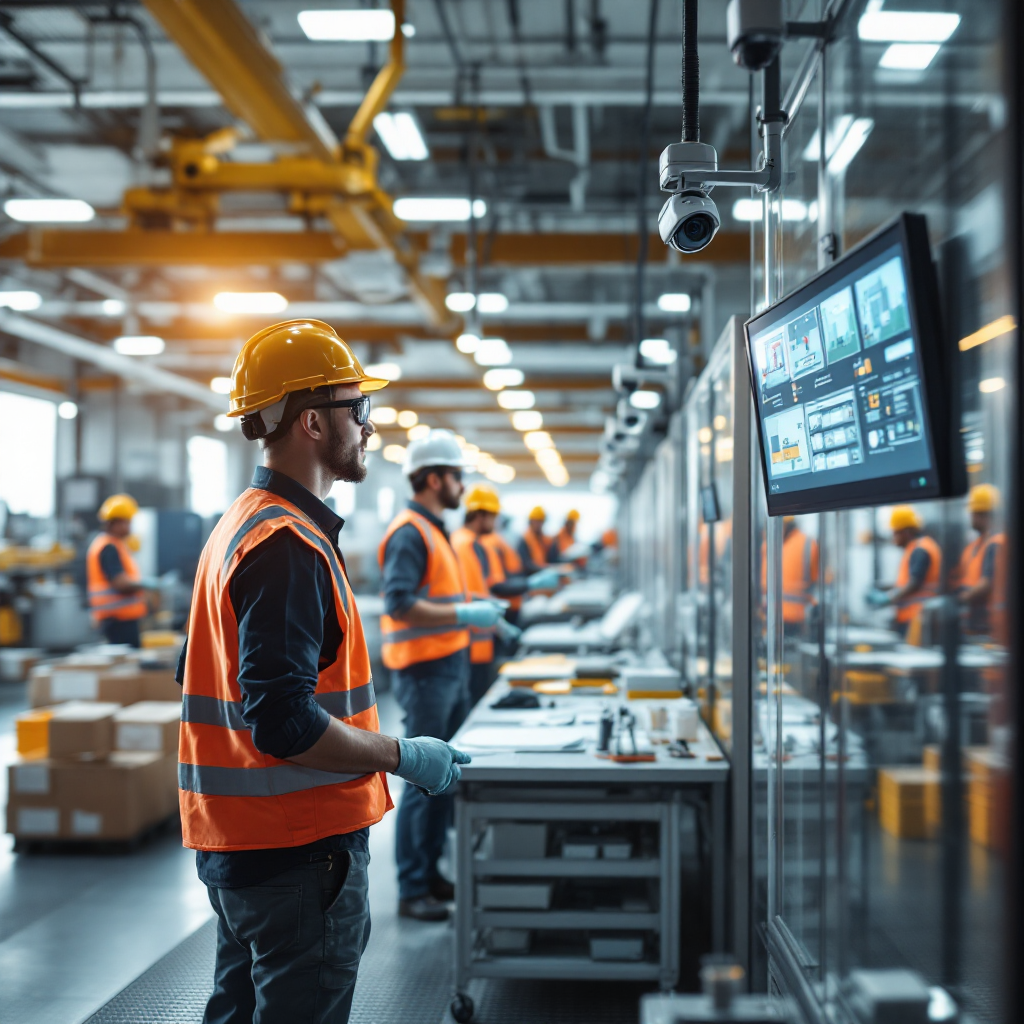
Modern ppe detection systems vary by speed and precision. Some run on edge devices for low latency and privacy. Others use GPU servers and cloud analytics for heavy model training and aggregated compliance reports. Benchmarks often compare frames per second and mean average precision. For instance, YOLO-based pipelines favor throughput and near-real-time response, while heavier CNN ensembles prioritize marginal accuracy gains. When teams choose a solution, they balance model latency, accuracy, and the need to integrate with existing VMS and operations.
Beyond raw models, practical systems include model retraining, site-specific tuning, and tools to reduce false positives. Visionplatform.ai emphasizes flexible model strategy: pick an existing model, improve it on your data, or build a new model from scratch. This on-prem approach keeps data local, supports EU AI Act alignment, and lets organizations tailor detection to their site-specific types of ppe and lighting conditions. For further context on tailored integrations, see our article on PPE detection in airports which explains how site-specific tuning improves results PPE detection in airports.
AI vision within minutes?
With our no-code platform you can just focus on your data, we’ll do the rest
Chapter 3: AI-driven PPE detection for consistent PPE compliance and accurate PPE detection
AI-driven ppe detection enforces consistent PPE compliance across shifts and sites. By continuously monitoring video feeds, these systems remove much of the need for spot checks that can miss non-compliance. Instead, automated alerts and audit logs capture when employees fail to wear PPE correctly. This consistent approach reduces variations that occur when different supervisors apply rules inconsistently.
Key metrics for accurate PPE detection include precision and recall, plus latency for real-time performance. Precision measures how often the system correctly flags a violation versus false alarms. Recall measures how often the system finds real violations. For operations, a balanced trade-off matters: too many false alarms frustrate safety officers and workers; too few detections leave gaps in protection. Therefore teams tune thresholds and retrain models on site data to hit operational targets.
Non-invasive monitoring matters for adoption. Systems that process video on edge devices limit data leaving the site and help address privacy concerns and compliance requirements like GDPR. Visionplatform.ai supports on-prem processing so enterprises own their data and training sets. This approach also enables structured compliance data that informs audits and continuous improvement. Auditors can review time-stamped events when they need to track adherence and to verify the use of protective gear.
AI also reduces errors that are prone to human error. Machines inspect every frame and do not fatigue during night shifts. As a result, the system detects omissions and can immediately alert supervisors. The system also supports overlays and dashboards that let safety managers assess trends and recurring issues. With clear compliance data, safety teams can target training or redesign workflows to improve the proper use of PPE.
Chapter 4: PPE detection solution with alert features and safety tech
A robust ppe detection solution combines cameras, edge devices, and cloud analytics into a single workflow that feeds operations. Cameras stream video to on-prem edge servers that run ai models. Those servers then send events to dashboards and to messaging systems such as MQTT so other tools can consume detections. This architecture keeps latency low and data local, and it makes it simple to automate alerts without moving raw video off-site.
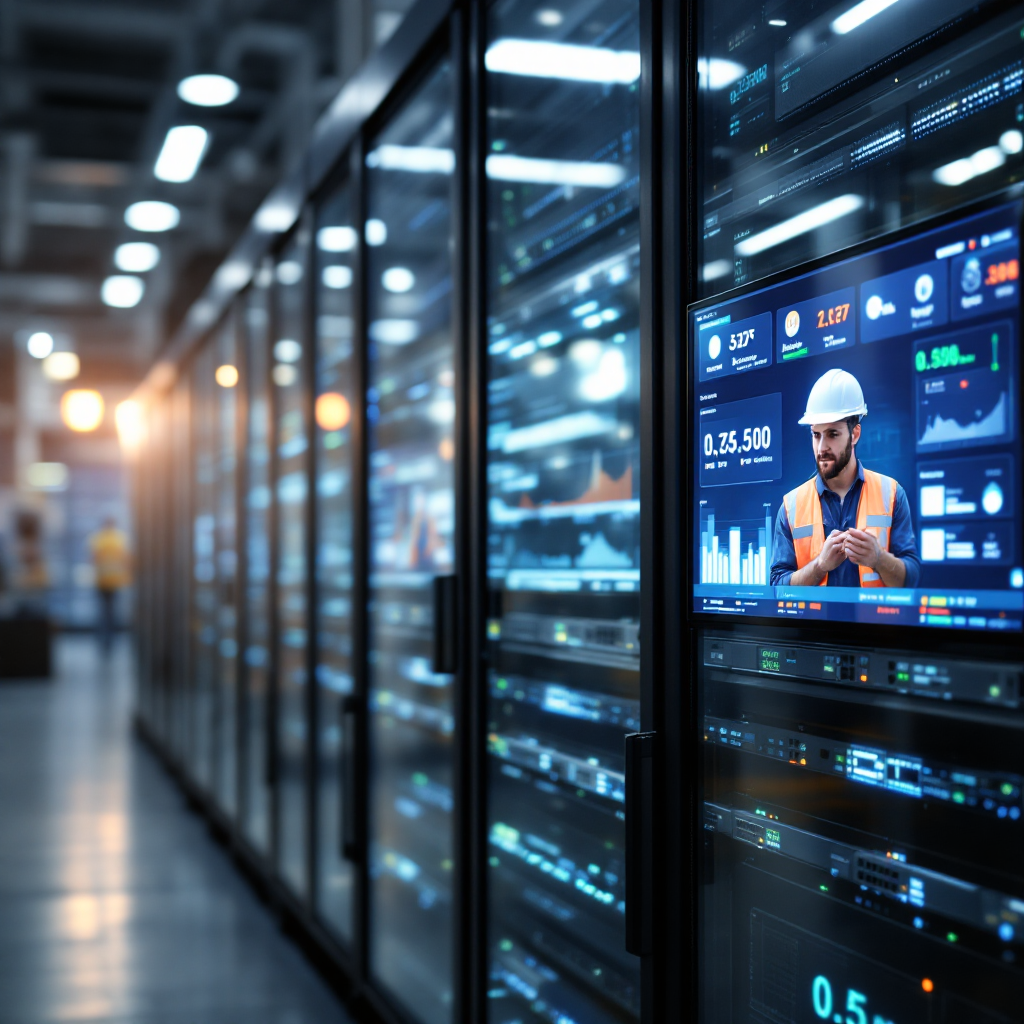
Alert workflows are simple and effective. When the system detects non-compliance, it sends an instant alert to supervisors, safety officers, or floor managers. Alerts can route via SMS, email, or integration with a VMS. For instance, Visionplatform.ai can stream detections into an existing security stack and operational dashboards so frontline teams can act immediately. This capability lets teams enforce safety and reduce response time after a system detects missing hard hats or safety vests.
Integration with safety tech and reporting tools boosts value. Real-time ppe monitoring feeds analytics that reveal compliance trends over time. These analytics help safety managers and safety teams quantify improvements and present audit-ready records for regulators. In turn, leaders can measure overall safety, reductions in safety incidents, and how adherence to safety regulations changes after interventions. Also, smart integrations support connections to maintenance and OT systems so cameras operate as sensors that inform broader operational decisions.
Finally, the system detects a range of ppe items including hard hats, safety glasses, and safety vests. It can also recognize if people wear gloves or specialized protective gear in ppe in hazardous roles. By combining automated ppe detection with alerting, safety officers get a single source of truth that helps enforce safety and drive a culture of safety on the floor.
AI vision within minutes?
With our no-code platform you can just focus on your data, we’ll do the rest
Chapter 5: Workplace safety with AI: reducing workplace injuries and ensuring PPE usage
AI and automated monitoring can significantly improve worker safety. Studies show proper PPE use supported by monitoring technologies can reduce workplace injuries by up to 40% A Systematic Review On The Effectiveness Of Personal Protective…. In practice, facilities that add real-time detection and alerts see fewer workplace injuries over time because they catch violations before they escalate. For example, automated ppe detection paired with immediate alerts shortens the time between a safety breach and corrective action.
Market demand reflects this shift. The U.S. PPE market is projected to grow strongly through 2030 as manufacturers invest in both physical PPE and digital safety solutions U.S. Personal Protective Equipment Market Report, 2030. This growth supports combined investments in protective equipment and ai-powered workplace safety solutions that both provide gear and verify its use in the field.
Experts praise these systems for improving adherence to safety regulations. As Dr. Jane Smith notes, “The integration of computer vision-based PPE detection in manufacturing…provides real-time feedback and accountability” PPE Detection Using Computer Vision for Workplace Safety – Encord. Similarly, safety managers report that automated detection helps them intervene earlier and reduce repeated violations ESPCN-YOLO: A High-Accuracy Framework for Personal Protective…. These statements underline that timely detection and audit trails make workplaces safer.
Case studies back these claims. Deployments that combine detection models with targeted training and revised safety protocols show fewer safety incidents and better adherence to safety standards. Over time, the combination of ppe monitoring, alerts, and analytics boosts overall safety and helps build a stronger culture of safety.
Chapter 6: Future of proper PPE and AI PPE detection in manufacturing
Current challenges remain. Systems must handle poor lighting, occlusions, and crowded scenes that can obscure PPE. They also need to respect data privacy and integrate with legacy workflows without adding friction. Companies must balance detection accuracy with minimal disruption, and they need clear policies for data retention and audit access so stakeholders can trust the system. Additionally, organizations face compliance requirements and must show adherence to safety regulations when using automated monitoring.
Emerging trends aim to solve these problems. For example, smart PPE with embedded sensors will complement vision by reporting conditions from the wearer. Combined approaches will create unified hazard monitoring that evaluates both environment and PPE. Also, hybrid deployments that run models on edge devices and centralize analytics will let teams scale without moving sensitive video off site. Research into improved algorithms and datasets such as SH17 will continue to raise detection performance for real-world manufacturing scenes.
Best practices help adoption. First, pilot systems on a small set of cameras and tune models on local footage. Next, involve safety officers and front-line teams early so workflows remain practical. Then, use compliance data to fuel training and to adjust protocols where gaps appear. Finally, ensure systems operate transparently so workers understand how detections work and why detections trigger audits or alerts.
To summarize, AI ppe detection will evolve toward more integrated solutions that recognize ppe items across complex scenes, that automate repetitive checks, and that keep data local for regulatory readiness. When designers align detection models with safety standards and with clear operational workflows, they enforce safety and make the workplace safer while keeping teams productive and compliant.
FAQ
What is AI-powered PPE detection?
AI-powered PPE detection uses computer vision and machine learning to recognize personal protective items on people in video streams. It then creates events and alerts so safety teams can respond quickly and document compliance.
How accurate are modern PPE detection systems?
Accuracy varies by model and dataset, but modern PPE detection systems can reach high precision and recall when trained on relevant site data and tuned for local conditions. Performance improves further when teams retrain models on their own VMS footage and reduce false positives.
Can an AI system detect hard hats and safety glasses?
Yes. Object detection models such as YOLOv8 and CNN-based pipelines can detect hard hats and safety glasses in real time when properly trained and deployed. For best results, use labeled images from the actual work environment.
Do these systems violate worker privacy?
They can, if configured poorly. However, on-prem and edge-first deployments process video locally and send only metadata or alerts off-site to reduce privacy risk. Clear policies and data retention rules further protect privacy.
How do alerts work in a PPE detection solution?
When the system detects non-compliance, it sends an alert to supervisors or safety officers via SMS, email, VMS overlay, or MQTT streams. Alerts include time-stamped events to support fast intervention and to create audit trails.
Will automated PPE detection replace safety officers?
No. The technology augments safety officers by automating routine checks and providing compliance data. It lets officers focus on training and handling complex safety decisions rather than manual monitoring.
Can these systems handle harsh factory lighting and occlusions?
They can, but models require robust datasets and site-specific tuning to handle poor lighting and occlusions effectively. Combining different camera angles and retraining with local footage improves robustness.
How do I integrate PPE detection with my VMS?
Many solutions integrate via ONVIF/RTSP streams and support common VMS platforms. Visionplatform.ai, for example, works with leading VMS systems and publishes events to MQTT so you can stream detections to dashboards and BI tools.
What metrics should I track after deployment?
Track precision, recall, the number of alerts, response time to alerts, and trends in PPE usage over time. These metrics help demonstrate adherence to safety regulations and guide targeted training.
Does PPE detection reduce workplace injuries?
Yes. Research shows that proper PPE use, supported by monitoring, can reduce workplace injuries substantially, with studies reporting reductions up to 40% when combined with appropriate interventions. For more details, see the systematic review on PPE effectiveness and industry reports on market trends in PPE adoption.