Detection of workplace violence and aggression in manufacturing
Workplace violence covers a wide range of harmful acts. It includes physical assaults, verbal threats and psychological intimidation. Manufacturing sites must address physical assaults that interrupt production and injure staff. They must also address verbal threats that erode trust over time. Psychological intimidation can undermine morale and increase turnover in a work environment that depends on team coordination and strict safety procedures.
Statistics make the risk clear. The U.S. Bureau of Labor Statistics shows that about 15% of nonfatal workplace violence incidents resulting in days away from work occurred in manufacturing in 2023 (Bureau of Labor Statistics data). In many manufacturing reports, verbal aggression accounts for nearly 60% of reported incidents, while physical aggression makes up about 25% (work-related exposure review). A survey among manufacturing employees found that roughly 30% experienced some form of workplace aggression in the past year, with 12% reporting physical threats or assaults (employee survey).
Several factors raise the odds that violence occurs in factories. High-pressure production targets and repetitive tasks can cause frustration. Hazardous conditions and fatigue reduce patience and raise stress. Crowded workstations and shift overlap increase chances for conflict. Shift handovers and noisy floors create misunderstandings that can escalate. In some plants, tight deadlines and overtime add to tension and increase the probability of physical altercations or hostile behavior.
Early detection and clear policies help reduce risk. The International Labour Organization states that “workplace violence is a global phenomenon that affects all sectors, including manufacturing, and requires comprehensive prevention strategies” (ILO guidance). Effective workplace violence prevention blends training, reporting systems and technological tools. For example, adopting video surveillance and reporting platforms gives teams better visibility. Visionplatform.ai helps manufacturers use existing cameras to detect people, PPE and custom objects, so managers can spot unsafe conditions and respond faster. Also, clear policies and defined escalation routes give staff the confidence to report verbal threats or intimidation. First, communicate expectations. Second, establish support procedures. Third, audit outcomes regularly.
First, next, then, also, additionally, meanwhile, however, therefore, consequently, thus, in addition, specifically, notably, for example, similarly, nonetheless, still, besides, finally, as a result.
ai-powered surveillance and video analytics for real-time violence detection
AI-powered CCTV and video analytics now offer active tools to enhance safety. These solutions transform video feeds into actionable events. They run behavior recognition on live video frames and flag signs of aggression or suspicious behavior. With advanced AI, systems can analyze movement patterns, crowd behavior and sudden clustering. Video analytics can spot raised hands, fast movements and crowd surges that suggest a fight or a potential threat.
Real-time violence detection gives supervisors a chance to intervene before threats escalate. Alerts can trigger a rapid response that de-escalates and prevents physical violence. For example, in automotive and electronics plants that piloted AI solutions, teams saw faster response times and clearer incident logs. In those pilots, video surveillance linked to operations dashboards helped safety managers coordinate a rapid response with security and floor supervisors. That faster response reduced downtime and supported a productive work environment.
Video analytics ties into existing video management systems and operational control rooms. You can integrate video surveillance with access control and incident reporting. Visionplatform.ai turns existing CCTV into an operational sensor network, so video events stream into MQTT topics for dashboards and BI. This approach reduces vendor lock-in and keeps data on-prem, which supports GDPR and EU AI Act readiness. The platform can also improve object detection and reduce false positives by retraining models on site-specific footage.
Additionally, organizations should test systems in a pilot area first. A pilot helps tune sensitivity and balance false positives. Also, staff need training so they trust alerts and respond correctly. For practical guidance on perimeter and crowd analytics, teams can reference related case studies on process anomaly detection to see how vision telemetry supports operations (process anomaly detection). Hospitals and clinics provided early data on fight detection that informed best practices for public spaces, and manufacturing can adapt those lessons for shop floors (violence and aggression detection reference).

AI vision within minutes?
With our no-code platform you can just focus on your data, we’ll do the rest
computer vision detection module to spot anomalies and aggressive behavior
A detection module for manufacturing usually combines computer vision and behavior models. The detection module relies on deep learning models for object detection and behavior recognition. It classifies people, gestures and objects, and it flags suspicious behavior. A robust detection model trains on site footage to reflect the real-world layout and the common movement patterns on a line. That reduces false positives and improves sensitivity to real threats.
Anomaly detection then complements behavior recognition. For instance, the system learns typical movement patterns for a shift and flags deviations. If a worker falls out of normal walking flow or a small group clusters unexpectedly near a machine, the system can spot the change. The anomaly term applies when sensors find a deviation from normal video frame statistics. Such anomalies often signal an emerging incident or a safety hazard that requires inspection.
Aggressive behavior markers include rapid movements toward another person, sudden arm motions and repetitive hitting gestures. Computer vision can also detect raised voices indirectly through coordinated signals — mouth movement, leaning in, and aggressive body posture. The module can combine audio where local law permits, but it often uses visual cues alone to trigger an initial review and then trigger an alert for human verification. Object detection helps too. Detecting dropped tools or thrown objects may predict escalating incidents or potential threats before they become physical aggression.
Manufacturers should ensure that the detection model and the detection module can integrate with video management systems and the plant’s management systems. Integration enables event streaming to control rooms, to maintenance teams and to safety dashboards. To reduce false positives, retrain models on your footage and label edge cases. Visionplatform.ai lets teams build new models or refine existing ones on private data, so models align with site-specific conditions and PPE classes (PPE detection reference). This approach keeps sensitive data local and gives teams ownership of model behavior.
Real-time alerts and coordinated response to detect aggressive incidents
Real-time alerts matter because seconds count during an aggressive incident. When AI detects a cluster or a fight, it should trigger real-time alerts so staff can respond. Alerts can take multiple forms: SMS to supervisors, push notifications via apps, control-room audio alarms or automated messages to security personnel. A single trigger can also publish a structured event to an operations dashboard for line managers.
An effective coordinated response ties security, safety officers and medical teams together. When the system triggers an alert, a clear protocol should define who acts first. Security personnel can secure the area. Safety officers can assess hazards. Medical teams can check injured workers. A coordinated response reduces time to stabilize the scene and helps de-escalate tension. It also preserves evidence by ensuring video feeds stay locked and logged for later review.
Logging and audit capabilities are critical. Every trigger should create an auditable incident record. That log should include video clips, timestamps and the detection model version. An audit trail supports root cause analysis and continuous improvement. Over time, incident logging lets teams analyze patterns, spot repeat hotspots and update clear policies. Those policy updates prevent recurrence and support workplace violence prevention.
Integration pays off. When AI system events feed into existing surveillance cameras and the plant’s video management systems, the team gains context fast. Integrate alerts with access control so doors can lock or open automatically during a response. Integrate with incident reporting platforms so human reports and AI events join one timeline. This design helps to reduce false positives and ensures commanders see corroborating data before they commit resources. Also, automated triggers that instruct staff to de-escalate using trained scripts help to prevent threats before they escalate.
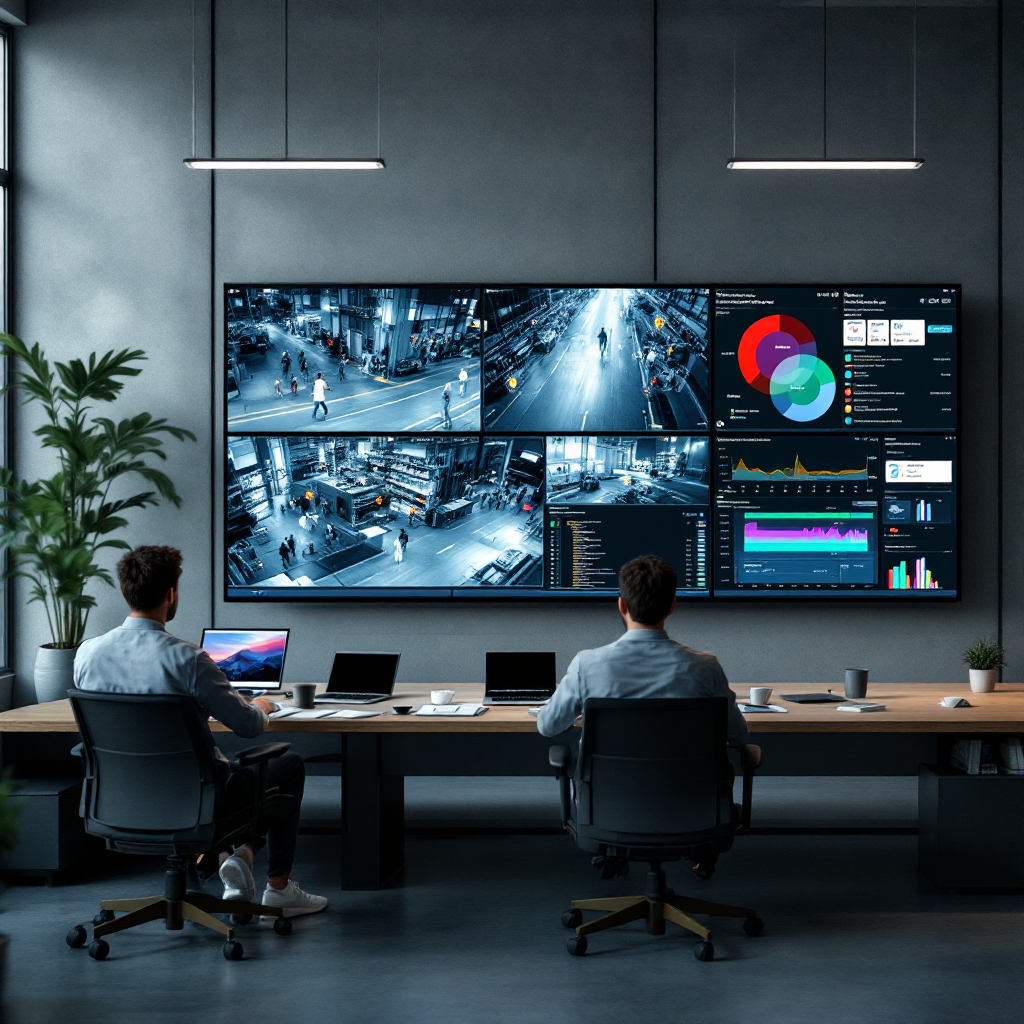
AI vision within minutes?
With our no-code platform you can just focus on your data, we’ll do the rest
Fight detection and aggression detection: lessons from healthcare facilities
Healthcare facilities provide useful lessons for manufacturing. Hospitals and clinics often face high rates of aggressive incidents and have invested in fight detection and other detection models. They developed protocols to respond to verbal threats and physical aggression in busy public spaces. Those protocols emphasize staff training, fast escalation protocols and de-escalation tactics that also work on a shop floor.
Fight detection algorithms used in hospitals often rely on posture analysis, rapid approach detection and crowd behavior analysis. These same techniques translate well to production lines and assembly areas. For example, an algorithm trained to flag sudden clustering in an emergency department can flag a sudden crowding around a conveyor belt. The behavior recognition and deep learning models for healthcare inform how to approach object detection and behavior thresholds in manufacturing.
Best practices transfer easily. First, use staff training to pair AI alerts with human judgment. Second, set escalation protocols that define clear roles for security, supervisors and medical responders. Third, review incident logs to refine model sensitivity. Health teams frequently use post-event reviews to debrief and update clear policies. Manufacturing teams can adopt the same review cadence to reduce repeat aggressive incidents and to strengthen physical security around high-risk stations.
Also, clinicians taught the need to manage false positives responsibly. Too many false alarms fatigue responders. To reduce false positives, combine visual cues with context — shift time, machine state and access logs. Anomaly detection helps when it learns normal crowd patterns, which makes it easier to spot hostile behavior that truly requires intervention. In short, learn from hospitals and clinics, adapt protocols to your shop floor, and ensure AI solutions stay aligned to your operational reality.
Deploying an ai system for comprehensive workplace violence detection in manufacturing
Deploying an AI system requires planning and a measured rollout. Start with a comprehensive risk assessment. Identify high-risk areas and typical crowd behavior around machines. Use that analysis to choose the locations for cameras and sensors. Then run a pilot in one zone to validate the detection model and the detection module settings. Pilots help teams tune sensitivity and manage false positives before full-scale deployment.
An AI system typically includes cameras, edge servers, analytics software and a central dashboard. You should choose hardware that can handle deep learning models in real-time. Existing surveillance cameras can often feed the system, which lowers cost and speeds deployment. The platform should also integrate with access control, incident reporting and video management systems so events flow to the right teams. Integration helps teams respond and analyze incidents across systems.
Rollout steps matter. First, perform a privacy and legal audit and document data flows to meet compliance. Second, run a pilot with clear evaluation metrics for early detection, false positives and faster response. Third, train staff on protocols that trigger a coordinated response and de-escalation tactics. Fourth, scale gradually and continue to analyze results. The audit record supports transparent policy decisions and supports an ongoing AI governance process.
Visionplatform.ai supports on-prem and edge deployments that keep data local and models auditable. That helps to align with EU AI Act and GDPR concerns while enabling organizations to own models and data. Also, by streaming structured events to operations stacks, the same system can support safety and security while powering dashboards that improve OEE. Finally, remember that detection helps only when paired with training, clear policies and a proactive approach. Adopt a mix of technology, human response and periodic training to prevent violence and to maintain a productive work environment.
FAQ
What is workplace violence in a manufacturing context?
Workplace violence in manufacturing includes physical assaults, verbal threats and psychological intimidation that occur between employees or between staff and supervisors. It also covers actions that create a hostile work environment or put safety and security at risk.
How can AI improve early detection of aggressive behavior?
AI can identify deviations from normal movement patterns and flag sudden clustering or fast movements associated with aggressive incidents. AI can also combine object detection and behavior recognition to trigger an early warning so teams can respond quickly.
Are there privacy concerns when using video analytics on the shop floor?
Yes. You must assess legal and privacy impacts before deployment and keep data handling transparent. On-prem edge processing and auditable logs reduce risk and support compliance with regulations like the EU AI Act.
Can existing surveillance cameras be used for AI deployments?
Yes. Many systems accept streams from existing surveillance cameras and feed them into analytics engines. Using existing cameras lowers cost and simplifies rollout while keeping video feeds in your control.
How do you reduce false positives in fight detection?
Reduce false positives by training detection models on site-specific footage and by combining visual cues with context such as machine state and shift schedules. Ongoing audits and fine-tuning of thresholds also help to reduce false alarms.
What should a coordinated response plan include?
A coordinated response plan should define roles for security personnel, safety officers and medical responders. It should include communication channels, de-escalate procedures and an audit trail for post-event analysis.
How do manufacturers integrate AI alerts with existing systems?
Integration usually uses APIs, webhooks or MQTT to stream structured events into video management systems, access control and incident reporting platforms. This ensures events feed dashboards and operations systems for a fast, aligned response.
What lessons can manufacturing learn from healthcare facilities?
Healthcare facilities taught the need for fast escalation protocols, staff training on de-escalation and the value of post-event reviews. Their fight detection models and audit approaches adapt well to high-traffic manufacturing areas.
How do you measure the success of a workplace violence detection deployment?
Measure success via metrics like reduced time to respond, fewer violent incidents, and a drop in nonfatal days away from work. Regular audits and analysis of incident logs also show where systems improved safety and workplace safety culture.
What are practical first steps before deploying an ai system?
Begin with a risk assessment, followed by a privacy audit and a small pilot to test detection model settings. Train staff, define escalation policies and then scale up while monitoring false positives and real-world performance.