Understanding the agentic soc platform
A SOC platform sits at the heart of modern control rooms and ties together monitoring, tools, and people. It collects logs, video, telemetry, and alerts, and it sends incidents to analysts for action. As a result, security operations teams gain a single view of threats and context. Today, organizations pair that infrastructure with AI to scale. For example, about 33% of organizations already run advanced AI in their SOCs, and 78% use AI broadly across workflows (real-world adoption data). These numbers show clear demand for an agentic SOC platform that coordinates people and machines.
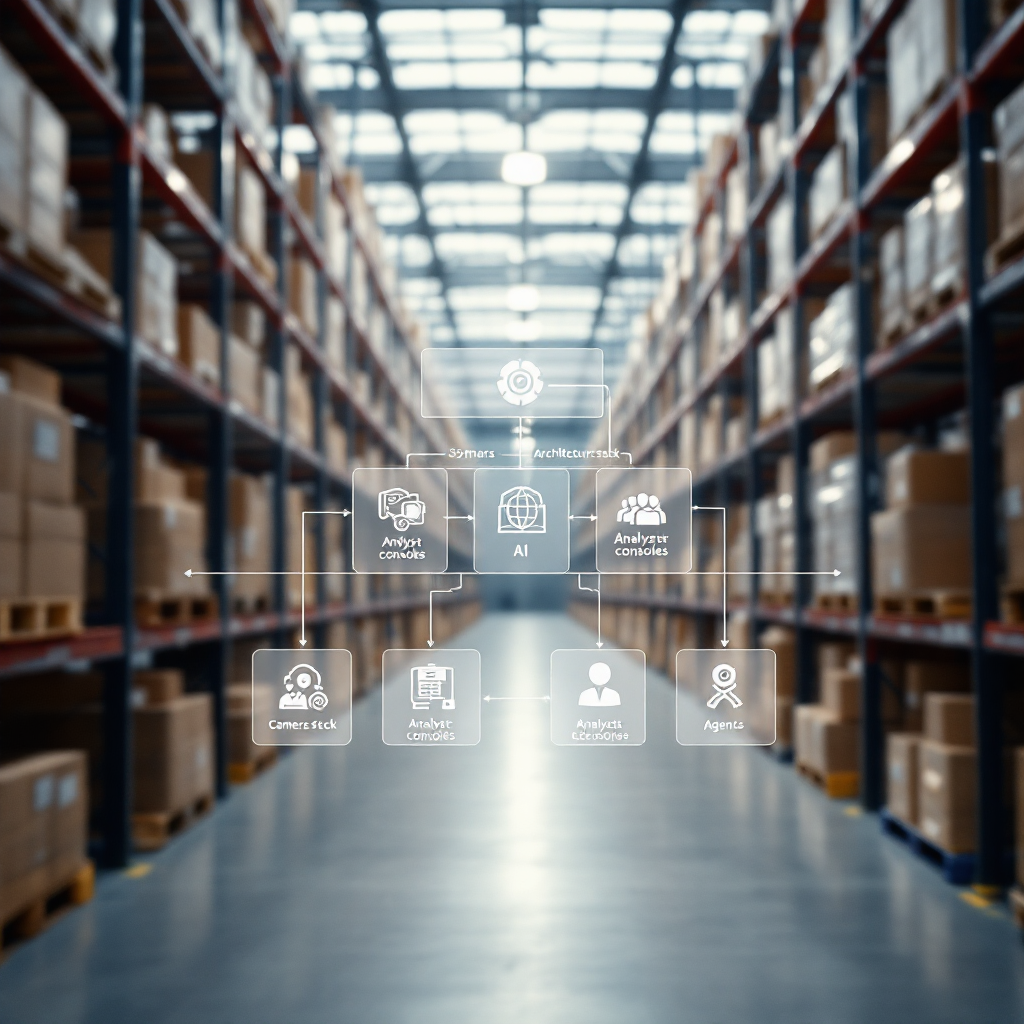
Agentic SOC platforms combine an underlying platform with agentic AI that executes tasks, learns, and collaborates with analysts. They embed multiple AI agent components such as natural language interfaces, automation modules, enrichment engines, and policy guards. In practice, an agentic soc platform mediates between the SIEM, EDR, VMS, and other security infrastructure; it normalizes data, correlates events, and surfaces priority items. This architecture helps reduce manual steps and supports faster decision-making for the analyst.
Adoption trends also show that organizations expect measurable returns. For instance, enterprises report efficiency and cost benefits when they deploy AI, which creates momentum to expand the platform scope (efficiency statistics). In addition, vendors and integrators now offer modular components so teams can adopt piecewise. Visionplatform.ai fits into this picture by converting existing CCTV into a sensor source that feeds an agentic soc platform. For example, our people detection and ANPR integrations stream structured events into a SOC platform, and they reduce false alarms while keeping data on-premise for compliance. If teams want to learn how visual sensors feed investigations, see our people detection page for airports (people detection in airports). Overall, an agentic soc platform closes gaps between data, automation, and the human analyst while enabling scalable security operations.
Exploring ai soc agents and ai capabilities in security operations
AI SOC agents perform focused functions that relieve repetitive work and add context to alerts. First, they triage incoming alerts, and then they enrich events with threat intelligence and telemetry. Next, they generate attack path context and suggest next steps. In practice, ai agent components run playbooks, gather host and network artifacts, and summarize findings in natural language for the analyst. These tasks reduce alert load and improve the speed of detection and response.

AI capabilities that boost detection and response include anomaly detection, correlation across data sources, and rapid enrichment from threat intelligence feeds. LLMS and other ai models enable natural language querying, so analysts can ask “what changed” and receive concise summaries. As a result, security operations teams see faster root cause analysis, and they can allocate time to deep investigations. Reported gains from enterprise deployments include a 55% increase in throughput and a 35% reduction in costs when organizations automate business processes with agents (efficiency and cost figures).
AI SOC agents also support decision-making by highlighting risky items and showing why a case matters. For security analysts, that means fewer distractions and higher trust in workflow suggestions. At the same time, teams must balance automation with human oversight. Design patterns call for human-in-the-loop controls on containment, and for clear audit logs that show how an ai agent reached conclusions. When teams combine those controls with tailored security automation, they protect against unwanted actions while still speeding response.
Finally, implementers should consider integration points like video analytics. Visionplatform.ai streams detections into the security stack so ai soc agents can correlate visual events with network alerts. For more detail on how video feeds support investigations, explore our intrusion detection integration for airports (intrusion detection in airports). Overall, ai soc agents and AI capabilities reshape security operations by automating routine tasks and elevating analyst focus.
AI vision within minutes?
With our no-code platform you can just focus on your data, we’ll do the rest
Building an autonomous soc with a multi-agent system to refine analyst workflow
An autonomous SOC uses multiple agents to share tasks, and it coordinates them to reduce handoffs. In this design, a multi-agent system runs specialized AI agent roles. For example, one agent gathers telemetry, another enriches alerts with threat intelligence, and another runs containment playbooks subject to human approval. The multi-agent AI approach improves throughput, and it enables richer context because agents correlate across data sources and timelines. In turn, analysts receive consolidated evidence and can take decisive action.
Architects design these systems so agents work in parallel, and so they escalate complex cases to the human analyst. That pattern keeps final control with people while the agents handle the heavy lifting. Teams that implement a multi-agent ai system report quicker time-to-evidence and less time spent on manual processes. Meanwhile, administrators configure policy gates that require human oversight for sensitive actions. This hybrid model lets SOCs move toward fully autonomous capabilities in low-risk areas, and it preserves human review for critical containment.
Implementing agentic workflows also affects org structure. Leaders often flatten analyst tiers because AI agent automation removes repetitive junior tasks. As a result, analysts focus on complex investigations, threat hunting, and decision-making. These shifts demand reskilling and new SOPs, and they require clear role definitions that pair agents with human reviewers. When planning deployment, CISOs should pilot small, measurable workflows and then scale. For instance, Visionplatform.ai helps teams operationalize video events so agents can correlate camera detections with SIEM alerts. See our process anomaly detection resource to understand event-driven workflows (process anomaly detection).
Finally, teams should measure performance across clear KPIs. Track time saved, reduction in false positives, and the number of cases that require escalation. Use feedback loops so agents learn from analyst corrections and so the multi-agent system improves accuracy. This approach ensures the autonomous soc delivers consistent value while keeping analysts in control.
Automate alert triage to cut false positive detection
Automating alert triage reduces noise, and it helps analysts see true risk faster. Start by defining triage rules and risk scores that map to business impact. Then, have AI agent components enrich each alert with context such as user history, asset value, recent configuration changes, and camera detections. That enrichment enables smarter prioritization. In practice, agents correlate events across logs and video, and they present a confidence score that the analyst can trust.
To cut false positive rates, use layered checks. For example, an agent can check an alert against historical baselines, then confirm with visual evidence from video analytics, and finally validate with threat intelligence. This multi-step approach reduces the chance of a false positive slipping into a high-priority queue. Visionplatform.ai contributes by turning CCTV into structured events that agents use to correlate motion or identity data against alerts. For a closer look at how visual confirmation supports triage, review our unauthorized access detection page (unauthorized access detection).
Automating triage also eases analyst workload and reduces alert fatigue. Analysts receive grouped alerts and a single timeline instead of many fragmented tickets. In many deployments, teams report lower mean time to respond because agents pre-check evidence and propose containment steps. Yet, designers must guard against overreach. Keep containment actions gated, and require human sign-off for changes that affect users or systems. That practice preserves trust and ensures the human analyst remains the final arbiter when needed.
Finally, instrument every stage for feedback. Track when agents misclassify an alert, and feed that data back to improve models. Use A/B testing to compare automated triage against manual review, and then scale the most effective flows. With a disciplined rollout, automation will cut false positive rates and let analysts spend time on high-value tasks instead of repetitive verification.
AI vision within minutes?
With our no-code platform you can just focus on your data, we’ll do the rest
Real-world threat detection and response with generative ai architecture
Generative AI and modern ai architecture bring new capabilities to threat detection and response. These systems synthesize logs, indicators, and narrative summaries so analysts can absorb the incident quickly. For example, generative AI can produce an incident timeline, highlight likely attack vectors, and propose a sequence of investigation steps. In many cases, that output speeds the analyst’s decision-making and reduces time lost on manual aggregation.
However, generative AI also introduces adversarial risks. Benchmarks show agents still struggle under targeted manipulation, and some studies report high failure rates in adversarial scenarios (adversarial resilience concerns). To address that, researchers developed the Agent Security Bench and similar frameworks to test agents under attack (benchmarking efforts). These efforts help teams measure robustness and harden models before full deployment.
In real-world settings, effective threat detection and response requires multiple data streams. Agents continuously monitor telemetry and correlate that with sensor events, threat intelligence, and historical behavior. When agents analyze combined signals, they surface attack path context and reveal lateral movement faster. Yet, teams must also plan for false alerts and model drift. Regular retraining, controlled deployment of ai models, and validation against curated test sets help maintain quality.
Practitioners should also align architecture with policy. Keep training data and inference close to the source when regulation or privacy is a concern; on-prem or edge processing avoids unnecessary data transfers. Visionplatform.ai supports this model by running detections on-site and streaming structured events into the security stack, which helps agents build context without moving raw video offsite. For guidance on how AI SOC agents perform in benchmark studies, see the Cloud Security Alliance report that highlights immediate operational value (CSA benchmark). In short, generative AI accelerates detection and response, but teams must harden systems and validate performance with adversarial testing.
Measuring impact on soc analysts and security operations
Measure the impact of AI on analysts and operations with specific metrics. Track analyst confidence, alert load per analyst, mean time to respond, and case closure rates. Also, measure system-level outcomes like reduction in false positives and cost savings from automation. Studies show significant gains: organizations that deploy AI agents report operational improvements and higher analyst satisfaction. For example, a CISO guide reports that 63% of analysts saw improved outcomes when supported by AI tools (CISO guide statistic).
Other industry data reinforces those results. Gartner notes that roughly 33% of organizations use advanced AI in SOCs, and many report better operational efficiency with AI integration (Gartner and market citation). Meanwhile, benchmark studies from reputable groups show the need to improve adversarial robustness, so measure security outcomes and resilience together (adversarial study). Use those metrics to drive prioritization and to justify further deployment.
CISOs should follow three practical recommendations. First, remove legacy barriers to integration so data flows quickly between tools and agents. Second, standardize evaluations using bench tests like the Agent Security Bench to validate performance under stress. Third, prioritize transparent, auditable workflows that keep the human analyst in the loop for critical decisions. These steps align with the broader movement toward agentic soc platforms and help teams capture expected efficiency gains while managing risk.
Finally, tools like Visionplatform.ai offer a pragmatic entry point for teams that need reliable, on-prem sensor data. By converting CCTV into structured events, teams can feed richer signals into AI SOC agents and track improvements in triage accuracy and soc efficiency. Overall, a measured approach that combines automation, human oversight, and robust benchmarking will deliver the best security operations outcomes.
FAQ
What is an agentic soc platform?
An agentic soc platform combines automation, AI agents, and orchestration to support SOC workflows. It integrates data sources and presents prioritized cases to analysts so teams can respond faster and with more context.
How do AI SOC agents help with alert triage?
AI SOC agents enrich alerts with telemetry and threat intelligence, and they score risk to prioritize cases. That process reduces noise and lets analysts focus on high-impact incidents.
Are AI agents going to replace human analysts?
No. AI agents handle routine tasks and propose steps, but human analysts remain essential for final decisions and containment in sensitive situations. Human-in-the-loop controls preserve oversight and accountability.
What measures show the impact of AI in SOCs?
Track metrics such as mean time to respond, closed cases per analyst, false positive rates, and analyst confidence. Use these KPIs to evaluate deployments and to guide scale-up decisions.
How do you reduce false positives with automation?
Combine multi-source enrichment, visual confirmation from cameras, and behavioral baselines to validate alerts before escalation. Automate non-sensitive checks and require analyst approval for containment to keep risk low.
What role does generative AI play in detection and response?
Generative AI summarizes evidence, builds timelines, and suggests next steps, which accelerates investigations. However, teams must test models for adversarial resilience before broad deployment.
How should organizations validate agentic systems?
Use benchmarking frameworks and adversarial tests such as Agent Security Bench to measure robustness. Also, run pilots with clear KPIs and iterate on feedback from security analysts.
Can Visionplatform.ai integrate with an agentic soc platform?
Yes. Visionplatform.ai turns CCTV into structured detections and streams events into your security stack, helping agents correlate visual evidence with alerts. That approach supports on-premise processing and compliance needs.
What is the recommended rollout strategy for AI agents?
Start with a pilot that automates low-risk, high-volume tasks, and then expand to more complex workflows. Use feedback loops so agents learn from analyst corrections and improve over time.
How do teams balance automation with security and compliance?
Keep sensitive actions gated behind human approval, maintain auditable logs, and where required run models on-prem to meet regulatory requirements. Regular audits and retraining help maintain compliance and accuracy.