types of ai agents in psim for physical security
AI is changing how teams run a PSIM control room and how they protect assets. This chapter outlines the common types of AI agent designs, from rule-based scripts to fully autonomous AI systems, and explains how each supports physical security tasks. First, simple rule-based agents filter alarms and flag obvious exceptions. They reduce repetitive tasks and free an operator to focus on complex signals. Next, pattern-recognition agents analyze video surveillance and video monitoring streams to spot people, vehicles, or unusual motion. These video analysis agents improve detection and reduce false positives. Third, alarm-handling agents correlate sensor input, timestamp data, and access control logs to prioritize alerts and propose SOPs. Finally, command-and-control agents propose actions, trigger locks, or call responders when allowed. They connect policy to action and help enforce security systems consistently.
Each agent type addresses specific gaps. Rule-based agents provide fast filtering. Perception agents extract structured events from amounts of data and from video feeds. Correlation agents centralize events and link them to operator workflows. Command agents automate escalation and can integrate with robotics for physical intervention where rules permit. For example, Visionplatform.ai turns cameras into operational sensors and can publish structured events to a PSIM so agents operate on accurate, site-specific inputs. Readers who want to see how people detection works can find more detail in our people detection overview people detection in airports. Other detection capabilities, like ANPR/LPR, fit naturally into the same workflow and help identify vehicles fast ANPR/LPR in airports.
Using AI agent tiers together makes a system holistic and more resilient. Rule agents cut noise. Perception agents provide visibility and structured events for higher-level analysis. Command agents ensure decisions turn into rapid action when needed. This layered setup helps physical security teams reduce human error and improve security outcomes while maintaining human oversight and control.
machine learning algorithm for real-time situational awareness
machine learning methods underpin modern situational tools and they are key to providing real-time situational awareness in security operations. Supervised learning models map labeled examples to outcomes. They power people and object classifiers and they support video surveillance models that detect PPE, loitering, or intrusion. Unsupervised methods find anomalies in amounts of data without predefined labels. They surface unusual patterns across sensors and video feeds. Reinforcement learning optimizes policies in simulated environments, so agents learn which actions yield the best long‑term result under reward signals. Each approach offers a different balance of speed, accuracy, and maintenance cost.
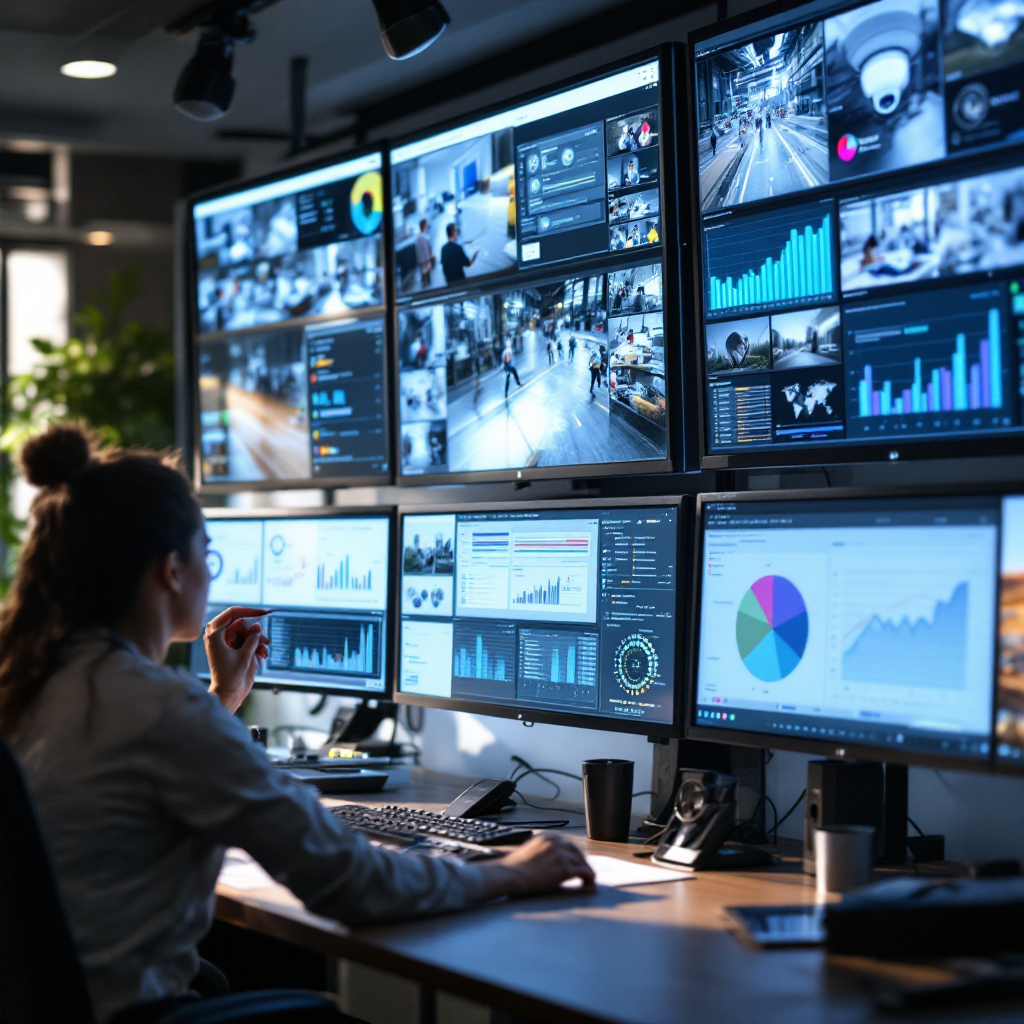
Choice of algorithm matters. For anomaly detection a common stack pairs convolutional networks for perception with an autoencoder or clustering layer that highlights deviations. For predictive analytics, time-series models such as LSTM or transformer variants detect subtle trends that precede incidents. A well-architected algorithm pipeline turns raw frames into events, and then into probability scores that feed into decision-making. This layered pipeline minimizes latency and supports real-time decision loops.
Successful deployments also solve integration challenges. AI agents need data from multiple sources, such as cameras, access logs and environmental sensors. An integration platform that centralizes these streams allows models to see the full context. Vendors report strong benefits: the AI agent market is growing fast, and enterprises expect higher adoption this year market growth projections. Practical tools reduce operational costs by lowering false positives and by helping teams focus on meaningful alerts. When models are trained on site-specific data, accuracy improves and systems provide more actionable outputs for operators.
AI vision within minutes?
With our no-code platform you can just focus on your data, we’ll do the rest
integration of ai tools and dashboard for full control
Integration is crucial when you want a single pane of glass that gives full control to security teams. An integration platform collects video feeds, access control logs, perimeter sensors and other inputs. Then AI tools convert those inputs into structured events and meta-data that a PSIM can ingest. A centralize approach avoids silos and helps create a unified picture. When you centralize events, operators can triage faster, and teams gain consistent visibility across multiple systems.
Designing a dashboard requires user-centered thinking. The UI should show prioritized alerts, camera thumbnails, and a timeline of related events. It should also link to SOPs and to incident playbooks so an operator can act without hunting for guidance. A good dashboard must streamline workflows. It should surface actionable insights and allow manual overrides. For example, Visionplatform.ai streams structured events via MQTT so dashboards and BI systems can reuse camera data beyond alarms. That makes it simple to publish occupancy metrics or to feed a forensic search. For readers who want examples of forensic tools, see our forensic search resource forensic search in airports.
Vendors are beginning to offer single platforms that combine VMS connectors, model management, and event routing. These platforms reduce deployment friction and they support a mix of on-prem and edge processing for GDPR and EU AI Act readiness. A streamlined dashboard reduces operator cognitive load, improves decision-making, and helps security management optimize resource allocation. When events are visualized clearly, teams can coordinate responses effectively and improve security while preserving human oversight.
smarter incident response times with ooda world
The ooda world decision-cycle—Observe, Orient, Decide, Act—maps neatly to how AI agents can speed incident handling. First, agents Observe by ingesting real-time data from cameras, sensors, and logs. Perception layers recognize people, vehicles, and behaviors, turning raw pixels into events. Then agents Orient by correlating those events with context, recent activity, and live maps. Next, agents propose Decisions, prioritizing actions and notifying the right responder. Finally, agents Act by executing automated workflows or by prompting human approval for lock-downs, notifications, or other measures.
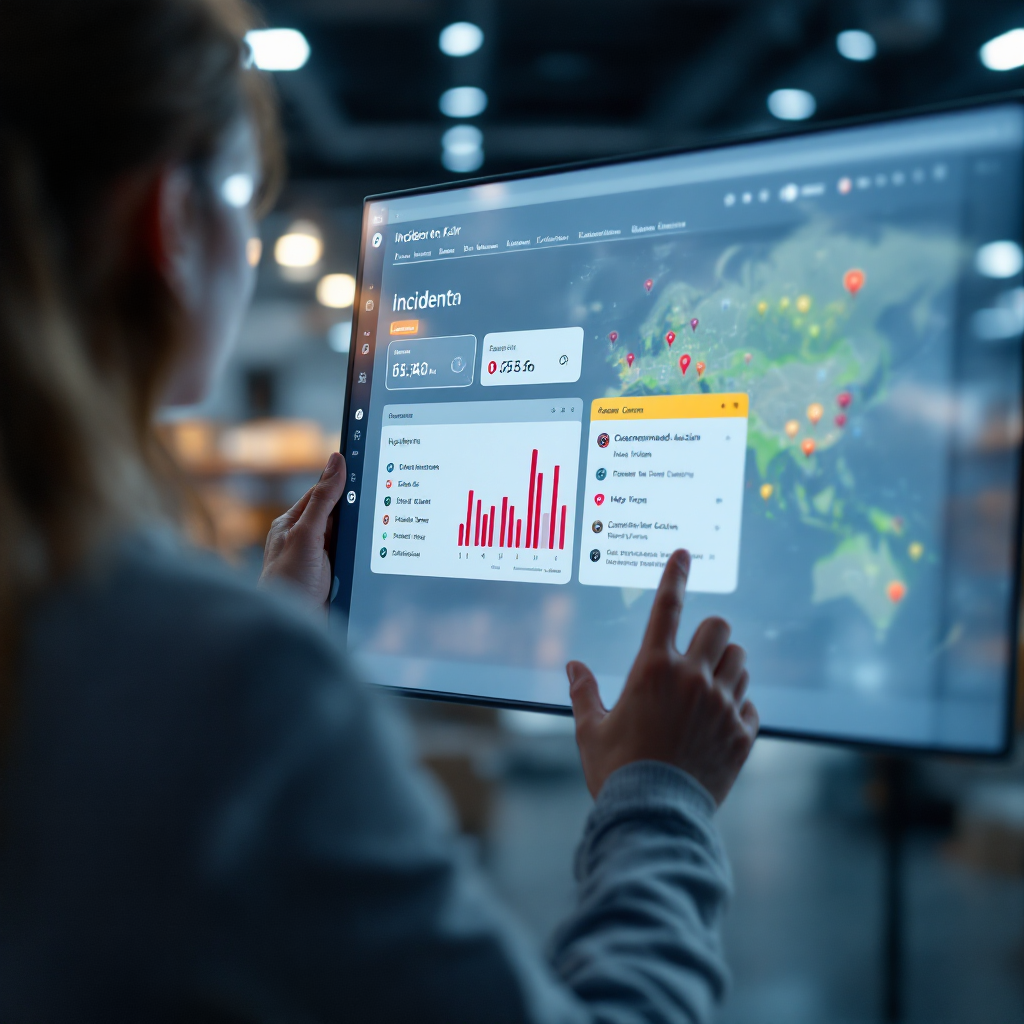
Using this cycle, teams can cut response times and reduce confusion. For example, organizations report up to a 30% reduction in false alarms and a 25% improvement in incident response metrics after integrating agent-driven analytics productivity gains. Faster response times translate to better outcomes and lower operational costs. Smart orchestration also automates routine lock-downs or perimeter checks, and it frees human staff to handle nuanced decisions.
Smarter agents are especially useful in multi-site environments. They can route alerts to local responders, and they can adapt SOPs to facility-specific rules. This improves coordination across teams and supports more consistent compliance. When teams train agents on local footage and rules, the system reduces human error and improves accuracy. The net effect is a tighter feedback loop that helps teams improve efficiency while keeping control firmly in human hands.
AI vision within minutes?
With our no-code platform you can just focus on your data, we’ll do the rest
chatbots for real-time situational response
Chatbots act as conversational interfaces that triage events and guide operators during high-pressure situations. A well‑designed chatbot ingests structured events, and then it surfaces key facts via simple prompts or rich UI cards. It can ask clarifying questions, provide SOP steps, and fetch camera clips on demand. This form of interaction helps an operator get concise answers fast, and it can help teams follow consistent procedures.
Chatbots are valuable around the clock and they scale better than single operators. They provide 24/7 availability and consistent protocols for routine incidents. When linked to a dashboard they can pull live thumbnails or play back video segments so an operator can confirm an alarm quickly. They also support audit trails by logging conversational steps and decisions for future review, which improves security management and reduces disputes.
There are limits to chat-based control. Chat interfaces must honor human oversight and avoid overly aggressive automation. Agents could overstep if not configured with proper guardrails. To avoid that, designers calibrate confidence thresholds and require human sign-off for high-impact actions. In practice, chatbots accelerate access to information, and they help teams enforce SOPs while maintaining clear decision-making accountability. That balance leads to better outcomes and more trust in AI-powered tools.
improve security: integrate ai agent into psim
To improve security you must plan a careful path to integrate an AI agent into an existing PSIM. Start by mapping data sources and by cataloguing camera types, access control systems, and sensor feeds. Next, pilot a small set of models on representative video to validate accuracy and to gauge false positives. Use on-site training data when possible so models match the environment. Visionplatform.ai supports such on-prem training workflows, which helps keep data local and compliant and allows teams to leverage site-specific models.
Common challenges include data silos, trust calibration, and false positives. You must break silos with a strong integration platform that can publish structured events across systems and data stores. Then implement confidence thresholds and human review paths to build trust. Track metrics like false alarm reduction and incident response times to quantify gains. Studies indicate that AI agent deployments can deliver strong ROI, often exceeding early expectations when teams tune models and processes ROI and performance data. Also, industry reviews note that AI agents shift operators from reactive to strategic roles and that this often improves security operations long term research review.
Looking forward, adaptive multi-agent systems will coordinate across domains and will enable richer threat mitigation. Implementing AI requires people, process, and technology changes. Start small, measure outcomes, and scale what works. When done right, you can leverage AI agents across teams to centralize situational views, to automate low-risk workflows, and to keep human responders focused on high-value decisions. This approach helps optimize resource use, to streamline incident response, and to enhance your security posture overall.
FAQ
What is an AI agent in a PSIM context?
An AI agent is a software component that perceives inputs from sensors or video, analyzes them, and takes or recommends actions. It automates routine decision-making while supporting human oversight.
How do machine learning algorithms help with situational awareness?
Machine learning models convert raw sensor and video signals into structured events and probability scores. These outputs feed dashboards and decision tools to provide real-time situational awareness for operators.
Can AI agents reduce false alarms?
Yes. When tuned to local data and deployed with proper thresholds, AI agents can cut false positives significantly and help teams focus on real incidents. Published reports cite up to a 30% reduction in false alarms productivity gains.
How do chatbots assist in incident response?
Chatbots triage alerts, retrieve relevant video clips, and guide operators through SOPs. They provide quick access to information and ensure consistent steps are followed during incidents.
Is it possible to integrate AI while keeping data on-prem?
Yes. Some platforms support on-prem or edge deployment so training data and events remain inside your environment. That approach helps with GDPR and EU AI Act compliance and preserves control.
What role does a dashboard play in a PSIM?
A dashboard centralizes alerts, camera views, and SOP links so an operator has full control and a clear incident timeline. Good dashboards reduce cognitive load and improve coordination.
How do AI agents affect operator roles?
AI agents often shift operators from repetitive tasks to more strategic oversight and exception handling. This improves job quality and can improve response times when agents handle routine alerts.
What are the main implementation challenges?
Key challenges include breaking data silos, tuning models to reduce false positives, and building trust with human teams. Pilots, clear performance metrics, and gradual rollout help manage these risks.
How quickly can organizations see ROI from AI agents?
ROI varies by use case, but case studies and industry data show meaningful returns within the first two years when deployments focus on high-noise, high-cost areas. ROI figures depend on model accuracy and process changes industry data.
Where can I learn more about specific detection features?
Our resources cover people detection, unauthorized access detection, and forensic search among others. For example, learn about our unauthorized access detection capabilities unauthorized access detection and explore forensic search tools forensic search in airports.