Chapter 1: ai and smart cities
Artificial Intelligence shapes how modern cities sense, decide, and respond. City systems now collect vast SENSOR DATA from cameras, sensors, and networks. AI converts that raw visual data into structured analytics and action. For example, machine learning and neural networks analyze traffic cameras to categorize and predict traffic flow. As a result, planners can optimize routes, reduce delays, and improve operational efficiency for transit and emergency services.
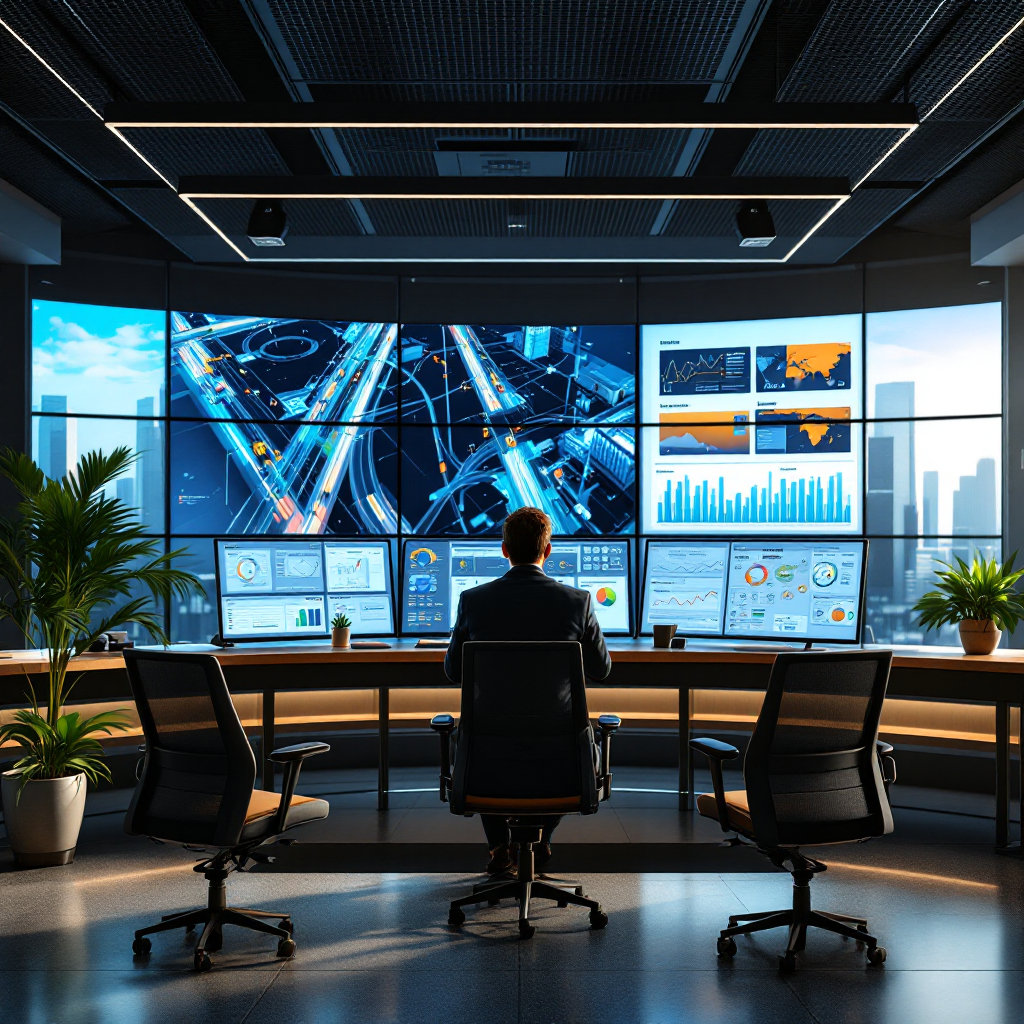
Smart cities aim to improve efficiency, connectivity, and sustainability. They also seek to increase citizen well-being while cutting costs. To reach those objectives, systems must integrate data across transport, utilities, and public safety. Control rooms once watched dozens of screens. Today, AI agents help operators prioritize alerts and reduce response times. visionplatform.ai, for instance, moves control rooms from raw detections to AI-assisted operations by adding context and reasoning to video feeds.
Public safety requires fast, accurate situational awareness. Cameras and IoT sensors provide continuous video feeds and sensor data. AI model pipelines perform object detection and segmentation on real-time video to detect threats or anomalies in public spaces. These outputs feed into command dashboards and APIs for dispatch. This pattern helps streamline emergency response and disaster management. It also supports detection models that spot perimeter breaches, loitering, and crowd density. For specific implementations, see practical applications like people detection and forensic search examples for airports to understand how detection and investigation workflows integrate with VMS systems.
Data management, however, matters as much as detection. User data privacy, trustworthiness, and open-source toolchains shape adoption. Therefore, planners must balance innovation with clear policies for data handling and dataset governance. Finally, cities that integrate AI well tend to see measurable gains. For instance, studies show a majority of urban AI research links directly to smart city planning, underlining the strong interest in AI for urban infrastructure and operations (78% of AI research papers relate to smart planning).
Chapter 2: language model and vision language models
A language model transforms sequences of words into meaning. It can generate natural language descriptions, answer questions, or summarize logs. Large language model systems extend that ability with vast pretraining on text corpora. Vision language models combine visual inputs with text understanding. In particular, vision language models can caption an image, answer a question about a scene, or align camera frames with incident reports. This combined capacity helps translate video feeds into searchable knowledge for operators.
Research shows vision models excel at perception yet still struggle with deep reasoning on complex tasks; benchmarks such as MaCBench measure scientific and reasoning skills in multimodal systems (MaCBench benchmark details). For city planners, these benchmarks indicate where current systems work well and where fine-tuning is needed. A robust pipeline often pairs computer vision models and classification models with a language model that can explain detections in plain terms.
For deployment, teams often use an on-prem vlm to keep video inside local networks and comply with user data privacy rules. That approach reduces cloud dependency and helps align with regulations such as the EU AI Act. In practice, vision models feed object detection, segmentation, and scene classification into a language layer that generates natural language incident summaries. The combination allows operators to search past video using simple queries, thus transforming thousands of hours of footage into actionable knowledge. Studies on building and better understanding these systems provide architectural insights for city use (VLM architecture insights).
To evaluate candidate systems, teams use datasets and detection models for object detection, satellite imagery analysis, and traffic flow prediction. For urban planners and control rooms, a tested pipeline means faster investigations and fewer false alarms. For more applied reading about airport-specific detection options, explore people detection in airports and forensic search in airports for practical examples of integrating vision and text workflows.
AI vision within minutes?
With our no-code platform you can just focus on your data, we’ll do the rest
Chapter 3: real-time and ai for smart cities
City operations demand real-time processing. Systems must process real-time video and sensor streams with minimal latency. Real-time analytics enable instant alerts for accidents, intrusions, or extreme weather impacts. To meet strict response times, architectures often combine edge computing and cloud resources. Edge nodes run lightweight convolutional neural and detection models for initial filtering. Then, higher-capacity servers handle deeper analysis, fine-tuning, and long-range analytics.
Vision-language models and vision-language integrations allow systems to explain what they see and why it matters. For instance, a vlm can convert a vehicle detection into a sentence that includes location, license plate context, and linked events. That textual output feeds AI agents which can automate routine tasks or suggest actions. Such agents streamline operator workflows and help categorize events automatically. When anomalies appear, the system marks them for urgent review. This kind of anomaly detection reduces time to respond and improves situational awareness across sectors like transit, utilities, and public safety.
Real-world deployments combine real time processing with end-to-end pipelines. A camera captures frames, object detection runs on-device, then a language model generates reports for operators. These reports integrate with APIs and dashboards to automate dispatch and logging. This setup can also incorporate satellite imagery for a broader view during disasters or major events. The IEEE and other industry reviews highlight trends in integrating vision models with language reasoning to support next-generation control rooms (IEEE survey on VLMs).
To optimize scalability, vendors often lean on hardware partners such as nvidia corporation for GPU acceleration. Yet teams must weigh scaling and user data privacy trade-offs. For example, visionplatform.ai supports fully on-prem deployments that keep video and models inside the organization. That choice helps reduce cloud exfiltration risks while maintaining high operational efficiency. In short, real-time capabilities let cities automate routine checks, accelerate decisions, and maintain resilient operations during peak demand and disaster management scenarios.

Chapter 4: urban environments and intelligent urban
Urban environments are complex. They include dense crowds, varied infrastructure, and rapidly changing weather. Cameras face occlusion, low light, and extreme weather events. Systems must handle segmentation, object detection, and classification models in messy scenes. For example, crowd detection and people counting can inform evacuation planning. Similarly, monitoring traffic flow and vehicle detection classification supports dynamic signal timing and congestion reduction.
An intelligent urban system self-optimizes by continuously learning from visual data. Digital twins ingest live video feeds, sensor telemetry, and historical records to simulate and optimize city operations. When linked to a pipeline, a digital twin can simulate alternate traffic plans or categorize flood risk during extreme weather. Integrating Digital Twins and BIM with vision feeds allows planners to visualize interventions and measure projected gains in safety and efficiency. Practical studies on smart city construction show how DTs help manage infrastructure and maintenance (Digital Twins and BIM for smart city management).
Intelligent urban systems also rely on robust data management. Big data stores must be searchable. To that end, end-to-end workflows connect video feeds, VMS metadata, and analytics into a unified index. This lets operators simulate scenarios, fine-tuning detection thresholds to reduce false positives. It also enables AI agents to recommend next steps or to autonomously trigger alerts when conditions meet predefined rules. For planners, such systems help optimize maintenance schedules and reduce types of waste across services.
Finally, trustworthiness and accountability matter. Cities must demonstrate that visual data use respects user data privacy and mitigates bias. Open-source toolkits, transparent datasets, and audit logs support these goals. Future research will continue to focus on explainability, chain-of-thought style reasoning for LLMs, and how to integrate satellite imagery with street-level feeds to improve both local response and strategic planning.
AI vision within minutes?
With our no-code platform you can just focus on your data, we’ll do the rest
Chapter 5: scaling and end-to-end
Scaling VLM capabilities requires a clear end-to-end architecture. A typical pipeline starts with camera capture, moves through computer vision models for detection and segmentation, and ends with a language model that generates human-readable reports. These reports feed operational dashboards and APIs that enable action. A scalable design must also consider edge computing for initial filtering and central servers for heavy analytics and fine-tuning. This hybrid model balances bandwidth, cost, and latency.
When deploying across hundreds or thousands of cameras, teams face challenges in data management and model lifecycle. Model fine-tuning must use representative dataset samples and respect user data privacy. In addition, classification models and detection models require consistent retraining to adapt to new object classes or environmental changes. To streamline updates, continuous integration workflows automate testing and rollouts. For GPU-bound tasks, partners such as nvidia corporation often provide acceleration stacks that make real-time video analytics feasible.
Operationally, best practices include monitoring response times, tracking operational efficiency, and ensuring auditable logs for compliance. Edge devices can run lightweight convolutional neural and computer vision models to categorise common events. Meanwhile, llms and llm-based reasoning run centrally or on secure on-prem servers to produce explanations and workflows. visionplatform.ai’s approach of keeping video on-prem and exposing events for AI agents illustrates a practical way to integrate control room data without cloud video exfiltration.
Finally, scaling is also about being scalable in process, not just hardware. Teams should implement modular architectures that allow models to be swapped, datasets to be updated, and agents to automate repetitive tasks. This lets cities simulate interventions, optimize traffic flow, and improve maintenance scheduling without massive rewrites. Overall, a well-planned scaling strategy helps cities automate routine monitoring and focus human effort where it matters most.
Chapter 6: real-world and safety and efficiency
Real-world case studies show measurable gains in safety and efficiency. For example, some digital twin platforms used in coastal cities improved incident response and maintenance planning by combining live video with historical analytics. Similarly, municipal deployments that integrated camera-based detection and AI agents saw reduced average response times for incidents. In safety-focused deployments, automated detection of perimeter breaches and weapon detection reduced investigation time and improved outcomes for first responders.
Quantifying gains matters. Studies show many AI research efforts target urban planning and report operational improvements when systems are properly tuned (78% relevance to urban planning research). Yet real-world success depends on ethics and governance. Public safety systems must address bias mitigation, trustworthiness, and user data privacy. Policy reviews emphasize that “the ethical deployment of AI in urban planning requires balancing innovation with the protection of citizens’ rights and fostering public trust” (ethical concerns in AI urban planning).
Operational deployments also require attention to maintenance and edge infrastructure. Using edge computing with lightweight models reduces bandwidth needs and supports autonomously triggered alerts. Cities can leverage real-time video analytics to automate routine checks and simulate disaster responses. For disaster management scenarios, integrating satellite imagery with street-level feeds increases situational awareness and helps planners prioritize resources. To explore how these ideas map to an airport control room or similar environment, review examples such as vehicle detection and process anomaly detection pages for practical system design.
Ethical safeguards include audit logs, open-source evaluation, and careful dataset curation. This combination builds trust and enables future research into next-generation systems with better chain-of-thought explanations and reduced bias. Ultimately, the goal is safety and efficiency: systems that detect and explain, that streamline workflows, that help operators decide and act faster, and that keep communities protected while respecting rights.
FAQ
What are vision language models and how do they help cities?
Vision language models combine image understanding with text generation and comprehension. They turn visual detections into searchable, natural language descriptions that help operators find and respond to events faster.
Can VLMs run on local hardware instead of the cloud?
Yes. Many deployments use on-prem vlm and edge computing to keep video in-house. This supports user data privacy and can reduce latency for real-time video analytics.
How do VLMs improve public safety?
They provide situational awareness by converting detections into contextual narratives and recommended actions. This helps reduce response times and streamline dispatch workflows.
What role do AI agents play in control rooms?
AI agents reason over video events, procedures, and external data to suggest actions and automate routine tasks. They help operators search video history using natural language and make decisions faster.
Are there standards or benchmarks for these systems?
Yes. Benchmarks like MaCBench assess multimodal reasoning and perception. Additional surveys from IEEE and academic reviews provide best-practice guidance for evaluation and deployment (MaCBench, IEEE survey).
How do cities handle bias and data privacy?
By curating datasets, auditing models, and using on-prem deployments when needed. Policies and transparent datasets improve trustworthiness and reduce the risk of biased outcomes.
What hardware is typically used for real-time analytics?
Edge devices and GPU servers from vendors like nvidia corporation are common choices. Edge computing handles initial filtering while central GPUs process heavier neural networks and fine-tuning tasks.
Can VLMs integrate with existing VMS systems?
Yes. Modern platforms expose APIs and webhooks to integrate detections and analytics into VMS workflows. This lets teams automate alerts, forensic search, and reporting without replacing current infrastructure.
What are typical use cases for VLMs in cities?
Use cases include traffic flow optimization, intrusion detection, crowd monitoring, and infrastructure inspection. They also support scenario simulation and disaster management planning with satellite imagery and ground feeds.
How should a city plan for future research and upgrades?
Plan for modular pipelines, continuous dataset updates, and fine-tuning capabilities. Also invest in auditability and open-source evaluation to keep systems adaptable and trustworthy for future research and upgrades.