ai architecture: combining computer vision and language models for perimeter security
AI architectures that combine computer vision and language models change how teams protect perimeters. In this chapter I describe a core architecture that turns raw video into context and action. First, camera streams feed CV modules that interpret each frame at the pixel level. Next, those visual features are consumed by language models to generate human-readable descriptions and an alert when needed. The result is an architecture that helps security teams move from raw detections to decisions.
The computer vision modules use classical and modern CV MODELS for object detection, tracking, and pose estimation. They extract bounding boxes, motion vectors, and semantic tags. Then, a lightweight ai model ingests those tags and metadata. It produces structured events that language models can map into natural language statements and rich metadata. In practice a surveillance cameras array becomes a set of sensing points. The system can interpret video and return an answer like “Person at west gate after hours” in natural language.
This design supports staged deployment and integration with existing security systems. Cameras and VMS connect via RTSP or ONVIF. Events stream to local processing nodes. Those nodes host VLM inference so data never leaves the site. That solves cloud concerns and supports EU compliance. visionplatform.ai applies this pattern in real deployments to augment control rooms so that operators search and reason across archived footage using simple queries like “Person loiter near gate” or run forensic queries for past incidents via our forensic search features at the platform.
Architectural components include ingestion, CV inference, a language layer, an events bus, and a decision engine. Each component has clear interfaces for scaling. The architecture supports model updates without disrupting the VMS. It also enables operators to classify events, to minimize false positives, and to trigger guided workflows. Finally, this approach helps in making perimeter protection both actionable and auditable while keeping video data on-premise.
perimeter sensor integration with deep learning for smarter detection
Sensor networks add crucial diversity to visual feeds. Thermal, LiDAR, distributed acoustic sensing, and motion sensors all complement cameras. When fused, these layers improve detection in low light and through vegetation. For example, infrared and thermal inputs can highlight heat signatures that visible cameras miss. In turn, this reduces the chance that a moving bush triggers an alarm. First, thermal and motion sensors provide coarse triggers. Next, deep learning refines those triggers into high-confidence events.
Deep learning and a deep learning model are used to fuse sensor inputs with video. Fusion networks align spatial and temporal data. They classify whether a contact is a human, a vehicle, or a benign object. As a result, systems can classify and prioritize events in large areas more reliably. This sensor fusion cuts the number of false positives and lets security teams focus on genuine threats. A 2025 survey found a 30% reduction in false alarms when VLM-enhanced pipelines were used; the improvement came from better scene understanding and multimodal verification (30% reduction in false alarms).
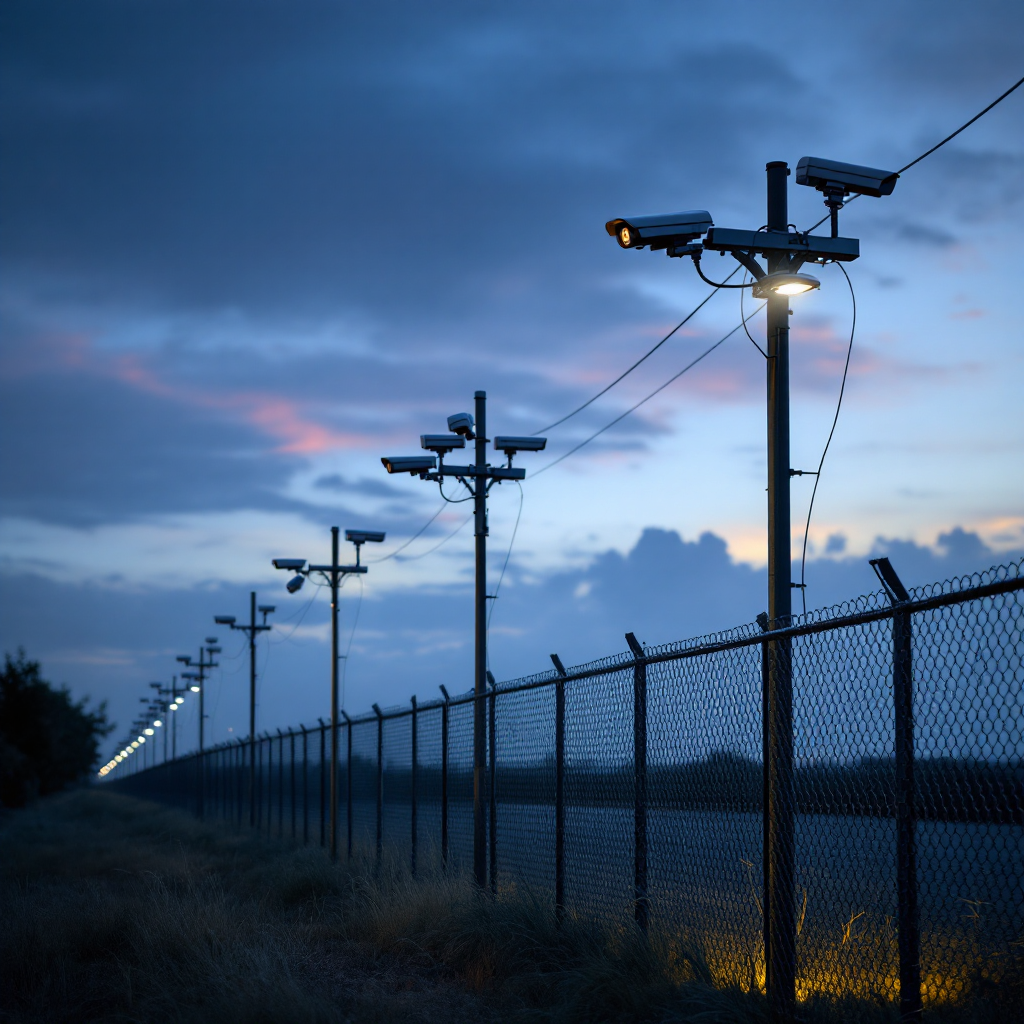
Case studies show clear gains. In one site, adding LiDAR and a fusion model cut response calls by 40%. In another, thermal helped detect an unauthorized person through fog. The system can detect motion and then classify the source. This process reduces false alarms and improves contextual accuracy. In practice, the combined stack supports intrusion detection and improves perimeter protection without swamping operators.
Deployment is flexible. Edge nodes run the fusion models for low-latency decisioning. Cloud is optional for model training only. Also, distributed acoustic sensing adds an extra layer for linear assets like fences. Together, these sensors and models make detection smarter and more robust across weather and terrain. This approach helps organizations minimize nuisance alarms while increasing real-world detection of potential threats.
AI vision within minutes?
With our no-code platform you can just focus on your data, we’ll do the rest
real-time analytics and sense: enabling proactive threat response
Real-time processing is essential where seconds matter. A VLM-enabled pipeline must analyze frames, fuse sensor inputs, and return a verdict in real time to be useful. Latency budgets vary by mission, but many perimeters require under one second from capture to actionable event. Systems that meet this requirement allow security teams to act before an intrusion escalates. They also enable a faster response across operations. The industry reports a 40% faster response when VLM context is delivered with automated verification (40% faster response).
Analytics pipelines convert raw video data and sensor streams into structured events. First, frame-level features and motion traces are computed. Then, VLMs attach semantic labels and temporal context. In this chain, sense modules flag anomalies like loiter or fence breaches. They correlate events across cameras, access control logs, and weather data to reduce the noise that plagues traditional systems. The outcome is actionable insights that a control room can use to prioritize alarms.
Sense modules specialize in behavior and anomaly detection. They spot loiter, rapid approach, and unusual crossing patterns. They also detect anomaly in patterns of life for a site. When a suspect trajectory matches a known intrusion pattern, the system creates an alert and supplies the operator with video snippets, a natural language summary, and recommended steps. The VP Agent Reasoning layer from visionplatform.ai, for example, verifies and explains alarms by cross-referencing VMS data and procedures in real time. This reduces cognitive load on the human operator and helps minimize false positives.
Implementations use a mix of GPU servers and edge devices to balance cost and latency. Pipelines must include logging, audit trails, and configurable automation. A system can automatically escalate verified intrusions while leaving low-risk events for human review. This balance of automation and operator control improves throughput and keeps critical infrastructure protected.
computer vision in perimeter security: improving detection accuracy
Computer vision has matured fast. Modern object detection and tracking algorithms outperform classic motion detection. Where motion detection simply flags change, object detection can classify what moved. State-of-the-art approaches combine convolutional backbones, attention layers, and tracking-by-detection to preserve identities across frames. These CV MODELS classify objects, estimate trajectories, and support classification of suspicious behavior.
Traditional systems that rely solely on motion detection trigger when pixels shift. That results in high false positives from vegetation, shadows, and weather. By contrast, a VLM-enhanced solution interprets pixels in context. It uses learned features to detect subtle cues, such as a hand holding a tool or a person crouching. In field evaluations, sites saw a 25% improvement in threat detection accuracy after switching to VLM-augmented pipelines (25% improvement in detection accuracy). The upgrade also improved classification under varied lighting and weather.
Computer vision tasks for perimeter include object detection, re-identification, and classification of intent. Object detection is the core. Trackers then maintain identities across cameras. Classification layers decide whether a subject is authorized or unauthorized. This layered approach reduces false positives and helps security teams focus on real threats. It also supports forensic search over archived footage through semantic tags.
Adapting to complex environments is critical. Models trained on diverse datasets handle vegetation, water reflections, and low light better. Techniques like data augmentation, infrared pairing, and synthetic scenes help models detect subtle movements and to reduce false. For airports and large campuses, combining object detection with scene awareness supports perimeter protection across large areas and varied terrain. To explore how these capabilities apply to airports, see practical examples of perimeter breach detection in airports.
AI vision within minutes?
With our no-code platform you can just focus on your data, we’ll do the rest
ai-driven language models: contextual analysis to reduce false alarms
Language models add a new layer of contextual analysis. Vision Language Models (VLMs) bridge visual features and human-readable descriptions. They summarize events and can generate alerts that explain why something matters. For instance, a VLM may report “Person at west gate after hours, carrying a bag” so the operator can assess intent quickly. This contextual information helps reduce false alarms and improves operator decision-making.
VLMs and VLMS both play roles in a control room. A VLM creates textual descriptions for search and reasoning. LLMS provide a reasoning layer that can correlate the description with policies and historical context. When combined, these models let the system tag, classify, and prioritize events. This capability supports forensic workflows, and it helps teams reduce false alarms and improving operational fidelity across sites. A quoted expert sums up the shift: “Vision Language Models represent a paradigm shift in perimeter security,” says Dr. Elena Martinez, highlighting how language layers bridge AI and humans (Elena Martinez quote).

These models also minimize operator fatigue. Rather than raw motion alarms, the operator receives actionable intelligence and suggested actions. A well-designed VLM reduces the number of false events flagged for review. In practice, sites that add this contextual layer see faster response and higher confidence in alerts. For example, teams can search natural language queries such as “Person loitering near gate after hours” and find matching clips quickly via the forensic search features in our platform (forensic search example).
Generative AI can also draft incident summaries, pre-fill reports, and recommend actions. That automation saves time, lowers error rates, and helps security teams scale without hiring proportional staff. At the same time, careful policy and audit trails ensure that automated suggestions remain accountable. Overall, ai-powered language models are essential to turning detections into explanations and to reduce false alarms while improving operational throughput.
advanced architecture: integrating ai, sensor, analytics for smarter perimeter security
This final chapter summarizes a full-stack architecture that integrates sensors, AI, and analytics. The pipeline begins with distributed sensors and surveillance cameras. Those inputs feed edge nodes that run object detection and fusion models. Next, VLMs and llms provide semantic description and reasoning. The analytic outputs move to a decision engine that supports operator workflows and optional automation. This architecture supports scalable and auditable deployments.
Scalability is built-in. The design permits highly scalable clusters or compact edge servers. You can deploy on GPU servers or on-site Jetson devices. Deployment planning includes compute sizing, bandwidth limits, and storage policies. It also factors privacy safeguards, such as keeping video data on-premise and restricting model access. visionplatform.ai emphasizes an on-prem VLM to meet compliance needs and to avoid sending video outside the environment.
Security teams benefit from layered defenses. Sensor fusion, CV MODELS, and language layers work together to classify potential threats and to surface actionable insights. The platform correlates access control logs, weather, and historical patterns to improve contextual accuracy. A system can automatically escalate validated intrusions while leaving uncertain events for human review. That balance strikes the right level of automation and retention of human judgement.
Consider deployment trade-offs. Edge processing reduces latency and helps detect subtle cues in real-world conditions. Centralized training enables continuous improvement using labeled incidents. Both approaches support model updates and robust audit logs. The architecture also supports additional modules, such as distributed acoustic sensing for linear assets and ANPR/LPR for vehicle profiling. In short, integrated stacks make perimeter protection smarter and more resilient, and they help organizations focus on genuine threats rather than noise.
FAQ
What are vision language models and how do they help perimeter security?
Vision language models combine visual analysis with natural language. They describe scenes in text, which helps operators understand incidents quickly and reduces the time to respond.
Can VLMs reduce false alarms?
Yes. VLMs add context to visual triggers, which lowers nuisance alerts. A 2025 survey reported a measurable reduction in false alarms when VLM-enhanced pipelines were used (30% reduction).
Do these systems require cloud processing?
No. Many deployments run VLMs on-premise to meet privacy and compliance needs. On-prem deployment keeps video data local and reduces external exposure.
How do sensors like thermal or LiDAR help?
They provide complementary cues when visible light fails. Thermal and LiDAR help detect motion through fog, over vegetation, or at night, making the overall system more reliable.
What is the role of analytics and sense modules?
Analytics pipelines convert raw video and sensor streams into structured events. Sense modules detect anomalies and help prioritize genuine threats for operator review.
Can language models search past footage?
Yes. Converting video into textual descriptions enables natural language search across archives. Forensic search functionality makes investigations faster and more precise (forensic search).
How do these systems perform in bad weather or low light?
Sensor fusion and robust CV MODELS improve performance in challenging conditions. Techniques like infrared pairing and specialized training data help models detect subtle behavior.
Will automation replace human operators?
Automation augments human operators, rather than replacing them. Systems support human-in-the-loop workflows and can perform low-risk tasks automatically with oversight.
Are VLMs vulnerable to attacks?
They can be targeted like any AI system. Strong security practices, model auditing, and controlled deployment reduce risk and improve integrity.
How do I learn more about specific perimeter use cases?
Explore focused examples such as intrusion detection and loitering detection to see practical applications. For airport scenarios, visit pages on intrusion detection in airports and loitering detection in airports for detailed use cases.