Forensic investigations and video surveillance in control rooms
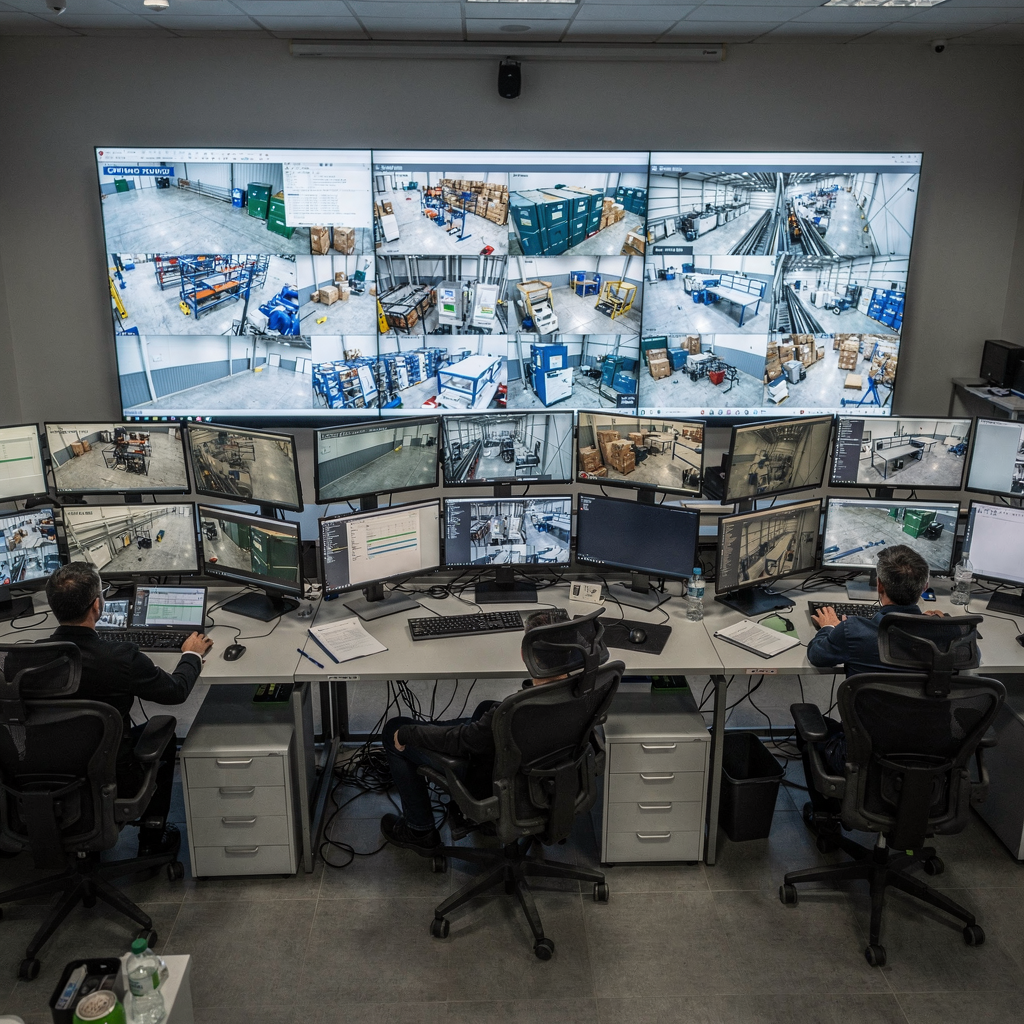
Control rooms are the nerve centre for many modern forensic investigations. They collect live and recorded signals from CCTV, access control systems, sensors, and smart devices. As a result, operators see consolidated situational displays and can coordinate responses. Centralisation helps teams perform a unified search across multiple feeds and timelines. For instance, a metropolitan control room may need to search across multiple cameras to track a person moving through a transit hub. Also, this central view reduces the time needed to find relevant video footage and to coordinate units on the ground.
Because control rooms ingest enormous volumes, scale is part of the challenge. Interpol notes that some control rooms process terabytes of footage every day, including thousands of hours of recorded video in large cities (Interpol review of digital evidence, 2019–2022). Therefore, operators must rely on tools that convert streaming video into searchable items. In practice, this means converting video into structured text, timestamped events, thumbnails, and searchable tags. This structured output supports specific search and also supports case files and audit trail requirements.
Control rooms combine feeds from legacy CCTV and modern IP cameras, along with IoT devices that act as invisible witnesses. These combined inputs give richer context for safety and security decisions. For example, a sensor can confirm that a gate was opened while a camera captured a subject. This cross-correlation improves the speed and reliability of forensic search. For teams working at scale, having a single workflow for live streaming video and hours of recorded video reduces duplicated effort. Finally, operators can use the same system to create incident reports, to populate case management software, and to keep an audit trail for evidentiary use.
If you want to explore how people detection is used in transport hubs, see the airport people detection page for practical examples of deployed models (people detection in airports). In short, modern control rooms provide a platform for unified search across multiple sources to help investigators find video content faster and to support actionable decision-making.
Metadata and search filters for forensic search
Reliable metadata is the backbone of any rapid forensic search. Metadata extraction turns timestamps, camera IDs, exposure settings, motion flags, and event tags into indexed entries. These entries let operators apply a filter to narrow tens of thousands of thumbnails down to a handful of candidate clips. Search filters can combine time ranges, camera IDs, and object tags so that investigators do not have to watch video manually. In many workflows, a single filter step reduces review time by orders of magnitude.
Studies show that properly applied tools can reduce manual review time significantly. NIST identified that forensic tools and structured metadata can cut manual review time by up to 70% (NIST report overview). Therefore, investing in standard metadata extraction and normalized event formats pays off quickly. For example, when a control room converts motion events into searchable keys, operators can answer a specific search in minutes rather than hours.
Despite these gains, formats remain fragmented. Proprietary encodings and vendor-specific tags limit interoperability across video management systems. So, control rooms need standard metadata schemas and connectors to bridge those gaps. That way, search queries run across a video management system and across multiple camera manufacturers without complex exports. Also, a consistent metadata model supports long-term case files and court-ready video evidence.
Tools that integrate with existing VMS platforms and convert video into human-readable descriptions let operators issue natural search queries. For example, visionplatform.ai converts video events into textual descriptions that can be queried with free text. This approach makes search easier for teams that lack deep technical training in search parameters. Finally, the right combination of metadata extraction, standardized schemas, and intuitive filters gives investigation teams a practical path to finding video more reliably and to maintaining a clear audit trail.
AI vision within minutes?
With our no-code platform you can just focus on your data, we’ll do the rest
Video analytics and AI for people or vehicles detection
Content-Based Video Retrieval and AI transform raw pixels into meaningful events. CBVR uses image recognition and pattern matching to detect faces, clothing colours, vehicle types, and motion patterns. Deep learning models classify object type and object class, and they extract attributes such as direction, speed, and pose. These outputs then feed into search engines so an operator can ask for a specific search or run a more advanced search automatically.
AI models have improved detection precision dramatically. Government reviews note that some modern algorithms achieve over 90% precision for identifying relevant frames and events in large archives (GAO: Forensic Technology report). Therefore, using AI for people detection in large venues can reduce false positives and quickly narrow down hours of recorded video. Also, integrating AI with thumbnail generation means operators can review representative frames instead of long clips, which speeds playback and triage.
Real-time analytics and post-event processing both have roles in a control room. Real-time detection triggers alerts and can guide immediate response. Post-event analysis supports thorough forensic workflows and structured case files. For example, a real-time detection of a vehicle can trigger a license plate capture, while post-event processing can link that capture to other sightings across hours of recorded video. In airports and transit hubs, that combination is especially useful. You can read practical implementations for people detection and ANPR in transport settings (ANPR/LPR in airports) and (people detection in airports).
However, AI is not a substitute for process and oversight. Algorithm outputs require validation, an audit trail, and human-in-the-loop review when evidence must be presented in court. Still, when used responsibly, AI-driven video analytics become a powerful tool to find, to verify, and to prepare usable video for investigations.
Advanced forensic search capabilities to refine search results
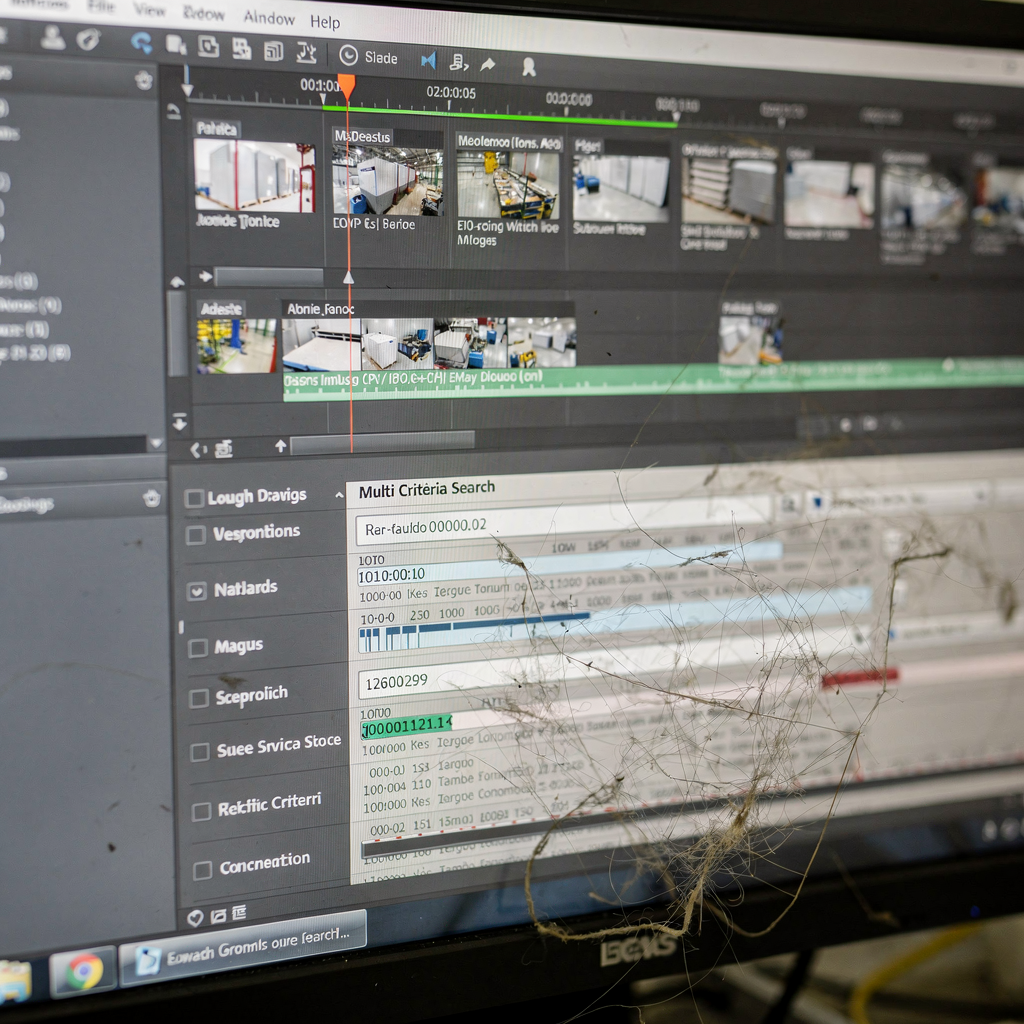
Advanced forensic search elevates simple filters to multi-criteria queries across feeds. An advanced search can combine temporal windows, spatial zones, clothing attributes, and object classes to produce precise search results. For example, investigators can search for a person wearing a red jacket who moved from Gate 4 to Gate 10 within a 15-minute window. This is especially useful when dealing with thousands of hours of footage and when the initial lead is only a brief description.
Refine features let users narrow results iteratively. First, an operator can filter by camera ID and time. Next, they can refine by colour, by gait, or by bag possession. Then, the system can produce thumbnails and short clips that match the combined criteria. Drawing a search area on the scene, or selecting an object in one thumbnail, lets the search expand across multiple cameras while keeping context intact. These workflows turn raw video into focused leads that help investigators close cases faster.
Advanced forensic search also supports cross-feed reasoning. For instance, when one camera captures a subject entering a restricted area, the system can automatically pull up nearby cameras, show movement paths, and highlight matching thumbnails. This unified approach helps build case files and supports the audit trail required for legal processes. In practice, an operator can export the refined clips and annotations directly to case management software to preserve chain of custody.
Tools that expose search queries and search criteria as human-readable entries are easier to audit and to repeat. That same transparency makes it simpler to hand a case from one investigator to another. If you want to explore airport-specific forensic search workflows, see our page on targeted forensic search in transit environments (forensic search in airports). Finally, advanced search reduces the need to watch long segments of video manually and improves the speed at which investigation teams find evidence.
AI vision within minutes?
With our no-code platform you can just focus on your data, we’ll do the rest
Partner integrations: Genetec and license plate recognition
Integrating forensic search with video management platforms makes systems far more effective. Many control rooms use a video management system to handle streams, to control playback, and to store video archives. Integrations with VMS vendors such as Genetec enable direct access to camera configurations, to archived footage, and to event logs. This reduces friction when running a unified search across multiple camera groups and when preserving video evidence for legal review.
Embedded license plate recognition adds a critical layer for tracking vehicles. When LPR captures a plate, the system links that plate to sightings across cameras and across hours of recorded video. This capability helps investigators follow a vehicle through a city, to correlate it with access control events, and to create timestamps and locations for case files. For practical airport use, see our ANPR/LPR implementation page (ANPR/LPR in airports).
Partner integrations extend beyond VMS and LPR. They include connections to access control, to health and safety systems, and to other site data sources. These integrations give AI agents more signals to reason over. For example, visionplatform.ai exposes VMS events and access control records to on-prem AI agents so that context is available without sending data to the cloud. This architecture supports EU AI Act–aligned deployments and keeps audit trail and compliance management simpler.
Integrating with camera manufacturers and standard protocols such as ONVIF and RTSP allows control rooms to reuse existing hardware. That means upgrading capability without replacing every camera. Also, commercially available integrations let teams use advanced analytics solutions with familiar video players. Finally, connections to partner systems make it easier to generate automated incident reports and to speed up handoffs between investigation teams and external agencies.
Accelerate investigations: speed up investigations with forensic video analytics
AI and video analytics shorten the time between alert and resolution. By turning detections into contextual descriptions, control rooms can automate routine triage and focus operators on high-priority events. Systems that combine real-time alerts with post-event search allow teams to follow leads immediately while preparing evidence for formal review. As a result, the time to close cases shrinks.
Statistical studies show clear operational gains. As noted, tools that structure video into metadata and searchable events can reduce manual review time by up to 70% (NIST summary). Other reviews highlight algorithmic precision improvements that support faster triage and fewer false positives (GAO forensic technology report). Therefore, the practical benefit is shorter investigations and more efficient use of limited analyst hours.
Future trends will further accelerate investigations. Cloud computing and edge AI enable scalable processing of thousands of streams. However, many agencies prefer on-prem models for compliance, for data sovereignty, and for lower latency. Solutions that support both models let teams adapt to policy and budget constraints. visionplatform.ai, for instance, focuses on on-prem reasoning so that video, models, and logs remain inside the control room environment while still providing AI-assisted operations.
Finally, cross-agency data sharing and common metadata standards will improve joint investigations. When systems can exchange normalized event records, investigators can trace a subject across jurisdictions with fewer manual exports. That interoperability accelerates investigations and helps close cases more quickly. With integrated AI agents, structured video analysis, and secure partner integrations, modern control rooms gain the investigation capabilities they need to respond fast and to present reliable video evidence in court.
FAQ
What is forensic video search in a control room?
Forensic video search is the process of locating and retrieving relevant recorded video and event data to support an investigation. It combines metadata extraction, object detection, and search queries to help investigators find usable video quickly.
How does metadata speed up forensic search?
Metadata such as timestamps, camera IDs, and event tags lets operators filter large archives without watching long clips. Proper metadata extraction turns streaming video into indexed entries that a search engine can query rapidly.
Can AI really identify people or vehicles reliably?
Yes. Modern AI and deep learning models can achieve high precision rates, sometimes exceeding 90% for specific tasks when tuned and validated properly (GAO). However, outputs must be validated and accompanied by an audit trail for legal use.
What is the role of a VMS like Genetec in forensic workflows?
A video management system stores, retrieves, and plays back video. Integrating forensic search with a VMS such as Genetec Security Center allows direct access to video footage, event logs, and camera metadata, which simplifies evidence collection and playback.
How do search filters and refine features help investigators?
Search filters narrow results by combining time, location, and object attributes. Refine functions let users iteratively tighten criteria, for example by selecting a clothing colour or drawing a search area to focus on a subscene.
What is the benefit of license plate recognition integration?
License plate recognition links plates to sightings across multiple cameras and to access control logs. This makes tracking vehicles across thousands of hours of footage faster and supports cross-jurisdictional investigations.
Are there privacy concerns with forensic video search?
Yes. Systems must comply with data protection laws and keep a transparent audit trail. On-prem processing and controlled model deployment reduce the risk of exposing video to external clouds and help align with regulatory requirements.
How does visionplatform.ai improve control room operations?
visionplatform.ai adds an on-prem reasoning layer that converts video into descriptive events, supports natural-language forensic search, and provides AI agents that help verify alarms and recommend actions. This reduces operator workload and speeds up investigations.
Can forensic search work across different camera brands?
Yes. Using standards like ONVIF and connectors to common VMS platforms enables unified search across multiple camera models and manufacturers. Integration layers translate vendor formats into a common metadata schema for search.
How do I get started with implementing forensic search?
Start by defining your key search criteria and by cataloguing existing cameras and storage. Then add metadata extraction and a video analytics solution that supports audit trail and VMS integration. For airport-focused workflows, resources on people detection and ANPR provide practical templates (people detection in airports) and (ANPR/LPR in airports).