ai & surveillance: evolution of video monitoring
AI has transformed how organizations think about video surveillance. For decades, monitoring relied on human review and basic motion detection. Now, prompt-based CCTV search replaces tedious scrubbing with descriptive prompts. Instead of fast-forwarding through hours of footage, an operator can type or speak a query such as “person in a red jacket near Gate B at 15:00” and quickly locate matching clips. This change removes the need to know camera IDs or exact timestamps, and it makes control rooms more efficient and less error-prone. For operators, the shift feels like moving from static recordings to an interactive, searchable system.
Prompt-based CCTV search differs from manual review in a clear way. Manual review forces an operator to watch or scan video clips. AI systems translate a natural language prompt into attribute-based filtering, then match those attributes to the visual descriptions derived from video. The system combines natural language processing with vision language techniques and a language model to interpret descriptive inputs. As a result, teams can find key incidents and events of interest with far less human effort. This helps reduce the cognitive load on security teams and improves response times.
There are practical benefits over traditional camera setups. First, a single AI-assisted interface makes enterprise video searchable in plain words, not technical tags. In addition, intelligent video descriptions can generate image snapshots and short summaries so an operator can verify a result instantly. For example, visionplatform.ai converts detections into rich textual descriptions and allows operators to search across cameras and timelines using plain speech or typed language prompts. This approach helps forensic teams and front-line operators move from raw detections to contextual reasoning. For readers who want to see how forensic search is applied in airports, consider our forensic search in airports resource for specific examples.
Transition words help guide the flow. Also, this evolution supports compliance requirements by offering on-prem deployment and auditable logs. Furthermore, the integration of AI reduces false positives and supplies context to alarms. At the same time, concerns about privacy and bias remain, so deployments include policy and oversight to keep trust intact. Finally, this early wave of systems shifts the focus from watching video to understanding video content.
smart search & video search: enhancing retrieval speed
Smart search changes the economics of reviewing security footage. AI-powered retrieval outperforms metadata-only methods by interpreting visual features rather than depending solely on tags. For instance, traditional systems use timestamps, camera IDs, and simple metadata filters. In contrast, an AI system parses a natural language prompt, converts it into searchable descriptors, and returns relevant clips. The result is faster investigation cycles and fewer missed leads.
Efficiency gains are measurable. Studies show prompt-based search can cut the time needed to locate relevant footage by up to 70% compared to manual review (Perceptions of surveillance study). Also, precision in controlled tests has exceeded 85% for certain attribute-based queries, which means operators spend less time chasing false leads. These numbers matter because security teams often need to find specific events across multiple cameras and timelines. By contrast, metadata-only search forces manual validation that eats operational hours.
Smart search for security supports a variety of workflows. Retailers can quickly find instances such as shoplifting patterns, while transport hubs can find a vehicle entering a restricted zone. In practice, ai smart search allows teams to ask questions, receive short video snapshots, and then act. For example, the VP Agent Search feature at visionplatform.ai turns video events into human-readable descriptions so operators can find incidents rather than sifting through footage using camera lists. This capability reduces the time to evidence from hours to minutes and often results in actionable leads.
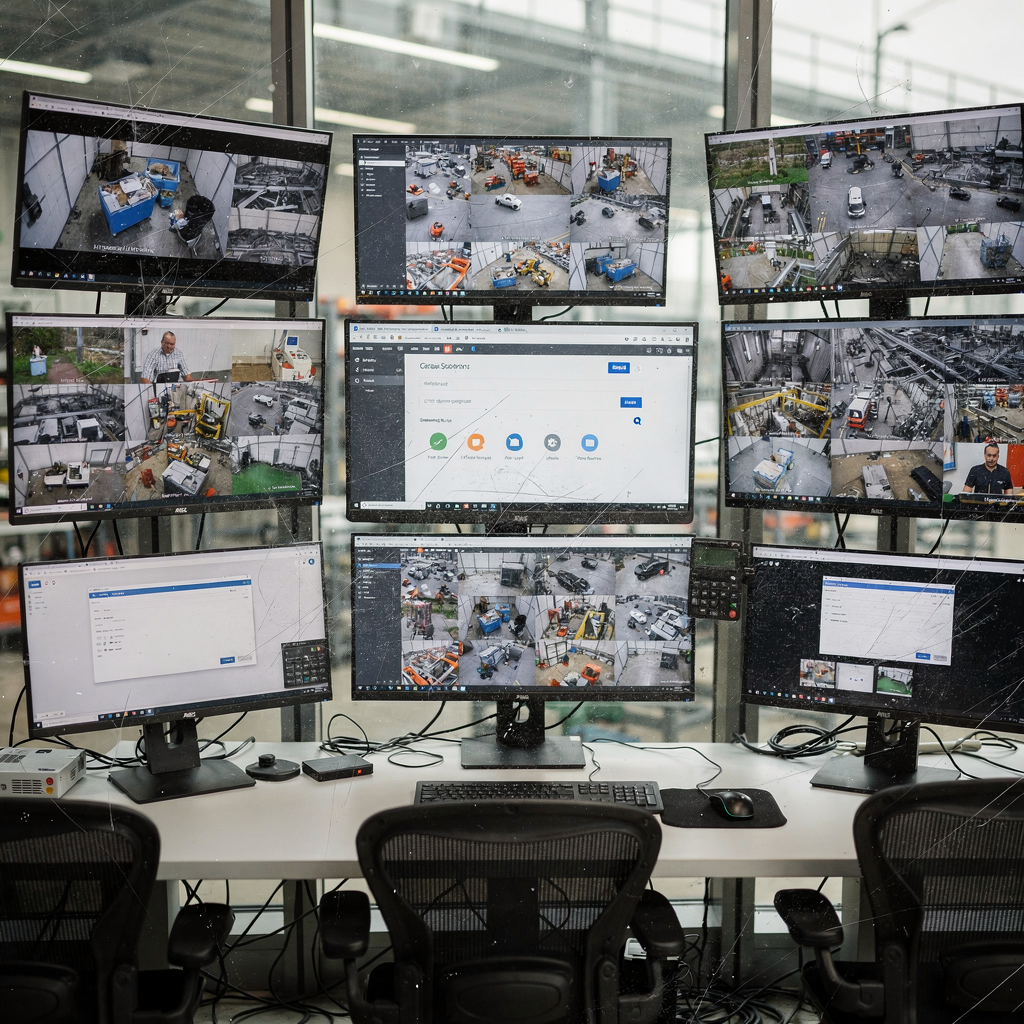
Also, smart search integrates with existing VMS and local storage, enabling investigators to query an enterprise video collection without moving video to the cloud. As a result, teams can preserve privacy and comply with regulations while quickly locate materials for investigations. In short, smart search speeds up responses and makes video security more useful.
AI vision within minutes?
With our no-code platform you can just focus on your data, we’ll do the rest
ai video & smarter video: combining NLP and computer vision
Multimodal AI architectures power the translation from language to visuals. At their core, these systems combine computer vision models that index visual scenes with a language model that maps descriptive text to visual attributes. The vision language component extracts captions, object attributes, and behavioural cues. Then, the language model converts a user’s voice commands or typed language prompts into a structured query. Finally, a retrieval layer ranks and returns the best matching video segments. This pipeline turns raw video feeds into searchable video intelligence that operators can use immediately.
That architecture supports both archive search and real-time monitoring. For archival work, video content is pre-processed into a searchable database that stores textual descriptions, image snapshots, and timestamps. For real-time video, models run on edge servers to provide providing real-time alerts and real-time insights when predefined conditions match incoming frames. Systems that operate on-prem avoid cloud transfer and reduce latency, while still offering advanced ai algorithms for detection and reasoning. This model is at the core of solutions offering enterprise video features and the ability to scrub through hours of footage efficiently.
Challenges remain. Low-light footage, occlusion from crowds, and varied camera angles reduce model performance. Also, different camera models and compression levels complicate indexing across multiple cameras. Systems must therefore include calibration tools and model refinement workflows so operators can tune detection thresholds. Voice-activated search and language prompts improve usability, yet the underlying models need robust training to avoid false positives. To mitigate that risk, hybrid workflows combine AI-driven suggestions with human verification so that the system learns from corrections and becomes smarter over time.
Natural language processing plays a central role here. For operators, the difference between typing a query and constructing complex rules is enormous. Using natural language queries shortens the path from question to answer. Moreover, this combination of vision and language delivers intelligent scene analysis that can surface events of interest quickly and reliably. For an applied example of people counting and crowd density, see our people-counting in airports resource for how these models support busy environments.
generative & generative ai: next-generation search intelligence
Large language models and generative AI enhance contextual search in video security. A language model can summarise multiple camera feeds, create human-readable incident reports, and suggest follow-up actions. For instance, a generative model can draft an initial incident note that includes timestamps, image snapshots, and probable sequences. This output then assists operators and investigators by reducing time spent on documentation. At the same time, tools like ChatGPT illustrate how language models can be applied for reasoning over textual descriptions, though specialised on-prem models are often preferred for compliance and privacy.
Generative features also support creative queries. A user might ask for a montage of all entries where a specific vehicle entered a restricted bay, or request a timeline of people who loitered in a zone. The system responds by assembling clips and offering a short narrative that ties them together. This capability helps teams find key patterns across days or weeks without manual correlation. For controls and auditability, it is essential to track how a generative output was produced and which raw clips it referenced. Transparency matters, especially when law enforcement uses the results.
Privacy and bias concerns are major considerations. Policy makers warn that “The power of AI to sift through surveillance data must be balanced with robust safeguards to protect individual privacy and prevent misuse” (EU study on digital surveillance). Furthermore, academic work highlights risks when AI-assisted processes feed into policing without oversight (risks of AI-assisted policing). Therefore, practical deployments often use on-prem Vision Language Models and audit logs to reduce bias and to keep storage and processing within organisational control. Companies like March Networks have historically supplied camera systems for regulated environments, and modern platforms now pair that hardware experience with advanced AI to improve results. For readers interested in loitering examples, see our loitering detection in airports page to see detection in practice.
AI vision within minutes?
With our no-code platform you can just focus on your data, we’ll do the rest
integrate & automation: seamless security workflows
To be effective, AI features must integrate with existing control rooms. Integrate the AI layer with VMS, access control, and incident management so operators can act from one console. For example, an AI agent may verify a detection, add contextual notes, and then either create an incident ticket or send an alert. This reduces the number of manual steps and gives operators a single pane of glass for decisions. The VP Agent Actions approach supports manual, human-in-the-loop, and automated responses. As a result, teams can both automate routine tasks and retain oversight for high-risk scenarios.
APIs and software infrastructure matter. A modern deployment needs webhooks, MQTT streams, and documented REST endpoints so other systems can consume events. In practice, event metadata, image snapshots, and suggested actions flow through these APIs to downstream systems like dispatch consoles and business intelligence dashboards. The architecture should also support local storage and on-prem inference to meet compliance constraints and to avoid high costs associated with cloud video egress. For integration examples with intrusion use cases see our intrusion detection in airports page.
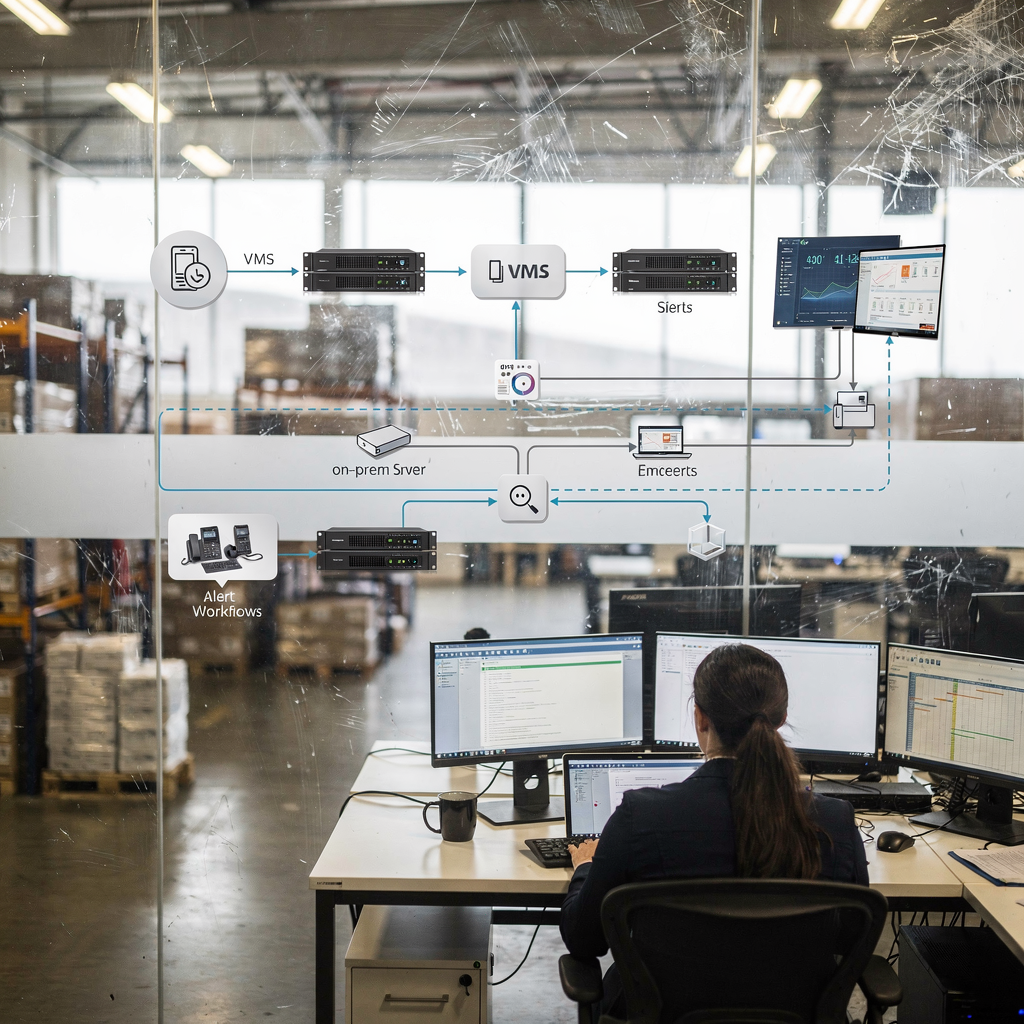
Automation reduces operator workload but must be configurable. Systems should support customisable rules, escalation paths, and audit trails. In addition, automation can pre-fill incident reports, trigger notifications, and enrich tickets with contextual evidence. For typical control rooms, this produces fewer redundant alerts and better operational insights. Also, security and operational teams gain consistency and scale. As a final note, when integrating, verify API rate limits, data retention policies, and the ability to filter outputs to avoid overwhelming human operators with low-value notifications.
ai for smarter & use cases: real-world deployments
AI adoption in the field shows clear benefits across sectors. For law enforcement, prompt-based search reduces investigation time and helps find specific events of interest in days-old footage. For retail, the technology helps loss prevention teams find suspicious patterns and supports business intelligence by turning camera streams into quantifiable metrics. For transport hubs, AI simplifies monitoring of vehicle movements, unauthorized access, and passenger flows. In many deployments, AI video search returns results in seconds, which improves real response and reduces downtime.
Concrete outcomes matter. Studies indicate up to a 70% reduction in search time (research on camera enforcement). In controlled environments, precision rates above 85% have been reported for attribute searches. These figures show that operators can focus on verification rather than relentless detective work. For organisations that need specialised modules — for example, ANPR, PPE checks, or perimeter breach — integrated detectors feed the AI layer and produce richer, contextual outputs. For example, our ANPR/LPR in airports and PPE detection resources describe how object classification data can be turned into investigable intelligence.
Best practices for deployments include starting with narrow, high-value use cases. First, map the most common investigator questions and then train models or configure language prompts to handle those queries. Second, keep video and models on-prem where regulation demands it. Third, involve operators early so the system learns from corrections. Finally, measure false positives and tune thresholds to balance detection and operator load. Systems that follow these steps can stay ahead of threats and provide actionable evidence quickly.
Use cases span forensic search, loitering detection, and slip-and-fall monitoring. Retailers can quickly locate events such as suspected theft, while airports use people detection and crowd density tools to improve passenger flow. Moreover, combining AI with human oversight reduces false positives and increases trust. If you want applied examples tailored to airports and perimeter scenarios, see our perimeter breach detection in airports page for tactical guidance.
FAQ
What is prompt-based CCTV search?
Prompt-based CCTV search uses AI to convert natural language queries into visual searches across video data. It allows operators to find incidents by describing them rather than using camera IDs or exact times.
How much time can AI reduce when searching video?
Research shows that prompt-based search can reduce the time needed to locate relevant footage by up to 70% compared to manual review (study). This depends on the quality of the indexed data and the specificity of queries.
Can AI run on-prem to meet privacy rules?
Yes. On-prem Vision Language Models and local storage keep video and models inside your environment to support compliance and reduce cloud dependency. This approach also lowers risk from data egress.
Does generative AI create false evidence?
Generative AI can summarise and then reference raw clips, but systems must log provenance to prevent misinterpretation. Auditable trails and human review reduce the risk of misleading summaries.
How do I integrate prompt search into my VMS?
Modern integrations use APIs, MQTT, and webhooks to expose events, image snapshots, and metadata. Systems should support configurable webhooks and authenticated REST endpoints for seamless workflow automation.
Are voice commands supported for search?
Yes. Voice-activated search and voice commands convert spoken queries into language prompts that the system parses. This enables hands-free investigation in busy control rooms.
What about low-light or occluded cameras?
Low-light footage and varied angles challenge models. The best practice is to use tailored models, calibration, and hybrid verification so AI suggestions are validated before action.
Can AI help reduce false positives?
Yes. AI agents that reason over multiple data sources can verify detections and provide contextual explanations, which lowers false positives and reduces alarm fatigue.
Is cloud processing required?
No. Many deployments keep processing local to meet compliance and cost goals. Local storage and on-prem inference are standard when organisations need full control over video data.
What are common first use cases?
Start with high-value tasks like forensic search, loitering detection, and perimeter breach monitoring. These use cases deliver quick wins and help refine language prompts and search logic.