Modern forensic video analytics for behaviour-based forensic search
Behavior-based forensic search focuses on what people do inside video, not just where or when a clip was recorded. It uses pattern recognition to find acts, gestures, and interactions that match an investigator’s intent. Traditional metadata-driven methods depend on TAGS, timestamps, and camera identifiers. They require precise search criteria and often need long manual review. Behavior-based search, instead, looks for motion signatures, posture changes, and interactions. As a result, teams can find relevant footage faster and with fewer false leads.
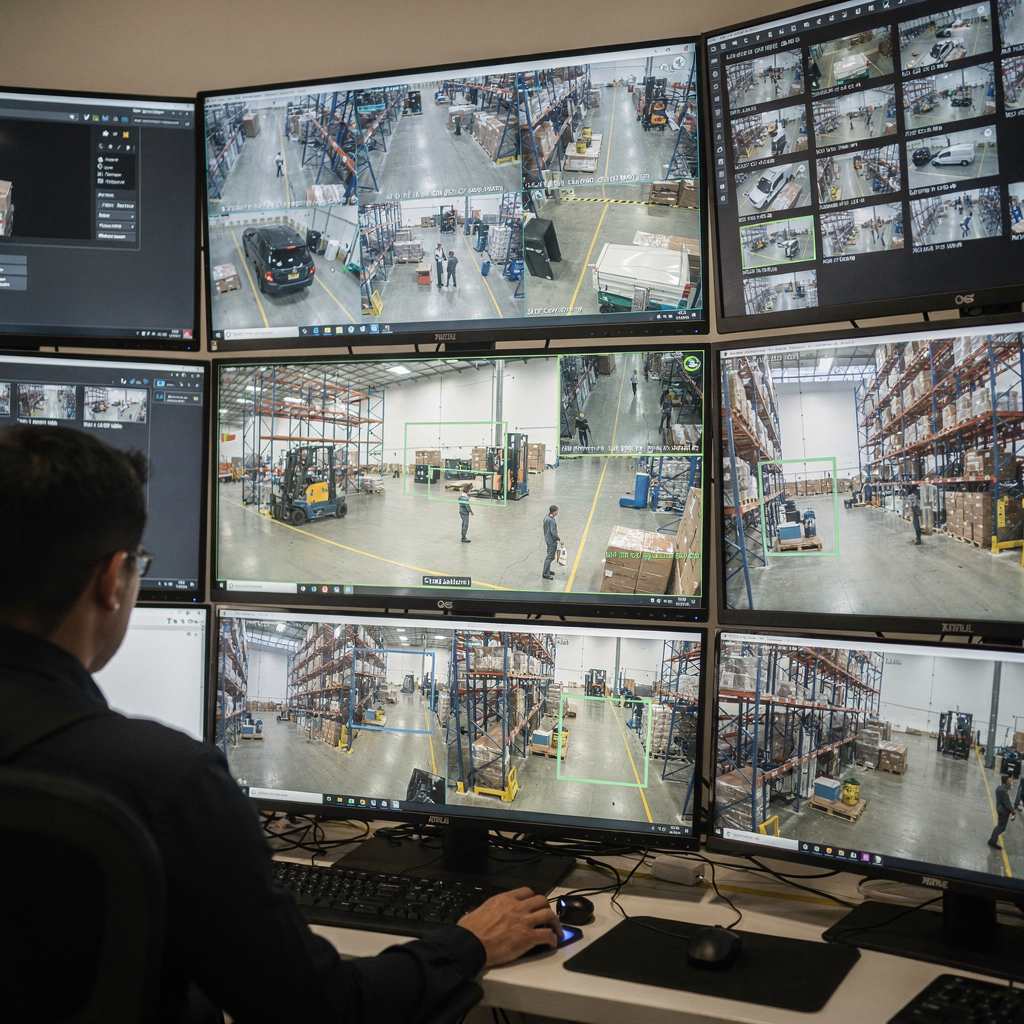
Algorithms extract motion vectors and skeleton tracks from recorded video. Then AI models convert these low-level signals into behavioural labels such as loiter, approach, or object handoff. For example, bounding boxes and pose estimation mark where a person moves. Next, temporal models link successive frames into an action. Therefore a single person walking becomes a traceable path across video streams. In practice, this approach helps investigators search across multiple cameras and link events in time.
Digital evidence features in roughly 90% of criminal cases, which amplifies the need for rapid forensic search (study). Consequently, large organisations face thousands of hours of recorded video and cannot manually scan every clip. Behavior-based algorithms scale. They reduce the time to find relevant footage and they reduce workload for security teams. For instance, an automated system can flag specific events, generate thumbnails, and present a short list of hits within seconds for human review.
Benefits include faster retrieval, cross-camera traceability, and fewer missed leads. Also, behaviour-based methods improve context. A snippet that shows a person loitering near an access point looks different from one showing a person running. That context supports evidence gathering and leads to better outcomes during an investigation. In real deployments, visionplatform.ai integrates behaviour labels with on-prem VMS data so operators can quickly locate visual evidence and act. For more on targeted behavioural queries in airport contexts, see our page on forensic search in airports forensic search in airports.
AI-powered detection: Enhancing video analysis in forensic investigations
AI automates the detection of suspicious or criminal behaviours so teams can focus on decisions. Convolutional neural networks, temporal convolutional networks, and transformer models process frames then infer actions. First, CNNs extract spatial features. Second, temporal layers connect motion across frames. Third, a classifier assigns labels like loiter or loitering near an entry. Thus a camera feed turns into searchable behaviour events.
Studies report that AI-driven systems can reduce manual review time by up to 70% when used in real workflows (report). This statistic shows how AI-powered tools save time and lower investigation time. Also, agencies such as the DOJ recommend using jurisdiction-specific datasets to improve local performance and fairness (DOJ summary). Therefore, AI adapts when teams add local recordings, annotations, and rules. In practice, visionplatform.ai supports custom model workflows so sites can refine detection with their own edge-based data and avoid cloud video transfer.
AI-powered forensic video analysis converts recorded video into human-readable descriptions. Then operators can run natural language queries such as “person loitering near gate after hours.” The platform returns candidate clips with thumbnails and timestamps. Also, the VP Agent can explain why a clip matched. That adds traceability and reduces false positives. As a result, analysts verify alarms faster and gain better context. This combination of automation and explanation makes AI-powered systems a powerful tool for modern forensic teams.
Common challenges remain. Model accuracy depends on training data quality. Bias and privacy concerns require governance. Still, by integrating AI to tag behaviour and by tuning models with local samples, teams improve reliability and reduce wasted hours of manual review. For a related use case in airports, see our pages on loitering detection loitering detection in airports and people detection people detection in airports.
AI vision within minutes?
With our no-code platform you can just focus on your data, we’ll do the rest
Workflow optimisation with metadata and search filters in video search
Combining metadata and behaviour cues optimises investigative workflows. Metadata such as timestamps, camera ID, and GPS coordinates narrows the search area. Then behaviour labels filter clips for specific actions. For example, an operator can search for “person running near gate between 22:00–23:00.” The search tool returns clips that match both the timestamp and the detected action. This layered approach reduces false positives and speeds retrieval.
A practical workflow follows four clear steps: ingest video, tag behaviours, apply filters, review hits. First, ingest recorded video into a VMS or archive. Then AI to tag frames with behaviour labels and object detection outputs. Next, apply search filters like movement speed, object type, and duration to trim results. Finally, review the top hits and export evidence. This workflow saves time because it makes the system do repetitive filtering while humans focus on verification.
Search filters can include movement speed, object type, and bounding boxes for people or vehicles. They can also use timestamps and camera identifiers. Search across cameras becomes possible when the platform links timelines. For example, trace a suspect across multiple cameras by matching posture and path characteristics. That cross-camera traceability supports chain-of-evidence and reduces the number of false leads.
Best practices recommend keeping metadata local and auditable. Also, annotate why results matched for later traceability. visionplatform.ai’s VP Agent Search supports natural language search and returns thumbnails plus timestamps so operators can quickly locate relevant footage without switching systems. This approach both increases security and reduces the time from tip to action. For more on structuring event-driven workflows at airports, review our intrusion detection and perimeter breach pages intrusion detection in airports and perimeter breach detection in airports.
License plate recognition: Advanced video analytics to enhance security
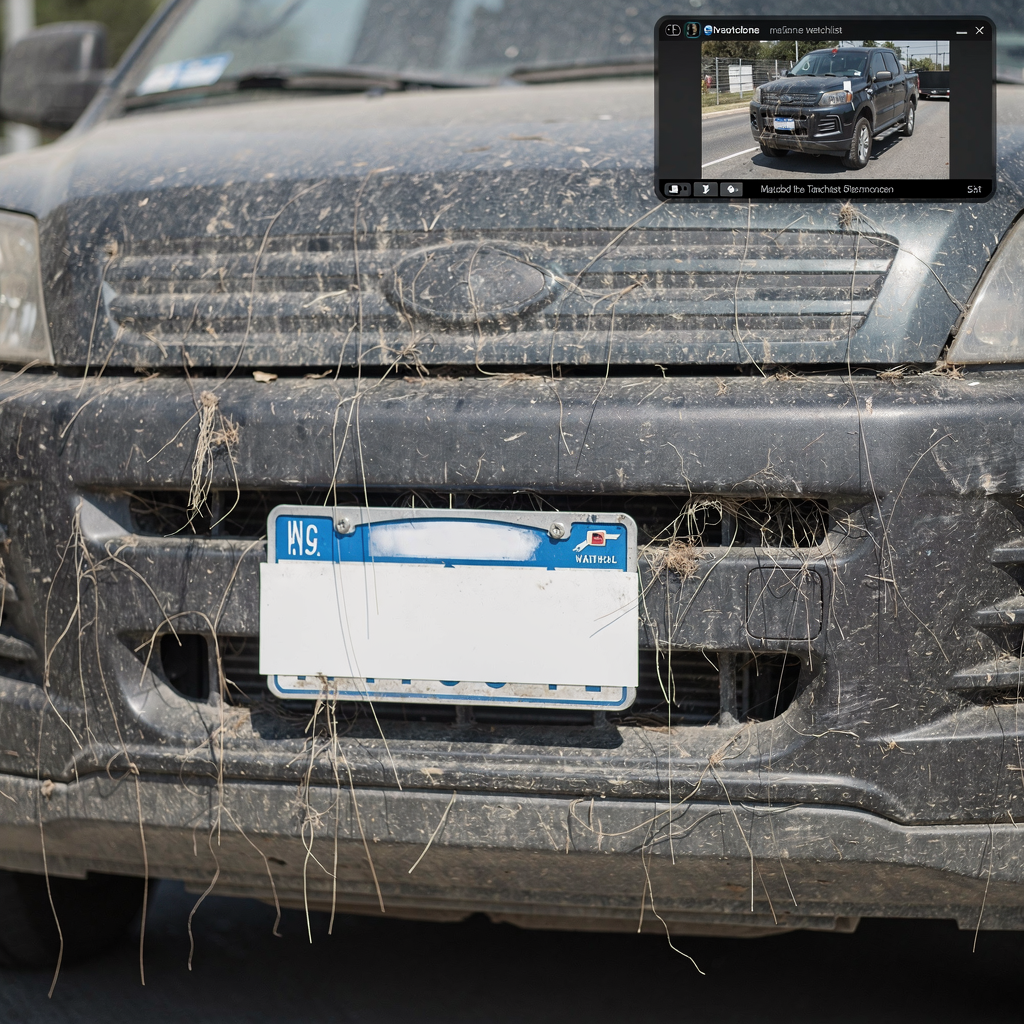
License plate recognition plays a central role in linking vehicle movements to incidents. ANPR systems extract the plate string then match it to watchlists. When combined with behaviour context, a plate seen near a suspicious action flags higher priority. For instance, a vehicle that stops near a loading bay during an after-hours loitering event raises immediate concern. Thus the combined signal speeds rapid identification.
Recognition accuracy increases when systems use both image-based ANPR and behavioural cues. For example, a plate read at a distance may be noisy. However when the system also observes the vehicle’s speed, direction, and whether the driver exited, it boosts confidence in matches. This fusion reduces false positives and improves retrieval rates during post-incident investigations.
Applications include public safety, perimeter control, and post-incident evidence gathering. ANPR enables fast lookups across archived footage and external databases. Teams can trace a suspect across all cameras and correlate timestamps with access control logs. In use, license plate recognition supports operations such as access control and perimeter monitoring while it helps investigators quickly locate a vehicle of interest.
In airport environments, ANPR integrates with vehicle detection and classification to create a fuller picture of activity near critical assets. For an ANPR-focused overview, see our page on ANPR/LPR in airports ANPR/LPR in airports. In deployment, keeping processing on-premises preserves privacy and compliance while it increases security. This approach enables near-instant matches and improves the speed of evidence retrieval without sending video footage without consent to external clouds.
AI vision within minutes?
With our no-code platform you can just focus on your data, we’ll do the rest
Genetec integration: Boosting search capabilities for forensic search for video
Genetec’s Security Center provides a robust foundation for search and incident handling. When integrated with behaviour-based analytics, the platform offers live monitoring, archived footage retrieval, and alerting. The combined system supports both live monitoring and retrospective queries. As a result, operators can jump from an alert to a timeline that shows linked behaviours and relevant clips.
Security teams gain search capabilities such as cross-camera trace and rapid identification. Forensic search for video benefits from Genetec’s event API and a behaviour layer that indexes actions. For example, an integrated deployment might detect a person loitering, then automatically pull related clips from nearby cameras. That automation reduces time to triage and it improves traceability of events.
One case study showed that integrated tools cut investigation time by half when behaviour labels and VMS metadata worked together. The VP Agent Suite enhances that pattern by exposing VMS events as structured data for AI agents. Then agents can run workflows that pre-fill incident reports, notify responders, or close false alarms. This flow reduces hours of manual tasks and helps teams scale monitoring without adding staff.
Data security and compliance remain essential. Keep video within controlled environments, enforce access controls, and log queries for audit. visionplatform.ai emphasizes on-prem processing to align with EU AI Act requirements and to avoid cloud exposure. Also, the system supports role-based permissions and audit trails so organisations can meet legal and procedural needs. Integrating with Genetec or other video management software improves both detection and evidence retrieval while it maintains chain-of-custody.
Forensic video investigation: ai-driven behaviour detection and filter application
Consider a step-by-step case study from tip-off to final video evidence. First, a tip arrives that a package was removed from a dock overnight. Second, operators run a natural-language query in the smart forensic search. Third, AI-powered forensic tools scan hours of video footage and return a short ranked list of candidate clips. Fourth, investigators review the top matches, confirm the event, and export the visual evidence for reporting.
During the search, ai-driven detection flags actions such as approaching a pallet, interacting with an object, and exiting the area. Then dynamic filters refine results by object type, duration, and timestamps. For example, filters remove short transient events and prioritise clips where a person stops and picks up an item. This targeted approach helps teams find relevant footage quickly and without manual review of every frame.
Challenges include false positives, privacy safeguards, and dataset quality. False positives occur when benign behaviours resemble suspicious ones. To mitigate that risk, systems combine multi-modal cues and seek corroboration from access control logs or mobile phone data (review). Additionally, teams must curate training datasets. The DOJ recommends adding jurisdiction-specific samples to improve local performance (summary).
Future enhancements point to multi-modal data fusion, real-time alerts, and deeper analytics. Linking video with access control, license plate recognition, and procedure logs creates a stronger evidence chain. Also, edge-based processing and on-prem Vision Language Models allow near-instant verification while preserving privacy. For practical deployments, consider solutions that integrate with existing cctv and VMS so you can scale from a few video streams to thousands of hours of archived footage. Finally, the modern forensic approach both saves time and improves decision quality during fast-moving incidents.
FAQ
What is behaviour-based forensic search?
Behaviour-based forensic search identifies actions and interactions in video rather than relying solely on metadata. It uses AI to tag movements, gestures, and sequences so investigators can find relevant footage more quickly.
How does AI improve video analysis?
AI automates detection, classification, and ranking of video clips based on learned patterns. It reduces hours of manual review, provides explanations for matches, and speeds evidence retrieval.
Can this work with existing VMS platforms?
Yes. Integrations with video management software allow behaviour labels and metadata to flow into the control room. That lets operators search across cameras and timelines without replacing their current VMS.
Is license plate recognition part of behaviour-based analytics?
Yes. License plate recognition complements behavioural context by linking vehicles to events. Combining the plate read with observed actions improves rapid identification and post-incident tracing.
How accurate are modern systems at reducing manual review?
Results vary, but deployments report reductions in manual review time of up to 70% in some studies (study). Accuracy depends on model quality and training data.
What privacy safeguards should be used?
Process video on-premises when possible, limit access via role-based controls, and log all queries for audit. Additionally, use jurisdiction-specific training data and clear retention policies to stay compliant.
How do I trace a suspect across multiple cameras?
Use cross-camera trace functions that match pose, trajectory, and timestamps to link the same individual across feeds. Natural-language search and thumbnails make it faster to find and verify matches.
Do behavior-based systems need custom training?
Often yes. Adding local samples and site-specific labels improves performance and reduces false positives. The DOJ recommends jurisdictional tuning to increase reliability (recommendation).
What happens after a clip is identified?
Operators verify the clip, export visual evidence, and attach metadata and timestamps for chain-of-custody. Automated workflows can pre-fill reports and notify relevant teams.
Where can I learn more about airport-specific deployments?
For airport use cases, review pages on forensic search in airports and ANPR/LPR in airports which explain how behaviour labels and plate detection combine to improve security. See our resources for practical guidance forensic search in airports and ANPR/LPR in airports.