AI and video surveillance: Transforming footage into actionable insights
Control rooms used to rely on long hours of manual review, and now AI drives a profound shift. First, AI replaces repetitive visual tasks, and second, it speeds up review of stored footage so teams can focus on decisions. AI inspects frames, tags events, and summarizes sequences, which lets operators quickly locate critical moments. For example, modern AI systems can reduce investigation times by up to 70% according to recent reporting. This quantifiable improvement matters because a faster investigation often means faster resolution and safer environments. At the same time, organizations that adopt AI report improved case resolution rates; one survey found a 65% uplift after deployment noted by Deloitte.
Computer vision models, trained on diverse data, scan vast archives and tag people, vehicles, and behavior. These models combine facial recognition, object detection, and behavior analysis to index hours of camera recordings efficiently. visionplatform.ai adds a reasoning layer that converts raw detections into context, which helps operators understand what happened, why it matters, and what to do next. Our platform centralizes video searches with natural language queries and reduces the time needed to find a person of interest or a license plate. That capability supports both proactive response and post-incident investigation, and it transforms static camera feeds into actionable information.
Search is no longer limited to timestamps. Instead operators query with plain language. For example, they can find “person loitering near gate after hours” or “red truck entering dock area yesterday evening” using VP Agent Search. This approach cuts tedious manual playback, and it allows teams to concentrate on verification and response. In practice, that leads to measurable gains in operational efficiency and fewer hours lost to repetitive tasks. Furthermore, when AI runs on-premise, teams keep control of sensitive video data, which supports compliance and reduces exposure from cloud dependency.
Finally, adopting AI in video surveillance also raises responsibilities. Privacy, cybersecurity, and careful policy design must accompany any rollout. For that reason, vendors and operators should pair technical safeguards with transparent procedures, and they should audit systems frequently to maintain public trust while leveraging the clear advantages AI delivers.
Centralising security operations with an AI-powered camera network
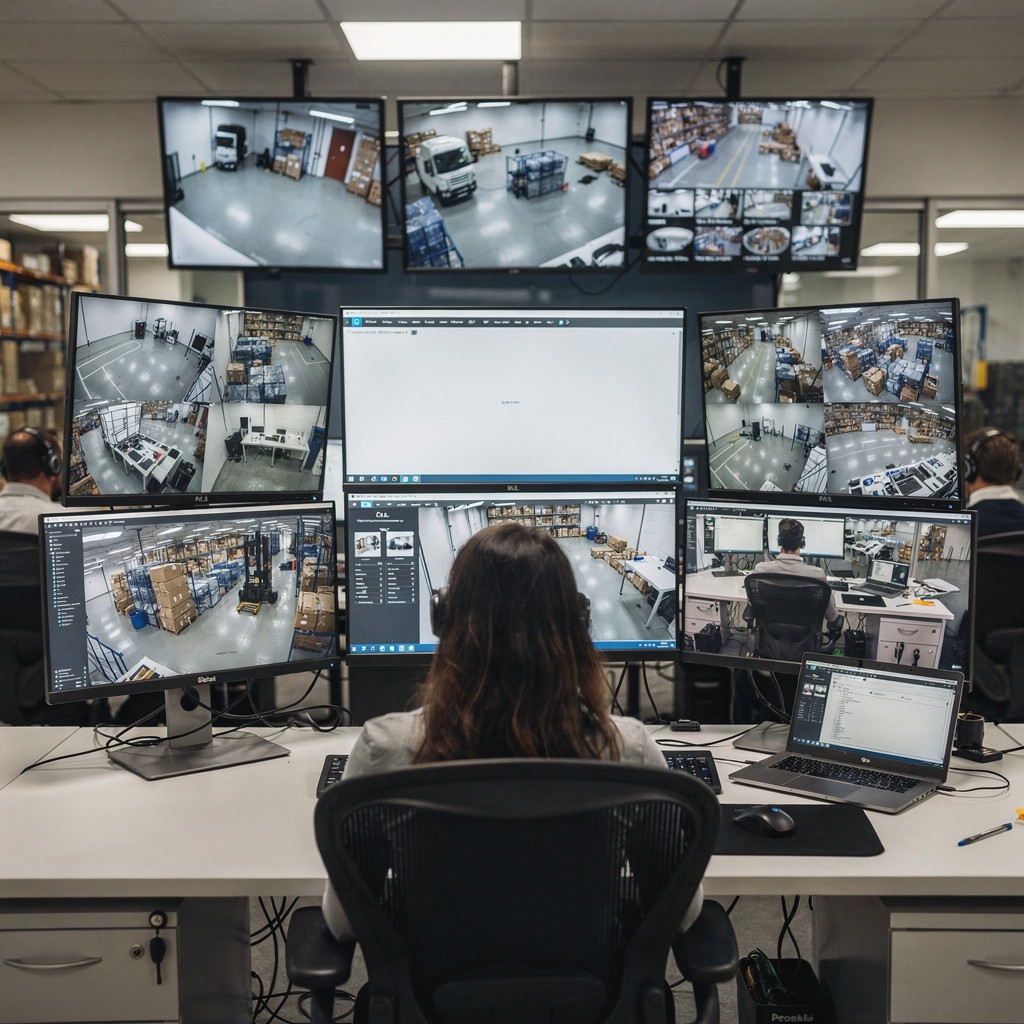
A unified approach changes how security teams work, and centralize becomes more than a buzzword. A single security platform can integrate many camera feeds and provide centralized control that simplifies monitoring. visionplatform.ai connects existing VMS systems and cameras, and it exposes events as structured inputs for AI agents. As a result, control-room staff gain a consolidated dashboard that presents verified situations rather than isolated alarms. This reduces cognitive load and improves decision speed.
When the platform indexes video clips and metadata, operators can quickly search across timelines and sites. AI-powered tagging and indexing create descriptive summaries for each recorded segment, and those summaries turn hours of footage into searchable text. The VP Agent Suite converts video into human-readable descriptions with an on-prem Vision Language Model, and that enables effortless retrieval without exporting video offsite. In practice, this architecture allows security teams to rapidly locate a relevant video and follow an audit trail with clear justification.
In addition, an integrated system streamlines workflows for control-room teams and supports remote monitoring. For example, when an intrusion is detected the platform can correlate nearby camera views, access control logs, and historical context to explain whether an alarm is valid. That workflow reduces false positives and gives operators recommended actions. Then, if required, the system can notify external responders or pre-fill incident reports, which speeds follow-up and improves operational efficiency.
To explore how AI can centralize your control room, request a demo of visionplatform.ai’s VP Agent Suite that shows forensic search, reasoning, and guided actions in action. The demo highlights how real-time detection and indexed footage combine to make monitoring more effective, and it demonstrates how a cloud-free, on-prem solution preserves data sovereignty while delivering industry-leading security.
AI vision within minutes?
With our no-code platform you can just focus on your data, we’ll do the rest
Smart video search and smart search for rapid detection
Searching by timestamp feels antiquated, and smart video search gives teams a better option. With AI-driven indexing, queries can include objects, behaviors, and plain-language descriptions. For instance, operators can quickly search for a specific vehicle or a person who left an item in a terminal. This smart search reduces time spent scrubbing footage and helps teams focus on verification and response. A properly configured system will let you quickly locate critical video clips with minimal operator training.
Traditional video surveillance search depends on manual tags or time codes, and it often misses contextual clues. By contrast, AI analyzes motion, posture, and interactions across frames, and it flags unusual activity that a timestamp search cannot. Use cases include locating a particular license plate, identifying loitering near a perimeter, or spotting patterns that indicate a potential intrusion. For airports, for example, tools like ANPR/LPR and loitering detection provide precise filters for high-traffic areas; learn more with our ANPR/LPR and loitering detection information for airports about ANPR/LPR in airports and about loitering detection.
Quantitatively, AI search shortens investigations by as much as 70% in many deployments according to industry reporting. That means staff spend less time on retrieval and more on proactive measures. Also, smart search is the backbone for forensic review, and it feeds downstream analytics and reports. When paired with a dashboard that summarizes incidents, teams can spot trends across sites and tune rules or models to reduce nuisance alarms and improve detection accuracy.
Finally, smart search improves auditability. Each query and result can be logged, and the platform can generate compliance-ready reports. This feature simplifies internal reviews and external audits, and it makes it easier to justify decisions and demonstrate adherence to policy. Overall, smart video search transforms unstructured video data into searchable knowledge that supports faster and more accurate outcomes.
Facial recognition and real-time alert to enhance video security
Face-matching capabilities now work across live feeds and recorded footage, and they can produce instant, actionable results. Facial recognition helps verify identities at access points, and it supports alerts for blacklisted individuals or VIP visitors. When combined with natural language search, operators can both query for a person of interest and receive rapid confirmation from multiple cameras. This reduces the time to react during critical moments and increases the chance of a timely intervention.
visionplatform.ai integrates facial recognition with on-prem reasoning so that decisions happen without sending video to the cloud. The platform correlates visual matches with access-control logs and procedures, which helps reduce false positives and explains why an alert was raised. For example, if an alert triggers for a person of interest the VP Agent Reasoning module verifies the match against contextual data, and then it offers suggested next steps. This improves response quality and reduces unnecessary escalations.
Real-time alerting is most effective when it is precise and timely. Systems can be configured to send a notification to an operator’s mobile device or to trigger workflows in control-room software. In some real-world deployments, timely alerts have prevented security breaches by enabling patrols to intercept an intruder before an incident escalated as industry analysts observe. Careful tuning and auditing of facial recognition settings remain essential to balance security with privacy and to comply with regional rules.
Finally, facial recognition must be part of a broader security system that includes access control, procedures, and human oversight. When implemented responsibly, it strengthens video security, supports efficient monitoring, and helps teams act decisively at critical moments while maintaining audit trails for compliance and review.
AI vision within minutes?
With our no-code platform you can just focus on your data, we’ll do the rest
Efficient monitoring and AI-driven physical security to deter theft and vandalism
AI excels at detecting loitering, perimeter breaches, and suspicious behavior, and that leads to reduced crime and faster closure of incidents. Automated detection flags unusual activity and presents operators with verified context, which reduces the time needed to triage alarms. When integrated with alarms and access control, AI becomes part of a seamless security solution that deters theft and supports rapid intervention.
Studies and deployments show measurable deterrent effects: some sites report up to a 30% drop in theft and a 25% reduction in vandalism after installing AI-assisted monitoring. In practice, the system sends an alert, and then the operator or an automated workflow can dispatch a response while capturing relevant evidence. visionplatform.ai supports such workflows with VP Agent Actions, which can pre-fill incident reports and notify responders automatically.
Integration matters. By connecting detection outputs to other systems, a control room can close the loop quickly and consistently. For example, an intrusion detection event can open perimeter cameras, verify the scene, and lock or unlock doors according to policy. This integrated approach reduces false alarms and improves operational efficiency. To explore specific detection modules for airport settings, see our intrusion detection and perimeter breach resources on intrusion detection and on perimeter breach detection.
Finally, by keeping models and video processing on-prem, organisations limit exposure of security footage and protect privacy. This architecture supports compliance with regional regulations and reduces cloud-related cybersecurity risk. As a result, AI-driven physical security not only deters theft and vandalism but also fits into a principled governance model that balances efficacy, transparency, and data protection.
Unlocking valuable data with our security solution – request a demo
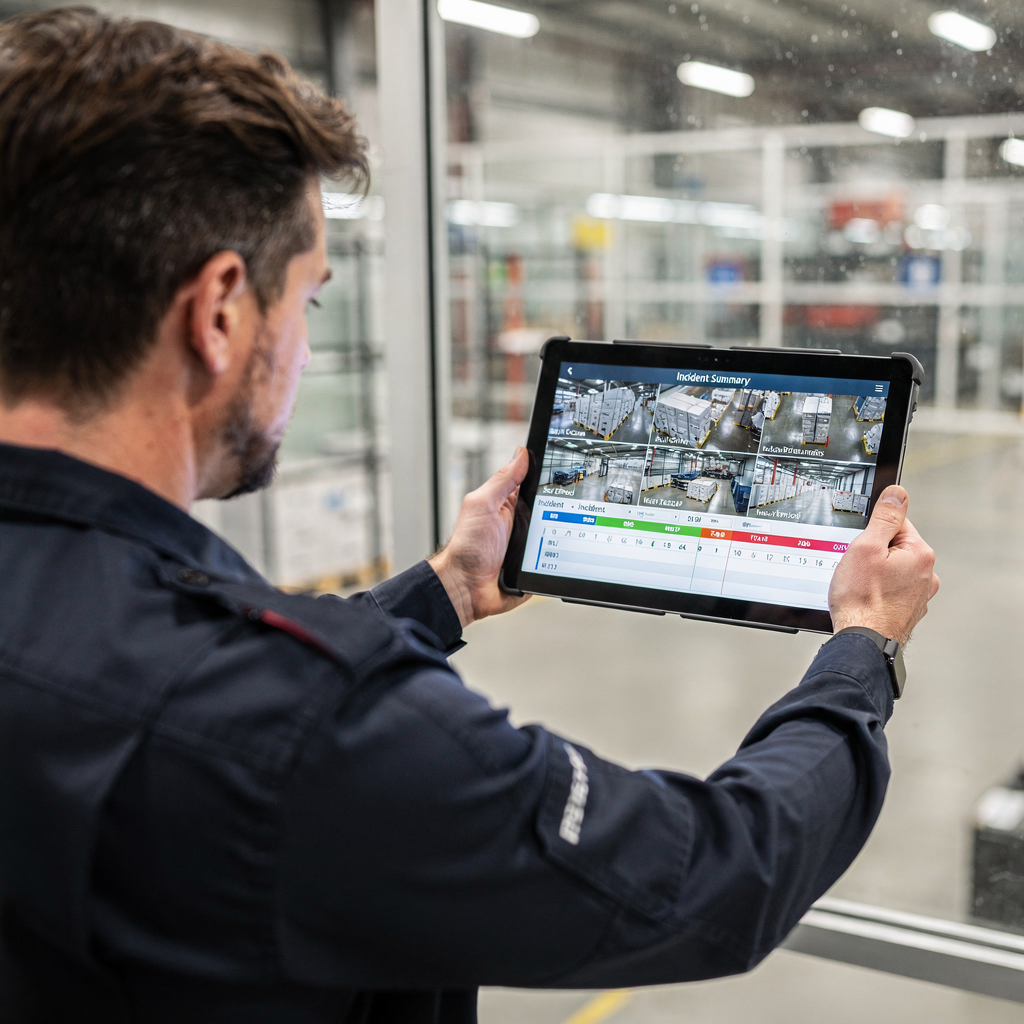
Raw video becomes insight when the right tools index and interpret it. Our security solution turns camera streams into searchable knowledge and operational context. The VP Agent Suite provides dashboards that surface trends, summarize incidents, and guide operators with suggested actions. A concise dashboard shows who, what, where, and when, and helps teams prioritize response. That streamlined view supports operational efficiency and lets security teams make decisions faster and with greater confidence.
Compliance reporting and audit trails are built in. The platform logs each query, match, and action, which supports transparent retrieval and review. administrators can run reports for incident reviews and for regulatory requests, and that simplifies oversight. In addition, integration with existing VMS platforms keeps deployment friction low. Visionplatform.ai can integrate with Milestone XProtect and common camera protocols, which means organizations can keep their current investments while adding advanced capabilities.
If you want to see the VP Agent Suite in action, request a demo to review forensic search, agent reasoning, and guided actions in context. The demo will show on-prem processing, model tuning, and how AI agents help with verification and response. It will also explain how the solution preserves data sovereignty while delivering ai-powered video capabilities that significantly reduce time per investigation. Request a demo and we will tailor the session to your operational needs, show a live dashboard, and walk through scenarios that matter to your team.
Finally, an on-site or remote demo provides clarity on functionality, workflow integration, and expected outcomes. Book a personalised session to evaluate how AI can streamline monitoring, reduce false alarms, and surface valuable data for proactive, auditable security and operational outcomes.
FAQ
What is AI-powered CCTV search and how does it differ from traditional CCTV?
AI-powered CCTV search uses artificial intelligence to index and interpret video, allowing searches by objects, behaviors, and natural language rather than by timestamps alone. Traditional CCTV relies on manual review and fixed timestamp searches, while AI adds context, reasoning, and faster retrieval.
How does facial recognition work with live and recorded footage?
Facial recognition matches facial features against a database or watchlist across live streams and recorded video. When paired with context and access logs, it can trigger a verified alert and provide suggested actions for operators.
Can I keep video processing on-premise for privacy and compliance?
Yes. visionplatform.ai supports on-prem processing so video, models, and reasoning remain inside your environment. This approach helps with data sovereignty and reduces cloud-related compliance and cybersecurity risks.
How much faster are investigations with AI search?
AI search can reduce investigation time significantly; some reports indicate reductions up to 70% according to industry reporting. Real results depend on deployment scale and model tuning.
Does AI reduce false alarms?
Yes, when combined with multi-source reasoning and configured policies, AI can reduce false alarms by explaining detections and correlating them with other systems. VP Agent Reasoning explicitly aims to verify and explain alarms before escalation.
What integrations are supported for existing camera systems?
The platform integrates with leading VMS, ONVIF and RTSP cameras, and common enterprise systems via MQTT, webhooks, and APIs. This lets teams leverage existing camera investments and add advanced capabilities without ripping and replacing hardware.
How do I request a demo and what will it show?
Request a demo to see forensic search, reasoning, and guided actions in a tailored session. The demo will highlight dashboard views, natural language searches, and how agents suggest or automate workflows for faster, auditable responses.
Can AI detect loitering or perimeter breaches in crowded environments?
Yes. AI models can identify loitering, perimeter breaches, and anomalous behavior even in dense settings, and then present verified context to operators. For airport-specific solutions, see our resources on loitering and perimeter breach detection loitering detection and perimeter breach detection.
How do you balance security benefits with privacy concerns?
Balancing security and privacy involves transparent policies, on-prem processing, limited data retention, and auditable logs. Regular reviews, clear access controls, and adherence to local regulations help maintain public trust while leveraging AI benefits.
What operational improvements can we expect after deploying an AI video surveillance platform?
Organizations commonly see faster investigations, fewer false positives, and streamlined workflows that let teams act proactively. The platform turns video into valuable data for trend analysis, risk management, and continuous improvement.