AI and Control Room Challenges
Control rooms manage complex systems every minute. They coordinate sensors, cameras, alarms, and personnel. Operators must make quick, correct decisions. AI can assist operators by turning noisy feeds into concise options. The role of AI in modern control rooms is to reduce uncertainty, speed reactions, and allow teams to focus on higher-value problems. For example, AI can correlate video, telemetry, and access logs to present a single view of an incident.
Data overload is a primary challenge. Thousands of camera streams and device metrics create more signals than one person can follow. In practice, too many detections become a distraction. That is why visionplatform.ai focuses on turning detections into reasoning, so operators get context instead of raw alerts. When operators need to search video history, manual review wastes time. A control room assistant that understands video like a human makes search fast and precise. See our forensic search for an example of searchable video history for investigations (forensic search in airports).
Real-time monitoring needs add pressure. Operators monitor live feeds and respond to changing conditions. Traditional tools often require toggling between dashboards. By contrast, an advanced AI-driven layer can reduce the number of screens an operator must check. Furthermore, AI can detect patterns that escape human attention and suggest immediate corrective actions. The platform can ingest data from cameras and other sensors, creating unified situational awareness that improves incident handling.
Compared with traditional approaches, AI makes the difference between reacting and acting ahead. It provides proactive alerts, aggregated evidence, and suggested responses. For example, studies show senior leaders increasingly rely on generative capabilities; “53% of C-suite leaders regularly interact with generative AI tools at work” (source). At the same time, successful deployments must protect data and integrate securely. Research emphasizes robust data access controls and encryption to keep AI reliable and compliant (ScienceDirect).
Operator Roles and Assistant Functions
Operators carry a broad set of responsibilities. They monitor live feeds. They confirm alarms. They escalate incidents when needed. They also schedule patrols, log events, and coordinate teams. Each task steals cognitive resources. That is why tools that can help with repetitive tasks are valuable. A well-designed AI assistant reduces manual steps and prevents human error. It enables operators to focus on judgment calls and strategy.
An AI assistant performs core automation tasks such as verifying detections, summarizing events, and pre-filling reports. It acts as an ai tool that pulls data from multiple sources and synthesizes an actionable summary. For instance, a camera might trigger a person detection. The assistant will analyze the scene, cross-check access logs, and flag whether an intruder is likely present. This reduces false positives and saves time.
Real-time alarm detection and alerting is a key example. When a video analytic raises an alarm, the assistant verifies against contextual signals, then provides an explanation and a recommended next step. visionplatform.ai’s VP Agent Reasoning is built for this workflow; it correlates video descriptions, VMS events, and procedures to explain alarms and recommend responses. The operator receives an explained situation: what was detected, what else supports the detection, and why it matters. That context reduces cognitive load and shortens response times.
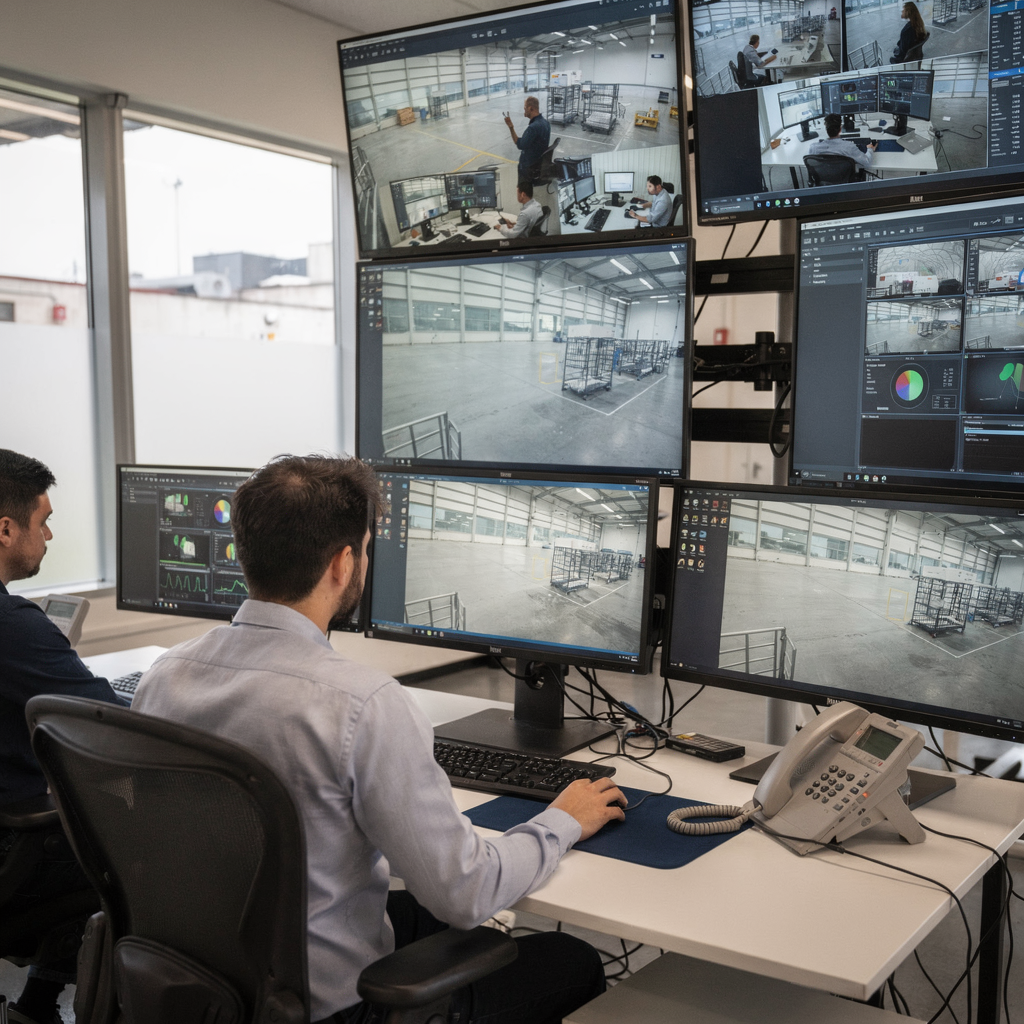
Assistants also support post-event workflows. After an incident, the control room assistant can generate a timeline, attach relevant clips, and pre-populate incident tickets. This process automation speeds handover to field teams and preserves audit trails. Operators can then review curated evidence rather than hunting through hours of footage. Such practices improve shift handovers, and improve situational awareness across teams.
AI vision within minutes?
With our no-code platform you can just focus on your data, we’ll do the rest
Automation and Process Automation in Operations
Automation and process automation are related but distinct. Automation often refers to single tasks being handled by software. Process automation links multiple steps into a reliable chain. For control rooms, process automation means the AI ties detection, verification, reporting, and notification into one flow. This removes repetitive tasks and makes the entire workflow consistent.
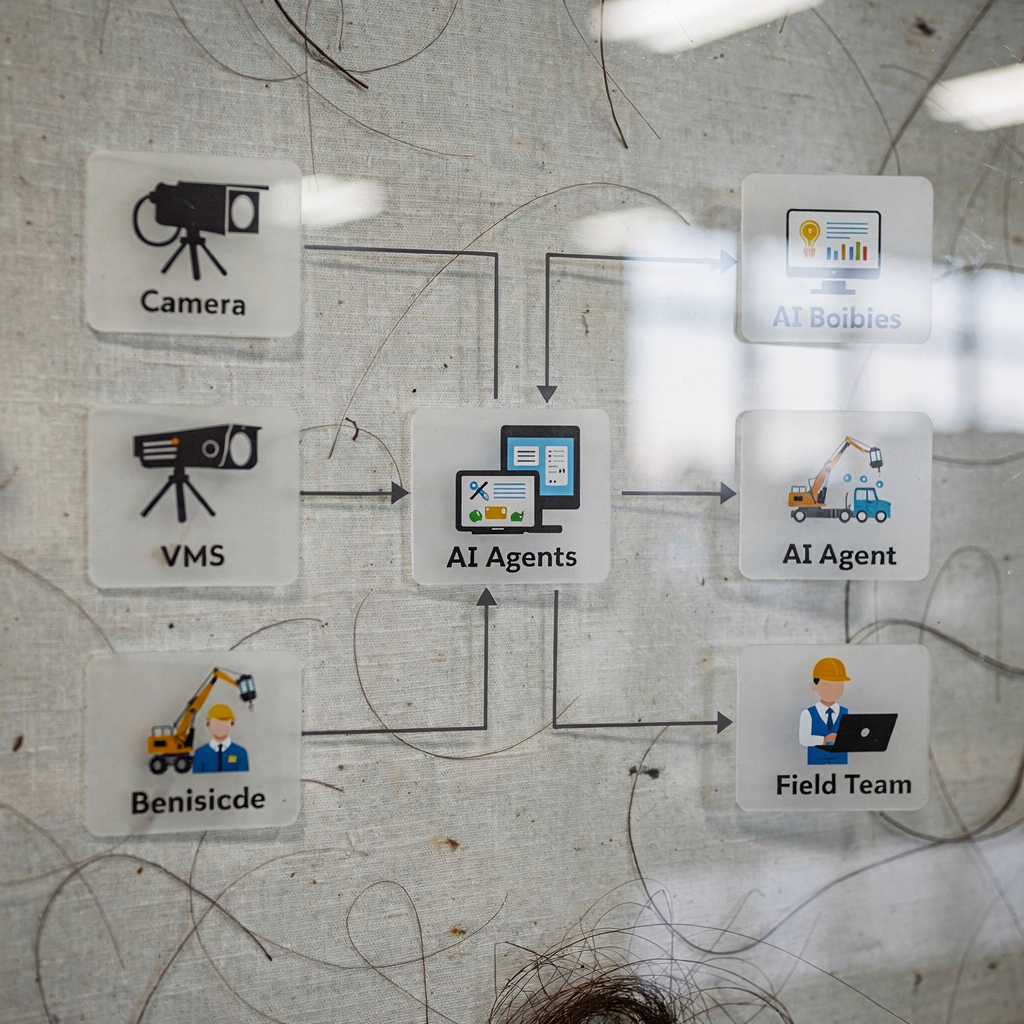
AI streamlines operation workflows by orchestrating systems and data. It connects VMS events to access control, to dispatch lists, and to existing procedures. For example, when an intrusion is suspected, an automated workflow can confirm the alarm, gather camera clips, notify the right responder, and create a report. That single orchestration reduces delays and human error. visionplatform.ai exposes VMS data for agents, so workflows can be executed with clear permissions and auditable steps.
Process automation delivers measurable benefits. Organizations report faster incident closure, fewer manual errors, and more consistent responses. Microsoft notes that every dollar invested in AI solutions generates an additional $4.9 in global economic value, highlighting strong ROI potential for such projects (Microsoft). In practical terms, automation reduces the time to verify alarms and to dispatch responders. It also lowers operator fatigue.
Metrics matter. Typical metrics include reduced false alarms, fewer escalations, and reduced downtime. Process automation can cut mean time to respond by a clear margin. It can also reduce unplanned downtime by detecting early signs of trouble and then initiating preventive steps. For asset-heavy sites, these gains translate into operational excellence and reduced downtime across shifts. To learn how anomaly-focused workflows can be applied in security and operations, see our process anomaly detection overview (process anomaly detection in airports).
Predictive Insights to Mitigate Risks
Predictive analytics matter in preventing outages and accidents. Predictive models use sensor data and historical behavior to forecast when equipment or processes might fail. In control rooms, these forecasts allow teams to prioritize inspections before issues grow. For example, an AI model might forecast bearing wear on a conveyor. The control room can then schedule maintenance and avoid unplanned downtime.
AI enables anomaly detection and predictive maintenance by continuously analyzing telemetry and video-derived descriptions. When the system flags unusual patterns, operators receive an actionable insight detailing likely failure modes and suggested mitigations. The assistant can also correlate events across cameras to identify recurring patterns, enabling proactive action. This predictive approach shifts teams from reactive to proactive maintenance.
Implementations should follow a clear mitigation protocol. Once a forecast is issued, the system can recommend steps such as scheduling checks, isolating a device, or escalating to field teams. visionplatform.ai’s VP Agent Reasoning can present the evidence behind a forecast and suggest a priority, so operators can make informed decisions quickly. This improves response times and reduces the likelihood of cascading failures.
Predictive systems must be validated and auditable. Operators need to verify model outputs and to inspect the supporting data from the control. Transparency builds trust. Also, cybersecurity and data governance must be addressed. Science reviews underline the importance of data access controls and encryption when deploying AI in operational settings (ScienceDirect). By combining predictive capabilities with controlled deployment, teams can mitigate risk and achieve reduced downtime while keeping control over sensitive video and metadata.
AI vision within minutes?
With our no-code platform you can just focus on your data, we’ll do the rest
Dispatch Workflow and Configure Settings
Efficient dispatch is essential in emergency and routine incidents. AI-driven dispatch prioritisation helps teams send the right resource, at the right time. The assistant can score incidents by severity, proximity, and the reliability of the evidence. Then it can recommend which responder to notify. That prioritisation improves resource use and shortens response times.
Operators must be able to configure AI parameters to match local protocols. They need to set thresholds, escalation paths, and permission levels. A good system allows easy tuning so the AI adapts to site-specific rules and operational needs. This configure-first approach ensures that automated actions align with human procedures. It also supports audit and compliance requirements.
Practical examples show gains. In one case, automated workflows reduced the time from alarm to dispatch by a measurable margin. The assistant verified the event with video and access logs, pre-filled the incident ticket, and notified the duty team. Operators kept final approval. The result was faster handoffs and fewer false deployments. When low-risk events are frequent, controlled autonomy can allow the assistant to act on predefined, low-risk tasks without human approval; human oversight remains for high-risk scenarios.
Field teams benefit from clear, contextual dispatch messages that include video snippets and a short explanation. That extra context improves first-response effectiveness. To further illustrate how video-driven alerts work, explore our intrusion detection integration which pairs detection with evidence and recommended action (intrusion detection in airports).
Operator Unique Needs and Artificial Intelligence Ethics
Operators have operator unique preferences and working styles. An effective assistant must adapt to those needs. It should allow operators to set alert verbosity, to change escalation thresholds, and to define which events require human confirmation. Customization ensures the assistant complements an operator’s judgment rather than replacing it. This design principle helps build trust and acceptance.
Trust depends on transparency, safety, and ethical oversight. Operators must understand why the AI made a recommendation. Systems must log decisions, show the evidence used, and allow operators to challenge outputs. Such transparency supports audit and compliance. The EU AI Act and organizational policies often require keeping video and models on-prem to meet privacy and legal constraints. visionplatform.ai offers on-prem options so sensitive footage and model reasoning stay inside the environment, which helps ensure compliance and reduces cloud-related risks.
Safety requires clear boundaries. For safety-critical tasks the assistant must defer to human judgment or follow tightly defined protocols. Operators should also be able to escalate issues manually. Training and simulated drills improve operator familiarity with the assistant and validate its behavior. Additionally, design teams should document failure modes and recovery steps, so operators know how to respond when the system behaves unexpectedly.
Ethical practices include data minimization, encrypted storage, and role-based access. Research into AI in organizational change highlights that human-AI collaboration succeeds when transparency and governance are prioritized (source). Finally, measure outcomes. Track response times, false alarm rates, and operator feedback. Use these metrics to iterate toward operational excellence. If you want to explore how camera analytics become searchable knowledge, check our people detection and forensic features (people detection).
FAQ
What exactly is an AI assistant for a control room?
An AI assistant is software that supports operators by aggregating sensor inputs, verifying events, and recommending actions. It provides context, short summaries, and evidence so operators can make informed decisions faster.
How does predictive analytics help prevent downtime?
Predictive analytics analyze trends and telemetry to forecast likely failures before they occur. This allows teams to schedule maintenance and avoid unplanned downtime, cutting costs and preserving continuity.
Can AI reduce false alarms?
Yes. By correlating camera video with other system signals, AI can verify alerts and flag false positives. This reduces unnecessary dispatches and helps operators focus on legitimate incidents.
Is on-prem deployment important for privacy and compliance?
On-prem deployment keeps video and models inside your environment, which helps meet regulatory and EU AI Act requirements. It reduces risk from cloud data transfers and supports auditable deployments.
How customizable are AI assistant settings?
Operators can configure thresholds, escalation paths, and notification rules to match local protocols. This customization ensures the assistant respects site-specific procedures and operator preferences.
Will the assistant take actions without human approval?
Depending on policy, the assistant can operate in manual, human-in-the-loop, or controlled autonomy modes. Low-risk recurring tasks can be automated while high-risk incidents remain operator-led.
How does the system explain its recommendations?
The assistant provides an evidence-backed explanation that cites video clips, sensor readings, and correlated events. This transparency supports trust and enables audit trails.
What training do operators need to work with AI?
Training focuses on interpreting AI outputs, adjusting settings, and exercising escalation protocols. Regular drills and feedback loops ensure the assistant complements operator expertise.
How can AI improve dispatch workflows?
AI prioritizes incidents based on severity and context and pre-fills dispatch messages with relevant evidence. This reduces delay and helps field teams respond more effectively.
What safeguards exist to prevent misuse or errors?
Safeguards include role-based access, encrypted storage, auditable logs, and configurable autonomy limits. Continuous monitoring of metrics and operator feedback helps detect and correct issues early.