control room infrastructure: building the foundation
A reliable control room begins with robust infrastructure. First, define core hardware requirements. Servers, GPU accelerators, network switches, and resilient storage form the backbone. Next, outline network and edge-computing requirements that support low-latency data flows. For mission-critical environments you must ensure redundancy and real-time data access. In practice, combining local edge processing with central servers reduces round trips. For example, adopting edge GPUs like NVIDIA Jetson allows on-site inference and preserves data residency, which helps with compliance and privacy.
Design the physical hub and the communication system to support many video streams and telemetry feeds. Then, build network slices that prioritise control traffic and emergency alerts. 5G and IoT devices play a clear role here. In trials, 5G and edge computing improve throughput and lower latency by over 40% (source), which enables faster visual verification and alerting.
Integrate legacy OT equipment and SCADA controllers without disrupting daily activity. Use secure gateways and standard protocols to connect supervisory and control systems to modern platforms. This lets you unify older PLCs with new analytics tools. Furthermore, build in clear audit trails to simplify incident reviews and compliance checks. Remember that a flexible control room must support both cloud and on-premises options. A hybrid strategy gives scalability while keeping sensitive video and logs inside the environment.
Finally, plan for operator ergonomics. An intuitive interface, multi-screen layouts, and standardised controls reduce training time and improve situational awareness. visionplatform.ai offers integrations that convert existing cameras into contextual sensors, which helps teams move from detections to AI-assisted operations without replacing core hardware. This approach lets organisations evolve their control room step by step while they modernise infrastructure and improve visibility.
AI and monitoring: boosting situational awareness
AI can shift monitoring from reactive to proactive. First, AI-driven anomaly detection cuts incident response times by up to 50% in pilots, which directly reduces disruption and risk (source). Second, predictive models anticipate failures in utilities and transport. For example, machine-learning models can forecast equipment degradation and schedule maintenance before outages occur. As a result, organisations achieve higher operational efficiency and lower unplanned downtime.
Real-time video analytics form a key piece of next-generation control room capability. Systems that provide forensic search and automated alerting let control room operators verify an alarm within seconds instead of minutes. visionplatform.ai turns camera feeds into searchable descriptions via an on-prem Vision Language Model, which helps reduce false alarm rates and simplify verification. The platform exposes VMS data so AI agents can reason over events and recommend actions, which improves decision-making under pressure.
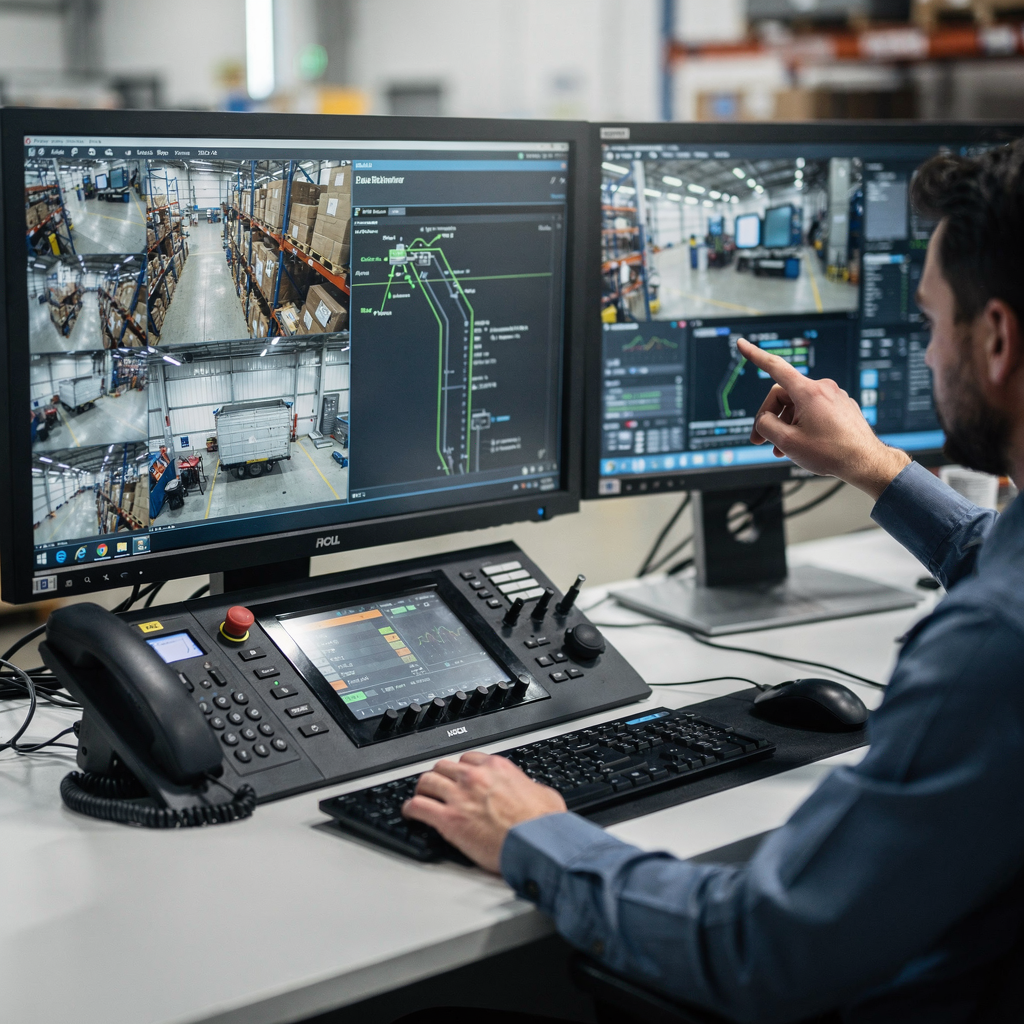
In transport hubs and utilities, AI supports predictive maintenance, by correlating sensor data with visual cues. This multi-modal approach increases situational awareness and gives operators clear, actionable insights. At the same time, keep AI processing close to the source to maintain privacy and compliance. visionplatform.ai supports on-prem processing so no cloud video leaves the site, which helps meet EU AI Act requirements (source). Finally, design the monitoring workflow so that routine tasks get automated while the human operator retains authority over emergency actions and complex incidents.
AI vision within minutes?
With our no-code platform you can just focus on your data, we’ll do the rest
integrate real-time data for actionable insight
To create real actionable insights, you must fuse multiple data streams. Pull together sensor telemetry, IoT devices, video analytics, and enterprise feeds into unified dashboards. This integration turns noise into clear signals and makes it easier to prioritise alerts. Gartner highlights immersive visualization and contextual data presentation as a top trend for improving operator effectiveness (source). Use customizable visualization tools to highlight critical metrics and to filter out non-essential events.
Edge analytics and 5G help ensure faster data delivery. In many implementations, edge processing and high-bandwidth networks increase effective data delivery speed by up to 80% for real-time tasks. This means that operators receive contextual video snippets and correlated sensor data far more quickly, which reduces time to decide and act. Configure dashboards so operators can drill from a high-level map into camera timelines, access control logs, and maintenance histories.
Design dashboards that unify video events with business systems. For instance, tie a baggage-handling alert to the work-order in a maintenance system. This lets teams perform immediate, coordinated responses across departments and reduce manual handoffs. visionplatform.ai facilitates this by exposing VMS events as structured data for AI agents and downstream systems. The result is a unified control room experience where video becomes part of operational intelligence rather than a separate feed.
Also, provide capabilities to manage alarms and to create audit logs automatically. These features help with compliance and with post-incident reviews. Finally, keep visualization flexible so teams can adapt views for daily supervision, incident response, or executive reporting. Such adaptability ensures ongoing optimization of workflows, better visibility into operations, and improved operational efficiency.
centralize control room operations with a unified software solution
Centralize activities by deploying a single control room platform that aggregates sites and regions. A unified approach gives consistent workflows, shared situational awareness, and faster escalation paths. For organisations that run multiple sites, a single pane of glass reduces duplication and helps standardise procedures. This centralization supports control room operators with consistent tools and with reduced context switching.
Choose a control room solution that supports cloud, on-premises, and hybrid deployments. Scalability matters. Cloud-hosted services can deliver elastic compute and storage. On-prem options keep sensitive video and logs inside the environment for compliance. Hybrid models strike a balance and enable gradual migrations. Make sure the platform supports common protocols, such as ONVIF and SCADA interfaces, so you can integrate legacy gear without long rip-and-replace cycles.
An intuitive interface matters. Standardised UI elements lower training time and let operators learn faster. Provide templates for common procedures and ensure supervisors can adjust access, so teams can scale safely. Also, embed collaboration and incident tracking features to streamline cross-team coordination during emergencies. For example, integrate automated reporting so that an alert generates a pre-filled incident ticket, which reduces manual steps and improves productivity.
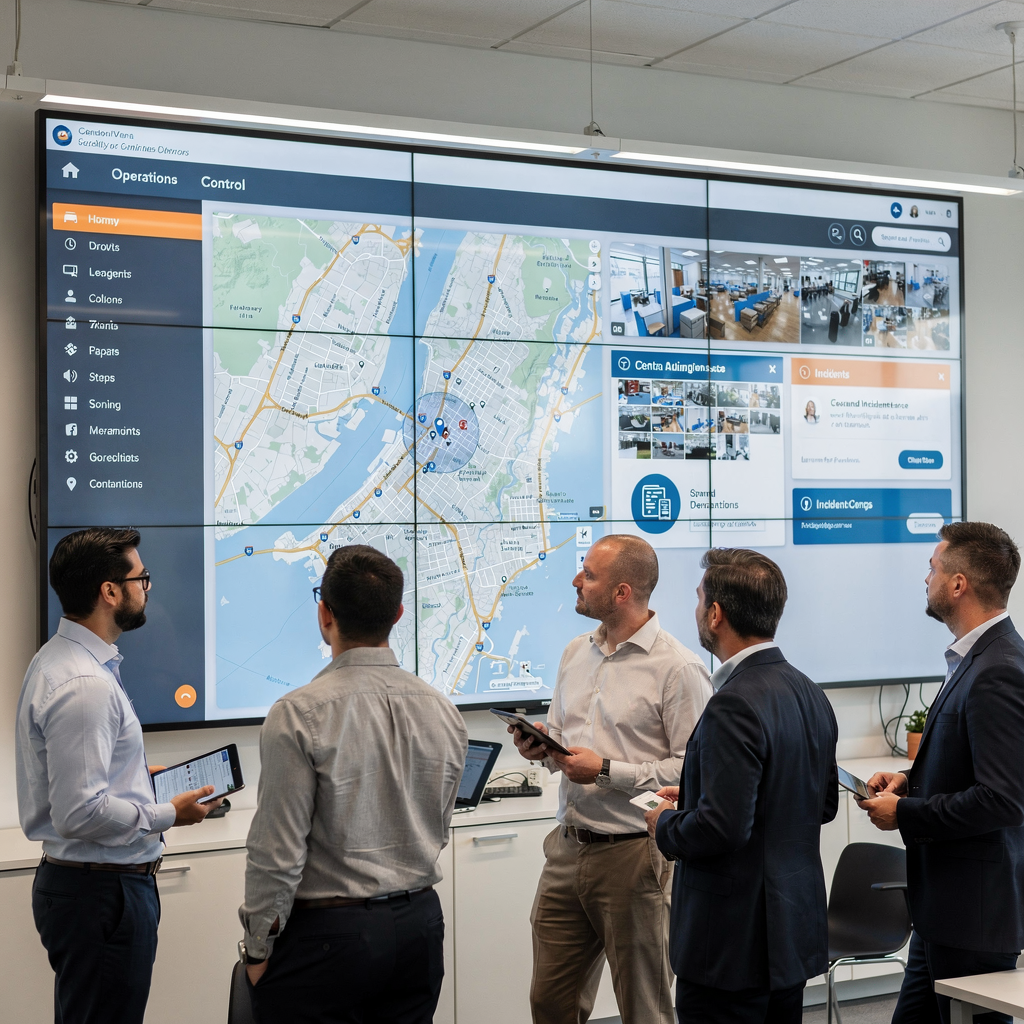
Security and resilience must be built in. Include automated failover, encrypted data paths, and real-time threat detection. Gartner expects strategic tech trends to push for immersive, resilient platforms that enable better decision making (source). Finally, choose a control room platform that provides audit trails and supports compliance reporting, so you can show why decisions were made and who approved automated actions.
AI vision within minutes?
With our no-code platform you can just focus on your data, we’ll do the rest
transform operation workflows to meet control room needs
Transform workflows to reduce operator overload. First, automate routine tasks so human attention handles only exceptions. Automate tasks such as logging simple incidents, closing false alarms, and notifying stakeholders. The VP Agent Actions in visionplatform.ai can pre-fill incident reports and trigger downstream systems, which simplifies response and shortens cycle times. This automation also keeps an audit trail for later review.
Next, deploy collaboration tools so teams coordinate smoothly. Use shared incident boards, chat links to case records, and built-in escalation rules. These features help operators and supervisors track status and maintain clarity during busy periods. For transport control centres, a case study shows that modern tools help manage peak-hour demand by routing verified alerts to the right teams and by offering fast forensic search of video history (forensic search example).
Also, consider human-in-the-loop approaches. Let agents recommend actions but require operator approval for high-risk steps. This balances safety, compliance, and speed. For recurring, low-risk alerts, an autonomous handler can take predefined steps while keeping logs and escalation rules. That way, teams can scale monitoring without growing headcount.
Train teams on standardized procedures to reduce training time and increase consistency. Create scenario-based drills and use recorded incidents for after-action reviews. Provide policy templates and ensure all automation follows those rules. For perimeter and intrusion scenarios, integrate video analytics with access control and alarm systems so the response chain runs smoothly (intrusion detection). Overall, these changes streamline workflows, improve productivity, and enhance visibility across production environments.
decision making: selecting the ideal control room solution
Selecting a control room solution requires a clear checklist. Prioritise cybersecurity, resilience, and AI readiness. Ensure the vendor supports encrypted data paths, role-based access, and real-time threat detection. Also, require audit logs and features that support compliance obligations. visionplatform.ai, for instance, offers on-prem processing and auditable event logs to help meet EU AI Act requirements and other regulatory needs (source).
Balance human expertise with automated recommendations. Your solution should enhance operator decision-making rather than replace it. Allow operators to accept, reject, or modify agent suggestions. Keep emergency overrides easy to access. Then, measure outcomes: track incident resolution time, false alarm rates, and operational efficiency to verify the solution delivers value. Reported pilots show up to a 50% reduction in response time and a 30% improvement in operational metrics in utilities and transport (source).
Look ahead to trends. Expect systems to evolve into adaptive, self-learning platforms that refine models through operator feedback. Choose a scalable architecture that supports edge computing, 5G, and GPU acceleration so you can add capacity without disruptive upgrades. Finally, pick software that provides clear integration methods, such as APIs, MQTT, and webhooks, to unify with asset management and SCADA systems. This approach will ensure your control room remains up-to-date and able to manage multiple sources of truth while delivering actionable insights in mission-critical environments.
FAQ
What defines next generation control room software?
Next generation control room software combines real-time monitoring, AI-assisted analytics, and unified dashboards to support faster decision making. It integrates video, sensors, and enterprise data to provide actionable insights and to reduce manual tasks.
How does AI improve situational awareness?
AI detects anomalies, correlates multiple data streams, and provides contextual explanations for alerts. This reduces false positives and speeds up response by offering recommended actions or verification details.
Can legacy SCADA and PLC systems integrate with modern platforms?
Yes. Using secure gateways and standard protocols allows legacy SCADA and PLC equipment to feed modern dashboards and AI agents. Integration preserves past investments while enabling new analytics and automation.
Do on-prem AI deployments help with compliance?
On-prem deployments keep video and models inside the environment, which simplifies data governance and EU AI Act compliance. They also reduce cloud dependency and lower data transfer risks.
What role does 5G play in control rooms?
5G enhances bandwidth and reduces latency for edge devices and cameras, improving real-time video delivery and remote verification. Trials indicate latency and throughput benefits that help meet strict operational SLAs.
How can automation and human oversight coexist?
Design policies that let agents handle low-risk, recurring tasks while requiring human approval for complex incidents. Maintain audit trails and escalation rules so supervision and compliance remain intact.
What should I look for when choosing a control room platform?
Prioritise cybersecurity, scalability, evidence of AI readiness, and clear APIs for integration. Also check for audit capability, resilience features, and support for hybrid deployments.
How does visionplatform.ai help control room operators?
visionplatform.ai turns camera feeds into searchable descriptions and exposes VMS data to AI agents for reasoning and action. This reduces alarm fatigue and supports faster, more consistent decision making.
Can a unified dashboard improve productivity?
Yes. A single pane of glass reduces context switching and standardises procedures, which lowers training time and boosts operational efficiency. It also helps teams coordinate across sites during emergencies.
Are these systems scalable for large deployments?
Modern platforms support edge scaling, GPU servers, and hybrid cloud models to accommodate growth. Choose architectures that allow incremental expansion and that preserve data control for sensitive environments.