Understanding Operator Fatigue: Risks to Safety System Performance
Operator fatigue is a reduced capacity to perform tasks that require attention, decision-making, and timely reactions. It occurs when tiredness and fatigue accumulate after long shifts, disrupted sleep, or repetitive work. As a result, cognitive fatigue and slower responses appear. Therefore safety can suffer. For example, studies show that fatigue-related errors account for a large share of workplace incidents across transport, manufacturing, and healthcare. A comprehensive review reports that predictive modelling and interventions can cut some incidents by as much as 30% in controlled trials (source). And other work documents how subjective self-reports often miss early signs of tiredness and fatigue.
Fatigue reduces situational awareness and weakens a safety system’s layered defences. When alertness slips, even well-designed controls and alarms become less effective. Consequently human operators may miss warnings, slow to verify triggers, or respond inappropriately. This mismatch raises the fatigue risk for adverse events, and for accident escalation. In transport, for instance, reports link driving fatigue with severe collisions. In healthcare, clinician fatigue contributes to medication errors and procedural lapses. And in manufacturing, attention lapses can halt production and create hazards. These patterns show why understanding of fatigue matters for design and operations.
Operators may think short breaks solve the problem. Yet fatigue develops gradually. It can begin as minor attention drift and then grow into lapses that matter. Thus monitoring across various contexts becomes essential. Today, moving from ad hoc checks to system monitoring helps. Systems that include physiological and behavioural indicators give early warnings. For example, heart rate variability, eye closure, and motion patterns reveal early signs. Early identification allows supervisors to schedule breaks, rotate tasks, or trigger in-cab reminders. This reduces the chance that fatigue before it becomes dangerous will turn into an accident.
Finally, organisations must combine technical and human measures. Training, shift planning, and ergonomic design still matter. At the same time, adopting AI-powered insights and continuous monitoring can strengthen defences. For practical guidance on integrating camera-based detection with operational workflows, see our work on people detection in airports people detection and monitoring.
AI-Powered System Monitoring for Fatigue Detection
AI-powered systems analyse streams of physiological and behavioural data to detect signs of reduced performance. First, they ingest signals from sensors and cameras. Then, they run algorithms that combine patterns over time. Thus they can flag shifts in heart rate variability, blink rate, or posture. In addition, these platforms fuse context such as time of day and task load. As a result, the system moves beyond single-point checks and into continuous monitoring. This improves reliability and helps to detect early signs of fatigue.
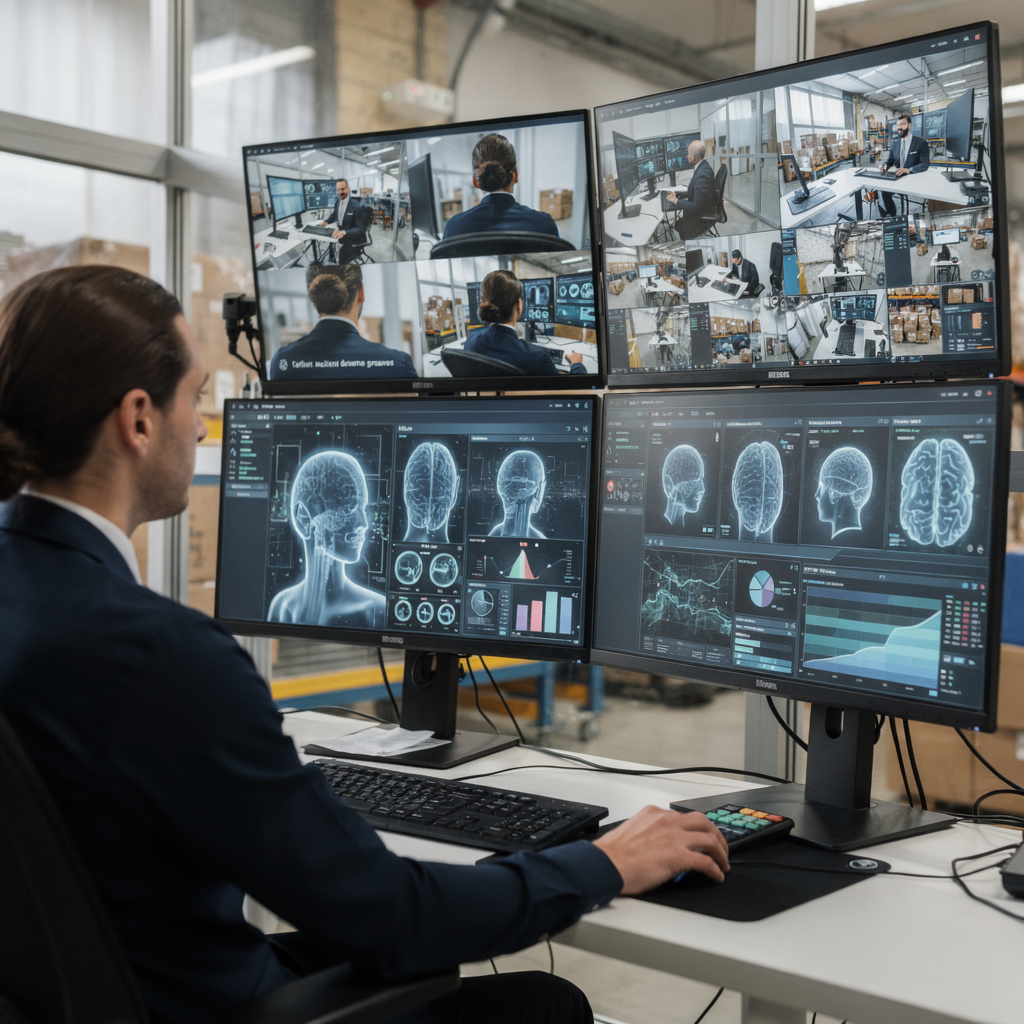
These solutions use advanced ai and machine learning algorithms to convert raw inputs into meaningful state estimates. They rely on machine learning and machine learning models to learn typical patterns and to classify deviations. Then they produce a confidence score and a recommended action. In trials, fusion of multi-modal inputs increased detection precision and reduced false positives compared with single-source systems. For example, wearable and vision fusion approaches have reported test accuracies above 95% on benchmark datasets (real-time detection study). Also, a recent study reported a testing accuracy of 96.54% using behavioural indicators and wearables (paper).
Such systems form a fatigue detection system when they are tuned to operational needs. They support state monitoring, and they provide operators and supervisors with actionable context. For example, an on-prem ai system can integrate with existing VMS and camera infrastructure so that video events become searchable context, not just alarms. This approach reduces the cognitive load on operators and improves the timeliness of interventions. As a result driver monitoring, industrial shift oversight, and clinical supervision can all benefit. For a view on how camera events become searchable text and context, read about our forensic search in airports forensic search.
Finally, combining physiological sensor streams with behaviour analytics lets teams detect fatigue earlier and with greater confidence. In short, AI allows continuous assessment and better prioritisation of risk, and it enables targeted steps to prevent accidents.
AI vision within minutes?
With our no-code platform you can just focus on your data, we’ll do the rest
Fatigue Monitoring with Wearable Sensors and Computer Vision
Wearable devices and computer vision together provide rich data for fatigue monitoring. Wearable sensors measure heart rate variability, skin conductance, and movement. Then, camera-based computer vision tracks gaze, head pose, and micro-behaviours. Combined, these inputs form a robust picture of operator state. In trials, systems using wearable EEG and vision inputs have delivered highly accurate fatigue classification. For instance, experiments that used wearable EEG alongside behavioural markers improved detection of cognitive fatigue and early signs of driver fatigue.
Wearable devices can be compact and unobtrusive. They stream data to edge processors for near real-time analysis. That leads to remote monitoring capabilities that are fast and privacy-aware. Also, vision-based methods work when wearables are impractical. They can run on existing cameras. For companies that already use video, vision and AI can add a new layer of insight while keeping operations on-prem. Our VP Agent Suite shows how video events can be converted into textual descriptions and used by AI agents to explain alarms and recommend actions. This reduces alarm fatigue and helps operators focus on true priorities.
In real-world trials, fusion systems that combine wearable and video features have reported precision above 96% in classifying states like drowsiness and inattentive driving. One published dataset and analysis achieved 96.54% testing accuracy by leveraging behavioural indicators and wearable signals (source). Likewise, multi-source information fusion has improved reliability by roughly 20% compared to single-source approaches (study). These numbers show why many teams now build hybrid solutions that can detect fatigue with high confidence.
That said, wearables such as wearable EEG provide unique electro-physiological data. Methods like eeg-based fatigue detection can reveal subtle neural signs of sleep pressure. At the same time, privacy, comfort, and sensor reliability must be addressed. For practical deployments, organisations often choose a mix: wearable devices for high-risk roles, and camera-based monitoring for broader coverage. For example, fleets using AI may equip drivers with a simple wearable and also enable driver monitoring via cabin cameras. This layered approach increases robustness and gives supervisors more options to prevent accidents while respecting worker comfort.
Real-Time Driver Fatigue Detection System and Alert Mechanisms
Real-time driver fatigue detection systems process incoming data continuously and deliver alerts when thresholds or predictive models indicate risk. A typical pipeline ingests sensor data and video frames. Then it cleans and filters signals. Next it extracts features such as blink duration, steering variability, and HRV. Finally it runs a fatigue detection model that outputs a risk score. This sequence must execute quickly to enable timely interventions. In practice, on-device inference and edge servers provide the low latency needed for real time responses.
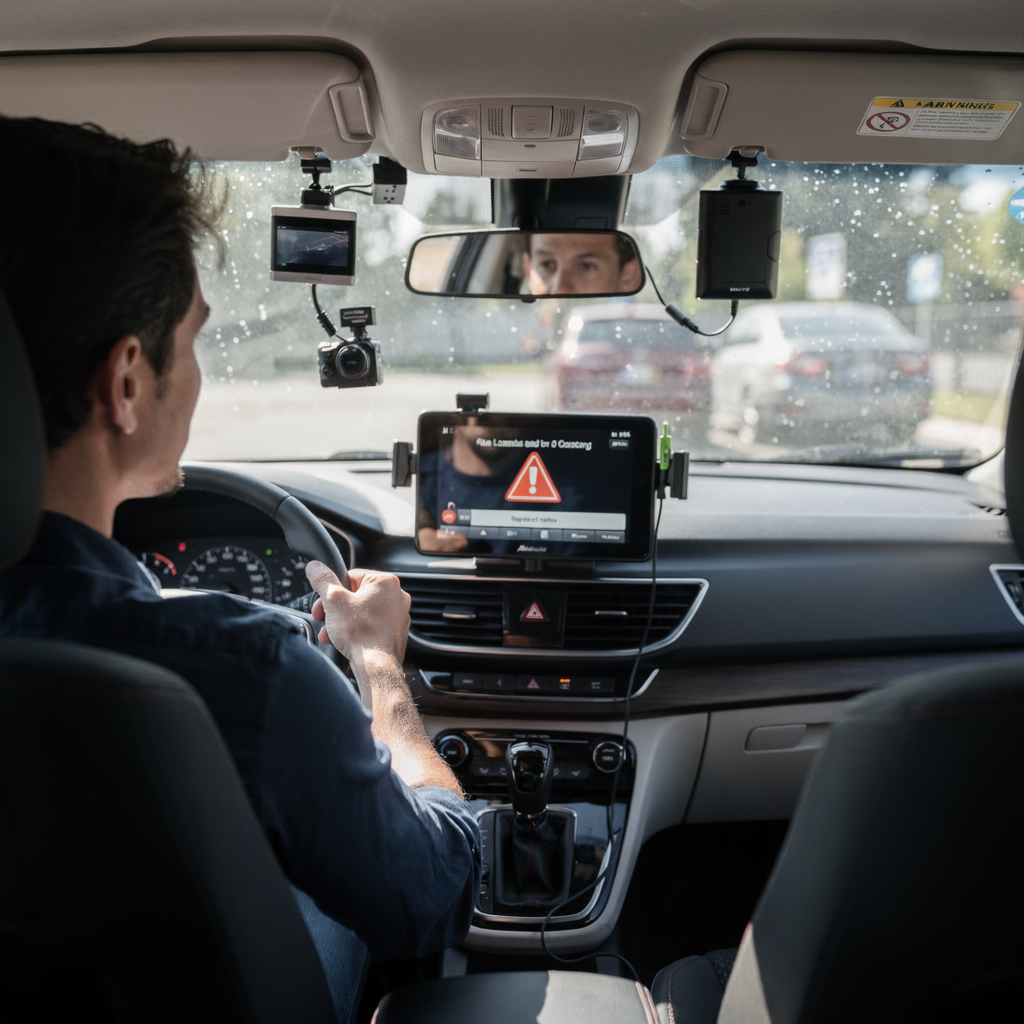
Alert strategies vary. Threshold-based alerts trigger when a metric crosses a preset limit. Predictive alerts use models to forecast near-term risk, so they can warn before attention drops. Both approaches have value. Threshold alerts are simple and transparent. Predictive alerts can reduce interruptions by warning earlier and only when risk rises. Many systems combine both. They issue an early predictive alert and then escalate if the state worsens.
Alerts must be designed to help, not annoy. In-cab alert techniques include gentle haptic cues, graded audio prompts, and in-vehicle display messages that recommend breaks. For high-risk roles, escalation paths can include remote supervisor notification or a required stop. Alert design also benefits from personalisation. Systems that learn baseline behaviour can reduce false alarm rates by adapting thresholds to the individual. This personalised approach improves acceptance and preserves driver safety.
Latency and reliability matter. False alerts degrade trust. So does missed detection. Well-engineered pipelines use redundancy and cross-validation to keep false positives low. They also include fallback checks before sending high-severity alerts. For commercial fleets, integration with telematics and fleet management systems makes alerts actionable. For example, an alert can automatically log an incident, pause dispatch, or recommend the nearest rest stop. This link between detection and operations helps prevent accidents and keeps drivers safer on the road.
AI vision within minutes?
With our no-code platform you can just focus on your data, we’ll do the rest
Balancing Accuracy: Reducing False Alarm and False Alerts
Reducing false alarms and false alerts is essential for long-term adoption of fatigue detection. False alarm rates frustrate operators and can cause real alerts to be ignored. Sources of error include noisy sensors, occluded camera views, individual variability, and transient behaviours that mimic fatigue. To address these problems systems apply noise filtering, sensor fusion, and adaptive thresholds. These steps improve robustness and cut false alarms.
Personalisation helps a lot. Machine learning algorithms that adapt to an individual’s typical patterns can better distinguish between short distractions and true mental fatigue. Equally, calibration routines and periodic retraining using labelled events reduce drift. Combining multiple modalities, such as combining heart rate variability with eye closure and steering metrics, lowers the chance of spurious triggers. In trials, multi-source fusion improved reliability by about 20% over single-source approaches (study).
Teams must accept trade-offs. Raising sensitivity catches more events but increases false alerts. Lowering sensitivity reduces interruptions but risks missed detections. The answer lies in operational tuning. Systems can start conservative and then increase sensitivity for higher-risk periods. They can also use graded alerts: an early, low-priority nudge followed by a stronger notification if the condition continues. This staged approach keeps operators engaged and helps maintain trust in ai solutions.
Finally, explainability matters. When an ai system issues an alarm, the operator needs context. Tools that provide short explanations — such as “prolonged eye closure and increased steering variability detected” — help humans verify and act. That is a core principle of our VP Agent Reasoning: explain alarms by correlating video analytics and other data to determine whether an alarm is valid and why it matters. This reduces cognitive load, reduces false alerts, and supports better decisions under pressure.
Leading AI Uses AI to Detect Driver Fatigue in Real-Time
Leading ai initiatives now focus on practical prevention and integration with operations. They combine detection, prediction, and workflows so that alerts trigger real actions. For example, fleets using AI can flag high-risk drivers and change schedules to reduce cumulative tiredness. They can also integrate driver fatigue detection outputs into fleet dashboards and dispatch systems so that supervisors can act fast. These integrations support road safety and help prevent accidents.
Adoption patterns vary by sector. Transport companies often prioritise driver monitoring systems, while industrial sites focus on operator monitoring for heavy equipment. Healthcare systems apply state monitoring to perioperative teams and long-shift clinicians. The common thread is the same: AI enables earlier, more reliable detection of fatigue and the ability to recommend interventions before incidents occur. Research supports this shift; for instance, studies show that early fatigue prediction can reduce fatigue-related incidents in controlled settings (research).
Looking ahead, advanced ai will further tighten the loop between detection and action. Vision and AI will provide richer context. For example, a camera that spots a driver’s head tilt can trigger cross-checks from wearables and cabin sensors. VP Agent Actions can then suggest the next step: schedule a break or log the event. This kind of automation helps control rooms scale while keeping humans in the loop. To explore more on how cameras become actionable operational sensors, see our process anomaly detection in airports process anomaly detection.
As AI safety systems mature, they will reduce the chance that fatigue occurs and that small lapses become accidents. They will also support policies that prioritise worker health and safer operations. For teams who want to deploy these capabilities while preserving privacy and compliance, on-prem solutions and transparent models make it possible to keep video data local and auditable. That balance is what enables practical, scalable deployments that both detect risk and help prevent accidents.
FAQ
What is operator fatigue and why does it matter?
Operator fatigue is a decline in cognitive and physical performance caused by tiredness and fatigue. It matters because it increases reaction times, reduces attention, and raises the risk of errors and accidents.
How does AI detect fatigue?
AI analyses physiological and behavioural signals, and then looks for patterns that match known fatigue indicators. It can combine sensor data, video analytics, and contextual inputs to detect early signs and to predict increasing risk.
Are wearable devices necessary for effective fatigue monitoring?
Wearable devices add direct physiological signals that improve detection in high-risk roles. However camera-based systems can also provide strong insights, and hybrid approaches often offer the best balance of coverage and accuracy.
How accurate are current fatigue detection systems?
Recent studies show detection accuracies above 95% in controlled evaluations, and in some trials precision exceeded 96% when combining wearables and vision (study). Real-world performance varies with sensors and context.
What causes false alarms and false alerts?
Noisy sensors, atypical individual behaviour, occluded video, and transient distractions are common causes of false alarms. Personalisation, sensor fusion, and filtering help reduce these errors.
How should alerts be delivered to drivers or operators?
Alerts should be graded and minimally intrusive. Gentle haptic cues or short audio prompts work well as early warnings, with escalation only if the condition persists. This approach maintains trust and reduces alarm fatigue.
Can AI systems predict fatigue before it becomes dangerous?
Yes. Predictive models trained on physiological and behavioural data can identify trends that indicate rising risk. Early warnings allow organisations to intervene before fatigue causes incidents.
How do organisations integrate fatigue detection into operations?
Integrations typically connect detection outputs to fleet management, telematics, or control room workflows. That lets teams log incidents, reroute tasks, or schedule breaks automatically. For operationalised video analytics and reasoning, see our VP Agent features forensic search.
What privacy considerations apply?
Privacy is crucial. On-prem deployments and clear data handling policies help keep video and sensor data secure and compliant. Transparent models and audit trails also support trust and compliance.
How can we start using AI for fatigue reduction?
Begin with a pilot that pairs cameras and a small set of wearables, gather labeled data, and evaluate detection and alert strategies. Then scale by integrating detection with scheduling and dispatch systems. For examples of camera-based solutions that turn video into operational insights, see our people detection and process anomaly tools people detection and process anomaly detection.