Explore How AI Video Analytics Transform Video Streams into Actionable Insights
First, AI turns raw video into measurable data. Next, operators and managers gain context they can act on. For example, visionplatform.ai converts existing cameras and VMS systems into AI-assisted operational systems. Then, control rooms stop receiving only alerts. Instead, they receive explanations and recommended actions. This shift moves monitoring from reactive to proactive. As a result, teams improve operational efficiency and reduce manual review time.
AI combines computer vision and machine learning to interpret video content automatically. Furthermore, this approach scales to thousands of hours of video without proportionate headcount increases. In caregiving, for instance, an AI approach “analyzes this substantial volume of video data without incurring human labor costs” and produces rich behavioral metrics that drive operational improvements. Likewise, many companies report measurable benefits. For example, 66% of CEOs have documented gains from generative AI initiatives that include video-based insights according to Microsoft.
Moreover, AI enables OBJECT DETECTION, asset tracking, and behavior analysis in live feeds. However, operators often still face too many raw detections. visionplatform.ai addresses that by adding reasoning on top of detections. The result turns video streams into structured event descriptions. Also, the platform supports search, verification, and action. For more on searching recorded footage with natural language, see our work on forensic search forensic search in airports. In addition, organizations should plan for privacy, bias, and integration hurdles. Finally, when implemented correctly, AI-powered video transforms video surveillance into a source of operational insights and actionable intelligence.
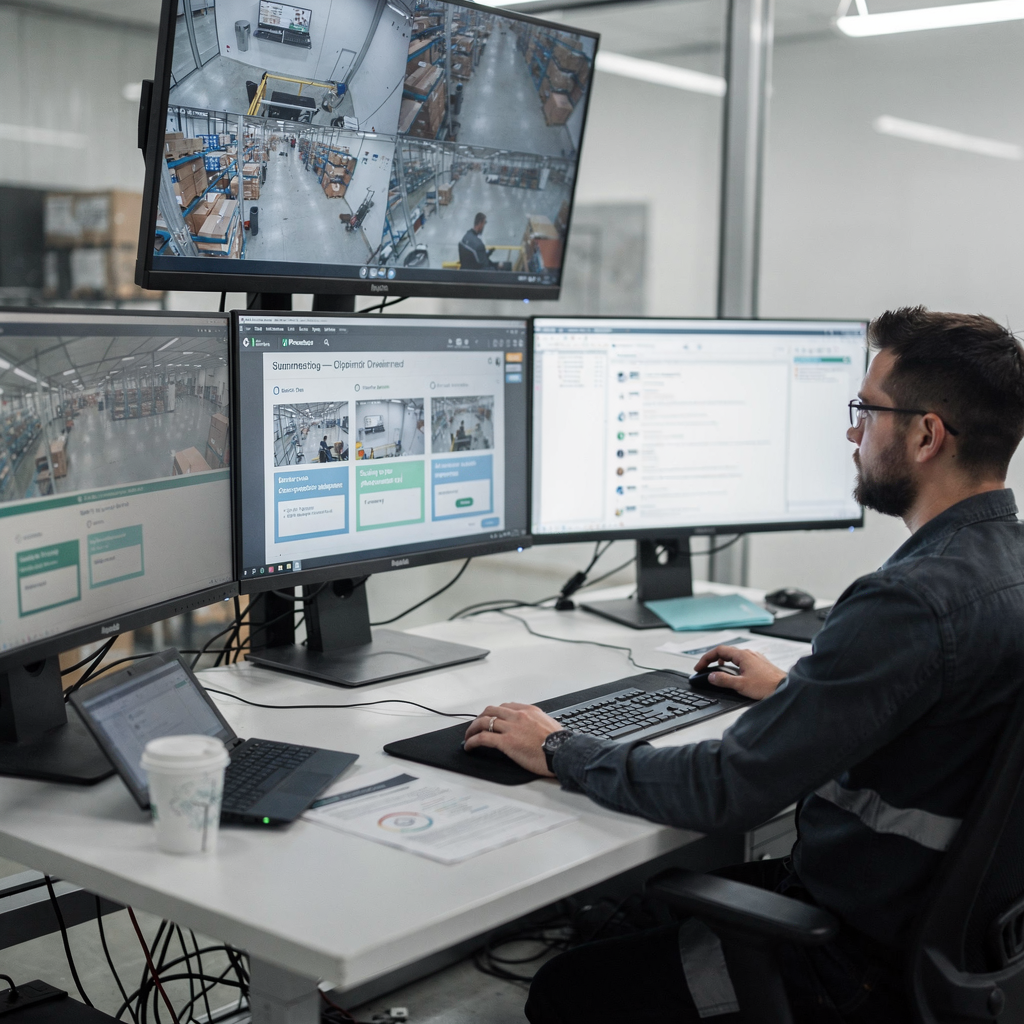
Intelligent Video Analytics: AI-Powered Video Analysis and Video Analytics Works in Real-Time
Intelligent video analytics combines detection with context. First, it runs object detection and behavior models on live feeds. Then, it enriches those detections with metadata, cross-camera context, and rules. As a result, operators receive fewer meaningless alerts. Instead, they receive explained events and suggested next steps. visionplatform.ai does this by exposing VMS data to AI agents. These agents verify events and propose actions in the control room. This approach reduces the time spent per alert and scales monitoring exponentially.
AI systems deliver real-time analysis that helps teams act fast. For example, manufacturers use real-time monitoring to spot process anomalies and stop a faulty run before it costs millions. In airports, people detection and crowd density analytics drive smoother flows and safer operations. See our people detection example people detection in airports. Also, video analytics is the use of algorithms to analyze video and trigger meaningful workflows. Importantly, AI-powered video analysis supports both live alerting and retrospective investigations.
Moreover, intelligent video analytics can reduce false alarms through contextual verification. For instance, when an alert flags an intrusion, the system cross-checks access control logs, camera tracks, and historical patterns. Then, it either raises an operator alert or closes the case automatically. This capability helps security teams prioritize high-risk events. Finally, using an on-prem vision language model keeps video inside the site. Consequently, compliance risk decreases and control stays local. The mix of real-time detection and reasoning makes video intelligence practical for modern operations.
AI vision within minutes?
With our no-code platform you can just focus on your data, we’ll do the rest
Advanced AI and Computer Vision: The Technology Behind Video Intelligence
Advanced AI powers modern video intelligence. First, deep learning models perform object detection and pose estimation. Next, those models feed into higher-level behavior analysis. As a result, systems recognize loitering, PPE violations, and process anomalies. In parallel, Vision Language Models convert visual events into human-readable descriptions. This conversion lets operators search hours of video using natural language queries. For example, visionplatform.ai’s VP Agent Search enables queries like “Person loitering near gate after hours.” That capability speeds investigations and reduces cognitive load.
Computer vision and machine learning work together to analyze video content. Furthermore, edge inference reduces bandwidth and latency. Also, an on-prem architecture protects sensitive footage and supports EU AI Act compliance. Studies show that AI-driven systems can improve operational efficiency by 30–40% through better monitoring and predictive maintenance per industry research. In caregiving, automated video analysis reduced manual review time by over 70% according to a recent study. These numbers illustrate the quantitative impact of AI on operations.
In practice, video analytics systems link to APIs, dashboards, and control room procedures. For example, the VP Agent Suite streams events via MQTT, webhooks, and API so BI and OT tools can consume them. This integration allows teams to turn raw video into structured KPI data. Also, it enables automated reporting and better resource allocation. Finally, when developers need cloud-native features, platforms can integrate with providers such as Google Cloud while keeping sensitive workloads on-prem as required.
Real-Time Insights for Operational Efficiency to Enhance Security
Real-time insights matter for both security and operations. First, immediate detection prevents incidents from escalating. Then, quick verification prevents unnecessary dispatches. For example, perimeter breach detection that includes contextual verification helps reduce false alarms and wasted patrols. In addition, systems that interpret video feeds can detect queue buildup at checkpoints and trigger staff reallocation. That simple action improves throughput and the passenger experience.
AI-driven video gives security teams tools to act faster and smarter. Also, when a system explains an alert, operators respond with confidence. visionplatform.ai goes further by recommending and automating workflows. For routine, low-risk events, agents can act autonomously under configurable rules. This feature enables controlled autonomy and reduces operator fatigue. At the same time, the platform maintains audit trails to support accountability.
Furthermore, converting video footage into searchable, time-indexed descriptions improves investigations. Investigators find incidents faster and with fewer false positives. In addition, cross-referencing camera observations with access control data prevents mistaken identity and reduces escalation. Finally, video intelligence improves decision-making and operational efficiency across security, operations, and safety teams. For more on process-driven detection, see our process anomaly detection page process anomaly detection in airports.

AI vision within minutes?
With our no-code platform you can just focus on your data, we’ll do the rest
Use Cases for Intelligent Video Analytics Solutions to Improve Decision-Making
Use cases for intelligent video analytics span many industries. First, retail teams use analytics to monitor customer flows. Second, logistics operations apply AI to track vehicle movement and optimize loading. Third, healthcare and caregiving apply 3D video analysis to measure staff interactions and patient safety. In many deployments, AI video analytics helps reduce manual effort and focus staff on high-value tasks.
Moreover, intelligent video analytics supports traffic management, access control, and loss prevention. For example, analytics can spot unauthorized access and flag the right responders. Also, object detection and ANPR/LPR features help manage deliveries and reduce bottlenecks. For airport-focused solutions such as crowd or ANPR detection, our pages show typical implementations and benefits. See vehicle and crowd analytics examples for applied scenarios on our site.
Additionally, AI analytics can support environmental safety. For instance, fire and smoke detection models provide early warning and faster response. Likewise, PPE detection enforces compliance on the factory floor. These examples demonstrate how video analytics enhances both safety and operational efficiency. Finally, organizations that combine AI capabilities with clear procedures gain faster, more consistent outcomes. As one study noted, AI deployments that include reasoning and workflow automation deliver measurable business benefits for 66% of executives reported by Microsoft.
Transform Traditional Video into AI-Driven Video: Smarter Video Analysis Tools and Video Analytics Use for Decision-Making and Operational Efficiency
To transform traditional video into AI-driven video, start with strategy. First, inventory existing cameras and VMS. Next, identify key operational questions. Then, pick models and rules that map to those questions. visionplatform.ai assists by adding a reasoning layer that reads video events like a human. This approach turns detections into context, explanations, and suggested actions. As a result, video becomes a searchable knowledge source rather than just footage.
Also, integrate video analytics tools with incident management and BI. For example, stream verified events through APIs so dashboards and BI reports reflect real operational KPIs. This integration helps executives and frontline staff use the same data to improve outcomes. In addition, prioritize privacy and compliance by keeping models and video on-prem where required. The VP Agent Suite emphasizes on-prem, EU AI Act–aligned deployment, which reduces regulatory friction while keeping data local.
Finally, measure impact with clear metrics. Track reductions in manual review time, decreases in false dispatches, and improvements in throughput. For context, some companies report 30–40% operational efficiency gains after deploying AI-driven video analytics industry research shows. Also, caregiving deployments reduced manual review by over 70% per a recent paper. By following this path, teams convert traditional video into AI-driven systems that support faster, better, and more consistent operational decisions.
FAQ
What is AI video analytics and how does it differ from traditional video surveillance?
AI video analytics uses AI models to interpret video content automatically and produce structured descriptions. By contrast, traditional video surveillance mainly records footage and relies on human review or basic motion alarms. AI adds object detection, behavior analysis, and reasoning to help operators act sooner and with more context.
How quickly can AI systems provide real-time insights?
Modern systems deliver near real-time analysis depending on deployment and hardware. Edge inference and optimized models can produce detections and alerts within seconds. However, full contextual verification may take slightly longer if the system queries multiple data sources.
Will AI reduce false alarms in my control room?
Yes. Systems that correlate camera detections with VMS data, access control, and history can reduce false positives. For example, visionplatform.ai verifies alerts and explains them, which helps operators focus on genuine incidents.
Can I keep my video data on-prem for compliance?
Absolutely. On-prem deployments let organizations process video without sending footage to external clouds. This model supports stricter data governance and aligns with regulations such as the EU AI Act where required.
What kind of operational improvements should I expect?
Improvements vary by sector, but many organizations see faster investigations, fewer false dispatches, and better resource allocation. Some report 30–40% improvement in operational efficiency and large reductions in manual review time industry studies.
How do AI agents help operators in the control room?
AI agents verify alarms, provide contextual explanations, and suggest or execute actions. They can pre-fill incident reports, notify teams, and trigger workflows while maintaining audit trails for oversight. This reduces cognitive load and speeds decision-making.
Are there specific use cases for airports?
Yes. Airports benefit from people detection, crowd density analytics, ANPR, and process anomaly detection. These use cases improve passenger flow, safety, and operational throughput. See our people detection and process anomaly pages for examples people detection in airports and process anomaly detection in airports.
How does AI handle privacy and bias concerns?
Responsible deployments use on-prem processing, model transparency, and careful training data selection to mitigate bias. Auditable logs and human-in-the-loop controls also help ensure fair and compliant operation. Organizations should document policies and review performance regularly.
Can AI video analytics help non-security teams?
Yes. Operations, facilities, retail, and caregiving teams use analytics for throughput, safety, and service quality. For instance, AI can monitor queues and suggest staffing changes to improve flow. These applications deliver measurable operational insights beyond pure security.
How do I start a pilot for AI-driven video?
Begin with a clear problem statement and a small set of cameras that cover a target workflow. Then, test detection models and verify outcomes with operators. Finally, measure impact and scale gradually while ensuring data governance and integration with existing systems.