1. Introduction to multimodal and AI works in a control room
Multimodal data streams combine visual, audio, text, and numeric inputs to create a richer, more contextual view of events. In a modern CONTROL ROOM, operators often face multiple sources at once. Cameras, microphones, alarms, and sensor outputs all arrive in parallel. Multimodal AI systems fuse these streams so operators can make faster, clearer choices. For clarity, multimodal AI is a type of AI that reasons across modalities rather than from one modality alone. This matters because one camera frame or one telemetry value rarely tells the full story.
AI works across audio, video, text, and sensor inputs by converting each input into an embedding space where signals are comparable. A computer vision model extracts visual features. A speech recognizer converts speech into structured text. Sensor data is normalized and timestamped. Then a fusion layer aligns signals in time and context. The architecture often relies on a transformer backbone to correlate events across modalities and across time. This lets an AI system detect, for example, a sequence where an operator yells into a radio, a camera observes a person running, and a door sensor registers forced entry. That correlation moves a raw alert into a verified incident.
Typical CONTROL ROOM scenarios include power grid monitoring, security operations, and emergency response. For a grid operator, AI can spot load imbalances by combining SCADA telemetry with thermal camera imagery and operator logs. In security, video analytics reduce manual scanning, and forensics search speeds investigations; see an example of forensic video search in airport settings forensic search. In emergency response centres, multimodal AI synthesizes audio 911 calls, CCTV, and IoT sensor pulses to prioritize responses. Evidence shows that AI-driven multimodal analysis improved early detection of critical events by 35% in certain centres, supporting faster intervention 35% improvement.
Across these scenarios, the use of multimodal AI reduces ambiguity and supports situational awareness. Companies like visionplatform.ai turn cameras into contextual sensors by adding a Vision Language Model that converts video into searchable descriptions. This helps control rooms search historical footage in natural language and prioritize tasks. As adoption rises, organizations increasingly expect control spaces to be decision-support hubs rather than simple alarm consoles. The trend is visible in industry reports that show over 60% of advanced control rooms integrating multimodal AI tools to enhance monitoring and incident response 60% adoption. That shift drives investments in on-prem inference, human-AI workflows, and operator training.
2. Architecture overview: multimodal AI models integrate gesture recognition and sensor inputs
A robust ARCHITECTURE blends data ingestion, preprocessing, embedding, fusion, inference, and action. First, raw inputs arrive: video frames, audio streams, transcripts, and telemetry from edge IOT devices. A preprocess stage cleans and aligns timestamps, and extracts initial features. Then specialized models—computer vision models for imagery, speech recognition for audio, and lightweight neural network regressors for sensor data—convert raw data into embeddings. These embeddings move to a fusion layer where a multimodal model reasons across modalities. In practice, multimodal ai models often use a transformer core to attend across time and space. That design supports temporal reasoning and context-aware inference.
Gesture recognition and speech recognition are two modalities that significantly enhance operator interaction and incident understanding. Gesture recognition identifies hand signals, body posture, or movement patterns near a control panel or within a secure area. Integrating gesture recognition with camera analytics and sensor data helps to detect, for example, when a technician signals for help while equipment telemetry shows anomaly. Speech recognition converts radio chatter into searchable text that an ai model can use to cross-validate an observation. By combining gesture and speech streams with video analytics, the fusion step reduces false alerts and improves verification.
Real-time processing imposes strict latency constraints. Control rooms require low-latency inference to support live decision-making. Therefore, edge computing and ai at the edge become crucial. Edge AI nodes run computer vision inference on NVIDIA Jetson or other embedded systems so frames never leave the site. This reduces bandwidth and preserves data privacy. For heavy reasoning tasks, an on-prem Vision Language Model can run on GPU servers to support llm inference, enabling natural-language search and agent-based reasoning while keeping video on-site. In addition, preprocessing at the edge filters non-actionable frames and sends only metadata to central servers, which optimizes computational resources and reduces energy consumption.
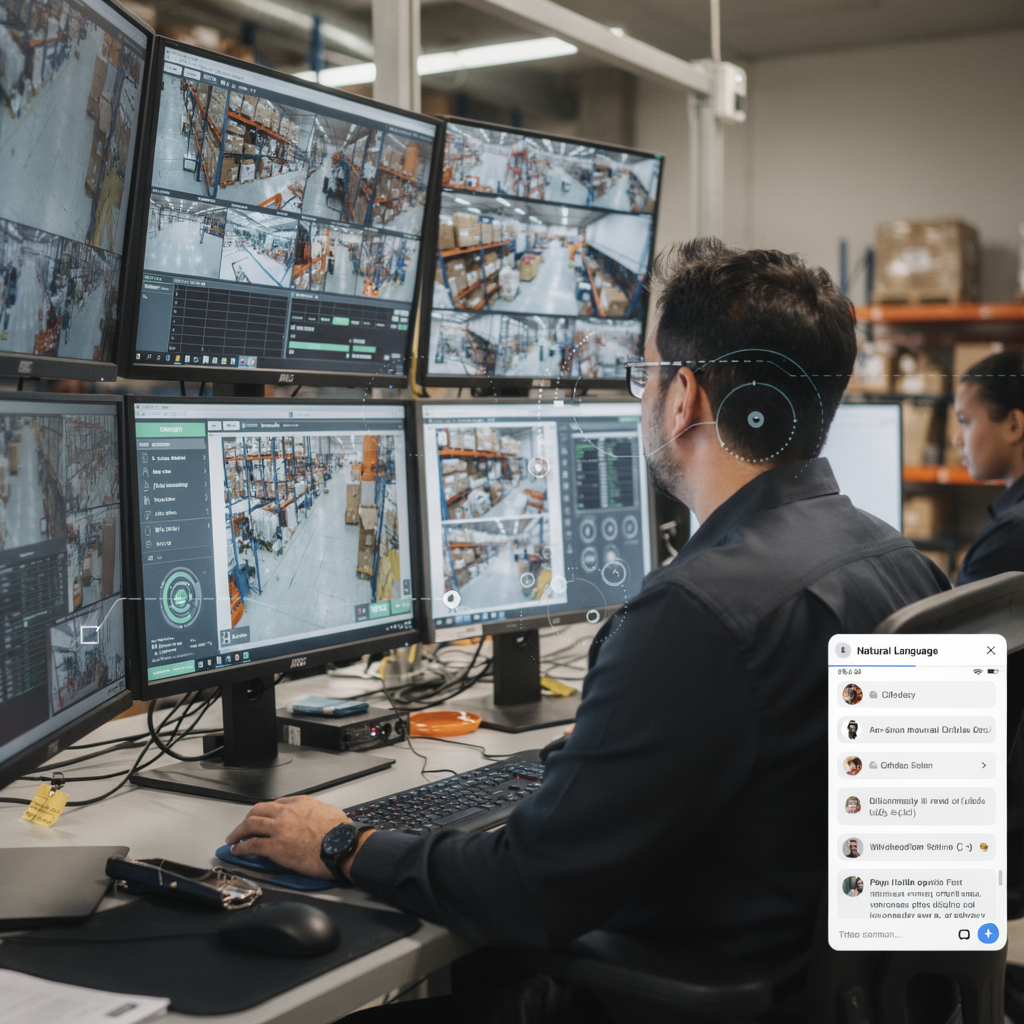
System designers must prioritize fault tolerance and graceful degradation. If network links fail, embedded systems continue local inference and log events. For auditability and compliance, the architecture logs model decisions and provenance. visionplatform.ai follows an on-prem, agent-ready design so models, video, and reasoning remain inside customer environments. The architecture thus supports both fast, local responses and richer, higher-latency forensic analysis when needed.
AI vision within minutes?
With our no-code platform you can just focus on your data, we’ll do the rest
3. Main AI use cases: grid operator monitoring, emergency response and security
Use cases demonstrate how AI can transform operations. For grid operator monitoring, multimodal AI fuses SCADA telemetry, thermal imaging, and weather forecasts to detect line overloads, hot spots, and cascading failures. A grid operator benefits when the ai model correlates rising current with thermal anomalies and nearby maintenance logs. That correlation can prioritize dispatch and prevent outages. Advanced multi-modal analysis also supports load management by predicting stress points before they trigger alarms. The combination of sensors and video helps to validate an incident quickly and to route crews more effectively.
In emergency response centres, multimodal analysis ingests 911 audio, CCTV streams, and building access logs. The system can transcribe calls via speech recognition and align them with camera events. For example, a dispatcher may receive a report of smoke; video analytics that detect smoke or flame, combined with a thermal sensor alert, raise confidence and accelerate response. Evidence suggests that AI-driven multimodal analysis improved early detection of critical events by 35% in reported deployments 35% early detection. That improvement shortens response times and reduces harm.
Security control rooms use multimodal fusion to reduce false alarms. A camera may detect motion at night, but an audio sensor might indicate wind. Cross-validation between video, audio, and access control logs reduces noise. Studies show multimodal systems can cut false alarms by up to 40% by verifying detections across streams 40% fewer false alarms. In practice, an AI agent verifies an intrusion by checking vehicle LPR against gate logs and by search across recorded footage. Tools that support forensic search and forensic workflows, like those used in airports, speed investigations; see the people detection and perimeter breach examples for related analytics people detection and perimeter breach detection.
These use cases highlight how an ai model reduces time to decision and improves accuracy. By exposing metadata and natural-language descriptions through an on-prem Vision Language Model, operators can query past events quickly. The VP Agent approach at visionplatform.ai turns detections into explainable context, so an operator gets not just an alarm but a verified situation and recommended actions. That flow enhances productivity, reduces cognitive load, and supports consistent handling of incidents.
4. Enhance decision-making: artificial intelligence with speech, gesture and visual analysis
Multimodal AI enhances decision-making by synthesising multiple signals and showing the reasoning path. The concept of Multimodal Chain-of-Thought lets the system break down complex tasks into interpretable steps. For operators, this means the AI explains why it flagged an event and what evidence drove the conclusion. When AI makes that chain explicit, operators can make informed decisions faster. The explanation can reference camera clips, transcripts, and sensor plots so humans see the same context the model used.
Cognitive load reduction is a core benefit. In many CONTROL ROOM workflows, operators juggle dozens of streams. Automated synthesis filters irrelevant data and surfaces only verified incidents. An ai system can pre-fill incident reports, suggest next steps, and highlight conflicting evidence. This automation reduces manual steps while keeping the human in control. visionplatform.ai’s VP Agent Reasoning example shows how contextual verification and decision support explain alarms, list related confirmations, and suggest actions. That approach shortens the path from detection to resolution and improves user experience.
Operator training and human–AI collaboration frameworks are essential. Training should include scenarios where the AI is wrong so operators learn to question suggestions. Also, design policies that define when the AI can automate tasks and when it must escalate. The planned VP Agent Auto feature illustrates controlled autonomy: for low-risk, recurring events the agent can act automatically with audit trails, while high-risk events remain human-in-the-loop. These workflows must be auditable to meet regulatory standards and to support post-incident review.
Speech recognition, gesture recognition, and computer vision together create a richer input set for the ai model. For example, during a factory fault, a worker’s hand signals, an alarm tone, and a machine vibration profile together tell a clearer story than any single signal. Multimodal models let humans and machines collaborate. Operators remain central, supported by AI recommendations that explain and prioritize. This collaboration boosts productivity and helps teams handle scale without sacrificing safety.
AI vision within minutes?
With our no-code platform you can just focus on your data, we’ll do the rest
5. Use cases to transform operations: multimodal models in industry and surveillance
Industrial control benefits from video–sensor fusion for predictive maintenance and safety. Cameras can monitor conveyor belts while vibration sensors or current meters report equipment health. When an ai model correlates visual wear with rising vibration, maintenance can be scheduled before failure. That predictive approach reduces downtime and improves quality control. In fact, manufacturers that adopt combined video and sensor analytics report measurable ROI through fewer stoppages and longer equipment life.
Surveillance for critical infrastructure relies on multimodal AI to monitor perimeters, detect unauthorized access, and support investigations. Combining ANPR/LPR, people detection, and intrusion detection reduces false positives and improves response. For example, a vehicle detection classification model working with access control logs confirms whether a vehicle was expected. For airport security and operations, players use object-left-behind detection, crowd density analytics, and weapon detection to focus resources where they matter most; see vehicle detection and object-left-behind detection examples for related capabilities vehicle detection and object-left-behind detection.
Impact metrics strengthen the business case. Studies and reports indicate that advanced multimodal systems can reduce false alarms by up to 40% and improve early event detection by 35% in emergency contexts. Adoption statistics show over 60% of advanced control rooms have integrated multimodal AI tools to enhance monitoring and incident response industry adoption. These gains translate into measurable ROI: less downtime, faster incident resolution, and improved operator productivity.
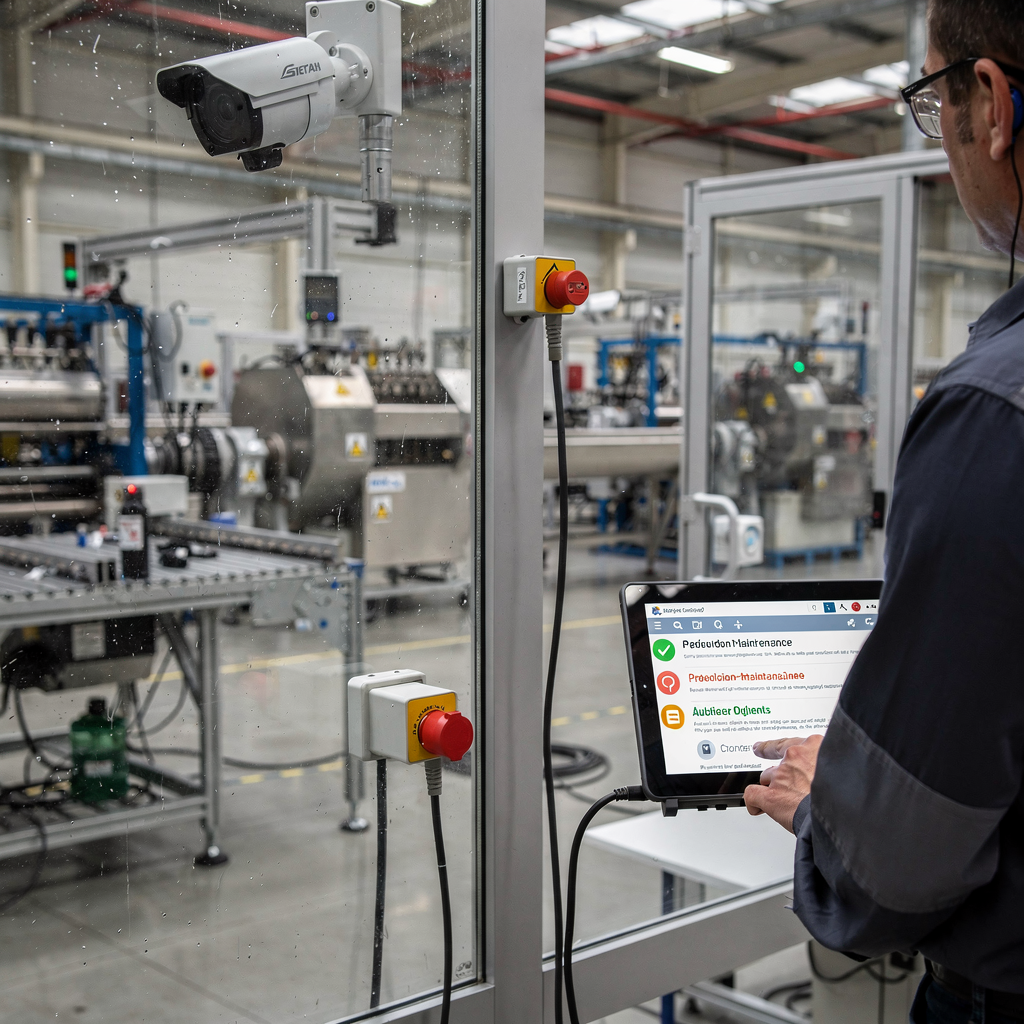
To transform operations, organizations should adopt specialized models and agent frameworks that automate routine tasks while keeping humans in charge for complex decisions. visionplatform.ai’s VP Agent Actions demonstrates how guided and automated workflows can pre-fill reports, notify teams, or trigger escalation. Over time, this reduces manual overhead and lets skilled staff focus on higher-value tasks. By integrating multimodal AI into day-to-day operations, companies can optimize processes and improve overall safety and uptime.
6. Future trends: how multimodal AI and AI model innovations integrate edge computing
Future advances will focus on efficiency, customization, and on-device reasoning. AI model architectures will grow more efficient so that complex multimodal models run on embedded systems. Expect smaller transformers, specialized models, and hybrid designs that split workloads between edge nodes and on-prem servers. These developments allow real-time inference with lower latency and reduced energy usage. In particular, edge computing and edge AI reduce bandwidth needs and keep sensitive video local, which helps with compliance under frameworks like the EU AI Act.
AI at the edge enables low-latency responses for control rooms that must act immediately. For example, an intrusion detection model running on-site can close a gate or lock a door within milliseconds while a central system logs context for later review. This split architecture supports both fast, local actions and richer, higher-latency reasoning in a central ai model or an on-prem Vision Language Model. The combination of embedded systems and server-side llm inference creates flexible workflows that balance speed, privacy, and depth of reasoning.
Ethics, data privacy, and responsibility will shape deployment choices. Control rooms must keep video and metadata under customer control to reduce risk and to meet regulatory requirements. visionplatform.ai emphasises on-prem processing to avoid unnecessary cloud exits for video. Organizations must also adopt audit trails, transparent algorithms, and human oversight to mitigate risks such as hallucination or inappropriate automation. Surveys reveal that many professionals worry about job security and governance as AI spreads, so clear human-AI collaboration policies are essential concerns about governance.
Finally, specialized models and agent-based orchestration will expand. Use multimodal ai to connect camera analytics, VMS records, access logs, and procedures into a single operational workflow. The result is adaptive control that both reduces operator burden and prioritizes incidents effectively. As models get leaner, control rooms can run more intelligence at the edge, which reduces latency and energy consumption while improving resilience. Open ecosystems that support different models and clear interfaces will be key to long-term success. For more context on the evolution of multimodal systems and adoption trends, see industry analysis that traces the shift to multimodal AI in operational settings multimodal AI trends.
FAQ
What is multimodal AI and why is it important for control rooms?
Multimodal AI combines inputs from multiple modalities—video, audio, text, and sensor data—so a system can reason about events with broader context. This is important for control rooms because it reduces ambiguity, speeds up response times, and improves situational awareness.
How does gesture recognition fit into control room workflows?
Gesture recognition detects hand signals or body movements and converts them into actionable metadata. When combined with video and sensor data, it helps verify incidents and supports quicker, safer responses.
Can multimodal AI run at the edge for low latency?
Yes. Edge AI and embedded systems allow real-time inference close to cameras and sensors, which reduces latency and bandwidth. This design also keeps sensitive video local, assisting with compliance and security.
What evidence shows multimodal AI improves operations?
Industry reports indicate widespread adoption, with over 60% of advanced control rooms using multimodal tools to enhance monitoring source. Other studies show up to a 40% reduction in false alarms source and a 35% improvement in early detection for some emergency centres source.
How do AI agents help operators in a control room?
AI agents synthesize multiple data sources, verify alarms, and recommend or execute actions based on policy. They can pre-fill reports, escalate incidents, or close false alarms with justification, which reduces workload and speeds resolution.
What are the privacy implications of multimodal systems?
Data privacy is a critical concern, especially when video and audio are involved. On-prem and edge inference help keep sensitive data inside the customer environment and simplify compliance with regulations like the EU AI Act.
Do multimodal models require cloud connectivity?
No. Many deployments run on-prem or at the edge to meet latency and privacy needs. Hybrid architectures can still use server-side reasoning for complex tasks while keeping video local.
How do control rooms train staff to work with AI?
Training should include both normal operations and failure modes so staff learn when to trust or question AI recommendations. Regular drills and explainable AI outputs improve human–AI collaboration and build trust.
What hardware is typical for on-prem multimodal deployments?
Deployments often use GPU servers for heavy reasoning and embedded devices like NVIDIA Jetson for edge inference. The mix depends on the number of streams, latency needs, and computational resources.
How can organizations measure ROI from multimodal AI?
Key metrics include reductions in false alarms, faster incident response, decreased downtime, and improved operator productivity. Tracking these metrics over time helps quantify benefits and prioritize further automation or optimization.