control room: The nerve centre of modern operations
A control room sits at the hub of surveillance, transport management, emergency operations and industrial sites. In essence, it is the nerve center where teams monitor activity, coordinate responses and keep systems running. Today’s control room often combines cameras, sensors and telemetry on high-resolution displays so staff can see and act. The control room brings together video, access logs and alarms into a single stream of situational awareness. As a result, teams cut the time to triage issues and improve incident response. For security teams, the control room links to specialist detection feeds such as people detection, anomaly alerts and perimeter sensors; for example, airport teams use people detection systems to track flows and optimize gates (people detection in airports).
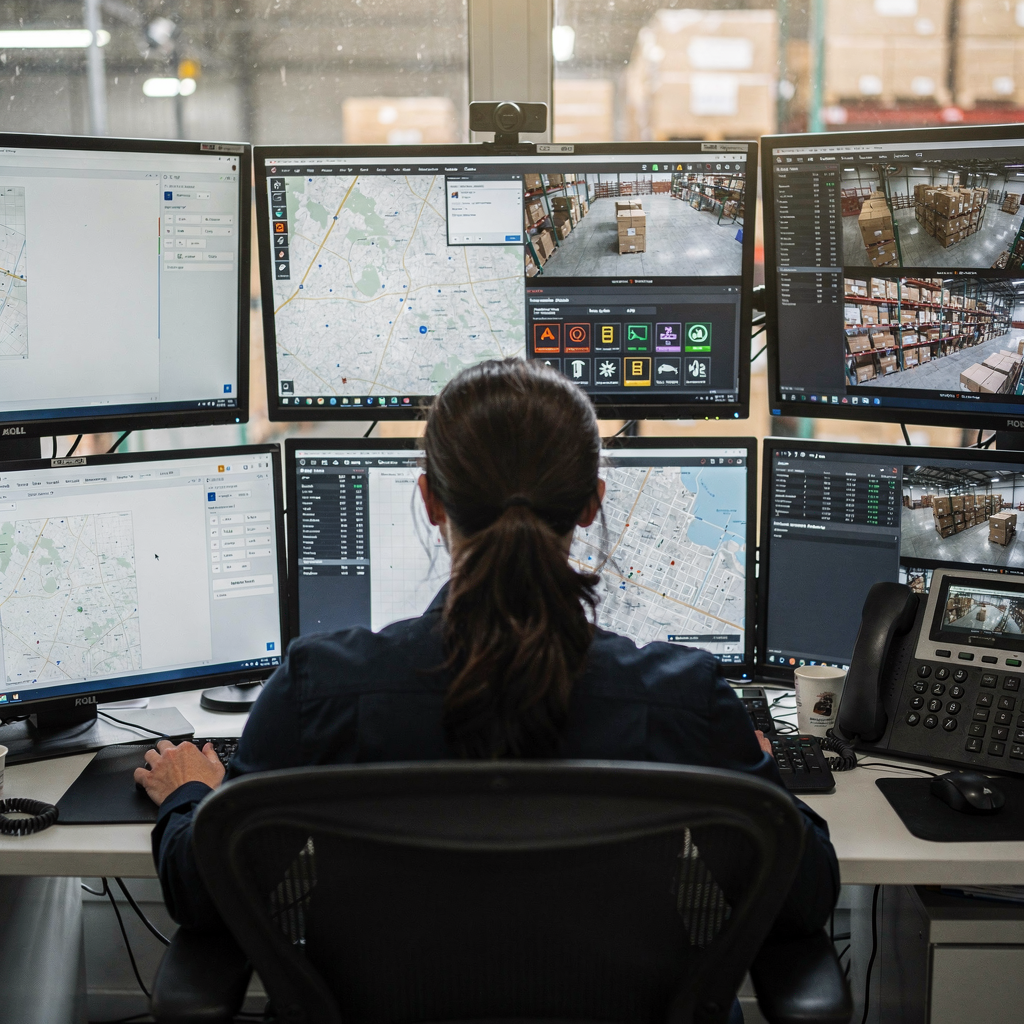
Control room operators work from consoles that present prioritized information and clear procedures. They watch wall displays, handle communications and manage handoffs during critical incidents. The layout and ergonomics of the operator desk affect vigilance, reaction times and uptime. Therefore, design choices must support long shifts and rapid switching between monitors. In many environments, a command center integrates VMS data with access control and dispatch systems so teams can make informed decisions quickly. Vendors report strong market growth for automated visual analysis; the video analytics market is projected to reach USD 12.3 billion by 2025, at a CAGR of 24.3% (MarketsandMarkets).
Control room environments vary widely. For air traffic control and emergency operations, redundancy and uptime are non-negotiable. In transport and industrial plants, process control systems tie into the same screens as camera feeds. As a result, every control room must manage interoperability, cybersecurity and disaster recovery planning. Integrators balance hardware and software selection to meet site-specific needs. In smaller sites, a modular new control room can scale up from a single workstation to a multi-operator crisis room. For further forensic capability, teams can add search tools that let operators find events in recorded video, helping investigations and reducing false alarms (forensic search in airports).
Finally, an agile control room supports high-performance teams and predictable workflows. It provides large monitors, wall displays and clear procedures, and it merges data streams so staff can focus on what matters. Today’s control rooms rely on both people and technology to keep facilities safe and efficient. Control room operations change constantly, and control rooms must adapt with the threats they face.
pixel: The foundation of visual intelligence
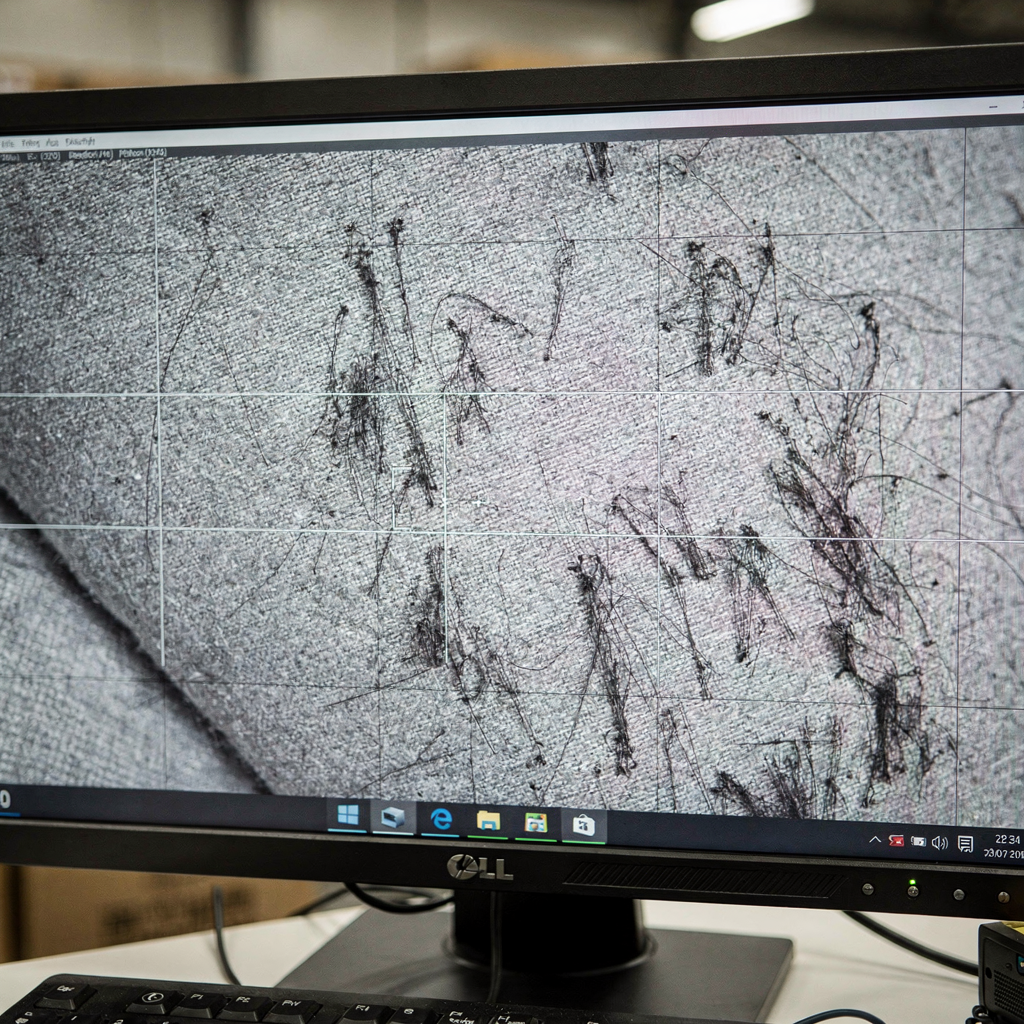
A pixel represents the smallest unit of image data that cameras and sensors deliver to a control room. Each pixel contributes to image clarity, and together they determine image quality and detection reliability. In modern control rooms, preprocessing steps such as compression, noise reduction and normalization prepare video for automated analysis. These steps reduce false detections and limit bandwidth. For example, when a camera compresses poorly, artifacting can trigger unnecessary alerts. Therefore, correct preprocessing improves analytics performance and reduces operator workload.
Resolution and frame rate directly influence detection accuracy. Higher resolution, such as 4k, lets analytics read small details like license plates or PPE markings, and higher frame rates capture fast motion without blur. However, higher fidelity increases storage and compute needs, so teams balance image quality with real-time data analysis and retention policies. In many mission critical settings, operators require crystal-clear images for verification and evidence. As a result, camera placement, viewing angle and lighting take on renewed importance when systems rely on automated alerts.
Data processing pipelines often include motion filtering and object tracking. These algorithms link pixels across frames, and then analytics extract behaviors and measurements. Predictive analytics add a layer that forecasts likely developments from current trends. For example, predictive flow models can warn of crowding long before a threshold triggers. visionplatform.ai enhances this chain by turning detections into searchable descriptions and by keeping video and models on-prem for compliance. This approach reduces cloud dependencies and supports EU requirements. In addition, forensic search tools let operators query recorded video using natural language, so teams can find specific events without knowing camera IDs or timestamps (forensic search in airports).
AI vision within minutes?
With our no-code platform you can just focus on your data, we’ll do the rest
video wall and display technologies: Visualising multi-source data
High-resolution video walls tile multiple feeds so operators can see an entire site at a glance. A video wall becomes the visual focal point in a control room, and it supports group briefings, incident triage and continuous monitoring. Wall displays vary by technology, and teams choose based on image quality, maintenance and cost. For example, LCD panels offer good image consistency and cost-efficiency, while LED solutions scale to larger sizes and deliver deeper contrast. Rear-projection cubes can provide uniform brightness for some room environments, although they require more space. System integrators often recommend high-resolution displays for mission-critical control room installations.
Video wall management software unifies windows, alerts and maps on a single canvas. This synchronization simplifies workflows, and it reduces the need for operators to switch contexts. Platforms such as barco’s controllers and vuwall appliances target scalable deployments, and they allow flexible layout control for different shifts or incident types. Video wall technology must support interoperability, remote access and redundancy to meet uptime targets in mission-critical control room setups.
Visualization matters for both group awareness and individual attention. Larger screens let teams compare feeds and detect anomalies, while large monitors at operator desks provide focused detail. Display technologies influence image quality and viewing angle considerations. Designers balance larger screens against operator desk layout to avoid fatigue and to preserve responsiveness. As control rooms evolve, new video wall technology supports 4k and beyond, and it helps integrate mapping, analytics overlays and live feeds. For traffic centres and command and control rooms, the right visualization reduces time to decide and improves overall operational efficiency (Transportation Analytics Report).
Finally, selecting a video wall involves planning for modular upgrades and long-term scalability. An integrator can phase in higher pixel density, add redundancy, and support virtualization and cloud services when appropriate. Video wall choices affect maintenance cycles and total cost of ownership. With the right design, organizations can align wall displays to operational goals and to the control room’s mission.
kvm: Empowering the operator
A KVM switch lets operators share keyboards, video and mouse across multiple systems and workstations. In a busy control room, fast switching between consoles reduces task-switch costs and avoids procedure errors. Modern KVM solutions include remote console servers that allow remote access and fast handover. In many setups, remote access enables managers to support shifts from outside the physical room. For mission-critical environments, KVMs provide redundancy and maintain uptime when a primary workstation fails.
Operator needs drive the choice of KVM and peripheral designs. An ergonomic operator desk, paired with reliable KVM switching, speeds verification and action. Seamless transitions keep operators focused during alerts. For example, a console that switches in under one second helps an operator verify a suspicious vehicle or a perimeter breach before escalation. Control room operators rely on predictable responsiveness and minimal lag, so high-performance KVM hardware becomes a crucial part of the hardware and software mix.
KVMs also support virtualized sessions and mixed OS environments, which helps integrators consolidate tools. This increases scalability and reduces cabling complexity, and it enables teams to maintain separate security domains without duplicated keyboards. In addition, KVMs must interoperate with video wall management and with logging systems so activities remain auditable. When paired with AI agents and real-time analytics, KVMs help operators act on synthesized information rather than raw alarms. That combination improves operational efficiency and reduces the cognitive load on staff. For a deeper look at object detection workflows that benefit from fast switching, see vehicle detection and classification in airports (vehicle detection classification in airports).
AI vision within minutes?
With our no-code platform you can just focus on your data, we’ll do the rest
decision-making and critical decision-making: AI and RL in mission-critical operations
AI-powered analytics turn video into actionable alerts, and they support critical decision-making in control rooms. Systems perform anomaly detection, pattern recognition and predictive alerts to flag unusual behavior before it becomes an incident. These tools deliver evidence and context, and they feed control room agents with ranked options for action. As Dr. Jane Smith explains, “The future of control rooms lies in intelligent systems that not only display data but interpret it, enabling operators to make faster, more informed decisions” (Dr. Jane Smith Interview).
Reinforcement learning provides a framework to adapt policies under uncertainty. RL trains agents to pick actions that optimize outcomes over time, and it helps automate routine responses while preserving human oversight for high-risk cases. Studies indicate that integrating AI and analytics in control rooms can reduce incident response times by up to 40% and improve situational awareness by 60% (Operational Efficiency Study). These figures highlight measurable gains when systems combine detection with explanation and with recommended next steps.
For mission critical deployments, organizations combine predictive analytics with event-driven controls and SOPs to ensure safety. AI models must be explainable so operators trust recommendations and can audit decisions later. That trust matters during critical incidents when human review remains essential. A mission-critical control room thus blends automated alerts with human reasoning and with clear handover points. visionplatform.ai focuses on this space by converting detections into human-readable descriptions and by offering AI agents that suggest actions and pre-fill reports. This approach helps teams make informed decisions faster and reduces time spent switching between logs and video.
operator needs: Ergonomics and trust in automated systems
Human factors determine how well a control room performs under stress. Workload, fatigue and cognitive load influence response quality, and design choices can improve or worsen these effects. An ergonomic workspace, adjustable seating and a clear layout reduce strain and improve vigilance. Furthermore, operators need training, simulations and feedback to handle rare or complex scenarios effectively. For example, air traffic control teams rehearse emergencies to keep skills sharp and to refine procedures.
Trust in automated systems depends on transparency and explainability. Explainable AI gives operators reasons for alerts, and it shows which data streams influenced a conclusion. When operators can verify the logic behind an alert, they accept AI recommendations more readily. That trust also supports gradual adoption of automation, from assisted workflows to autonomous routines for low-risk tasks. For instance, VP Agent Reasoning can verify alarms by correlating video, access control and procedures, and then present an explained situation so the operator can act with confidence.
Training must reflect the operational realities of the room environment and of the tools in use. Regular simulation exercises, realistic incident injects and after-action reviews close the loop and increase adaptability. Integrators should include cybersecurity and virtualization and cloud scenarios in those drills to test incident response and disaster recovery. Finally, control room technology should support intuitive interfaces. A single interface that reduces clicks and surfaces the right context helps operators manage multiple tasks. For more on occupancy and crowd analytics that inform staffing and layout, see crowd detection and density in airports (crowd detection density in airports).
FAQ
What is a control room?
A control room is a dedicated space where teams monitor systems, review alerts and coordinate responses. It serves as the nerve center for operations, linking cameras, sensors and communications to support decision-making.
How do pixels affect detection accuracy?
Pixels determine the level of detail available to analytics. Higher resolution and correct frame rates improve object recognition and reduce false positives, while poor compression can cause artifacts that trigger alerts.
Why are video walls important in a control room?
Video walls allow teams to view multiple sources at once and to share situational awareness. They help groups brief quickly, compare feeds and coordinate during critical incidents.
What role does a KVM play for operators?
A KVM enables operators to control several systems from one keyboard and mouse and to switch between workstations rapidly. This reduces context switching and supports fast verification during alerts.
How does AI improve decision-making in control rooms?
AI automates anomaly detection, recognizes patterns and can predict incidents. When combined with explainable outputs, AI helps operators verify alerts faster and make more consistent decisions.
What is reinforcement learning used for in mission-critical settings?
Reinforcement learning helps train agents to optimize responses over time in uncertain environments. It can automate routine responses while leaving high-risk decisions to human operators.
How do you build operator trust in automated systems?
Trust grows when systems explain why they raise an alert and when operators can audit the logic. Training, simulations and gradual adoption help teams accept AI assistance.
What are common design considerations for a new control room?
Designers focus on ergonomics, sightlines, redundancy and interoperability. They choose display technologies, layout and workflows that reduce fatigue and support rapid incident response.
How does on-prem AI support compliance?
On-prem AI keeps video and models inside the site, reducing cloud exposure and helping meet local privacy and regulatory requirements. It enables organizations to control data and to audit model behavior.
Where can I learn more about specific analytics like people or vehicle detection?
visionplatform.ai provides detailed pages on many analytics types, including people detection, vehicle detection and forensic search. These resources describe how analytics integrate with control rooms and improve operational efficiency.