AI in Control Rooms by 2025: Building a Resilient Ecosystem
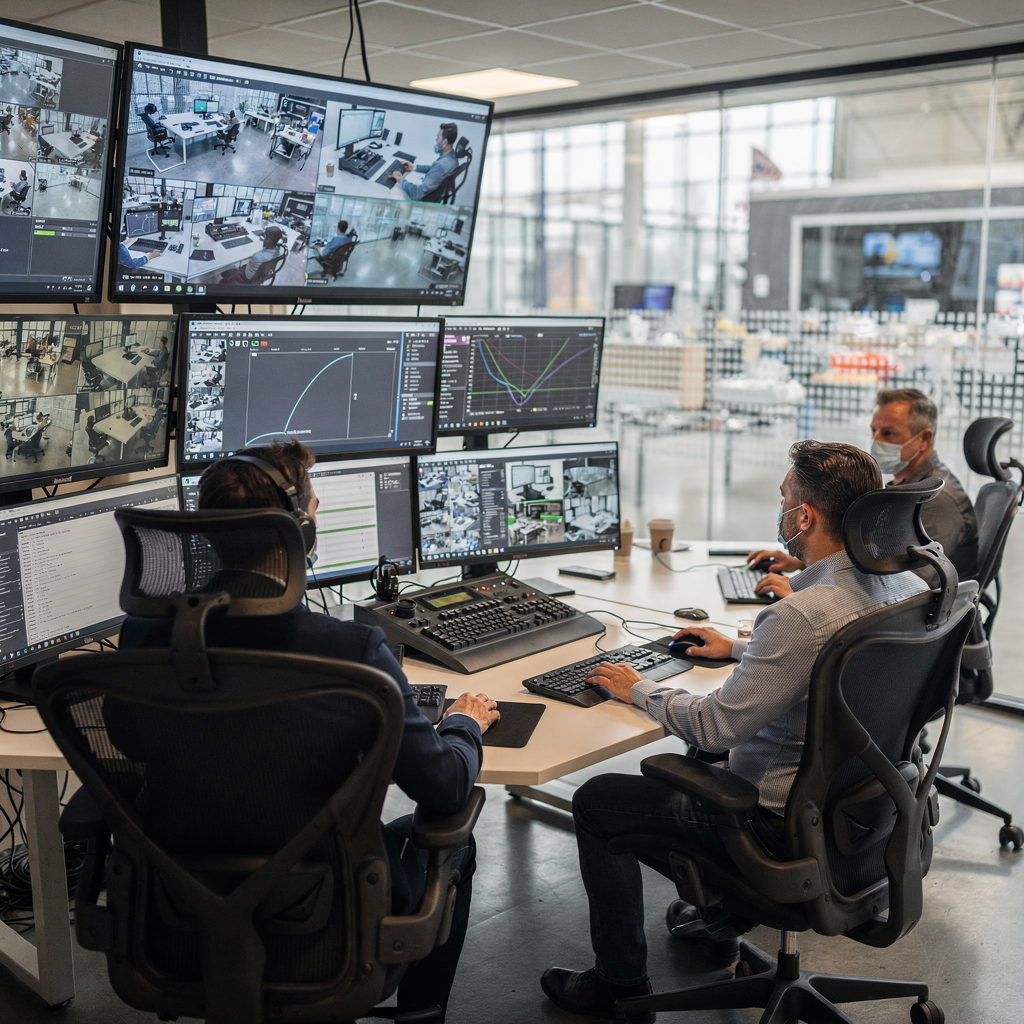
By 2025 the landscape for CONTROL ROOM operations will look noticeably different, and operators will rely on AI to keep systems resilient and responsive. Industry forecasts expect AI ADOPTION to expand rapidly, with a projected 25% CAGR through 2030 that signals growing investment and deployment across sectors. For example, energy and manufacturing sites already use MACHINE LEARNING and advanced ANALYTICS to process vast sensor streams and to extract PATTERNS from historical data; this shift helps teams move from reactive response to FORWARD-LOOKING management informed by DIGITAL TWINS and correlated telemetry. A CONTROL ROOM becomes more than a bank of screens; it turns into an ECOSYSTEM where CCTV feeds, SCADA, and third‑party data converge for situational awareness.
Operators in mission-critical settings see the BENEFITS OF AI as clearer decision triggers, fewer false ALERTS, and faster corrective actions. Today, AI SYSTEMS can sift through complex information, reduce INFORMATION OVERLOAD, and surface ACTIONABLE INSIGHTS that human operators can act on. For proof, studies show predictive analytics can reduce unplanned DOWNTIME by up to 30% source. Meanwhile, AI‑enabled anomaly detection and correlation tools improve SITUATIONAL AWARENESS and help CONTROL ROOM PROFESSIONALS prioritize incidents. Vendors that combine video reasoning with on‑prem processing, for example, let organizations keep data local and align with EU regulations while still enabling advanced reasoning.
Yet challenges remain. Data quality, VULNERABILITY to cyber threats, and the need to TRAIN CONTROL ROOM OPERATORS to interpret AI outputs are significant. Reports stress that HUMAN OPERATORS must retain critical thinking to oversee AI and to avoid overreliance source. Companies such as visionplatform.ai bridge detection and decision support by turning camera streams into searchable context and by giving operators AI‑ASSISTED tools that explain alerts and recommend ACTIONABLE responses. As a result, control rooms can TRANSFORM from mere monitoring centers into proactive hubs for SAFER OPERATIONS and improved OPERATIONAL EFFICIENCY.
AI-powered Analytics: How Operators Transform Decision-Making
Real-time ANALYTICS are central to how operators make faster and smarter choices in CONTROL ROOM workflows. AI-POWERED models produce PREDICTIVE INSIGHTS and ACTIONABLE INSIGHTS that help teams intervene before faults escalate. In practice, AI‑driven systems shorten DECISION-MAKING time by up to 60% and cut human error rates by around 20%, which improves reliability in mission-critical environments source . Control room operators rely on these insights to reduce cognitive load and to prioritize which ALERT or ALARM requires immediate human attention.
Control room OPERATORS no longer simply watch gauges; they interrogate models, inspect CONTEXTUAL evidence, and validate AI recommendations. Human expertise stays central, and AI acts as an assistant that aggregates HISTORICAL DATA, CCTV records, and sensor readings into a cohesive narrative. For example, an AI‑ASSISTED interface can indicate correlation between a temperature rise and a pattern of small leaks, then recommend CORRECTIVE ACTIONS. The operator evaluates the suggestion, triggers a WORKFLOW, and documents the INCIDENT RESPONSE.
Generative AI capabilities add another layer by translating complex telemetry into plain text summaries, making logs searchable using NATURAL LANGUAGE. Systems that are POWERED BY AI can also present FORENSIC SEARCH results so operators can find previous similar events quickly; for further reading on searchable video and forensic features, see the forensic search resource forensic search in airports. With this blend of model outputs and human oversight, CONTROL ROOM OPERATIONS become more consistent, and operators can focus on higher‑value work rather than repetitive monitoring.
AI vision within minutes?
With our no-code platform you can just focus on your data, we’ll do the rest
AI-powered Solutions for Power and Utility Management
AI solutions in POWER AND UTILITY networks increasingly drive PREDICTIVE maintenance and resource optimisation. Utility operators use PREDICTIVE ANALYTICS to schedule repairs, to balance loads, and to coordinate DISTRIBUTED ENERGY RESOURCES and ENERGY STORAGE assets. These capabilities help reduce unplanned DOWNTIME by up to 30% and can lower operational costs by as much as 25% when automation of routine tasks is combined with smarter scheduling source.
In practice, a DISTRIBUTED CONTROL SYSTEM that integrates AI can detect ANOMALY patterns in transformer vibration or in substation flows, then propose targeted inspections. The OPERATOR receives a contextual alert that links sensor readings to relevant CCTV clips and historical performance. That combination of video evidence and sensor telemetry reduces false alarms and accelerates INCIDENT RESPONSE, which improves SAFER OPERATIONS across the grid. Several utilities now deploy AI‑enabled monitoring and control tools that coordinate between field crews and control centers; an example use case is process anomaly detection, which ties into forensic video search and incident review process anomaly detection.
Digital TWINS help operators run simulations, to forecast load shifts, and to plan maintenance windows without risking real assets. These forward-looking models offer operators the chance to make INFORMED DECISIONS about asset health and capital allocation. For utilities considering a roadmap to AI, the path includes piloting predictive models, tying video and telemetry to operational procedures, and keeping AI reasoning on-premise where compliance or security demands it. Utility teams that follow this approach can transform PLANT OPERATIONS and daily operations while maintaining HUMAN OVERSIGHT and regulatory alignment.
Cybersecurity in AI-driven Control Rooms: Safeguarding the Ecosystem
As CONTROL ROOM systems adopt AI and as devices proliferate, NEW VULNERABILITY vectors appear that attackers could exploit. AI‑connected sensors, VMS platforms, and cloud integrations expand attack surfaces if not managed carefully. Effective CYBERSECURITY must therefore include encryption, strict access control, and real‑time threat detection that monitors both network activity and model inputs. Operators should assume adversaries try to inject malformed data or to manipulate training pipelines, and they should apply layered defenses accordingly.
Best practices for secure AI deployment involve separating duties, applying secure on‑prem models, and enforcing least privilege for service accounts. visionplatform.ai advocates keeping video and models on site to reduce data egress risk and to align with EU AI Act constraints. In addition, CONTROL ROOM PROFESSIONALS should implement audit logs and explainable model outputs so HUMAN OPERATORS can validate why a recommendation was made. Regulatory frameworks and industry standards for critical‑infrastructure security provide guidance on resilience, and adopting them reduces operational exposure.
Real-world resilience also depends on tabletop exercises that test incident response and on continuous improvement. Teams that train to recognize compromised models or corrupted CCTV feeds find issues faster, and their remediation times fall. Finally, integrating real-time DATA streams with security analytics creates contextual threat views, which help teams detect vulnerability exploitation and to ACT AUTONOMOUSLY where safe. When cybersecurity and AI design go hand in hand, CONTROL ROOM ECOSYSTEMS remain robust and trustworthy.
AI vision within minutes?
With our no-code platform you can just focus on your data, we’ll do the rest
The Evolving Operator Role in AI-powered Control Rooms
CONTROL ROOM OPERATORS must shift from manual monitoring toward supervised human‑AI collaboration. The role of the human operator evolves to supervising AI outputs, validating ACTIONABLE INSIGHTS, and making higher‑stakes decisions. Training programs now focus on interpreting model confidences, on spotting ANOMALY DETECTION limits, and on preserving HUMAN OVERSIGHT over automation. This change reduces the repetitive load and the COGNITIVE LOAD while enabling operators to respond faster to CRITICAL ISSUES.
Human operators still bring context, judgement, and adaptability; AI brings scale, speed, and pattern recognition. For example, a control room assistant that USES AI can search video in NATURAL LANGUAGE and can surface related procedures and past occurrences, which cuts time to verify an alarm. Control room operators benefit from AI ASSISTED tools that recommend workflows, suggest CORRECTIVE ACTIONS, and pre-fill incident reports. Visionplatform.ai’s VP Agent Reasoning feature, for instance, correlates video, VMS metadata, and procedures to explain alarms and to reduce false alerts; operators then decide whether to escalate or to close an alert.
To prepare, organisations must design PRACTICAL certification and drill scenarios and must update SOPs to reflect AI‑assisted tasks. Overload from too many detections is manageable when AI systems prioritize and verify events before they reach an operator. Ultimately, the future of control rooms rests on a partnership between AI SYSTEMS and HUMAN OPERATORS that yields smarter decisions, better incident response, and more predictable outcomes.
Transforming Utility Operations in 2025 with AI
By 2025 utilities will adopt AI‑DRIVEN tools to improve OPERATIONAL EFFICIENCY and to reduce costs. Forecasts point to up to 25% cost reductions and to 15% fewer incidents when predictive insights and automation are applied across networks. Integration of DIGITAL TWINS and AUTONOMOUS OPERATIONS allows teams to simulate and to act before problems escalate, and the use of DISTRIBUTED ENERGY RESOURCES requires smarter orchestration that AI can provide. The roadmap for utilities combines pilot projects, data governance, and operator training to balance innovation with compliance.
Practical steps include deploying AI solutions that monitor equipment and that recommend maintenance windows, connecting video analytics to asset records, and enabling searches across CCTV history for faster investigations; for example, see the intrusion detection use case that links camera events to response workflows intrusion detection in airports. Entities should also evaluate DCS integration paths so that DISTRIBUTED CONTROL SYSTEMs can accept validated AI recommendations and still retain human approval for high‑risk actions. These designs reduce information overload and improve correlation across feeds, which leads to more informed decisions and to safer operations.
As utilities pursue this change, they must address regulatory constraints, secure model pipelines, and define escalation rules that keep HUMAN EXPERTISE central. Visionplatform.ai demonstrates a pattern where video moves from raw detections to reasoning, where AI agents assist in workflows, and where optional autonomy scales routine handling. With these building blocks, utilities can automate low-risk processes, improve plant operations, and create resilient control room operations that serve communities reliably.
FAQ
How will AI change the role of a control room operator?
AI will shift the control room operator role from manual monitoring to supervised decision-making and validation. Operators will rely on AI to prioritise alerts, to provide contextual evidence, and to suggest corrective actions while maintaining human oversight.
What are the main benefits of AI in control rooms?
Benefits include faster decision-making, reduced downtime, fewer false alerts, and improved situational awareness. AI can also automate routine tasks so operators focus on mission-critical work.
Is predictive maintenance practical for power and utility networks?
Yes. Predictive analytics can schedule interventions before failures occur and reduce unplanned downtime by up to 30% source. Utilities combine sensor data and video to prioritise inspections.
How do organisations secure AI-enabled control rooms?
They apply encryption, strict access control, audit logging, and keep sensitive processing on‑prem where required. Regular drills and model integrity checks also help detect vulnerabilities early.
Can AI reduce operator information overload?
Yes. AI systems correlate multiple streams, filter false alarms, and present actionable insights so operators see fewer, more relevant alerts. This lowers cognitive load and speeds incident response.
What is the role of digital twins in utility operations?
Digital twins let operators simulate scenarios and test interventions without risking physical assets. They support forward-looking planning and help coordinate distributed energy resources more effectively.
How does visionplatform.ai support control room workflows?
visionplatform.ai turns video and VMS data into searchable descriptions, reasoning, and decision support, which reduces manual steps and speeds responses. The platform keeps processing on-prem and exposes structured inputs for AI agents to act safely.
Will AI replace human operators?
No. AI is designed to augment human expertise and to automate low-risk routine work. Human oversight remains essential for complex and high-risk decisions.
How should organisations start with AI in control rooms?
Begin with pilot projects that focus on high-value use cases like predictive maintenance or forensic search. Combine those pilots with operator training and clear governance to scale safely.
What regulatory considerations affect AI deployment in control rooms?
Regulations around data protection, critical infrastructure security, and emerging AI rules, such as the EU AI Act, may require on‑prem processing, explainable models, and audit trails. Organisations must design systems with these constraints in mind.