next-generation cctv and ai: an overview of ai video analytics and video surveillance
Next-generation CCTV adopts AI to move beyond passive recording. First, IP cameras stream network video that enables real-time analysis. Next, AI video analytics interpret scenes, tag objects, and raise an alert when patterns match risk criteria. For example, a security camera can detect a person at an off-hours gate and create a real-time alert for operators. Also, visionplatform.ai turns existing cameras and VMS systems into AI-assisted operational systems to explain events, not just flag them.
AI delivers pattern recognition using an algorithm trained on thousands of hours of video footage. In practice, this means smart analytics can count people, detect loitering, flag access control violations, or spot an object left behind. For example, airport teams use people-counting and crowd detection to manage flows and safety; see crowd detection density resources for more details (crowd detection density in airports). Also, advanced video analytics reduce time to verify incidents and improve security and operational efficiency at scale.
Compared with traditional surveillance systems, next-generation solutions automate verification and reporting. They transform raw video into searchable descriptions and metadata. For instance, visionplatform.ai adds an on-prem Vision Language Model that converts video into text for fast forensic search; operators can find events with natural language queries, as in VP Agent Search and forensic scenarios (forensic search in airports). These capabilities reduce false alarms and help security teams to respond quickly.
Statistics reinforce the shift. The market outlook shows robust growth for video analytics tools as organizations adopt intelligent video to manage vast amounts of video and connected sensors across sites (video surveillance market report). Also, the number of connected IoT devices, including smart cameras, is forecast to reach 21.1 billion by 2025, which fuels demand for AI-enabled video solutions (IoT device growth 2025). Therefore, modern security depends on video analysis that converts network video into context and action.
ai-powered analytics in video analytics: how surveillance meets edge computing
AI-powered analytics combine AI models with edge hardware to process video close to where it is captured. First, putting inference on-camera reduces latency. Next, edge-AI keeps bandwidth use low while delivering real-time video classification. Also, this design supports real-time monitoring for threat detection and crowd safety. In many deployments, analytics run on an embedded GPU or on a nearby server to balance compute and cost.
Edge processing means an alert can be raised in seconds. For example, a camera using an ai-powered algorithm can detect a perimeter breach and raise a real-time alert to the control room. Also, local processing preserves privacy and reduces cloud video transfer. visionplatform.ai supports on-prem processing and an agent layer that reasons across detections, VMS events, and procedures to verify alerts before escalation.
Then, cloud-native platforms add scale. By combining edge filtering with cloud analytics, organizations can centralize management and historical analysis. For instance, a connected site might stream only verified events to a cloud archive while keeping raw video on-prem. This hybrid approach reduces costs and maintains compliance with data residency rules. Pelco notes edge-AI and sensor fusion as key trends for responsive security solutions (security technology trends).
For crowd management, AI-powered video analytics identify density build-up and movement anomalies in real time. Also, in transport hubs, the system can trigger rerouting messages or extra staffing when crowd thresholds are exceeded. For threat detection, the same edge capability ensures low-latency recognition of suspicious items or behaviour. In short, integrating edge and cloud lets teams monitor more with fewer false alerts and better context, while providing the infrastructure for advanced video analytics and incident management at scale.
AI vision within minutes?
With our no-code platform you can just focus on your data, we’ll do the rest
How security cameras work with ai-powered video analytics for core security
Security cameras work as the front line for AI-powered video analytics. First, cameras capture video feeds and send them to an edge processor or cloud video service. Then, the ai system applies an algorithm to detect people, vehicles, or unusual motion. Also, systems can run models for facial recognition, ANPR/LPR, or PPE detection depending on policy and use case. For airports, specific solutions such as people detection and ANPR provide clear operational value; see people detection details for airport deployments (people detection in airports).
AI analytics can reduce false alarms by up to 90% when tuned to site conditions and combined with verification logic (“Video analytics cameras essentially understand movement, behavior, and context, allowing for proactive security measures rather than reactive responses”). Also, visionplatform.ai layers reasoning on top of detections to explain why an alarm matters, which further reduces manual verifications. This reduces the workload on security personnel and helps security teams to respond with confidence.
Core security goals such as perimeter security, access control, and intrusion detection become easier to meet when analytics convert video into actionable events. For perimeter security, an intelligent video solution triggers an alarm only when a verified breach occurs. For access control, cameras can cross-check badges with detected identities to flag tailgating or unauthorized access. Also, evidence gathering improves because AI adds searchable tags to video footage, enabling fast investigations and consistent incident management.
Systems use both on-camera and server-side neural networks to balance accuracy and throughput. Edge inference handles immediate threats while a video analytics platform or video management system can run deeper analysis for forensic review. This split ensures real-time detection and reliable historical search. In practice, organisations that adopt ai-powered security cameras and an integrated video management software see improved detection and faster, more accurate response to security events.
Tackling security challenges with analytics and ai video analytics in camera system deployments
Security challenges often include blind spots, human error, and data overload. First, blind spots allow incidents to go undetected. Next, human operators can fatigue when monitoring many screens. Also, amounts of video can overwhelm traditional monitoring systems. For these issues, analytics and ai video analytics offer pragmatic solutions. For example, smart analytics can prioritise events and surface only those that need human attention, which helps security management and reduces cognitive load.
To address blind spots, deploy overlapping views and sensors and use AI to stitch detections across cameras. Also, integrate other sensors such as access control logs or environmental sensors to provide context. visionplatform.ai emphasises multi-source reasoning so an alarm is explained by correlating video, VMS data, and procedures. This approach reduces false alarms and improves the operator’s ability to decide what to do next.
To manage human error, use automation and guided workflows. For example, VP Agent Actions can pre-fill incident reports or recommend next steps, allowing operators to follow consistent procedures. Also, by deploying forensic search, teams can quickly locate relevant footage instead of manually scrubbing hours of recordings. For guidance on configuring camera systems to maximise detection rates, start with a site survey, set realistic rules, and test models with site-specific data.
Best practices include placing cameras to minimise occlusion, selecting the correct sensor and lens, and tuning algorithms to local conditions. Also, update models periodically with new data to prevent drift and to handle changes such as seasonal clothing or new vehicle types. For operational deployments in high-traffic sites like airports, specialised features such as slip-trip-fall detection, crowd density, and intrusion detection add targeted value (slip trip fall). Finally, combine verification logic with human oversight to achieve both scalability and reliability.

AI vision within minutes?
With our no-code platform you can just focus on your data, we’ll do the rest
Choosing video analytics software: best ai video analytics companies and system selection
Selecting video analytics software requires clear criteria. First, evaluate accuracy and false alarm rates. Next, check scalability and how the platform integrates with your video management system and other enterprise systems. Also, confirm whether the solution supports on-prem deployment if you need to avoid cloud video. visionplatform.ai offers on-prem Vision Language Models and VMS agents to keep data in your environment when compliance matters.
Criteria to prioritise include model performance, API access, explainability, and deployment options. Also, look for support for custom model workflows so you can improve a model with site-specific data. For organisations that want to automate common workflows, ensure the vendor provides incident management and automation hooks. Finally, consider total cost of ownership including compute, storage, and integration effort.
A comparison of the best ai video analytics companies and video analytics companies in 2025 should consider features such as ANPR, people counting, and PPE detection. For commercial security, look for vendors that support network video standards and integrate tightly with major VMS platforms. Also, ask for case studies showing improved operational metrics, such as reduced time per alarm or fewer false alarms.
To match a solution to sector needs, use a decision matrix based on accuracy, latency, integration, and compliance. For retail, prioritise people counting and heatmap occupancy analytics. For transport hubs, focus on throughput, crowd detection, and ANPR/LPR. For industrial sites, seek process anomaly detection and PPE detection. Internal links to specialized modules help readers learn more about specific capabilities like ANPR or PPE detection (ANPR/LPR in airports) and PPE detection (PPE detection in airports).
Integrating security camera, cctv and camera system data for proactive surveillance
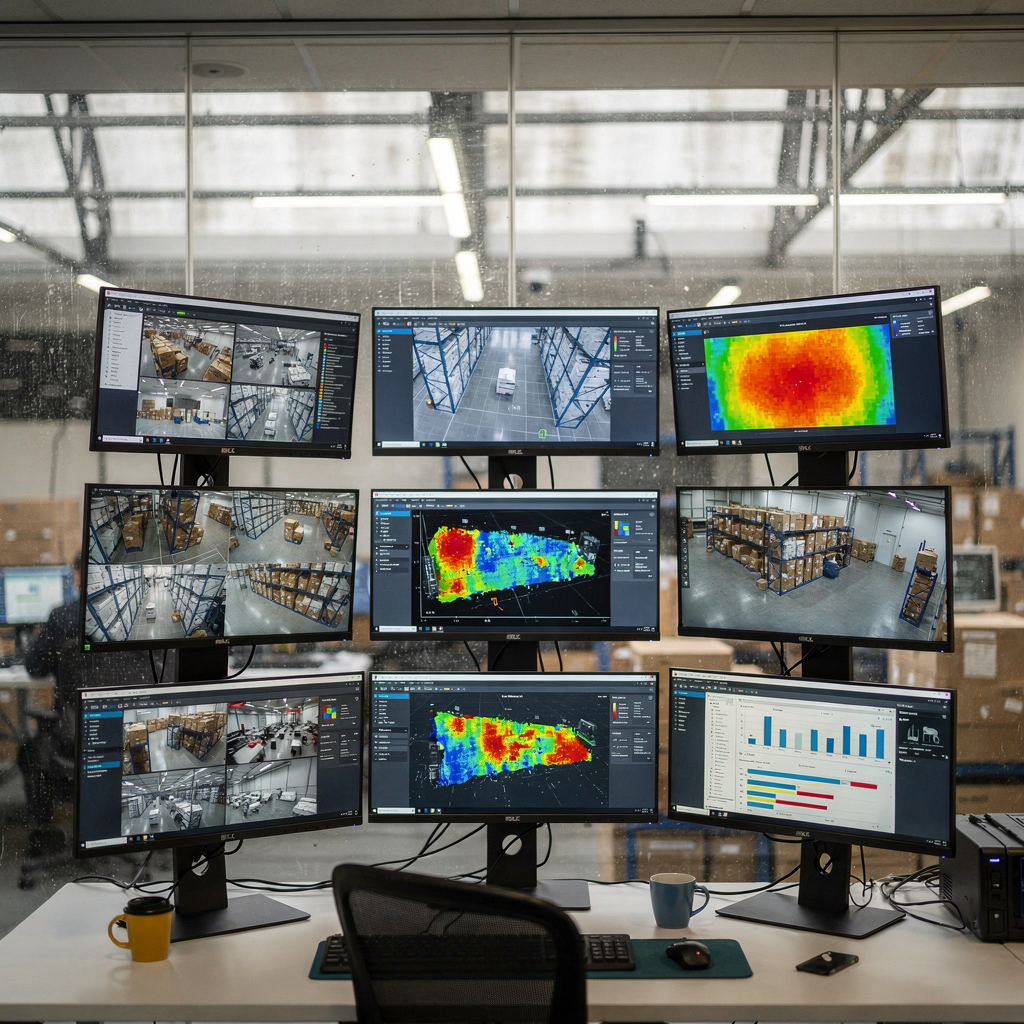
Integration turns separate feeds into an operational security solution. First, unify events in a single dashboard so security teams can see verified alerts and context. Then, link video metadata to access control, dispatch, and maintenance systems to automate responses. Also, visionplatform.ai exposes VMS data and detections as a real-time datasource for AI agents, enabling automated workflows and suggested actions that reduce time to resolution.
Unified dashboards and cloud-native platforms let managers track KPIs and run analytics across sites. For organisations that must keep video on-prem, hybrid architectures allow historical analytics without moving raw footage to the cloud. Also, combining video with environmental sensors and badge data produces richer insights, enabling predictive interventions before incidents escalate.
To deploy an integrated solution, follow these steps: perform a site survey, define detection rules and escalation paths, pilot with a subset of cameras, and then roll out with continuous model tuning. Also, include human-in-the-loop validation to refine rules. For forensic needs, tools that convert video into searchable descriptions let investigators find events fast. For example, visionplatform.ai’s VP Agent Search provides natural language queries over recorded video, which helps forensic teams explore amounts of video efficiently.
Once deployed, measure impact on response time, false alarm reduction, and operational efficiency. Also, maintain regular audits of model performance and data flows to ensure compliance and to optimize outcomes. In practice, this approach turns surveillance systems from passive recorders into proactive, context-aware tools that support security management and broader operations.
FAQ
What is next-generation CCTV?
Next-generation CCTV refers to systems that combine IP cameras with AI analytics and modern management platforms to provide real-time video intelligence. These systems go beyond recording to detect, explain, and help respond to incidents.
How does AI improve video surveillance?
AI improves video surveillance by recognizing patterns, classifying objects, and reducing false alarms through contextual verification. It can also automate routine workflows and make video searchable, which speeds investigations.
Can I use existing cameras with AI analytics?
Yes. Many software platforms support existing cameras via ONVIF or RTSP and can add AI capabilities without replacing hardware. visionplatform.ai specifically turns existing cameras and VMS into AI-assisted operational systems.
What is edge-AI and why does it matter?
Edge-AI runs inference near the camera, lowering latency and bandwidth use while supporting real-time alerts. This is essential for fast threat detection and for deployments that restrict cloud video transfer.
How much do false alarms decrease with AI?
Properly tuned AI systems can cut false alarms dramatically, with some vendors reporting reductions up to 90% in specific scenarios (Avigilon report). Real-world results depend on configuration and site conditions.
What should I look for in video analytics software?
Look for accuracy, scalability, integration with your VMS, explainability, and deployment options like on-prem versus cloud. Also consider support for custom models and APIs for automation.
How does integration improve security operations?
Integration links video analytics to access control, incident management, and reporting so that alerts include context and suggested actions. This reduces operator workload and speeds decision-making.
Are there privacy or compliance benefits to on-prem processing?
Yes. On-prem processing keeps raw video inside your environment, which simplifies compliance and reduces risks associated with cloud video storage and cross-border data transfer. It also aids alignment with regulations such as the EU AI Act.
Can AI help beyond security?
Absolutely. AI can support safety and security as well as operational tasks like occupancy analytics, process anomaly detection, and resource optimisation. These uses extend the value of surveillance investments.
How do I start a pilot for AI video analytics?
Begin with a site survey and clear objectives, deploy on a subset of cameras, and measure false alarm rates and response times. Then iterate on rules and models before scaling the deployment.