Importance of human oversight in human-in-the-loop AI control rooms
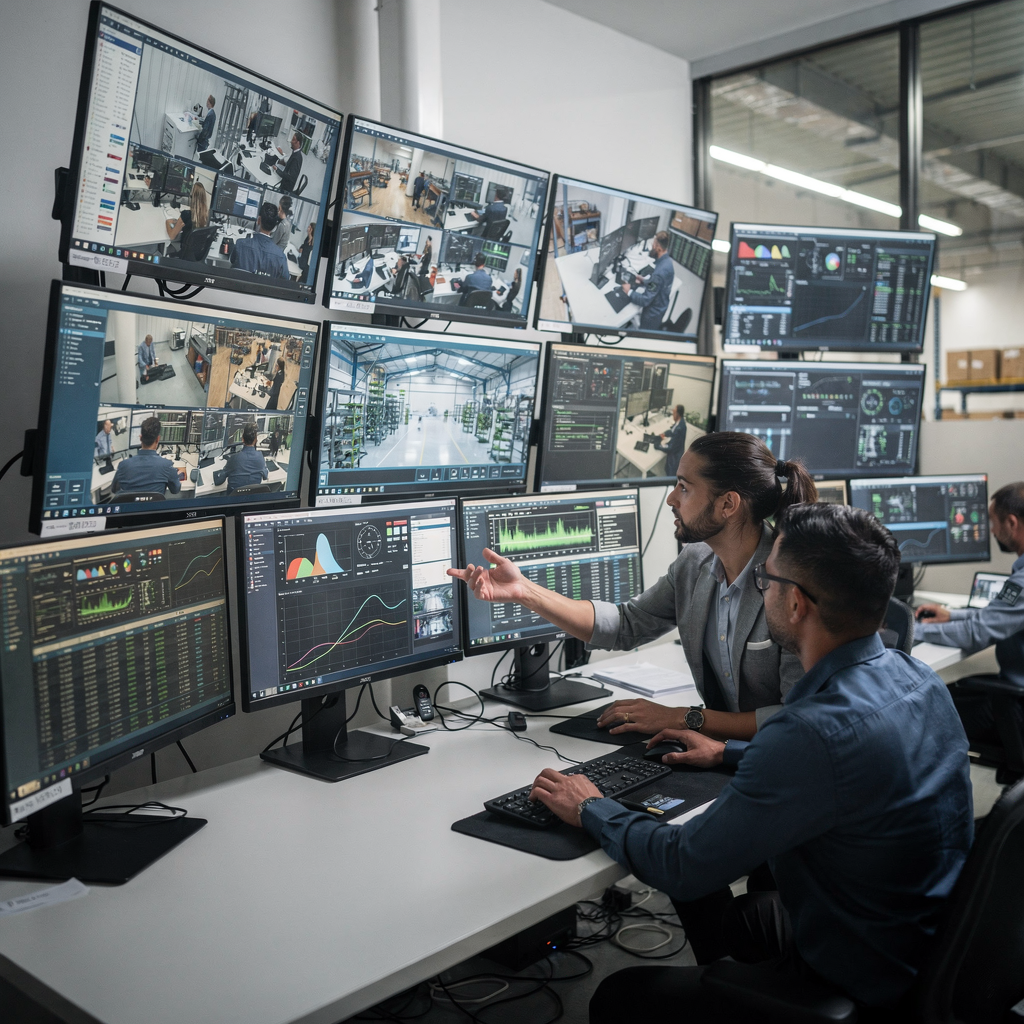
Human oversight complements AI’s data processing by providing context, questioning anomalies, and applying ethical judgment. AI systems scan large volumes of data rapidly. Humans add situational awareness, and they check edge cases. First, AI detects patterns and raises an alert. Then, a trained operator evaluates the evidence. This layered approach reduces the risk of false positives and false negatives, and it improves trust in output.
Control rooms that integrate human checks change how teams respond. For example, roughly 78% of enterprises now use AI tools with human checks, and about 67% of AI-generated responses still require verification. These figures show why embedding human oversight matters when systems operate under pressure.
Human operators detect anomalies in ways that statistics alone cannot. They notice contextual clues, apply POLICY and ethical norms, and connect multiple signals. For instance, a camera detection of a person near a gate may be normal during staff shift change. An operator recognizes that pattern quickly, and they stop unnecessary escalation. In aviation and facility security, operators rely on tools like forensic search to confirm intent and history. You can explore our forensic search example for airports for related context forensic search in airports.
Human judgment also provides accountability. When outcomes matter, humans accept final responsibility. Control rooms need clear accountability chains and easy override controls. Operators require user-friendly interfaces, and they need real-time context. At visionplatform.ai we turn camera detections into human-readable descriptions, and we surface the evidence that supports an action. This approach reduces operator stress and improves decision-making quality.
Finally, human oversight fosters continuous improvement. Human feedback trains AI models, and it sharpens pattern recognition over time. Thus, teams can automate low-risk tasks while keeping humans in authority for high-impact or high-risk incidents. This balance safeguards people and assets while allowing automation to scale.
The human-in-the-loop approach to AI decision-making and governance
The human-in-the-loop approach aligns governance with operational practice. It defines who reviews AI proposals, when to escalate, and how to audit decisions. Governance frameworks specify permissions, logging, and accountability. They also demand explainability and operational checks. For instance, healthcare and clinical research increasingly require human oversight to meet ethical and regulatory standards. The report on responsible oversight of AI in clinical research highlights this trend Responsible Oversight of Artificial Intelligence for Clinical Research.
Under governance, human operators retain final authority over AI proposals. The system suggests actions, and humans decide. This preserves accountability and reduces unintended consequences. Systems must record who accepted or overrode decisions. Recording creates audit trails, and it supports compliance with rules such as the EU AI Act. Organizations that deploy AI workflows should configure escalation paths and override mechanisms. In practice, an operator might accept a suggested lock-down action, or they might hit an override and run manual protocols instead. This preserves human judgment while benefiting from AI speed.
Governance also sets clear boundaries for autonomous behavior. Some deployments allow agents to act automatically for well-understood low-risk events. Others require human confirmation for high-risk incidents. For example, a control room may let agents flag unattended baggage but require human confirmation before involving law enforcement. That model balances efficiency and restraint. The HITL model supports continuous human feedback to refine both models and procedures. In educational and assessment settings, researchers stress that human-in-the-loop frameworks create training targets and replicable taxonomies for trustworthy outcomes Human-in-the-loop assessment with AI.
Governance also covers deployment strategy. Teams must define who monitors performance, who tunes thresholds, and who archives logs. Clear roles prevent the risk of error and ensure that AI use follows legal and ethical norms. In sum, the human-in-the-loop approach links decision-making, auditability, and human supervision into a practical governance system that scales.
AI vision within minutes?
With our no-code platform you can just focus on your data, we’ll do the rest
HITL systems: merging autonomous technologies with human control
HITL systems balance AUTONOMOUS algorithms and HUMAN CONTROL. They let algorithms handle repetitive pattern recognition and let humans handle nuance. For example, analytics detect crowd density spikes and signal an alert. An operator inspects the scene, and they decide whether to escalate. This model reduces trivial alerts and keeps humans focused on judgement calls. Control room teams need interfaces that provide context fast, and they need tools that summarize why an alert fired.
Interface design directly affects operator cognitive load. Poor design increases stress and slows response. Effective interfaces present concise evidence, recommended actions, and a clear path to override. They also integrate with existing VMS and procedures. Our platform exposes camera events as structured inputs so agents can reason over them, and operators can verify recommendations quickly. The VP Agent Reasoning feature correlates video, access logs, and procedures to explain an alarm. That reduces false alarms and operator fatigue.
Design challenges include alert prioritization, visual clutter, and workflow handoffs. Teams should tune thresholds and group related alerts. They should make it easy to search historical video. For example, a forensic search lets an operator find all instances of loitering across cameras. Read more about loitering detection and how search helps investigations loitering detection in airports. Also, integrate perimeter breach analytics so that physical security and operations share a single source of truth perimeter breach detection in airports.
Examples from industrial control and cybersecurity show how to merge technologies. In industrial plants, AI may flag process anomalies and recommend shutdowns. Human control teams verify sensor patterns and make the final call. In cybersecurity operations, agents triage alerts, and analysts confirm breaches. Both domains need audits and clear override buttons. In air traffic and other high-impact settings, the safety net of human review preserves system resilience and public trust.
Explainability and ethical AI in human–AI operational environments
Explainability builds trust in AI outputs. Operators accept recommendations faster when they see rationale. Explainable ai techniques break down why a model flagged an event. They show contributing signals and confidence levels. This helps operators validate decisions and reduces blind trust. Avoid black box analytics in control rooms. Instead, provide human-readable summaries of detections, and show linked evidence. Visionplatform.ai converts video into textual descriptions so operators can search and verify quickly.
Ethical AI considerations include bias mitigation and fairness. Humans must test models across different conditions and populations. Teams should run audits for algorithmic bias, and they should log performance by scenario. Embedding human oversight in testing helps reveal edge cases early. For example, camera-based person detection needs to work across light conditions and body types. Use human reviewers to evaluate and to guide model retraining. That practice reduces the risk of error in high-stakes situations.
Human–AI collaboration is crucial in high-stakes environments. In healthcare, human review prevents harm when models suggest diagnoses. In airport security, operators balance privacy, operational impact, and safety. Human expertise grounds model output in legal and ethical norms. Firms must implement responsible ai policies that require human sign-off for sensitive actions. The EU AI Act also raises the bar for transparency and human oversight, and teams should plan compliance early.
Explainability ties into training and feedback. Human feedback improves reinforcement learning and supervised updates. When models explain rationale, humans can give targeted corrections. This creates a feedback loop that improves both accuracy and explainability. Finally, clear explainability reduces cognitive load because operators get focused reasons rather than raw scores. That supports faster, safer decisions in control rooms and across operations.
AI vision within minutes?
With our no-code platform you can just focus on your data, we’ll do the rest
From autonomous decisions to agentic AI: evolving the human–AI partnership
Systems are shifting from autonomous decisions to agentic AI assistants. Autonomous systems once handled tasks end-to-end. Now, agentic AI collaborates with people. Agents propose, explain, and act within defined permissions. Humans then oversee, adjust, or override. This change moves humans toward strategic supervision and away from micromanaging every output. The result is more scalable workflows and fewer routine distractions for operators.
As agents grow capable, the role of the operator evolves. Humans become supervisors who set objectives, manage exceptions, and refine policies. They need new skills in model interpretation, governance, and cross-system orchestration. Teams must train staff to read model explanations, to tune thresholds, and to audit agentic behavior. Organizations should plan for role shifts and for ongoing learning programs. Training improves human feedback and reduces dependency on vendor black box solutions.
Agentic AI also raises questions about accountability and override. Systems must provide visible controls and audit trails. Operators must be able to stop an agent instantly, and they must be able to review prior decisions. Design for escalation and for manual takeovers. Visionplatform.ai’s VP Agent Actions supports manual, human-in-the-loop, or automated responses depending on policy. That flexibility lets operations scale while keeping human control where it matters.
Finally, the future of artificial intelligence in control rooms depends on balancing autonomy with human ingenuity. Humans contribute strategy, ethics, and contextual judgement. AI contributes scale, speed, and pattern recognition. Together they create safer, faster, and more reliable operations. To prepare, invest in governance, in ergonomic interfaces, and in cross-disciplinary training. Then, agents will augment human teams rather than replace human leaders.

Best practices for effective human-in-the-loop AI governance in control rooms
Establish clear governance principles first. Define roles, responsibilities, and accountability for each workflow. Use audit logs and require human sign-off on high-risk decisions. Implement explainability standards so every output links to evidence. Also, require human reviewers for sensitive or unclear events. These steps ensure that automation with human oversight remains practical and safe.
Train operators on both tools and judgment. Provide scenario-based drills that mix routine and rare cases. Include reinforcement learning updates and human feedback sessions so models improve with real-world corrections. Make training ongoing. That approach builds competence and reduces cognitive load under pressure. In addition, create ergonomic interfaces that reduce clutter and focus attention on the highest-priority alerts.
Design feedback loops that close the learning cycle. Label confirmed events, and feed those labels back to ai models. Track metrics such as false alarm rate, time-to-resolution, and operator override frequency. Use those metrics to tune thresholds and to guide retraining. Also, plan your deployment strategy to keep video and models on-prem where needed for compliance. Our VP Agent Suite, for instance, supports on-prem deployment and audit trails to help meet EU AI Act requirements.
Adopt a checklist for continuous improvement: 1) map workflows and annotate decision points; 2) set escalation and override rules; 3) implement explainability for each detection; 4) run bias and performance audits; 5) schedule regular training and debriefs. Also, integrate natural language search so operators can find past incidents quickly. For example, using VP Agent Search operators can query recorded video for specific behaviors, which speeds investigations and reduces manual review time people detection in airports.
Finally, maintain a balance between automation and human supervision. Allow agents to automate low-risk, repetitive tasks while preserving human authority for high-risk or ambiguous situations. This balance safeguards assets and people, and it enables scale. When teams follow these practices they create resilient control rooms that combine technology and human intelligence effectively. For perimeter contexts, integrate intrusion detection with incident workflows to close the loop between detection and action intrusion detection in airports.
FAQ
What is a human-in-the-loop AI control room?
A human-in-the-loop AI control room combines AI-driven analytics with human operators who review and act on suggestions. Humans retain final authority for high-risk or ambiguous decisions, and they provide feedback that improves the system.
Why is human oversight important for AI in control rooms?
Human oversight catches contextual and ethical nuances that models might miss. It also creates accountability, and it reduces the chance of automation producing harmful outcomes.
How does explainable AI help operators?
Explainable AI shows why a model produced a given output, which speeds verification and builds trust. When operators see contributing signals and confidence levels, they can make faster, safer decisions.
Can control rooms automate tasks safely?
Yes, when teams automate low-risk workflows and keep humans in the loop for high-impact actions. Configurable permissions and audit trails allow safe automation and clear oversight.
What training do operators need for agentic AI?
Operators need skills in interpreting model explanations, tuning thresholds, and conducting audits. Regular scenario-based drills and feedback sessions help operators maintain readiness.
How do HITL systems reduce false alarms?
HITL systems combine automated detections with contextual verification from humans and auxiliary data. This correlation of signals reduces false positives and speeds accurate responses.
How do organizations meet regulatory requirements like the EU AI Act?
They implement explainability, maintain audit logs, and retain human oversight for high-risk actions. On-prem deployments and clear data governance also support compliance.
What role does visionplatform.ai play in HITL control rooms?
visionplatform.ai turns camera detections into human-readable descriptions and agent-ready inputs. The platform supports search, reasoning, and action to reduce cognitive load and speed decision-making.
How do feedback loops improve AI performance?
When operators label and correct outputs, teams feed that data back into models for retraining. This continuous human feedback sharpens pattern recognition and reduces systematic errors.
What is the best way to start deploying a HITL control room?
Begin with a pilot that automates low-risk workflows, add explainability and audit trails, and train a core team of operators. Then scale with measured governance, and iterate based on performance metrics and human feedback.