Trustworthy AI for Video Surveillance
Trustworthy AI for Video Surveillance sets the tone for safe, transparent systems that protect people and property. Today, organisations want security that respects legal and ethical limits, and that delivers proven results. visionplatform.ai builds on this need by turning cameras and VMS systems into AI-assisted operational systems. Our platform keeps video, models, and reasoning on-prem, which helps meet EU AI Act compliance and strengthens information privacy. First, this article explains foundations. Then, it covers governance, privacy, bias, and transparency. Next, it shows how an AI agent can help operators make faster, better decisions. Finally, it outlines steps to monitor systems and report publicly so that customer trust grows. Throughout, I cite research and offer practical examples.
AI and Video Surveillance: Foundations
AI now plays a central role in modern video surveillance. It detects people, vehicles, and unusual activity. It can also provide decision support that improves operational efficiency. Real-time analytics let systems provide real-time alerts and summaries, and they feed real-time data into control rooms. An ai model based on deep learning or machine learning converts raw pixels into structured events and metadata. Training data shapes model behaviour, so quality data is essential. For example, poor training data can raise false alarms and bias outcomes. Therefore, teams must curate and label datasets carefully.
Reliability and robustness are core attributes. Reliability means the system works across different lighting, weather, and camera angles. Robustness means resistance to adversarial inputs and unexpected anomalies. The Center for Security and Emerging Technology warns that “without robustness and reliability, AI surveillance systems risk amplifying errors and biases, eroding public trust and potentially causing harm” CSET. Control systems include cameras, networked recorders, analytics engines, and operator consoles. Video surveillance systems must link cameras, VMS, and automation in a secure, auditable chain.
Design must also minimise potential risks to public spaces and individuals. Good designs include access control, encryption, and strict data processing rules that limit who can view video and for how long. For airports, for example, integrations such as people detection and ANPR improve safety while supporting forensic search across recorded footage; see our people detection and ANPR pages for examples people detection, ANPR. Finally, human judgment must remain central: operators verify alerts and apply procedural context before escalation.
AI vision within minutes?
With our no-code platform you can just focus on your data, we’ll do the rest
Trustworthy AI in Video Surveillance Systems
Trustworthy ai in systems combines fairness, accuracy, and resilience. Organisations should adopt clear principles so technology supports safer communities while limiting harm. The characteristics of trustworthy ai systems include reliability, explainability, and privacy by design. Standards and frameworks guide these designs. For instance, policy bodies stress the need for accountable and transparent practices and for clear technical controls. The Nature review notes that “the way that an AI system communicates its results with human agents has a direct effect on trust” Nature. Therefore, design choices that improve explainability and interpretability matter.
Transparency measures include human-readable logs, model cards, and versioned deployment records. Explainability helps operators understand decision-making processes and reduces uncertainty during incidents. Interpretable dashboards show why an alert fired, which sensors agreed, and what historical evidence exists. An ai system that documents model versions and training data supports audits and continuous improvement. For regulated sectors, linking model provenance to policies simplifies compliance with rules such as the AI Act.
Governance frameworks must cover development and deployment of ai, risk reviews, and vendor assessments. Organisations should create AI governance boards and define ai risk management processes. They should also test for adversarial weaknesses and document mitigation steps. KPMG highlights that “Trust in AI depends heavily on who develops and governs the technology; institutions perceived as impartial and transparent garner significantly higher public confidence” KPMG. In practice, teams must balance security goals with the ethical use of AI and with public reporting that builds customer trust. For operators who need fast video search and context, a forensic search tool reduces time to investigate while preserving audit trails forensic search.
AI Agent and Responsible AI: Governance and Ethics
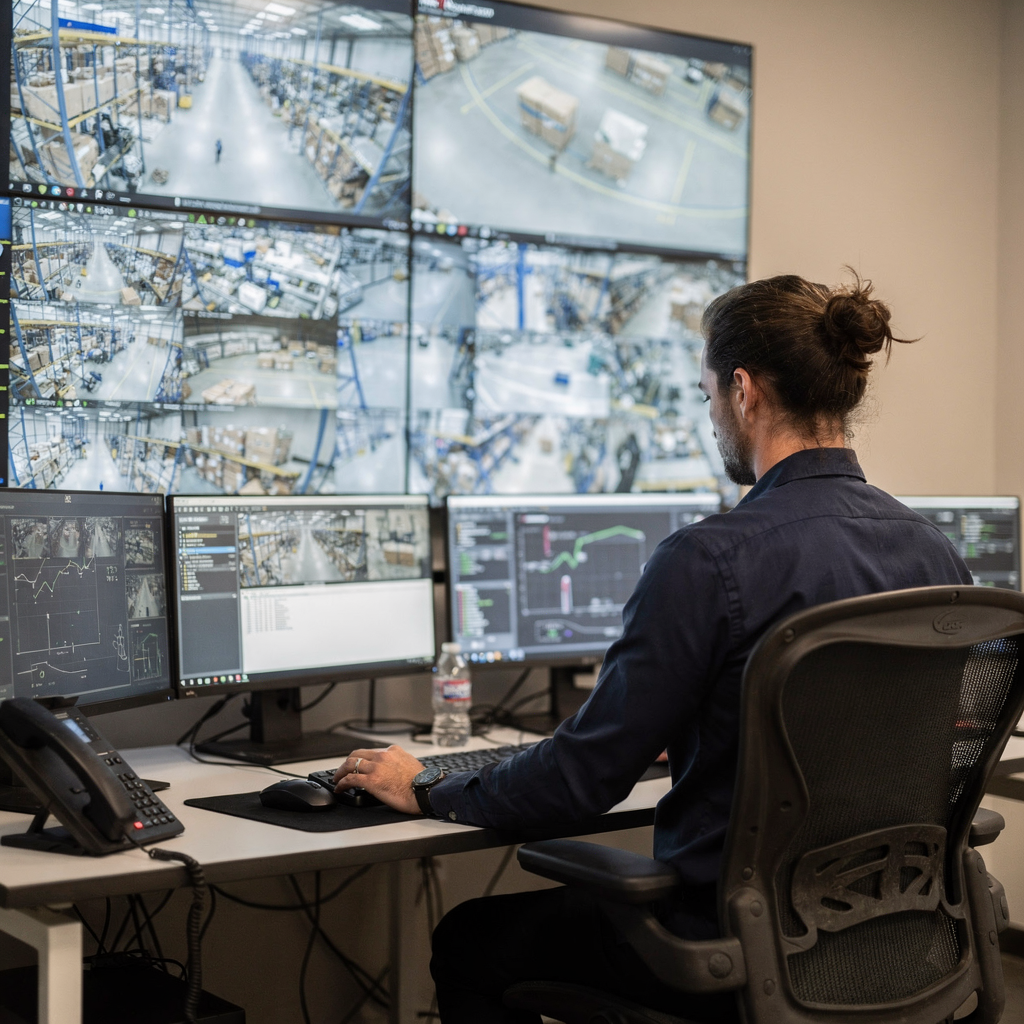
An ai agent in surveillance workflows acts as an assistant to human users. It reasons over video descriptions, VMS events, and procedural rules. The agent can propose actions, create reports, and pre-fill incident forms. When designed well, the agent reduces manual work and supports human judgment. Visionplatform.ai’s VP Agent concept shows how an agent can verify alerts and recommend steps. The VP Agent Reasoning feature correlates video, access control logs, and procedures to explain why an alarm matters.
Responsible ai requires policies, codes of conduct, and regular audits. Organisations should set clear roles for ai actors and for system owners. They should publish access control lists, retention rules, and audit trails. NIST-style risk frameworks and the ai rmf help teams perform structured reviews during the ai lifecycle. Operators must log decisions and maintain accountability and transparency for actions taken. Regular third-party audits and red-team tests check for algorithmic weaknesses and adversarial attacks. The Future of Life Institute notes that building trustworthy systems “is not just a technical challenge but a societal imperative” Future of Life.
Responsible use also means staged deployment of new ai features. Start with pilot zones and human-in-the-loop modes. Then expand to wider use after measured tests. Training and change management are critical. Teams must keep records of ai development and ensure that operators know when an agent recommends an automated action and when they must intervene. For sensitive environments, you can restrict agent actions so that they cannot change access control or issue unsafe commands without explicit approval. Our platform supports on-prem models and configurable permission levels to help enforce those controls unauthorized access detection.
AI vision within minutes?
With our no-code platform you can just focus on your data, we’ll do the rest
AI Video Surveillance: Privacy and Security
Protecting personal data in video systems demands layered controls. Data security combines encryption at rest and in transit, strong access control, and robust logging. Organisations should restrict exports and keep video on-prem where possible. Visionplatform.ai’s architecture supports on-prem processing to reduce third-party exposure and to simplify compliance with the AI Act and national laws. Differential privacy and federated learning are privacy-preserving methods that reduce central collection of sensitive data while still enabling model improvement.
Information privacy requires clear retention policies and minimization of stored footage. Teams should adopt protection mechanisms such as anonymisation, masks, or bounding boxes to limit identification in non-essential contexts. Cybersecurity practices protect against unauthorized access and limit the risk of leaked footage. Regular penetration testing and patching reduce vulnerabilities. The 2025 AI Safety Index reports that sourcing and attribution issues can erode trust if outputs lack provenance, so logging data processing steps matters for audits AI Safety Index.
Regulatory frameworks like the AI Act and guidance from standard bodies such as NIST help define expectations. Use technical safeguards and clear governance to align with these standards. For airports and transport hubs, systems must protect sensitive data while enabling safety features like weapon detection and plate readers. Where possible, implement access control to limit who can view sensitive streams and who can export footage. Finally, prepare incident response plans to handle data breaches and to communicate openly with affected stakeholders.
AI Surveillance and Facial Recognition: Bias Mitigation
Facial recognition poses significant fairness challenges. Bias can arise from unbalanced training data, poorly designed ai algorithms, or miscalibrated thresholds. These biases disproportionately affect marginalised groups and reduce community trust. A Pew Research survey found that over 60% of people express concerns about AI-related bias and data misuse, a figure that highlights public scepticism Pew Research. Thus, teams must treat facial recognition with extra care.
Mitigation begins with diverse and representative training data and with evaluation across demographic slices. Use fairness metrics and stress tests to quantify disparities. Then apply de-biasing techniques, model recalibration, or post-processing rules to reduce differential error rates. For critical use cases, consider replacing direct identification with alerting mechanisms that flag behaviours or contextual cues instead of identity. This reduces the social impact while still supporting safety goals.
Algorithmic transparency supports remediation. Provide clear documentation on how facial recognition scores are derived. Allow human users to review and override matches. Design workflows that emphasise human judgment when identity matters. Also, monitor outcomes continuously so that teams detect drift or new issues after deployment. For environments like airports, alternative sensors and video analytics such as loitering detection or people counting can complement identity systems and reduce reliance on facial models; see our loitering and people counting solutions for more context loitering detection, people counting. Finally, involve affected communities in policy design to rebuild trust and to ensure that practices align with social expectations.
Accountable and Transparent AI Surveillance with Interpretable Models
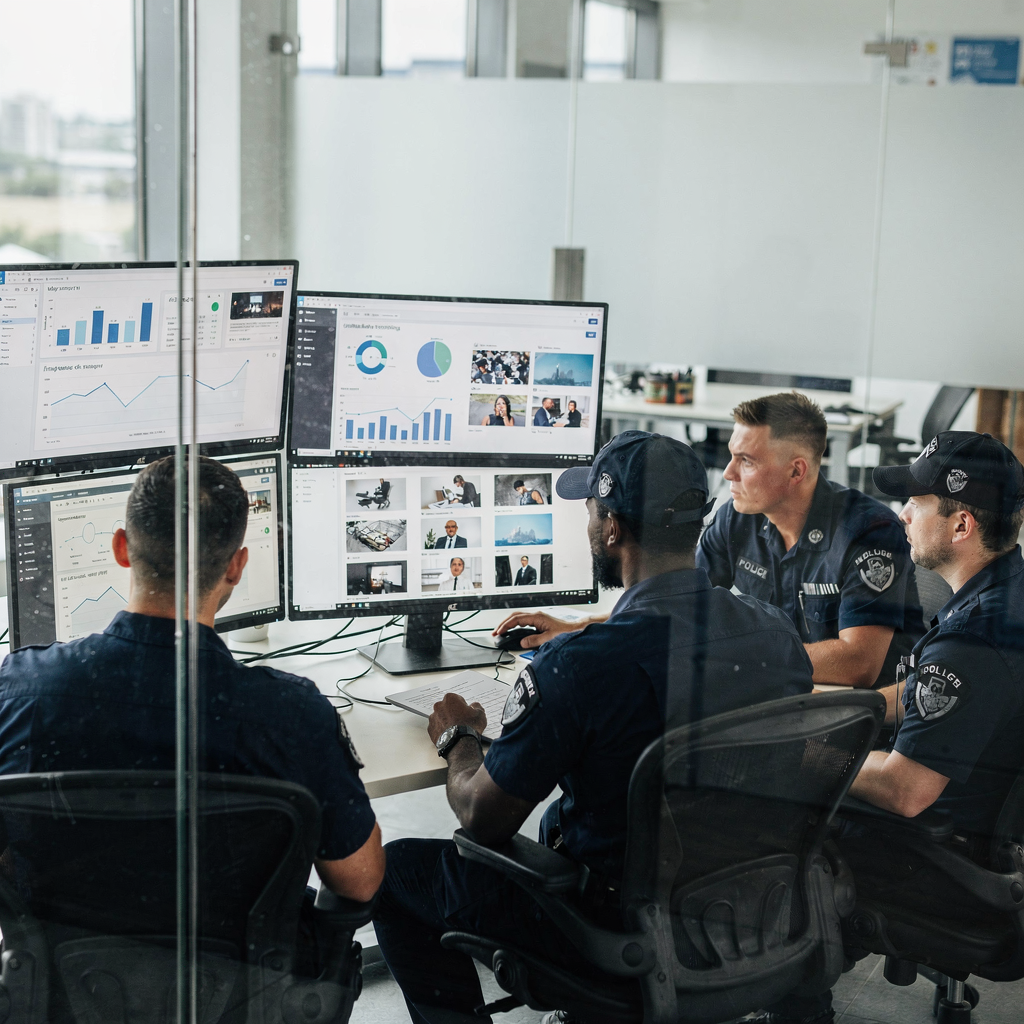
Systems must be accountable and transparent to earn and keep public confidence. Accountability and transparency start with logging every decision, model update, and access event. Public reporting on system performance, bias metrics, and incident resolution builds legitimacy. For example, publishing aggregate false alarms and mitigation steps shows commitment to minimization of potential harms. Regular audits and continuous monitoring support long-term trust.
Interpretable and interpretable model architectures help operators and auditors understand outputs. Simple rule-based layers, attention maps, or counterfactual explanations can show why a model flagged an event. Explainability and interpretability reduce ambiguity during investigations. They also support training and operator confidence. For generative ai features, limit outputs to vetted templates and keep content grounded in sources to avoid mistrust. The 2025 cross-national health survey found that ai literacy and performance expectancy increase trust, which suggests that transparent tools and education improve acceptance survey.
Operational processes should embed ai risk management and an ai rmf aligned with NIST guidance. Combine technical controls with governance reviews during the ai lifecycle. When teams publish model cards and decision-making processes, they show how they balance safety and security with operational needs. Also, include community feedback loops and escalation paths so that concerns reach decision-makers. Finally, design systems to be resilient. Test for adversarial threats, monitor for drift, and keep rollback plans ready. By doing so, organisations can use AI-based tools to support safer communities while protecting human rights.
FAQ
What is trustworthy AI for video surveillance?
Trustworthy AI for video surveillance means designing systems that are reliable, explainable, and respectful of privacy. It combines technical safeguards, governance, and public accountability to reduce potential harms.
How does an AI agent help control room operators?
An AI agent assists by correlating video events, procedures, and historical context to verify alarms. It can recommend actions, pre-fill reports, and reduce time to resolve incidents while keeping humans in the loop.
What privacy measures should organisations adopt?
They should use encryption, access control, retention policies, and anonymisation where possible. They can also explore differential privacy and federated learning to limit centralised personal data collection.
How do you reduce bias in facial recognition?
Start with diverse training data and evaluate models across demographic groups. Then apply de-biasing methods, calibrate thresholds, and require human review for identity-sensitive decisions.
What role does explainability play?
Explainability helps operators trust alerts by showing decision-making processes. It also supports audits and helps investigators decide when to intervene.
Which standards inform governance?
NIST frameworks and emerging regulations such as the AI Act provide useful guidance. Organisations should align their ai governance with these frameworks and with sector-specific rules.
How can systems prevent misuse?
Limit features via permissions, log all access, and enforce strict export controls. Regular audits and red-team tests detect misuse early and help refine protection mechanisms.
What is the impact on public trust?
Transparent policies, public reporting, and community engagement improve customer trust. Research shows that institutions perceived as impartial gain higher confidence.
How do organisations balance security and privacy?
They must apply data minimization, purpose limitation, and strong cybersecurity controls while keeping operational needs in mind. On-prem processing is one practical approach to reduce exposure.
Where can I learn more about practical tools?
Explore solutions like forensic search, people detection, and unauthorized access detection to see applied examples. Our platform pages show how real-time monitoring and contextual reasoning support safer operations.