Understanding video analytics: evolution from cctv to ai-powered video analytics
Traditional CCTV systems recorded events and left humans to review the recorded video. Today, AI turns passive cameras into active sensors. The shift began when image processing and pattern recognition moved from lab research into deployed surveillance. As a result, operators receive fewer meaningless alerts and more context. AI models detect objects, classify motion, and flag suspicious patterns. They can also verify alarms and reduce false positives, which speeds up response.
Core functions include object detection and pattern recognition. Object detection spots people, vehicles, and items. Pattern recognition tracks movement over time and learns normal behaviour. Advanced models identify loitering, tailgating, and unusual trajectories. These capabilities let teams focus on real threats, and not waste time on benign events.
AI also supports metadata generation. Instead of raw data, systems produce searchable descriptions of what happened. That change lets teams query for incidents using plain language. For example, our platform turns detections into text so operators can find events fast, and so they can verify alarms with context.
This evolution delivers measurable benefits. First, fewer false alarms mean less fatigue. Second, faster incident response reduces loss and exposure. Third, surveillance becomes a source of operational insight rather than just a log. Analytics could transform a noisy security room into a decision centre. For organisations that want to extract value from their cameras, integrating detection models and human workflows is essential.
AI adoption grew as compute power moved to the edge. Modern camera hardware now runs models locally and sends only events. That lowers bandwidth and keeps recorded video in place. The migration from traditional CCTV systems to intelligent video analytics was gradual, but it is now mainstream. For examples of specialised detection, see our work on people detection in airports, which shows how camera-based analytics can feed higher-level reasoning.
The role of surveillance in real-time video analysis and operational insights
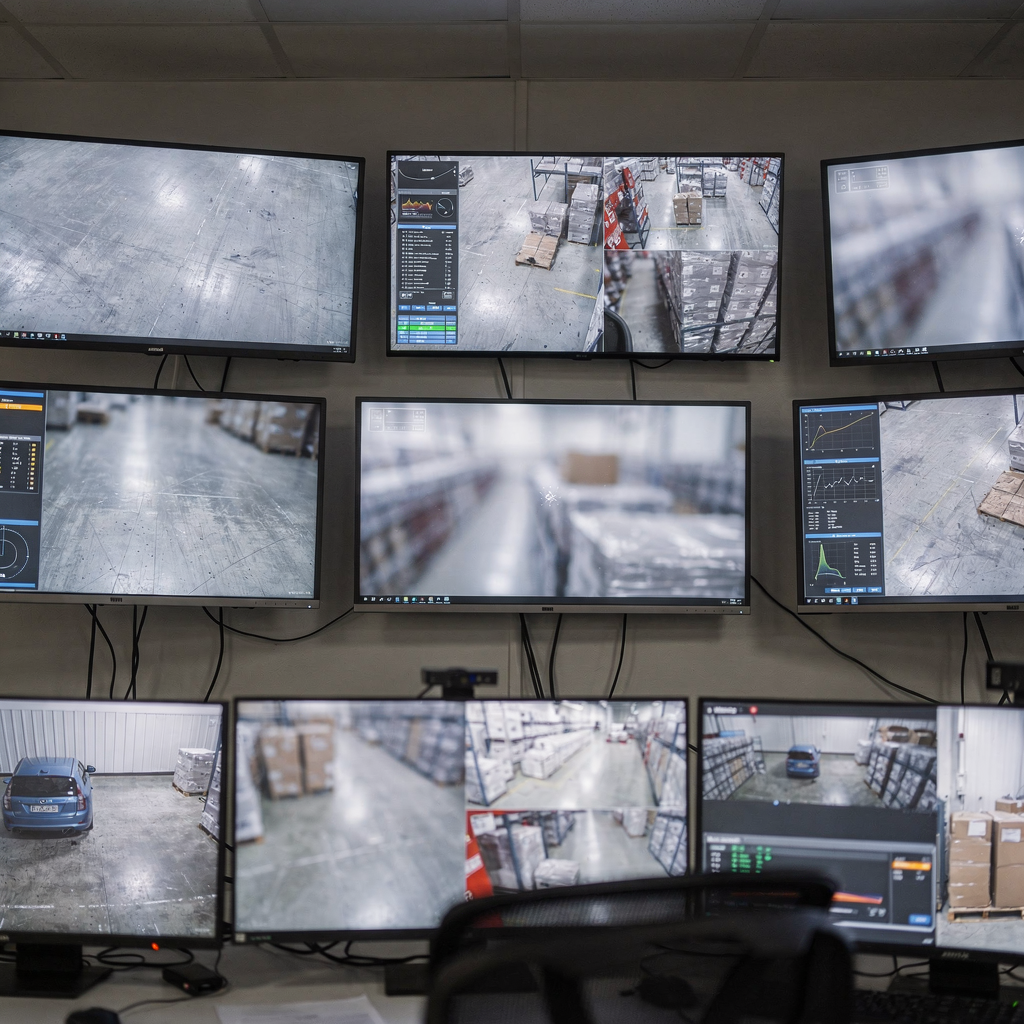
Real-time processing changes how teams act. Real-time systems analyse video feeds as frames arrive. They identify threats, and then raise an alert or start a workflow. When seconds count, this immediate loop improves outcomes. Real-time insights support both security responses and business decisions. They inform crowd control, gate management, and resource allocation.
Surveillance feeds generate operational insights beyond alarms. Heat maps reveal customer flow and hot spots. Dwell time metrics highlight bottlenecks and inefficiencies. These data points help retailers optimize store layouts and staffing. In transport hubs, stopped-vehicle detection helps clear congestion quickly, which improves safety and throughput. For a deeper example of flow analytics applied to occupancy, read our piece on heatmap occupancy analytics in airports.
Real-time also aids investigations. When an incident unfolds, control rooms can track assets and people across cameras. That capability cuts the time spent hunting through hours of recorded video. Instead, teams use event metadata to jump to the exact clip. This approach reduces response cycles and lets operators verify whether an alert requires escalation.
Surveillance cameras provide continual observation, and they feed AI models that produce recommended actions. For operators, the combination of video analysis and integrated access control systems creates a fast path from detection to decision. When an alert triggers, the system can cross-check badge logs and camera tracks to confirm access anomalies. This cross-correlation turns detections into contextualised insight, which improves both safety and operational efficiency.
Even simple automation reduces workload. For instance, an AI model that flags unattended baggage can create a pre-filled incident report. Then, a human reviews and closes the case, or the system escalates if the risk persists. This flow shows how surveillance and real-time data make control rooms more effective. It also illustrates the benefits of integrating video feeds with existing enterprise systems.
AI vision within minutes?
With our no-code platform you can just focus on your data, we’ll do the rest
Extract data insights from cctv footage with advanced video surveillance analytics
Advanced analytics turn hours of footage into concise reports. Techniques such as motion clustering group related activity, and heat mapping visualises density across time. Facial recognition supports identity tasks, while object-left-behind detection flags unattended items. By combining overlays and timelines, teams gain a clear account of what occurred and why.
From these techniques teams can extract specific data insights. Dwell time shows how long people linger in key zones. Unusual behaviour models flag deviations from established patterns. Bottleneck analysis reveals where queuing builds and how flows stall. These outputs become KPIs for operations teams, and they also feed continuous improvement cycles.
Market growth confirms the business case. The global video surveillance market is projected to expand with a compound annual growth rate near 10–12% through 2026, which reflects rising demand for AI-powered analytics in CCTV systems according to industry forecasts. Vendors report that smarter analytics reduce incident costs and improve recovery times.
Research highlights the enabling technologies. Image processing, pattern recognition, and digital signal processing underpin these capabilities according to scientific reviews. As one industry guide explains, “Video analytics cameras essentially understand movement, enabling them to differentiate between normal and abnormal activities” as Avigilon describes. That understanding lets systems prioritise events and surface valuable insights to operators.
Analytics turns raw video into actionable summaries. For example, our platform combines detection events with a Vision Language Model to produce human-readable descriptions of incidents. Operators then query recorded video in plain language, which speeds forensic work. For hands-on cases, see our forensic search in airports example that showcases search across recorded timelines.
Camera innovations: cctv analytics and video analytics solutions utilising ai
Camera hardware evolved fast. High-resolution sensors, HDR imaging, and onboard processors now ship in mainstream devices. Edge computing lets models run close to the sensor, and that reduces latency and bandwidth. Cameras send events instead of continuous streams, which lowers cost and keeps recorded video local. This architecture helps organisations meet data privacy and compliance goals.
Modern video analytics solutions mix edge inference with central reasoning. Some solutions provide simple detection; others integrate with AI agents and Vision Language Models. The balance between on-device and server-based processing depends on use case, and on constraints like bandwidth and retention policies. For many deployments, a hybrid model gives the best trade-off between speed and scale.
When comparing offerings, consider three dimensions: detection quality, explainability, and integration. High-quality detection reduces false alarms. Explainable models and transparent logs help operators trust results. Tight integration with VMS and access control systems lets AI recommend actions that match policy. Our VP Agent Suite emphasises these elements by exposing structured event data and by running models on-prem to avoid cloud video transfers.
Deployment considerations include bandwidth, storage, and lifecycle management. Cameras with AI require firmware and model updates. Organisations should plan for model retraining to adapt to site-specific conditions. For airport deployments, solutions like thermal people detection or ANPR/LPR offer specialised capabilities; see our resources on thermal people detection in airports and ANPR/LPR in airports for examples.
Camera analytics now span from perimeter breach to PPE detection and to crowd density. A modern security surveillance approach uses both device-level intelligence and central reasoning layers. This combination turns cameras into sensors that produce high-quality data and ready-to-use events for analysts and for automation.
AI vision within minutes?
With our no-code platform you can just focus on your data, we’ll do the rest
Use case in video surveillance: turning information into actionable insight and data for better security
Real-world examples show how analytics produce value. In retail, flow analysis identifies hot aisles and cold spots. By analysing patterns, stores can optimize product placement and checkout staffing. When teams combine these results with POS data, they measure lift from layout changes. Such interventions increase conversion and reduce queue times.
Transport networks see benefits too. Stopped-vehicle detection reduces incident dwell time on roads, and improves throughput. When an alert is validated, traffic management systems change signals or dispatch clearance teams. These quick interventions reduce secondary collisions and delays. For a transport-specific illustration, our vehicle detection and classification work highlights automated handling of vehicle events in complex environments vehicle detection and classification in airports.
Public safety gains from analytics-driven policing. Data for better policing strategies comes from crowd density, movement trends, and suspicious behaviour flags. Analysts use this evidence to allocate patrols, adjust checkpoints, and prevent incidents before they escalate. When AI agents provide explanations alongside alerts, commanders act with more confidence.
Turning information into actionable outputs requires end-to-end design. Detections must map to procedures, and those procedures must link to workflows. visionplatform.ai focuses on that gap. Our platform converts events into recommended steps and, when policy allows, into automated actions. This reduces manual steps and lowers the time per alarm.
Successful deployments also measure ROI. Organisations report fewer false alarms, shorter case resolution times, and improved resource utilisation. These gains justify investment in advanced analytics. Analytics can help shift security from reactive monitoring to proactive management, and they can provide operational metrics that guide long-term improvements.
Building robust video analytics systems: best practices and strategies
Start with architecture. Choose between on-premise, cloud, or hybrid models based on compliance and latency needs. On-premise keeps recorded video within the site, which eases EU AI Act concerns and reduces data egress. Hybrid models let you scale AI processing while retaining sensitive footage locally. For many critical sites, an on-prem Vision Language Model gives both performance and control.
Next, plan for calibration and maintenance. Models must be tuned to site lighting, camera angles, and local behaviours. Regular validation prevents drift and maintains accuracy. Train staff to interpret analytics outputs and to respond to suggested actions. Human-in-the-loop processes ensure that automated workflows remain aligned with policy.
Scalability requires consistent data pipelines. Stream events as structured metadata so downstream systems can consume them. Use message brokers and APIs to integrate with enterprise tools. visionplatform.ai exposes events via MQTT, webhooks, and APIs so teams can build dashboards, BI reports, and automated OT integrations.
Address privacy and data quality from the start. Define data retention, anonymisation, and access controls early. High data quality produces reliable analytics results. Poor input data hurts model performance, and that leads to mistrust. Keep governance tight, and audit logs clear, so your security system can demonstrate compliance.
Finally, adopt continuous improvement. Collect feedback on analytics results, update models with site-specific samples, and expand capabilities gradually. Use analytical insights to refine camera placement and to reduce blind spots. A robust programme turns surveillance systems has become a source of operational intelligence, and not merely a record store. When you follow these steps you build a resilient system that delivers consistent, actionable outcomes.
FAQ
What is video analytics and how does it work?
Video analytics applies algorithms to video streams to detect, classify, and track objects or behaviours. It uses techniques like object detection and pattern recognition to turn footage into searchable data and alerts.
Can AI run on existing cameras or do I need new hardware?
Many existing cameras support edge modules or can connect to nearby edge devices that run AI. However, some advanced functions perform best on modern cameras with higher resolution and onboard compute.
How fast are real-time alerts from analytics systems?
Real-time alerts typically appear within seconds of detection, depending on model complexity and network latency. Faster responses occur when models run at the edge and when alerts map directly to pre-defined workflows.
How do I balance surveillance with data privacy?
Set retention limits, use anonymisation where appropriate, and keep models and footage on-premise when required. Clear policies and audit logs help demonstrate compliance with regulations such as the EU AI Act.
What operational insights can I gain beyond security?
Analytics provide metrics like dwell time, flow patterns, and density heat maps that support store layout optimisation and staffing decisions. These operational insights drive productivity and customer experience improvements.
How do I search hours of footage quickly?
Search uses metadata and textual descriptions generated by Vision Language Models to find moments based on natural language queries. This reduces time spent scrubbing recorded video and speeds investigations.
What is the ROI for deploying advanced analytics?
ROI comes from reduced incident costs, fewer false alarms, and improved resource allocation. Market studies show strong growth in adoption and benefits tied to faster response and lower manual workload.
Which integrations matter for a robust system?
VMS integration, access control systems, and APIs for BI and OT all matter. These connections let analytics verify events and support automated or human-in-the-loop actions.
How do I maintain model accuracy over time?
Regular calibration, site-specific retraining, and feedback loops maintain performance. Monitor false positives and negatives and update models with representative samples from your environment.
Can analytics recommend or take actions automatically?
Yes. Systems can pre-fill reports, notify teams, or trigger workflows. When policy allows, they can even execute low-risk, repeatable actions autonomously while preserving audit trails.