ai agent and agentic ai: Purpose-Built Control Room Intelligence
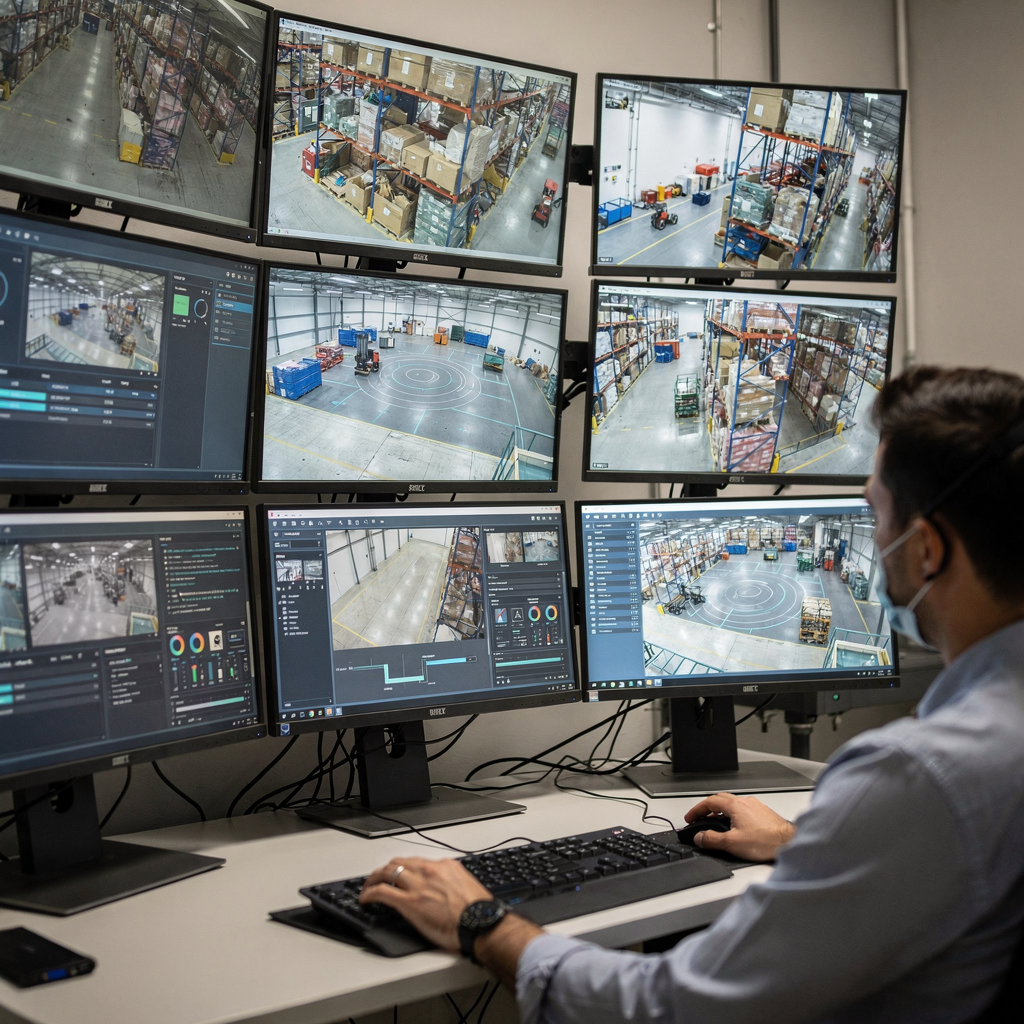
First, define the VP Agent as an AI system designed for control room use. Next, think of it as a purpose-built ai agent that operates like a virtual VP of operations. It monitors feeds, reasons over context, and recommends actions. For example, VP Agent Reasoning correlates video analytics, VMS data, and procedures to explain alarms and reduce false positives (VP of Sales AI Agents – Relevance AI). Then, contrast agentic ai with traditional assistants. Traditional AI assistants follow prompts and return suggestions. By contrast, agentic ai acts autonomously. It validates, forecasts, and triggers follow-up workflows when policy allows. Thus, agentic systems provide continuous monitoring and active decision support. Also, VP Agent uses a vision language model and structured inputs to translate camera feeds into searchable descriptions. This enables natural language queries and forensic search, which helps control room operators find incidents quickly and correctly. visionplatform.ai built this approach to move beyond raw detections. It converts VMS data into reasoning-ready signals and preserves data on-prem for compliance and audit trails. Because of that, control room teams gain situational awareness and reduced cognitive load. The VP Agent interacts through a simple UI. Operators can ask it to prioritise alerts, present verified incidents, or pre-fill incident reports. The system supports role-based permission and human-in-the-loop review. In addition, VP Agent Actions can act automatically for low-risk scenarios or require an operator for sensitive ones. Finally, this architecture supports a clear lifecycle for ai models and live production rollout. It helps teams deploy ai safely while keeping full control over data and models.
control room automation: Achieving full control in Operations
First, control room automation delivers measurable benefits for control room operations. It provides real-time visibility and reduces manual steps. For instance, organizations report up to a 30% improvement in forecasting accuracy and a 25% cut in administrative time when they adopt agentic agents (Relevance AI). Also, a PwC survey found that 88% of senior executives plan to increase AI budgets, driven by AI agent adoption (PwC). Therefore, automation can accelerate response times and reduce error rates across security and operations. Next, control systems that combine VMS, SCADA, and access control let the VP Agent reason with multiple inputs. This reduces false alarms and improves predictive maintenance signals. visionplatform.ai converts video into contextual descriptions. As a result, control room operators can search video history with natural language and verify incidents faster. Use cases include perimeter breach detection, intrusion detection, and thermal people detection in airports; these are typical examples where automation yields clear wins. For instance, forensic search accelerates investigations (forensic search). Then, examine a case study from a large facility. The site used VP Agent Actions to pre-fill incident reports and notify teams via teams and slack. This reduced time-to-closure and improved auditability. Finally, automation platforms that integrate generative and predictive models can streamline decision-making, maintain accuracy and confidence, and allow operators to focus on higher-value tasks rather than routine tasks.
AI vision within minutes?
With our no-code platform you can just focus on your data, we’ll do the rest
integration and access control for seamless enterprise ai workflow
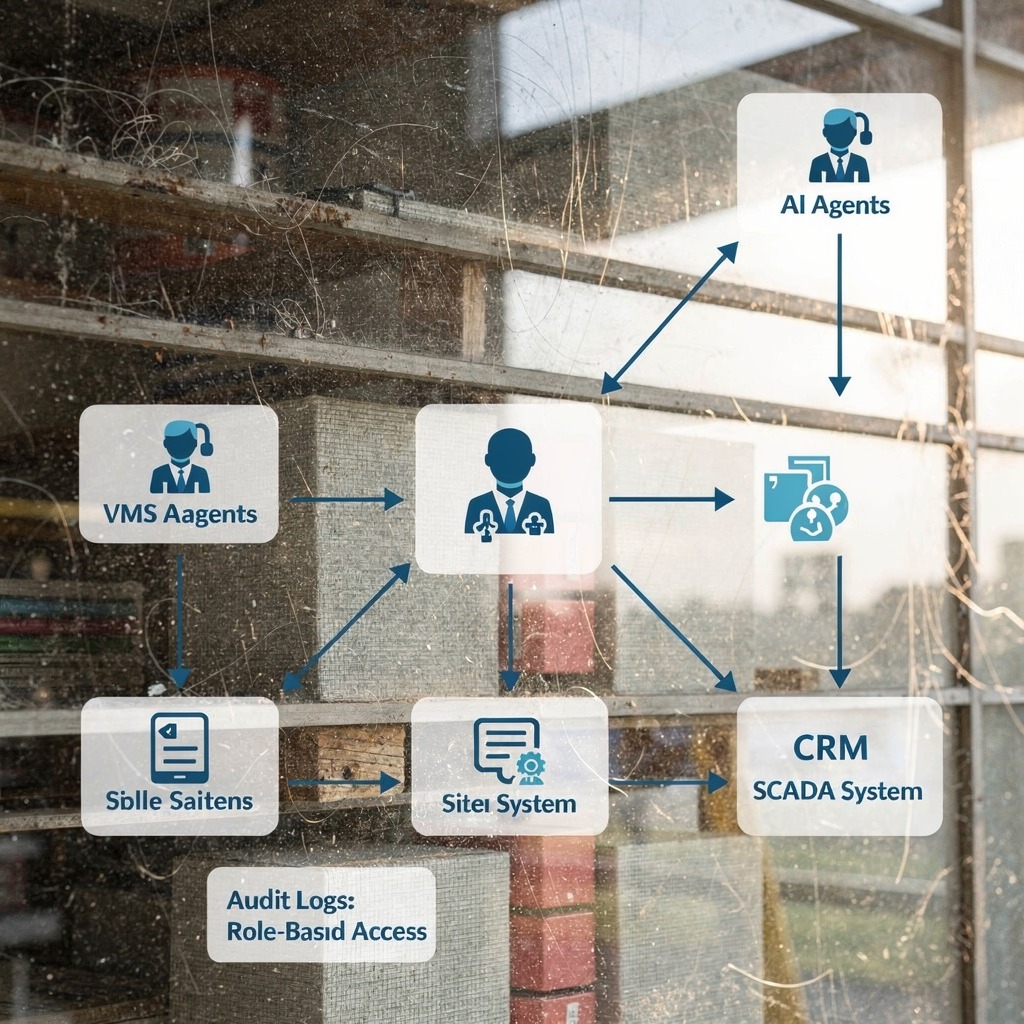
First, successful integration matters. VP Agent links to CRM, ERP, VMS, and external systems via APIs and webhooks. It supports integration with existing camera feeds, ONVIF streams, and MQTT event buses. This seamless integration helps teams create end-to-end workflows that tie detection to action. Next, the platform enforces role-based interfaces and permission rules. Each operator receives access that matches their duty. For example, control room operators can view incident details while supervisors can approve automated actions. This role-based design ensures audit trails and accountability. In addition, data security and compliance receive priority. Visionplatform.ai keeps video and models on-prem to meet the EU AI Act and customer policies. For reference, Microsoft points out that deploying enterprise-grade agents is essential for secure and scalable control environments (Microsoft). Therefore, teams can maintain auditability while enabling ai-driven recommendations. Also, the VP Agent exposes procedures to verify and logs each step for auditors. This provides traceability across the lifecycle of an event from detection to closure. Then, consider system-level controls. Access control integrates with existing badge systems and SCADA alarms. The VP Agent can correlate access logs with camera evidence to present verified incidents. It reduces false positives and gives operators a clear sequence of facts. Finally, the platform supports software and hardware validation for production control. This ensures stable live production deployments and helps teams deploy ai with confidence.
end-to-end automation with ai-powered workflow management
First, VP Agent automates routine tasks across the control room. It can pre-fill incident reports, create tickets, and notify teams. Also, the agent can automate report generation and scheduling. These agents can automate low-risk actions while keeping humans in the loop for complex cases. The system uses a vision language model to turn camera streams into textual descriptions. As a result, operators can search video with natural language queries. For example, a user might ask for a “person loitering near gate after hours” and receive clips and suggested actions. Next, workflows trigger autonomous actions when confidence thresholds are met. VP Agent Actions follow policy and permission rules. If the policy allows, the agent executes notifications or closes false alarms. If not, it hands the case to an operator. This balance supports human-in-the-loop control and maintains audit trails. In addition, performance metrics track time per alarm, false positive rate, and accuracy and confidence of detections. Teams use these metrics to refine ai models and operational playbooks. Continuous optimisation happens through model retraining, rules tuning, and regular feedback from control room operators. visionplatform.ai emphasizes model lifecycle management, on-prem retraining, and seamless integration with Milestone VMS. Furthermore, the platform supports predictive maintenance and anomaly detection so that the same workflows can trigger maintenance tickets when equipment health degrades. Finally, this end-to-end approach saves time and scales monitoring without adding staff. It turns detections into decisions and improves production stack reliability.
AI vision within minutes?
With our no-code platform you can just focus on your data, we’ll do the rest
agents at scale and ai integration in the Control Room environment
First, plan for agents at scale. Deploying multiple agents across sites requires consistent deployment patterns. Teams should standardise configuration, monitoring, and rollback procedures before they deploy ai. Next, use a modular control system architecture. This separates the vision language model, event broker, and action engine. It also supports high availability and graceful degradation in live production. For reliable ai integration, consider edge deployment on NVIDIA Jetson or GPU servers for heavy workloads. Visionplatform.ai supports both options and provides APIs for event streaming and webhooks. Then, manage governance and monitoring. Implement dashboards that show agent health, model drift indicators, and anomaly rates. These metrics help teams prioritise model retraining and maintenance. Also, define escalation rules and humans in the loop for high-risk workflows. In addition, adopt security practices that align with the EU AI Act and internal compliance. Include audit trails for vp agent actions and operator approvals. For example, a Microsoft example notes that enterprise-grade agents require trust and training to scale effectively (Salesforce). Therefore, governance must include training, documentation, and procedures to verify outputs. Finally, focus on the operational lifecycle: deploy ai, monitor performance, update models, and repeat. This lifecycle supports continuous improvement. Use agents at scale to streamline control room operations while preserving oversight, and ensure that multiple agents coordinate rather than compete.
frequently asked questions on VP Agent and control room automation
Below are frequently asked questions that answer practical concerns about VP Agent and control room automation. These address ROI, security, industry fit, and future enhancements. For additional details on specific detection types, see intrusion detection and perimeter breach detection resources (intrusion detection) and (perimeter breach detection). Also explore forensic search capabilities for investigations (forensic search).
What is the typical ROI and time to value for VP Agent deployments?
ROI varies by site, but adopters report measurable gains within months. For example, some deployments improved forecasting and reduced administrative time by up to 25–30%, so time to value can be under six months when integration is well scoped.
How are security, privacy and compliance addressed?
VP Agent supports on-prem deployment to keep video and models inside the customer environment. This architecture supports EU AI Act alignment, auditability, and role-based access control plus detailed audit trails for vp agent actions.
Which industries benefit most from VP Agent?
Sectors with 24/7 monitoring benefit most, including airports, petrochemical plants, and critical infrastructure. Use cases include people detection, ANPR/LPR, and predictive maintenance where situational awareness improves safety and uptime.
Can VP Agent work with existing VMS and camera systems?
Yes. The platform supports integration with leading VMS platforms, ONVIF cameras, and RTSP streams. It exposes VMS events so ai agents directly access the data they need for reasoning and action.
How does VP Agent reduce false positives and improve verification?
The agent correlates video evidence with access control, logs, and procedures to present verified incidents. This cross-checking reduces false positives and gives operators context and confidence.
What level of autonomy can be expected from VP Agent?
Autonomy ranges from recommendations to full automated actions for low-risk scenarios. Humans remain in control via permission rules, and human-in-the-loop checkpoints exist for sensitive decisions.
How do you monitor and maintain agents at scale?
Use central dashboards for health, model drift, and anomaly detection metrics. Also, set up standard deployment stacks and rollback procedures to keep live production stable while you scale ai.
Does VP Agent support natural language search and forensic analysis?
Yes. The vision language model enables natural language queries across video streams and timelines. This makes forensic search faster and more intuitive for operators.
What about integration with collaboration tools and workflows?
VP Agent integrates with teams and slack for notifications and escalations. It also sends events to ticketing and ERP systems so workflows tie detection to business processes.
What future enhancements are planned for VP Agent?
Planned work includes expanded generative features, improved predictive maintenance, and controlled autonomous operation at scale. The roadmap focuses on tighter ai integration, better UI, and clearer audit trails.