ai control room: ai integration and ai-powered seamless automation
The AI control room is a focused environment where monitoring, analysis, and action happen together. VP Agent sits at the center of that environment. The VP Agent Suite turns cameras and VMS data into a reasoning layer so teams can make informed decisions faster. For many organisations, this replaces manual cross-checking of logs with context-rich explanations and suggested responses. visionplatform.ai helps by connecting camera feeds, VMS events, and procedures so operators get context, not raw noise.
At its core, AI integration ties together databases, APIs, VMS, and on-prem models. The VP Agent ingests events from VMS systems and exposes them as structured data for agents to reason about. This enables seamless integration with workflows, dashboards, and OT systems, and it avoids sending video to cloud services. Many deployments favour on-prem Vision Language Model technology to keep video inside the customer environment for compliance and auditability.
When VP Agent runs in a control room, the system provides real-time insights and anomaly alerts. The agent monitors pipelines of events, correlates signals across systems, and notifies the right teams when something needs attention. The agent provides explanations such as what was detected, what confirmed it, and why it matters. This contextual output reduces false positives and shortens time to resolution.
Numbers show tangible impact. Sales-facing VP Agent templates report up to a 30% lift in forecast accuracy and a 25% reduction in time spent on manual analysis, which shows how AI-driven analysis accelerates decisions and reduces manual effort (VP of Sales AI Agents – Relevance AI). Also, a 2025 survey found 88% of senior executives plan to increase AI budgets, signalling rapid adoption for control room functions (AI agent survey: PwC).
control room automation with agentic ai: end-to-end operations in 2025
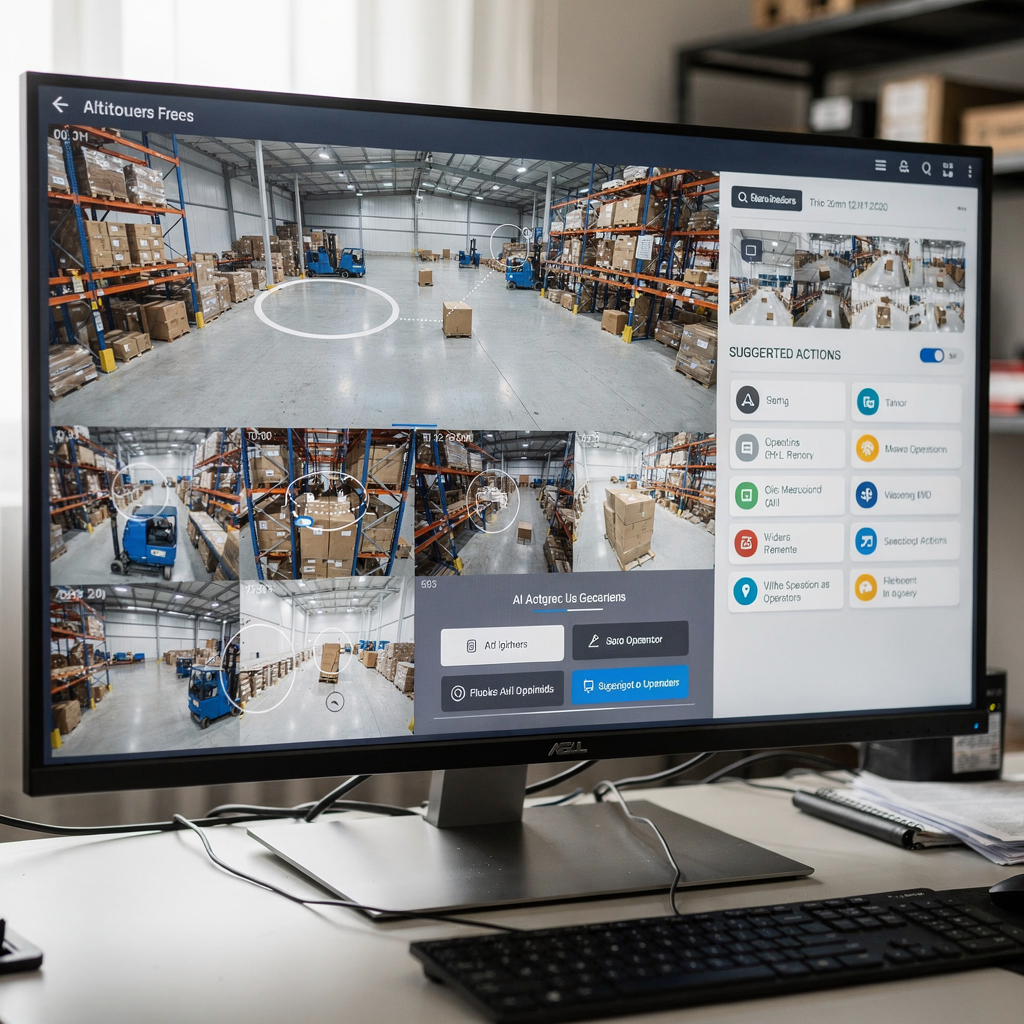
Control room automation becomes continuous monitoring plus action. Rather than only flagging detections, the system verifies and suggests next steps. VP Agent Reasoning correlates video, VMS metadata, access logs, and procedures to present verified incidents instead of raw detections. That shift reduces cognitive load for control room operators and enables faster, confident responses.
Agentic AI refers to systems that act as autonomous digital workers. An agentic AI can trigger a workflow, pre-fill incident forms, or hand-off a task to a human. Grammarly’s overview of agentic AI highlights that agents can rewrite communications, trigger workflows, and annotate documents (Agentic AI 101 – Grammarly). In a control room, agentic systems perform repetitive steps while keeping humans in the loop for risky decisions.
End-to-end orchestration covers detection to closure. A VP Agent can pre-fill incident reports, call up related camera history, notify teams and slack channels, and log actions in an audit trail. The orchestration includes branching logic, role-based approvals, and escalation rules. For low-risk routines, VP Agent Auto can automate routine responses to recurring events while leaving higher-risk events for operators.
Looking ahead to 2025, enterprise investments will expand. The PwC survey shows 88% of executives plan to grow AI budgets, and many of those investments target control room automation and agentic systems (AI agent survey: PwC). For organisations such as airports, this means improved forensic search across camera histories and faster verification of alarms — see an example forensic search capability in our airport-focused work (forensic search in airports).
AI vision within minutes?
With our no-code platform you can just focus on your data, we’ll do the rest
ai agent orchestration: agents at scale and enterprise ai for full control
AI agent orchestration organizes many specialist agents so they act as a single, coherent system. The VP Agent architecture supports multiple agents that each focus on tasks: one for reasoning, one for actions, another for search. This multi-agent model helps scale AI across dozens of pipelines and thousands of camera feeds. In practice, agents at scale run parallel checks and hand-offs while maintaining a single view for operators.
Enterprise AI use cases span sales forecasting, predictive maintenance, and production control. The VP Agent pattern adapts to each control system, from SCADA to VMS, so teams get unified situational awareness. For example, predictive maintenance routines can prioritise assets with trending anomalies, freeing teams to focus on critical items. Use cases include perimeter breach detection and resource optimisation across shifts.
When AI agents directly integrate with existing operational stacks, they can detect bottlenecks and propose fixes before service degrades. The VP Agent’s orchestration layer tracks lifecycle state for incidents and carries out vp agent actions such as generating reports or triggering external APIs. This gives operators full control with proactive remediation and fewer escalations.
At scale, the system also supports role-based access and role-based access controls so only authorised users can approve sensitive automated steps. For compliance, decision logs and audit trails capture user attribution and version history. That way, teams can scale AI while preserving oversight and auditability.
access control and automate agentic workflow with VP Agent
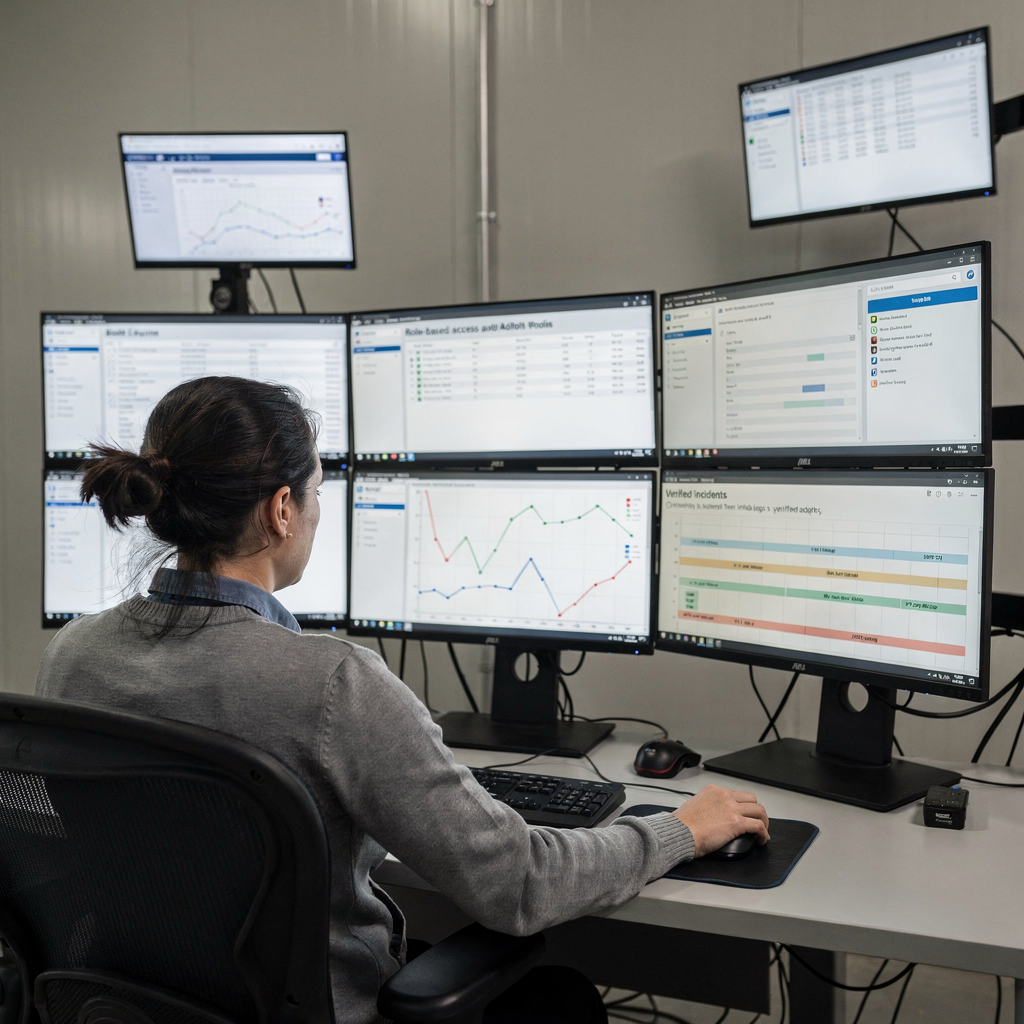
Secure deployments begin with robust access control and permission models. VP Agent enforces role-based access to actions so agents only perform what they are allowed to. Role-based policies prevent a routine verification agent from taking high-risk production control steps without explicit approval. This reduces operational risk while enabling automation.
You can automate routine tasks like email rewrites, notify the right teams, or pre-fill incident reports. The VP Agent can create incident templates and execute them with human sign-off. For example, after a verified intrusion, the agent can pre-fill incident forms and notify security teams, while also linking the event to historical camera clips for easy review. Our Milestone VMS AI Agent exposes VMS events as a data source so agents act on the same facts that operators see.
Agentic workflows include branching logic and humans in the loop. Low-risk events may run through ai-assisted automation to close or archive. Higher-risk events follow procedures to verify and escalate. The system logs each decision and action for audit trails and forensic review. This auditability satisfies both security teams and auditors.
Access control extends to how you deploy AI. Many organisations choose on-prem deployment to meet eu ai act requirements. visionplatform.ai offers on-prem Vision Language Model processing and tight VMS integration so video never leaves the site, which supports auditability and reduces cloud dependency. For teams operating in petrochemical facilities or airports, this can be a decisive compliance advantage. For extra context about specific detection modules, see our perimeter breach and intrusion detection content (perimeter breach detection in airports) and our intrusion detection overview (intrusion detection in airports).
AI vision within minutes?
With our no-code platform you can just focus on your data, we’ll do the rest
integration of artificial intelligence: audit trails and anomaly detection
Integration best practices require syncing on-premise and cloud data sources safely. Start by mapping VMS event schemas, camera metadata, SCADA logs, and user procedures. Then create secure connectors using apis, webhooks, or MQTT streams so AI models get accurate inputs. visionplatform.ai supports MQTT and webhooks, plus tight VMS integration for a reliable production stack.
Artificial intelligence methods for anomaly detection combine statistical models, vision language outputs, and context from external systems. A vision language model turns video into searchable text, so analysts can search in natural language. For anomaly detection, VP Agent weights evidence across camera feeds, access logs, and historical behaviour to reduce false positives and prioritise likely incidents. The agent presents verified incidents instead of raw detections, which reduces false positives and boosts accuracy and confidence.
Audit trail capabilities include decision logging, version history, and user attribution. Every automated action and human override records a timestamped entry so investigators can follow the lifecycle of an incident. That auditability helps when compliance teams review procedures to verify incident handling. In trials, teams report fewer chained errors and shorter investigation cycles when they rely on AI-enriched logs for context.
Operational metrics matter. By combining anomaly detection with structured logs, organisations can measure reductions in false positives and time saved in investigations. The VP Agent’s contextual outputs and situational awareness let teams prioritise alerts that truly need human attention. This saves operator time and improves the overall quality of responses across control room operations.
ai: the next frontier for automation
AI is the next frontier for automation in control rooms. The shift from raw detections to reasoning and action transforms how teams manage incidents. Intelligent assistants and agentic systems let operators focus on exceptions while routine tasks get handled automatically. This approach streamlines workflows and reduces time spent on repetitive work, so teams scale without proportional headcount increases.
Future trends point to more agents at scale, better vision language model integration, and stronger orchestration across tools. Organisations will integrate generative AI for richer incident summaries, and enterprise AI platforms will tie together VMS, SCADA, and business systems for end-to-end visibility. As firms deploy AI more broadly, they will demand auditability, role-based controls, and alignment with the eu ai act.
Strategic advantages are clear: improved agility, cost savings, and data-driven decision-making. The VP Agent Suite is designed to create intelligent, explainable outputs from camera feeds and VMS events, so teams can make informed decisions with less friction. If your control room must scale monitoring volume without sacrificing accuracy, consider how VP Agent can streamline processes, present verified incidents, and reduce time to resolution.
Start by mapping your production control needs and pilot a small deployment. Then expand with agents that automate routine checks, pre-fill incident reports, and integrate with ticketing and notification systems. By 2026, mature programs will run agents in live production and support continuous improvement across the organisation. For leaders ready to explore practical next steps, visionplatform.ai helps convert detections into AI-assisted operations with an architecture that keeps software and hardware inside your environment while maintaining auditability and compliance.
FAQ
What is a VP Agent and how does it differ from standard AI tools?
A VP Agent is an AI agent that acts as a control room assistant with reasoning and action capabilities. Unlike isolated AI tools, it integrates VMS data, vision language outputs, and procedures to present contextual, actionable insights.
Can VP Agent reduce false alarms in a busy control room?
Yes. VP Agent verifies anomalies across multiple data sources and presents verified incidents instead of raw detections, which reduces false positives. The agent also logs decision steps so teams can audit how conclusions were reached.
How does VP Agent handle sensitive video data while meeting compliance?
VP Agent supports on-prem deployment and keeps video processing inside the customer environment to align with the eu ai act and reduce data export risk. This approach preserves audit trails and ensures video never leaves secure systems unless configured to do so.
What routine tasks can VP Agent automate?
VP Agent can automate routine tasks such as pre-fill incident reports, rewrite notification emails, and trigger workflows in response to verified alerts. Operators retain control through role-based approvals and humans in the loop for high-risk events.
How do AI agents scale across large operations?
Agents at scale run specialist agents in parallel, each handling specific pipelines and camera feeds. Orchestration coordinates their actions and provides a unified UI and audit log so control room operators maintain situational awareness.
What integrations are required for VP Agent to work with my existing systems?
VP Agent integrates with VMS platforms, ONVIF and RTSP cameras, MQTT, webhooks, and apis. It is designed for integration with existing software and hardware and can be deployed on GPU servers or edge devices.
Does VP Agent support natural language search of video history?
Yes. The Vision Language Model converts video to human-readable descriptions, enabling natural language search across timelines and cameras. Users can query the system in plain language to find relevant incidents.
How does the system ensure secure access to automated actions?
Access control uses role-based access and permissions so agents only act within authorised scopes. All automated actions and approvals are recorded for auditability and forensic review.
What is the role of humans in an agentic workflow?
Humans remain central for high-risk decisions and for tuning policies. Humans in the loop can review agent recommendations, approve escalations, and adjust procedures to improve automation safety.
Where can I learn more about specific detection features like perimeter breaches or forensic search?
visionplatform.ai provides detailed pages on specific capabilities such as perimeter breach detection and forensic search in airports. These resources explain how detections, context, and actions combine to support faster, more accurate responses (perimeter breach detection in airports, forensic search in airports).