Solution overview: AI video analytics solutions in Genetec Security Center
Genetec Security Center offers one platform that unifies video, access control, and analytics. Also, it simplifies complex sites and gives operators a single view for incidents and routine checks. For example, the suite provides actionable event summaries and auditable logs that help teams make decisions faster. However, many organisations want more than alerts; they want context. Therefore, AI video analytics add semantic understanding to camera streams and turn hours of footage into searchable metadata.
This solution overview highlights how enterprise-grade analytics modules plug into a modern video management system to detect people, vehicles, and behaviours. Additionally, kiwivision video analytics and kiwivision™ video analytics operate as analytic engines inside that ecosystem. They deliver object classification, people detection, loitering detection, perimeter intrusion, ANPR and dwell time metrics. In practice, operators receive real-time alerts and rich contextual descriptions of incidents that require human review. The system can run on-prem processing to keep data local and to meet EU AI Act constraints; see how Genetec ties into broader compliance goals here.
visionplatform.ai complements this approach by adding a reasoning layer on top of video analytics. Our VP Agent turns structured events and metadata and alarms into natural language descriptions, and then it uses AI agents to recommend responder actions. Consequently, teams focus on what matters and spend less time switching between screens. Also, integrating forensic search with natural language search helps investigators find relevant clips across a campus in minutes. For a market view on adoption, note that the VSaaS market is growing rapidly with a projected CAGR that exceeds 20% over the next five years (source). Finally, this section sets the scene for deployment and integration steps covered next.
AI video integration and VMS deployment
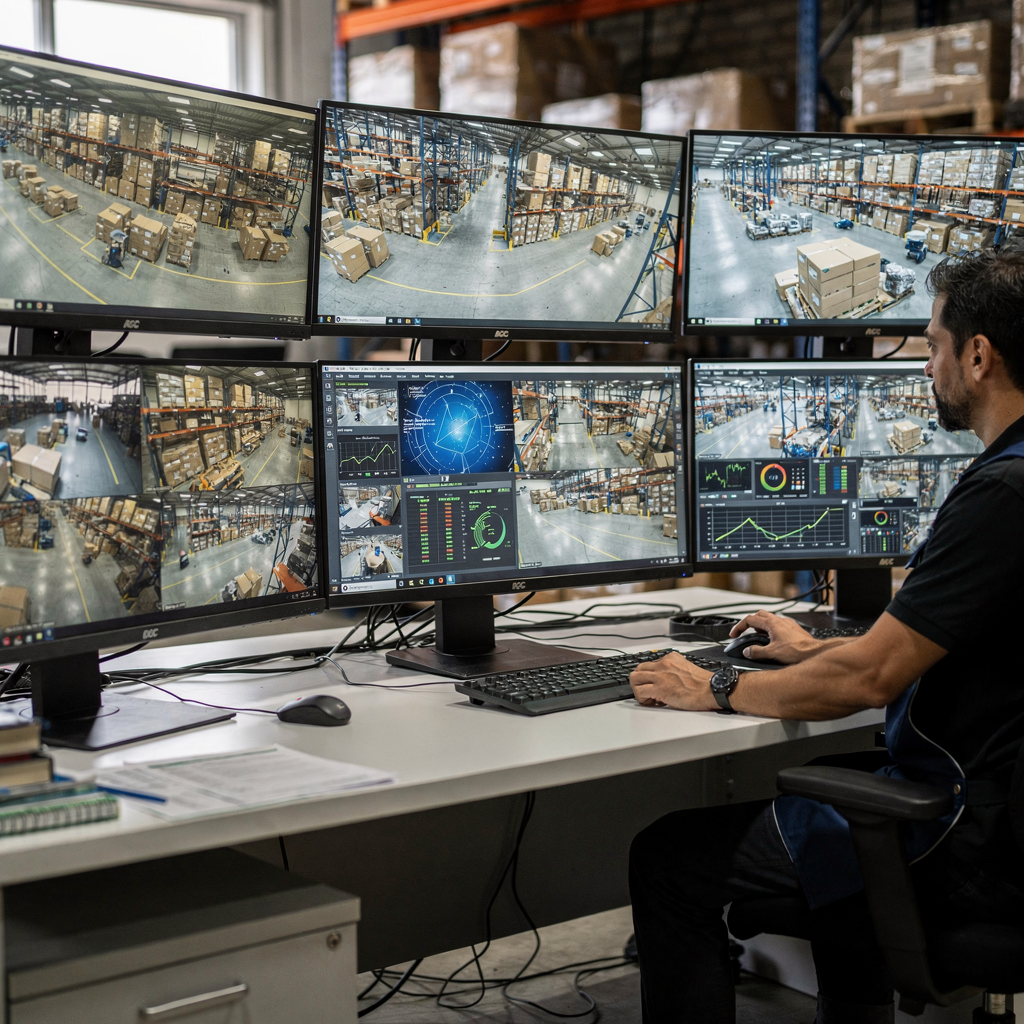
Integrating analytics modules into your VMS starts with clear objectives and a phased plan. First, map camera streams, identify critical zones, and choose whether to run models on edge devices or servers. Next, configure cameras and the modern video management system to accept analytic events, and ensure modules include structured outputs such as object type, bounding boxes, and timestamps. Also, modules include health checks and system status feeds so administrators can monitor deployment health and spot failing sensors early.
For real-time performance, use on-prem processing on GPUs or lightweight edge devices like NVIDIA Jetson. This reduces latency and keeps data local; in other words, you avoid unnecessary cloud transfers and support privacy rules. Additionally, model training can be tailored with local datasets to improve accuracy and reduce false alerts in site-specific conditions. During rollout, integrate alerts with your incident workflow and notification chains so responders know what to do next. The process must also link access control events and VMS logs; for instance, an unauthorized access attempt at a gate should tie a camera clip to a door event.
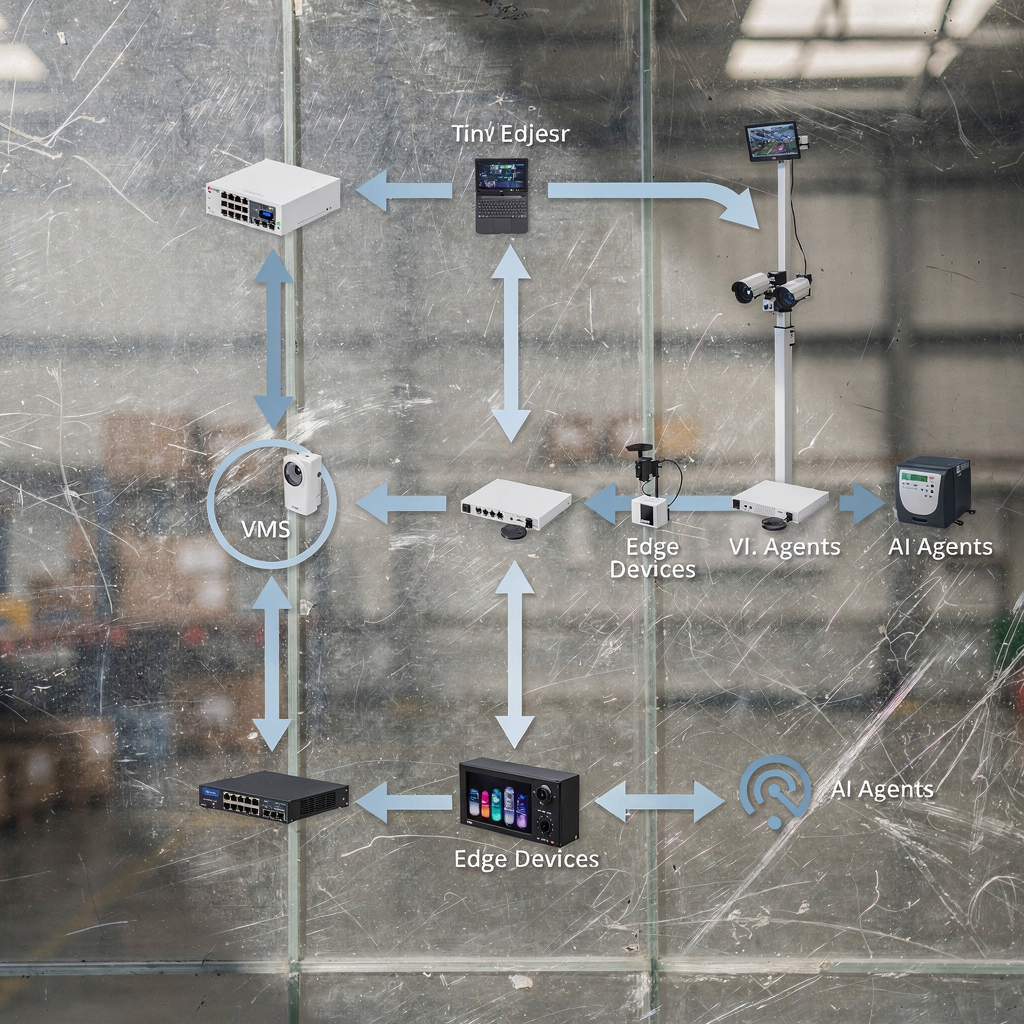
Deployment best practice includes ambient monitoring and automated system health checks that report camera uptime, bandwidth, and model drift. Moreover, ensure you have auditable logs for compliance and that the analytics modules expose metadata and alarms through MQTT, webhooks, or APIs. visionplatform.ai supports this approach and helps teams configure data flows and integrate AI agents for decision support. In addition, combining model retraining with scheduled checks preserves accuracy and performance over time. Finally, you gain resilience by distributing processing across servers and edge devices, and by validating integrations before you scale to large sites.
AI vision within minutes?
With our no-code platform you can just focus on your data, we’ll do the rest
Automation and operational efficiency through detection and intelligent search
AI-driven detection reduces the noise that overwhelms security teams, enabling better operational efficiency. For example, sophisticated people detection and object classification lets systems filter routine activity from potentially risky events. Also, automation can trigger instant alarm workflows and notifications so that responders receive real-time alerts only for incidents that require attention. The result is fewer false alarms and fewer false positives, which helps teams spend less time on meaningless checks.
Intelligent search transforms investigations. Instead of scrubbing hours of footage, investigators use forensic search or natural language queries to find relevant clips quickly. In many deployments, intelligent search cuts investigation time by up to 50%, and it reduces monitoring costs by letting operators focus on verified incidents. Furthermore, smart filters and contextual verification mean initial detection is not the end; you get an explained alarm that correlates camera data with access control logs and other sensors. This contextual approach reduces operator fatigue and improves response accuracy.
Automation also supports workflows that pre-fill incident reports, notify on-call responders, or escalate to security managers. For example, when a potential perimeter intrusion is detected, the system can automatically task a patrol, create a video clip, and attach related access control events. Consequently, patrols are more efficient and there are fewer wasted patrols. visionplatform.ai adds reasoning and action recommendations so operators make decisions faster. In summary, better detection plus intelligent search equals measurable time savings and more consistent outcomes.
Features and benefits of KiwiVision video analytics
KiwiVision video analytics offers a rich set of capabilities that extend legacy motion detection and basic alarms. Core features include object classification, people counting in airports, people detection, ANPR, loitering detection, and behaviour analysis. Also, the suite supports multiple camera deployments and on-prem processing to keep sensitive footage and models local. Compared to motion detection, this approach yields higher accuracy and reduce false events by concentrating on meaningful behaviours rather than raw pixel change.
Benefits are tangible: faster response, accurate threat identification, and fewer false alarms. For example, advanced detection technology can detect suspicious behaviour and generate video clips with annotated metadata and alarms. In practice, operators receive a short clip, a description, and suggested actions. This structured event output allows teams to decide and act with more confidence. Additionally, the analytics provide metrics such as dwell time and people counting for operational planning.
KiwiVision integrates with modern VMS platforms and supports a modular architecture so you can tailor tailored models for specific environments. Modules include behavioural rules, object detection, and forensic search tools. Also, the system supports edge devices and server-based processing, and it exports events for dashboards or BI. If you want to learn more about forensic search in real settings, see our guide on forensic search in airports. Finally, these features and benefits translate into operational efficiency, fewer false alarms, and better use of security personnel.
AI vision within minutes?
With our no-code platform you can just focus on your data, we’ll do the rest
Key market application and use cases for ambient surveillance
Ambient surveillance uses passive monitoring to surface operational insights as well as security alerts. Use cases span transport hubs, energy plants, and retail sites. For example, people counting in airports helps with gate planning and staffing; similarly, people detection improves safety in busy terminals. In industrial sites, the system can flag PPE violations, detect potential threats at perimeter fences, and reduce reaction times to incidents that require immediate attention. Use cases include perimeter breach detection and unauthorized access scenarios where a camera clip is automatically matched to a door event.
The market demand for AI-based video analytics is strong. The VSaaS market growth shows operators increasingly prefer intelligent solutions that scale. In particular, large sites benefit from reduced monitoring costs and from ambient insights that support strategic decisions. Also, managers can track dwell time, people flow, and vehicle paths to optimise operations. The suite provides actionable metrics and supports model training for site-specific challenges.
In transport hubs, typical benefits include fewer wasted patrols, faster verification, and better queue management. For instance, object-left-behind detection and crowd density tools can reduce risk and improve passenger flow. Meanwhile, in the energy sector, enterprise-grade analytics with auditable logs and privacy rules provide compliance with regulations such as the EU AI Act. visionplatform.ai’s approach keeps data local and supports modular rollouts across camera feeds. In sum, ambient monitoring offers both security and operational intelligence for diverse key market application scenarios.
Scalability strategies and free consultation for AI automation
Plan a phased rollout to achieve scalability without disruption. First, pilot critical zones with a handful of cameras and integrate analytic outputs into existing incident workflows. Then, expand the deployment, adding modules and edge devices as needed. This modular architecture supports both small pilots and scaling to thousands of camera streams. Also, ensure you configure alerts and notification policies so that automation escalates correctly and sends the right data to the right responder.
Integrate with existing surveillance and access control systems to maximise ROI. For example, tie ANPR events to vehicle detection classification, and correlate badge swipes with camera clips to confirm unauthorized access. visionplatform.ai works with leading VMS platforms and supports integration via MQTT and webhooks. Additionally, on-prem processing options help you meet privacy rules and keep data local, which simplifies compliance with the EU AI Act.
To support rollout, request a free consultation so experts can assess your site, propose tailored models, and estimate monitoring costs. During consultation, teams focus on model selection, model training approaches, and deployment plans for edge devices and servers. Next, you will receive recommended workflows, sample configurations, and a roadmap that balances detection sensitivity with fewer false alarms. Finally, a well-scoped plan ensures teams focus on what matters, reduce time spent on low-value alerts, and scale consistently across multiple camera zones.
FAQ
What is AI video analytics and how does it differ from motion detection?
AI video analytics uses machine learning to recognise objects, behaviours, and patterns, whereas motion detection simply senses pixel change. Consequently, AI-based systems can detect suspicious activity and reduce false alarms compared with motion detection.
How does Genetec Security Center fit into an AI deployment?
Genetec Security Center provides the unified platform that hosts video, access control, and analytics. It allows analytics modules to integrate with the VMS so events and metadata flow into operator workflows.
Can KiwiVision video analytics run on edge devices?
Yes, KiwiVision and similar analytics can run on edge devices as well as on servers. Running models at the edge reduces latency, supports on-prem processing, and keeps data local.
How much can intelligent search reduce investigation time?
Intelligent search and forensic search tools often cut investigation time by up to 50% by returning relevant clips and metadata quickly. This lets investigators focus on incidents that require action rather than reviewing hours of footage.
Are there options to integrate analytics with access control systems?
Yes, analytics can integrate with access control to correlate events and verify unauthorized access. For practical examples of access-linked analytics, see integration resources such as people detection and vehicle detection links.
What is the role of model training in improving detection accuracy?
Model training tailors models and data to your site, improving object classification and reducing false positives. Regular retraining and validation preserve long-term performance as conditions change.
How does on-prem processing help with compliance like the EU AI Act?
On-prem processing keeps video and models local, which reduces cloud risk and supports data local policies. This setup aligns with privacy rules and helps when handling sensitive environments subject to the EU AI Act.
Can automation take action automatically, or is human approval required?
Automation can be configured for human-in-the-loop or for automated actions depending on policy and risk. Workflow options allow alerts to notify responders, pre-fill incident reports, or execute low-risk actions automatically.
What are common use cases for ambient surveillance?
Common applications include transport hubs, energy plants, and retail sites where ambient monitoring supports operational efficiency and security. Use cases include perimeter intrusion detection and people counting in airports to improve staffing and flow.
How can I get a free consultation to evaluate AI automation for my site?
Request a free consultation to assess camera coverage, recommend tailored models, and estimate monitoring costs and deployment needs. Visionplatform.ai offers expert guidance to design scalable rollouts and to configure integrations with your VMS.