ai systems: Foundations of Agentic Vision AI
AI systems power modern sensing and perception. They collect images, video, and metadata and then classify, track, and summarize them. In the field of computer vision, these systems form the foundation for higher-level decision-making and situational awareness. For example, a computer vision system ingests camera streams, pre-processes frames, and feeds them to computer vision models that return bounding boxes and labels. This pipeline must run reliably and with low latency so that operators can act quickly.
Continuous data ingestion binds perception to context. Streams arrive from databases, external APIs, and sensors. Cameras supply video and thermal feeds. Logs and telemetry provide status and timing. Together, these sources help an AI agent build a working model of the scene and the task. Visionplatform.ai converts existing CCTV into operational sensors so enterprises can analyze visual data in real-time and reduce false alarms by using their own footage. That approach helps teams keep data private and remain GDPR ready.
Perception and feedback loops matter. When a model misclassifies a person or vehicle, the system records that event and can retrain or calibrate models later. Short loops feed system logs into model optimization steps. Over time, the models adapt to changing lighting and camera angles. The agent then uses those insights to take actions and improve accuracy on live feeds. Real-time monitoring also surfaces drift so teams can act before errors spread.
Transitioning from perception to action requires clear interfaces. The ai framework must expose outputs for automation, alarms, and dashboards. For sensor networks, streaming events via MQTT can power operations or BI systems, so cameras become sensors for more than just security. This helps streamline workflows. It also lets teams automate routine tasks while keeping humans in the loop for oversight and strategy. As a result, the overall workload falls and teams can focus on higher-value analysis and planning.
agentic ai systems: Architecture and Agentic Capabilities
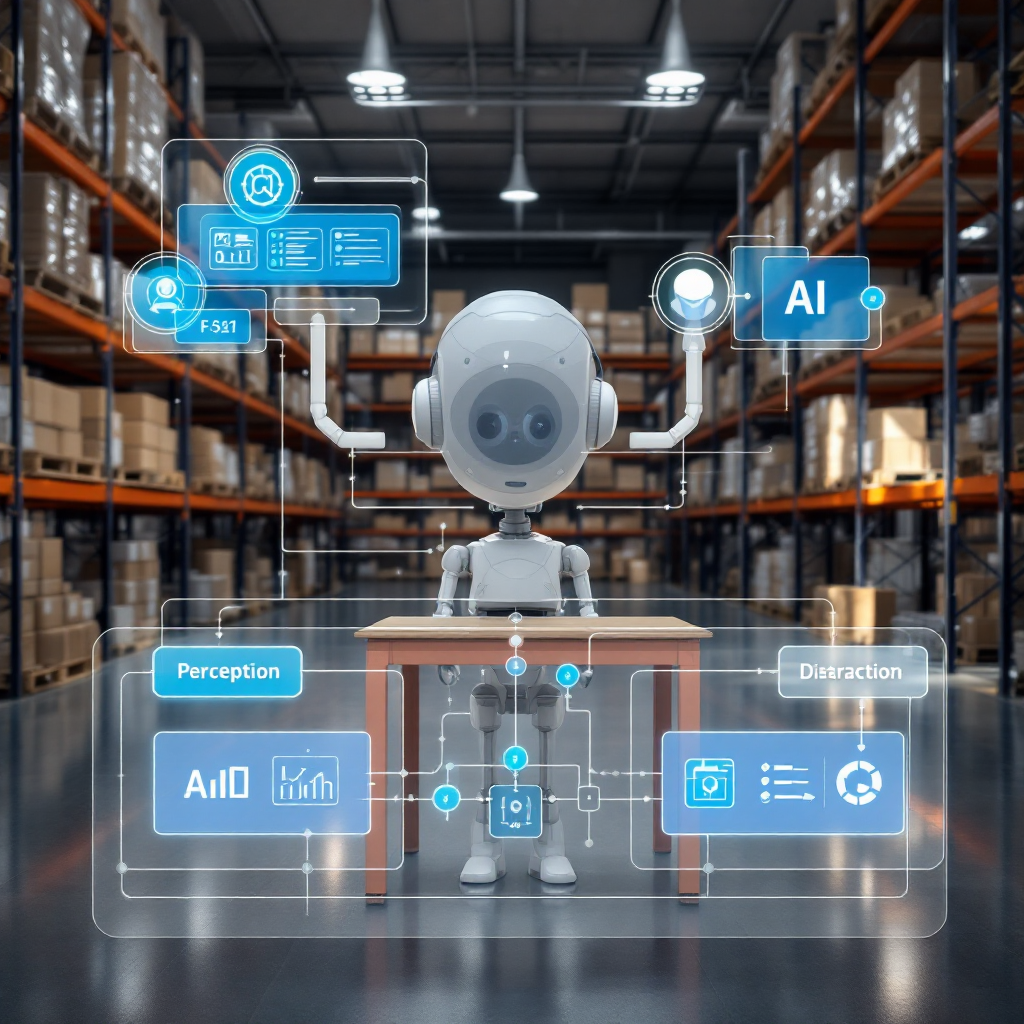
The term agentic describes systems that operate with intentionality and autonomy. In fact, IBM defines this idea neatly: “Agentic AI is an artificial intelligence system that can accomplish a specific goal with limited supervision,” and that quote guides how we build agentic AI systems “Agentic AI is an artificial intelligence system that can accomplish a specific goal with limited supervision,”. An agentic framework combines perception modules, reasoning engines, and action controllers so the system can sense, plan, and act.
Perception modules convert pixels into semantic facts. They run computer vision and pattern recognition models and return labels, confidence scores, and spatial metadata. Reasoning engines then contextualize those facts, applying rules and probabilistic models to make decisions. At this stage, the system may consult language models for instructions or to generate task plans. Finally, action controllers execute commands, trigger automation, or publish structured events so downstream systems can respond.
Real-time feedback loops make the architecture resilient. When sensors report an anomaly, the agent evaluates possible responses and selects the best action. The loop closes when the environment changes and the system senses a new state. This adaptive behavior enables the agent to optimize strategies on the fly. Markovate emphasizes that “at its core, Agentic AI architecture serves as a blueprint for building systems where AI agents interact with their environment, perceive data, and act accordingly” Agentic AI Architecture: A Deep Dive. That blueprint underpins many deployments today.
New agentic AI designs often include on-edge execution to protect data and latency. Visionplatform.ai supports deploying models on GPU servers and on devices like NVIDIA Jetson. This approach aligns with EU AI Act requirements and helps enterprises own their models and datasets. As a result, systems can operate autonomously while preserving compliance and control.
AI vision within minutes?
With our no-code platform you can just focus on your data, we’ll do the rest
agentic ai and computer vision: Integrating Advanced AI for Visual Content Analysis
Agentic AI and computer vision converge when systems must analyze visual content and make decisions. In these setups, perception feeds semantics to reasoning and planning engines. For scenario-driven tasks, the agentic system must perform complex scene understanding. It needs to handle occlusion, crowded scenes, and objects that change appearance. Agentic design prioritizes adaptability and resilience so models stay reliable across conditions.
Pattern recognition, scene understanding, and contextual reasoning layer together. Vision transformers and other computer vision models extract features and infer spatial relationships. Then the agent uses probabilistic reasoning or simple rules to infer intent or risk. For example, in airports, systems that detect unattended baggage combine object detection and temporal reasoning to escalate alerts appropriately. You can read how perimeter and crowd analytics work in operations like airports via specialized pages such as people-detection and crowd-detection-density.
Agentic AI uses outputs from large language models and natural language modules to translate visual findings into human-friendly alerts. For instance, a system might summarize a scene for an operator, or generate a query to a database when the model needs additional context. These interactions help the AI agent make decisions and to collaborate with humans more effectively.
The power of agentic AI becomes visible when models adjust to changing conditions. Adaptive retraining, label correction, and model optimization pipelines update weights with local data. Visionplatform.ai enables customers to improve false detections on their own footage and to build custom models on-prem. This reduces vendor lock-in and makes analytics applications more practical and accurate. As a result, organizations can analyze visual data in real-time and use those events beyond alarms, such as feeding dashboards and OT systems.
computer vision system & object detection: Real-Time Detection in Dynamic Environments

A reliable computer vision system includes sensors, models, and inference engines. Cameras and thermal sensors gather images and streams. The system then preprocesses frames to normalize lighting and reduce noise. Next, computer vision models run to detect and to classify objects. The inference engine schedules work across GPUs or edge accelerators so latency stays low. Finally, results feed into event buses or dashboards for operators to act on.
Object detection algorithms vary by speed and accuracy. YOLO-style models prioritize inference speed and work well for real-time monitoring. Faster R-CNN models tend to yield higher accuracy but at greater computational cost. Vision transformers can balance both, depending on how they are implemented. When the task demands low latency, systems choose lightweight models and then apply post-processing to maintain precision.
Optimisation techniques help maintain accuracy under changing conditions. Techniques include data augmentation, domain adaptation, and targeted retraining using local footage. Model optimization also relies on pruning, quantization, and mixed-precision inference to fit edge hardware. Teams can use performance metrics to balance false positives versus missed detections. For environments with heavy occlusion or crowded scenes, combining tracking and temporal smoothing improves robustness.
Object detection using multi-sensor fusion increases resilience. Combining visible-light cameras with thermal or depth sensors helps the model detect people or vehicles in low light. In practice, companies equip sites with flexible model strategies: pick a model from a library, refine it with local classes, or build one from scratch. Visionplatform.ai supports those paths and keeps data private on-prem, which helps with compliance and faster retraining when models drift.
AI vision within minutes?
With our no-code platform you can just focus on your data, we’ll do the rest
ai-powered automation and workflow: How Agentic AI Systems Augment Operations
Agentic systems can automate routine responses and streamline operational workflow. When a detection event occurs, the agentic pipeline assesses context and then triggers automation. It can publish a structured event to MQTT, escalate to a security operator, or start a scripted response. This capacity lets teams reduce time-consuming manual checks and focus on exceptions.
In manufacturing, agentic AI systems can detect process anomalies and then notify control systems to pause a line. In healthcare, they monitor patient movement and send alerts for falls or unusual activity. For logistics, agents track vehicles and optimize routing. Enterprises that adopt these systems report measurable improvements. For instance, agentic AI systems can reduce human intervention by up to 70% What is Agentic AI? Definition and Technical Overview in 2025 – Aisera, and they can improve task completion speed by roughly 50% Agentic AI: Examples of How AI Agents Are Changing Sales & Service.
These gains let staff shift to oversight and strategic work. Rather than handling every alert, people validate high-risk cases and refine policies. As a result, the organization can augment human expertise with reliable AI. Visionplatform.ai helps teams own their models and to stream events to security stacks and business systems. This way, cameras become sensors that feed KPIs and dashboards, which helps operations and not just security.
Designing workflows for agentic systems requires clear human-in-the-loop policies. The system must know when to act autonomously and when to escalate. That balance preserves safety and prevents overreliance on automation. In regulated sectors, keeping models and training local supports compliance and auditability. For teams that need to automate at scale, an agentic architecture that includes transparent logs and retraining pipelines makes the transition practical.
unlock real-world applications of agentic ai-powered vision
Real-world applications of agentic ai span many industries. In healthcare, agentic AI monitors patients, detects falls, and triggers alerts to staff. In finance, it analyzes screens and market feeds to detect fraud or to automate trades. Across manufacturing and logistics, it performs visual inspections and optimizes throughput. Salesforce projects strong sector growth and expects adoption to expand rapidly, projecting a CAGR of about 35% through 2030 What is Agentic AI? – Salesforce.
Agentic AI-powered vision enables systems to analyze visual data in real-time and to respond without needing human intervention for many routine tasks. For airports, for example, agentic solutions can support people-counting, ANPR/LPR, and PPE monitoring; see specific integrations like ANPR/LPR in airports and PPE detection in airports for concrete examples. These deployments improve situational awareness and reduce false positives while keeping processing local.
New agentic AI designs often mix edge computing with cloud orchestration. That mix provides low latency and centralised model management. The agentic ai framework includes monitoring for model performance, drift detection, and retraining hooks. Developers then leverage large language models and llms for higher-level planning or for generating human-readable summaries. Combining these elements helps teams perform tasks like object recognition, situational triage, and document processing more efficiently.
Looking ahead, agentic AI will continue to unlock applications in self-driving cars, perimeter monitoring, and robotics. As models improve their ability to process visual data and to make decisions, they will also improve model optimization and reduce manual tuning time. Organizations that adopt reliable ai and that keep data control on-prem will gain faster iteration cycles and stronger compliance posture. Ultimately, the power of agentic ai lies in its ability to augment human teams, to streamline operations, and to deliver actionable insights from visual content.
FAQ
What is agentic vision AI?
Agentic vision AI refers to systems that perceive their environment, reason about it, and act to achieve goals. These systems integrate perception, reasoning, and action modules so they can operate with limited human supervision.
How does continuous data ingestion help agentic systems?
Continuous ingestion supplies up-to-date context and enables the agent to adapt quickly. By pulling data from sensors, APIs, and logs, the system stays aware of changes and can adjust its behavior in real time.
What architecture components make up an agentic AI system?
Typical components include perception modules, reasoning engines, and action controllers. Perception converts images into structured facts, the reasoning engine plans steps, and the action layer executes commands or sends events.
Can agentic AI work on existing CCTV cameras?
Yes. Platforms like Visionplatform.ai turn existing CCTV into operational sensors that detect people, vehicles, and other classes in real time. That approach allows organizations to reuse their VMS footage and to improve accuracy on site-specific data.
What benefits do enterprises see from agentic AI?
Enterprises report reduced manual intervention and faster task completion. For example, adoption can lower human intervention by up to 70% source and raise task speed by about 50% source.
How does agentic AI handle changing conditions like lighting?
Systems use adaptive models, data augmentation, and targeted retraining with local footage to handle changing conditions. Multi-sensor fusion, including thermal sensors, also improves robustness at night or in glare.
Are there real-world examples of agentic AI in airports?
Yes. Airports use systems for people-counting, ANPR/LPR, PPE detection, and more. See specific deployments such as people-detection in airports and anpr-lpr in airports for more details and case studies.
Does agentic AI require cloud processing?
Not necessarily. Many agentic deployments run on-prem or at the edge to reduce latency and to meet EU AI Act and GDPR requirements. On-edge deployment preserves data control and supports auditability.
How do large language models fit into agentic vision?
Large language models and llms can help translate visual findings into natural language summaries or generate task plans. They act as a bridge between visual analytics and conversational interfaces.
What is the best way to start with agentic AI for vision?
Begin with a clear use case and a dataset that reflects your site. Then pick a model strategy: choose an existing model, refine it with local footage, or build a custom model. Keep retraining and monitoring in place so the system stays adaptive and reliable.