bosch video management system
Bosch Video Management System (BVMS) 13.0 presents a centralized platform for video, audio and data that helps organisations run modern video security and operations. BVMS 13.0 acts as a single control layer for cameras, integrations and analytics, and it supports distributed sites with a single management plane. The architecture scales to support over 1,000 cameras in distributed deployments while keeping configuration and updates modular and consistent. Operators gain a live and intuitive overview, and they get an overview of what is happening across sites. The platform’s modular design lets teams upgrade individual components without replacing the whole platform, and this reduces downtime and lowers total cost of ownership.
BVMS 13.0 also embeds a clear pathway for integrating advanced analytics and third‑party modules. The video management system supports a matrix of connections to access control and IoT sensors, and it makes it easier to integrate edge devices and cloud services where policy allows. This lets teams leverage analytics and modern automation in phases, and it preserves legacy investments. For organisations that run many security camera feeds and need forensic search across captured video, BVMS 13.0 provides the core hooks to embed analytics and metadata into workflows. For example, operators can connect to a forensic search tool to find relevant video fast, and then review that footage inside the same GUI.
visionplatform.ai works with BVMS 13.0 to bridge detections to AI-assisted operations. We add a reasoning layer that understands events, and we help turn video into actionable intelligence for control rooms that face too many alerts. Our integration respects data locality, and it uses local models and flexible connectors to avoid sending captured video offsite. As a result, teams get state-of-the-art video handling and a consistent path to scale without losing control over bandwidth and storage. In short, BVMS 13.0 is a strong foundation for modern video systems and for solutions from bosch that aim to raise operational efficiency and reduce operator load.
ai agents
AI agents expand what surveillance platforms can do by turning raw detections into context and suggested action. In BVMS deployments, AI agents run inference in real time, and they spot early detection of unusual activity such as unauthorised access, loitering and suspicious behaviour. Operators receive alerts that are filtered and explained, and they get recommended steps so they can respond faster. Bosch reports a reduction in false alarms by up to 90% and an 80% improvement in incident detection speed; these metrics highlight how automated verification and prioritisation change daily operations Source: real-world generative AI use cases.
AI agents also enable automated workflows that combine detection, verification and notification. When an alarm fires, an agentic process can check access control logs, read relevant metadata and confirm whether moving objects are authorised. If the alarm is valid, the workflow can escalate to the right team, and if it is a false positive the agent can close the incident with justification and an audit trail. This reduces repetitive tasks, and it frees security professionals to handle complex tasks that require human judgement. For sites that must meet compliance requirements, AI agents automate reporting and preserve an evidence chain while minimising operator overhead.
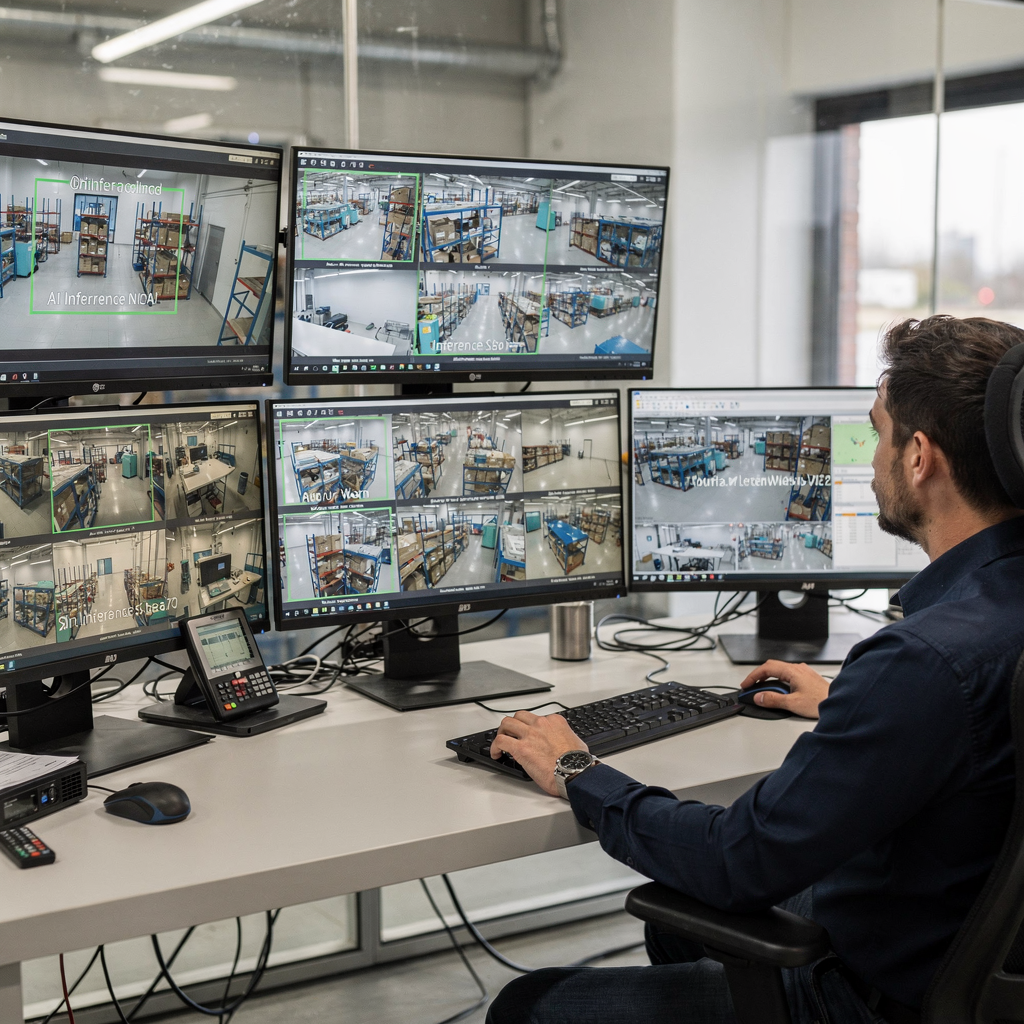
visionplatform.ai integrates with BVMS to provide agent reasoning, search and actions inside the control room. Our VP Agent Reasoning layer correlates camera events with procedures and external systems to explain what happened and why it matters. This reduces false positives and improves decision speed. For those seeking use cases like loitering detection or perimeter breach response, our integrations provide a human-readable explanation of events and a path to automated actions. See our practical example of loitering detection for more context loitering detection in airports.
AI vision within minutes?
With our no-code platform you can just focus on your data, we’ll do the rest
ai-enabled cameras
AI-enabled cameras move inference to the edge, and they cut bandwidth and latency by analysing video close to the source. Edge analytics can reduce network traffic by up to 50% by transmitting only relevant events and compressed metadata instead of full streams. That reduces demands on bandwidth and storage, and it keeps captured video local unless human review requires transfer. On-device object recognition classifies people, vehicles and packages, and it tags live and recorded video with searchable descriptions so operators can find relevant segments faster.
These cameras excel in perimeter and remote deployments. For perimeter security in remote or high-risk sites, AI-enabled cameras provide continuous screening and immediate alarms when someone crosses a defined line or when object left behind triggers a rule. The same devices can run IVA PRO PERIMETER models for intrusion tasks, or IVA PRO TRAFFIC models when a perimeter contains vehicle gates and roads. Operators in remote control rooms receive concise alerts and can zoom into feeds for verification. This reduces false positives and helps teams respond faster to verified events.
visionplatform.ai supports ai-enabled video analytics on both edge devices and servers. Our platform accepts metadata and event streams from edge AI and then turns those events into searchable narratives using an on-prem Vision Language Model. That lets control rooms search for people and vehicles in natural language and perform forensic search across long time ranges. For airport environments and transport hubs, see related examples of people detection and vehicle detection classification people detection in airports and vehicle detection and classification in airports. These integrations help embed AI into video cameras and into broader smart security strategies.
ai video analytics
AI video analytics combine classification, tracking and anomaly spotting to produce actionable alarms and summaries. Core functions include object classification, crowd detection and automated anomaly spotting that highlights unusual motion or behaviour. Intelligent video analytics provide a continuous stream of structured events, and they tag moving objects so operators and investigators can follow trajectories across cameras. These analytics make forensic search practical by reducing hours of raw footage to a handful of relevant clips with contextual metadata.
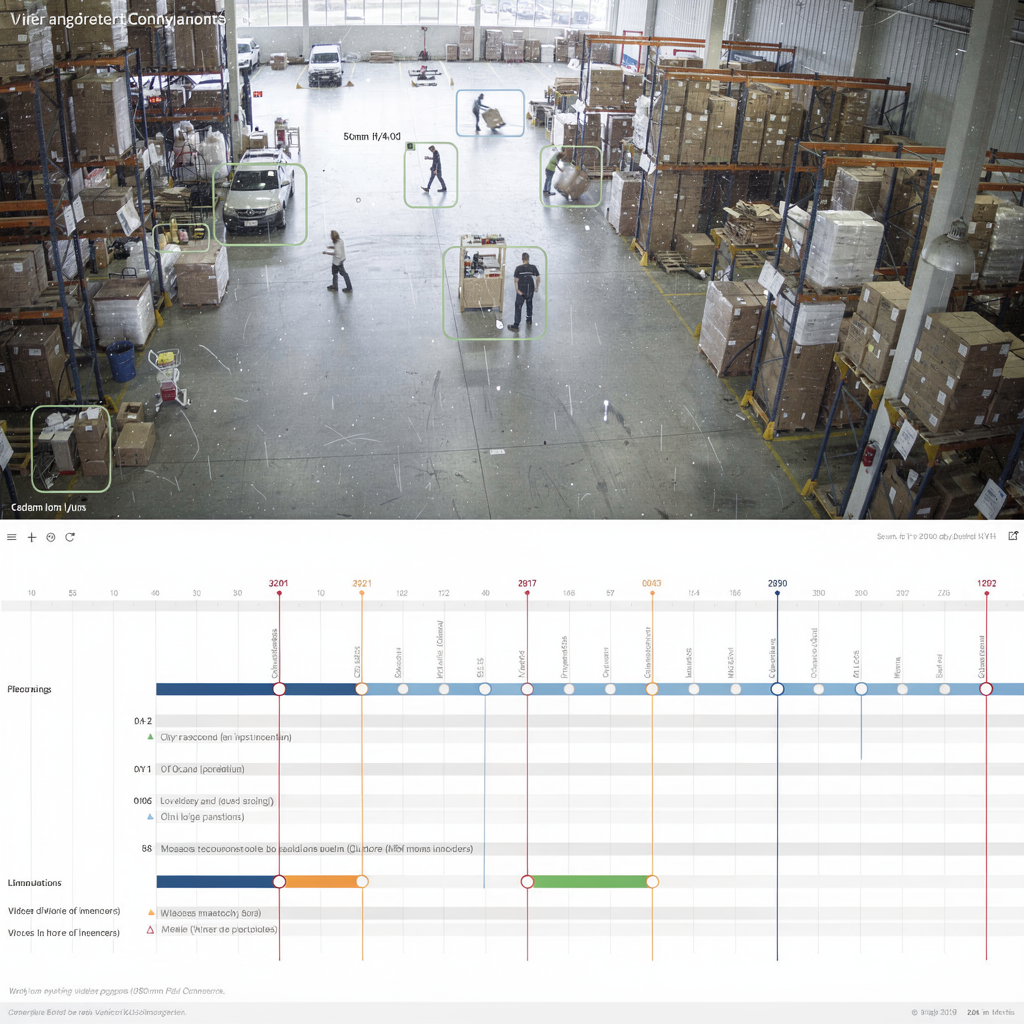
Automation of routine monitoring tasks can cut operator workload by about 70%, and it increases situational confidence. AI-driven filters prioritise alarms and reduce false alarms, and then operators can focus on exceptions and escalations. In internal tests and field deployments, teams report that ai video analytics deliver faster verification and cleaner incident logs, and that they support consistent workflows across sites. For forensic search needs, the system surfaces relevant video quickly; you can learn how forensic search works in operational settings forensic search in airports.
Performance benchmarks for modern deployments show measurable gains. In large installations, analytics lower time-to-detect and help teams respond faster to threats. These tools also enable license plate and people and vehicles recognition where required, and they provide options for custom models and deep learning enhancements. The result is stronger video security with clearer evidence trails and faster, more consistent responses.
AI vision within minutes?
With our no-code platform you can just focus on your data, we’ll do the rest
analytics in bosch
Analytics in bosch refers to the suite of analytics, interfaces and integration points that extend BVMS capabilities. Bosch provides a set of models and APIs that let partners and integrators embed tailored solutions from bosch into larger ecosystems. These analytics integrate with access control systems to cross‑check events, and they augment captured video with searchable metadata for incident review. For sites that must meet audit requirements, automated compliance reporting and a preserved audit trail simplify inspections and oversight.
Bosch’s approach to trustworthy AI emphasises privacy, transparency and local processing. That aligns with the challenges many organisations face: data that leaves the environment creates cost, risk and regulatory pressure. By keeping inference local when necessary, systems reduce cloud exposure and preserve control over video data. Bosch also supports machine learning and deep learning pipelines for advanced model tuning, and these tools help teams adapt analytics to site specifics without sacrificing robustness.
visionplatform.ai complements analytics in bosch by adding reasoning, search and action layers on top of events and metadata. We integrate live and recorded video with a Vision Language Model and agentic workflows so operators receive contextual explanations instead of raw alarms. Our VP Agent Actions module automates repetitive closure of false positives, and it can prefill incident reports to save time. The combined software and hardware ecosystem therefore supports scalable operations while meeting privacy and compliance requirements. For perimeter-focused deployments consider our perimeter breach resources perimeter breach detection in airports.
situational awareness
Situational awareness starts with a unified dashboard that consolidates alerts, maps and video feeds so operators get a clear overview of what is happening. A good interface blends visual intelligence, live camera thumbnails and timelines so teams can spot patterns and act swiftly. The graphical user interface should make it easy to filter alarms, to zoom into an incident, and to read a short, contextual explanation of why an alarm fired. When systems embed context from access control and sensor feeds, operators understand whether an event is normal or requires escalation.
One case study shows a critical infrastructure site that achieved 60% faster response times after combining BVMS, edge analytics and agent reasoning. The platform presented an actionable summary, and operators followed a recommended workflow that saved minutes per incident. Looking ahead to 2025, roadmaps include predictive analytics, expanded media service features and better bridge functions between operations and incident reporting. These advances will let systems offer proactive recommendations and better automation for recurring, low-risk scenarios.
visionplatform.ai focuses on turning detections into AI-assisted operations. Our VP Agent Search and VP Agent Reasoning help security professionals find relevant video fast and to verify alarms using contextual knowledge. This reduces cognitive load and supports consistent responses while keeping models and data on‑prem. In practice, that means teams get actionable insights for both everyday monitoring and complex investigations, and they can scale without losing control over compliance or robustness. The combination of scalable analytics, customizable policies and a clear audit trail makes a modern smart security posture achievable for many organisations.
FAQ
What is BVMS 13.0 and why does it matter?
BVMS 13.0 is a version of the video management platform that centralises video, audio and data into a single control layer. It matters because it supports distributed sites, simplifies upgrades, and provides hooks for analytics and integrations that modern control rooms need.
How do AI agents reduce false alarms?
AI agents verify detections by correlating video events with access control and historical context, which filters out many irrelevant triggers. By combining automated checks with human oversight, systems can close false positives and focus operator attention on verified incidents.
Can ai-enabled cameras work offline at remote sites?
Yes, ai-enabled cameras perform edge analytics that keep inference local and transmit only event summaries and metadata when needed. This reduces bandwidth needs and allows perimeter security systems to continue operating even with limited connectivity.
What is the role of forensic search in investigations?
Forensic search converts metadata and video descriptions into searchable text, allowing investigators to find relevant video quickly. This saves hours of manual review and helps teams reconstruct events across multiple cameras.
How does visionplatform.ai integrate with BVMS?
visionplatform.ai connects to BVMS through standard APIs and event streams, adding a reasoning layer that turns detections into explanations and recommended actions. The integration stays on‑prem by default and supports both live and recorded video workflows.
Are deep learning models required for intelligent video analytics?
Deep learning models power many advanced detection and classification tasks, but deployments can mix classical rules with learned models. Tuning models to site specifics improves accuracy and reduces false positives over time.
What benefits do automated workflows bring to control rooms?
Automated workflows streamline routine tasks like report generation, alarm triage and notifications, which lowers time per alarm and frees operators for complex decisions. This leads to more consistent responses and reduced operational cost.
How does the system handle privacy and compliance?
Solutions support on‑prem inference and local storage of captured video to minimise cloud exposure and align with regulatory needs. Audit trails and configurable retention policies help meet compliance and reporting requirements.
Can analytics detect both people and vehicles?
Yes, modern analytics classify people, vehicles and other objects, and they track movement across cameras to provide context. This multi-class capability supports mixed scenarios such as access points, loading docks and perimeter zones.
What improvements are expected by 2025?
Roadmaps point to predictive analytics, richer media service features and tighter automation between detection and response. These changes aim to give operators better recommendations and to scale monitoring with controlled autonomy.