Next Evolution of Intelligent Command in Command Center
The next evolution of operational control is arriving fast. Intelligent command will change how leaders make choices. It fuses machine speed with human judgment. In a modern ai command center, systems parse vast amounts of sensor inputs and give clear, actionable options. This improves decision-making capabilities and slashes the time between detection and response. For example, analysts expect that by 2026 more than 70% of U.S. military command centers will use AI-enabled decision support systems, which shows the pace of change (Gladstone AI). Also, studies estimate a 30–40% improvement in operational efficiency when AI automates routine duties (Second Talent). These numbers support why leaders redesign command and control workflows now.
Traditional command center workflows rely on humans to collect, fuse, and act on reports. They face latency when analysts must read multiple dashboards. In contrast, intelligent command layers next-gen sensing, predictive analytics, and dynamic playbooks. It reduces cognitive load and helps teams select courses of action in minutes rather than hours. The system flags potential issues and provides a transparent trail for human approval. Therefore, commanders retain oversight while benefiting from automation that reduces human error in high-stakes situations.
Importantly, an intelligent command approach supports interoperability across different tools and legacy systems. It enables collaboration across units and helps teams respond to changing conditions. As a result, a single command center can act as a central hub that integrates satellite imagery, radar, and open-source feeds. In short, the next evolution is not about replacing humans. Instead, it is about amplifying their capabilities so they can focus on complex judgment and leadership.
Agentic AI and ai agent operations in Mission Control
Agentic systems bring a new layer of autonomy to mission control. Agentic AI describes autonomous agents that take directed actions under guardrails and human rules. These intelligent agents can monitor streams, suggest options, and sometimes execute low-risk tasks. For example, autonomous agents can re-task cameras or change sensor priorities when they detect an anomaly. In practice, ai agent operations coordinate multiple specialized ai agents and a team of ai agents to handle concurrent tasks. This architecture lets specialized agents focus on narrow problems while a supervisor agent orchestrates priorities.

In mission control, agents work as teammates. They gather context, run simulations, and present courses of action. A senior DoD official has said that integrating AI into command and control enhances speed and precision (Congress.gov). Also, Dr. Emily Chen notes that “AI agents are not just tools but active collaborators in command centers” (Stanford HAI). Therefore, deploying agentic ai in sensitive environments requires clear guardrail definitions, audit logs, and approval steps so humans can intervene. Specialized agents will classify images, detect intrusions, and score threats. Meanwhile, supervisory agents coordinate these pieces so operators see a unified picture.
Field examples include military C2 and emergency response centers. In both, multiple specialized ai agents can detect people, vehicles, or behavior anomalies and then present an integrated incident brief. Visionplatform.ai helps organizations operationalize camera feeds so vision data powers operations as well as alarms; this approach supports mission control workflows and improves observability across locations. When agents detect a probable threat, the system will flag potential issues and propose a response. The human then validates and approves the action. This balance keeps systems nimble while ensuring accountability.
AI vision within minutes?
With our no-code platform you can just focus on your data, we’ll do the rest
AI-Driven Dashboard for Observability and Analytics
An AI-driven dashboard becomes the operator’s window into complex operations. It fuses sensor feeds, satellite imagery, and intelligence reports so users can scan and act. Dashboards present both raw events and summarised insights. They also let teams filter and drill into anomalies. Good dashboards provide observability across the entire stack so analysts can see where data flows break or where a sensor underperforms.
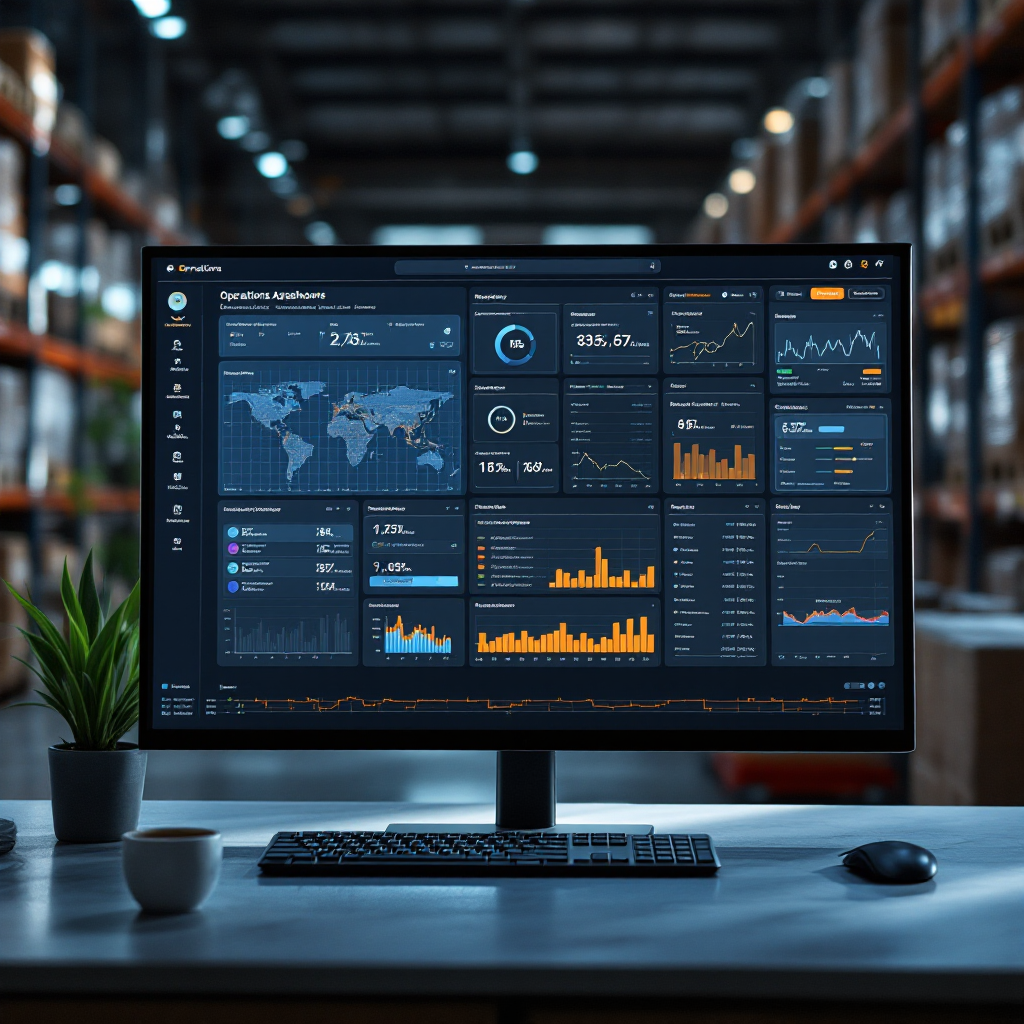
Modern dashboards use predictive analytics to predict hotspots and resource needs. They can parse logs and real-time data to spot trends before they become incidents. For example, combining CCTV-derived people counts with thermal feeds improves situational awareness in crowded hubs. Visionplatform.ai turns cameras into sensors that stream structured events to analytics systems so teams can operationalize video for safety and operations. Dashboards can also create actionable summaries that reduce time to decision. When an alert occurs, the interface links to video clips, sensor history, and recommended actions. This allows operators to validate, escalate, or hand off tasks quickly.
Analytics techniques such as time-series analysis, anomaly detection, and correlation scoring help teams discover relationships across multiple systems. Because dashboards show performance over time, commanders can optimize staffing and reposition assets. The design also supports LLMS and modern ai models to generate natural-language briefs for commanders. In short, a thoughtful dashboard turns vast amounts of data into concise options, and it helps teams predict and prepare for changing conditions.
Enterprise-Grade Orchestration and Scalability
Enterprise deployments require an enterprise-grade approach. Reliability, security, and low latency are mandatory. Teams must build systems that run continuously and tolerate failures. Orchestrate and orchestration are central here. A platform must orchestrate ai across nodes, microservices, and edge devices so tasks move where they run best. This architecture makes the system scalable and robust. It also lets teams scale ai across sites without redesigning each installation.
To scale effectively, engineers design for microservices and distributed processing. They ensure robustness by separating detection, decisioning, and execution components. A single command center can manage remote sensors, or multiple systems can interconnect into a constellation of sites. This supports collaboration across regions and improves redundancy. When traffic spikes, the platform can scale up compute and still deliver results within seconds to operators. The goal is to maintain low latency while the system operates at machine speed.
Security and compliance matter too. Enterprise-grade solutions must protect data and provide auditable logs for approval and human review. Visionplatform.ai focuses on on-premise and edge deployments so organizations keep control of models and footage. This reduces risk and helps organizations deploy in regulated environments. Finally, teams should design for seamless upgrades so they can deploy new ai models without downtime. That approach lets organizations scale ai responsibly while keeping mission uptime high.
AI vision within minutes?
With our no-code platform you can just focus on your data, we’ll do the rest
Agentic AI for Continuous Improvement in Supply Chains
Agentic systems can revolutionize logistics in defense and humanitarian settings. In supply chains, agents monitor inventory, predict delays, and optimize routing. They automate low-risk tasks and let human planners focus on complex exceptions. By continuously collecting feedback, agents drive continuous improvement loops that raise efficiency and resilience. These loops include simulation, live testing, and model retraining so performance over time gets better.
For instance, agents can predict demand and suggest rebalancing before shelves run low. They can also adjust delivery windows when sensors report congestion. This lets teams proactively schedule vehicles and staff. In scenarios with limited connectivity, agents operate at the edge and sync when links return. The result is faster decisions and fewer costly delays. In high-stakes humanitarian missions, these capabilities reduce the risk of shortages and potentially catastrophic supply failures. Studies of AI in emergency management demonstrate how predictive tools improve response timing and allocation in disaster zones (Davis Report).
Practical implementations combine robots, trucks, and cameras into an operational mesh. Visionplatform.ai helps operationalize camera data so sorting centers and depots can optimize flow and parse anomalies. Agents can predict bottlenecks and recommend courses of action that reduce dwell time. They also use simulation to test different strategies before rollout. Over time, these systems become more nimble and better at predicting variance. In short, agentic AI delivers automation and powerful tools that let teams optimize logistics in real time.
AI Agent for Continuous Improvement: Next Evolution
The next-generation of agentic AI moves toward autonomous decision-making under tight constraints. Next-gen agents will combine LLMS, vision, and domain models so they can reason about complex tasks with guardrail oversight. In the future, a copilot will sit beside commanders, summarizing options and highlighting risk. This copilot will help teams review automated suggestions and give final approval. The architecture will interconnect multiple ai and integrate legacy systems so solutions scale across theaters.
Still, trust, transparency, and human-AI collaboration remain essential. Deploying ai without clear audit trails and approval steps risks errors. LangChain’s State of AI Agents Report warns about latency, trust, and cost as real obstacles (LangChain). Decision support will evolve as agents learn from operator feedback and operationalize lessons. The power of agent arrives when teams can rapidly retrain ai models on site and test changes under supervision. Traditional ai will adapt to new data and changing conditions, and teams will use frameworks that let multiple agents coordinate safely.
Ultimately, agentic systems will reshape command workflows and revolutionize decision timelines. They will predict threats, flag potential vulnerabilities, and propose mitigations before events escalate. Organizations that leverage these advances can reshape response plans and remain resilient in high-stakes operations. However, success depends on robust validation, clear guardrail policies, and human trust. By combining autonomous agents with human approval, operators keep control while benefiting from machine-scale speed.
FAQ
What is agentic AI?
Agentic AI refers to systems of autonomous agents that can act under constraints and policies. They take directed actions, coordinate with humans, and learn from feedback to improve performance over time.
How do AI agents improve situational awareness?
AI agents combine multiple feeds and highlight anomalies so operators can focus on priorities. They reduce noise and present concise, actionable briefs that speed up decision-making.
Can AI handle real-time decision-making in high-stakes settings?
Yes, when systems are designed for low latency and robustness, AI can support decisions within seconds. Still, human approval and clear guardrails remain essential to avoid risky autonomous actions.
How does a dashboard help mission control teams?
A dashboard centralizes sensor outputs and analytic summaries so teams can assess the full picture quickly. It links to source footage and evidence, enabling validation before actions are taken.
Are these systems secure and compliant?
Enterprise-grade deployments focus on on-premise processing and auditable logs to meet compliance needs. Keeping data local reduces exposure and supports regulatory approval workflows.
How do AI agents help supply chains?
Agents monitor inventory, predict delays, and suggest route changes to optimize flow. They create continuous improvement loops by learning from outcomes and simulations.
What are the main challenges of deploying AI in command centers?
Challenges include trust, latency, skill gaps, and ensuring transparent decision trails. Addressing these requires training, robust architecture, and clear human-AI roles.
How do organizations scale AI across sites?
They use microservices, edge processing, and orchestration to distribute workloads. This lets them operate consistently across many locations while maintaining performance.
Can AI agents operate offline?
Yes, many designs support edge operations that continue during connectivity loss and sync when links return. This capability is critical for remote or contested environments.
Where can I learn more about applying vision-based sensors to operations?
Visionplatform.ai publishes practical resources on turning CCTV into operational sensors, including people detection and forensic search. See their pages on people detection and forensic search for concrete examples: people detection, forensic search, and perimeter systems like perimeter breach detection.