ai video and video analytics: Core Capabilities of Genetec AI Agents
AI video and video analytics form the first line of defense in modern surveillance. First, AI agents ingest live camera feeds and convert pixels into structured event data. Then they apply object recognition, pose estimation, and behavior analysis to classify people, vehicles, and objects. For example, a gun detection model can flag a drawn object while a tracking module follows the same person across multiple camera feeds. Also, facial matching and appearance descriptors help link the subject to prior sightings. This layered approach helps reduce false positives and improve situational awareness for on-site teams.
Accuracy matters. In practical deployments, AI modules in large systems can achieve detection accuracy rates exceeding 90% when tuned for the environment, significantly cutting noise for operators and lowering the rate of false alarms by up to 70% source. As a result, teams spend less time on spurious events and more time on response. Moreover, combining object-level detection with behavior scoring means an event is not just detected but given context and priority. This contextual insight turns a raw camera trigger into an actionable item.
Genetec agents and partner solutions integrate these analytics into a unified workflow. The architecture supports multi-sensor correlation, so an entry detected by an access control reader can be checked against nearby camera footage in seconds. For example, the VA has centralized video data across facilities and improved operational efficiency by relying on correlated video and access logs VA report. The same techniques help locate video evidence quickly during post-event review, which improves the investigation experience and speeds case resolution. Finally, an ai-powered agent can automate initial verification and produce a short, human-readable summary for the operator to review.
solution overview: Architecture of Genetec Security Center SaaS
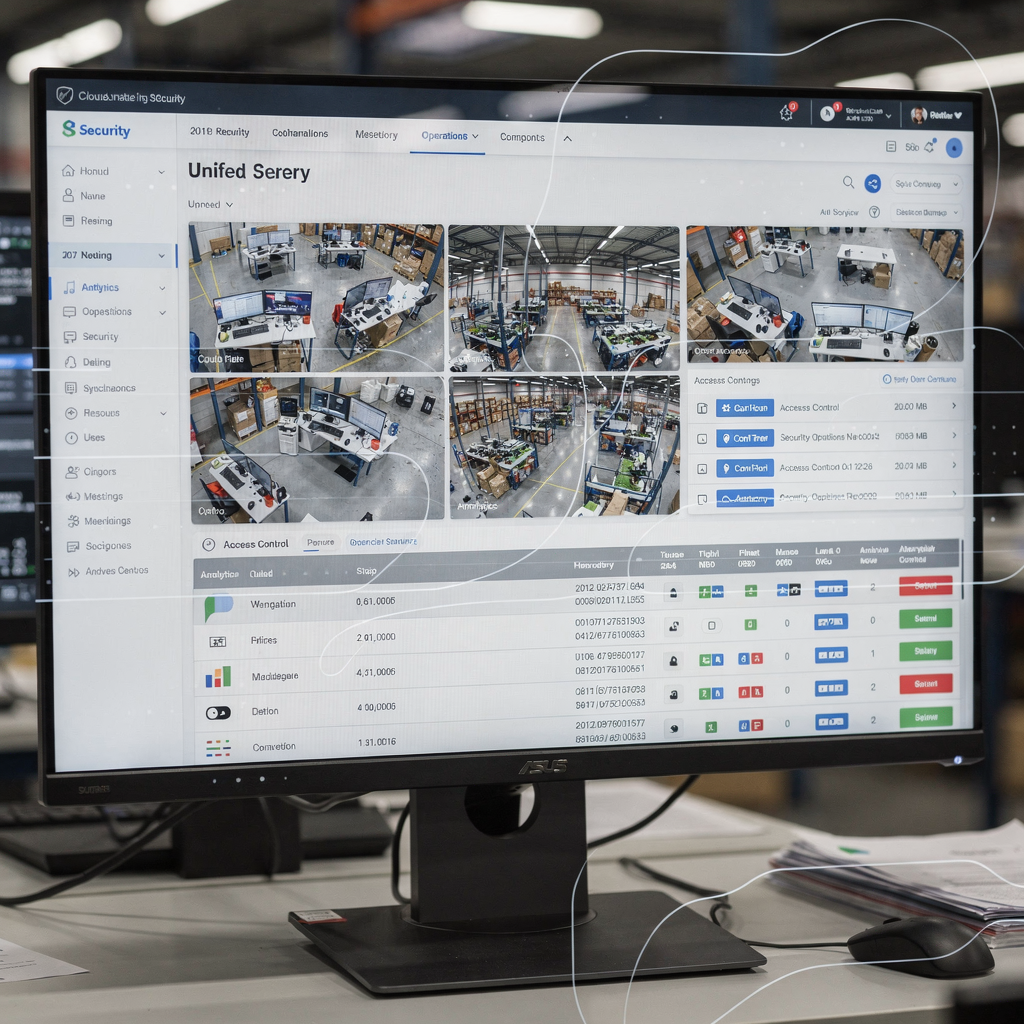
The solution overview begins with a cloud-native SaaS model that centralizes video, access control, and alarms under a single pane. Genetec Security Center SaaS offers a unified security platform where authorized users access live and recorded video, manage entry and exit events, and handle case workflows from the same console. Importantly, Genetec Inc. has built this cohesive interface to support enterprise physical security while enabling multi-site management and role-based access for diverse teams.
At the core, AI agents slot into the platform’s data pipelines. Video streams are ingested, encoded, and sent through analytics services before metadata is written to a searchable store. This workflow enables contextual correlations between cameras and auxiliary systems. For example, when an access control badge is used at a door, the platform correlates it with nearby camera feeds and tags the related footage for quick review. The architecture supports horizontal scaling so a single tenant can manage hundreds of camera feeds across campuses.
Cloud-native benefits include centralized policy distribution, faster updates, and simpler provisioning for saas users. Yet, many deployments need tailored on-prem processing to meet compliance or latency demands. visionplatform.ai complements this by offering on-prem Vision Language Models and AI agents that keep video and reasoning local. This hybrid approach helps organizations maintain control while they unify operations. For readers seeking deeper forensic search capabilities, see our work on forensic search in airports forensic search. The platform also supports open architecture and APIs for seamless integration with third-party VMS, access control, and alarm systems, which helps security professionals build context-rich, auditable pipelines.
AI vision within minutes?
With our no-code platform you can just focus on your data, we’ll do the rest
key market application and use cases: Sector Deployments and Examples
Major verticals deploy these systems to solve distinct challenges. In healthcare, hospitals need patient-safety monitoring, asset protection, and privacy-aware analytics. In government, agencies require consistent auditing, controlled access, and long retention of footage. Retailers demand loss-prevention, queue analytics, and rapid incident resolution. Transport hubs must monitor crowd flow, perimeter security, and vehicle movements. Each sector benefits differently from the same set of core capabilities.
For instance, in healthcare, an integrated solution reduces response time to unauthorized entry and improves patient safety by correlating alarms with contextual video and access logs. The U.S. Department of Veterans Affairs reported measurable efficiencies after centralizing video and metadata across facilities, which allowed staff to respond faster and to prioritize threats more effectively VA report. Similarly, transport environments adopt ANPR/LPR and crowd-density analytics to streamline operations and detect anomalous behavior; see our ANPR/LPR work for airports ANPR/LPR in airports.
Real-world case studies show predictive security in action. A transit operator used behavior analysis and tracking to pre-empt a recurring trespass pattern, which reduced incidents by a measurable margin. A large hospital combined access control and video analytics to quickly locate missing equipment and to resolve unauthorized access attempts. Retail chains use object-left-behind detection and loitering analytics to flag potential theft or safety issues; learn more about weapon and object detection use cases in airports weapon detection.
Across sectors, the unified security platform reduces manual tasks and helps security professionals focus on decisions. Importantly, these systems also support compliance needs by logging decisions, preserving chain-of-evidence, and enabling enterprise-grade audits. As deployments scale, the platform’s ability to correlate volumes of video and data becomes a strategic advantage. Consequently, security teams can move from reactive incident handling to proactive risk reduction.
features and benefits: Improving Accuracy and Resource Allocation
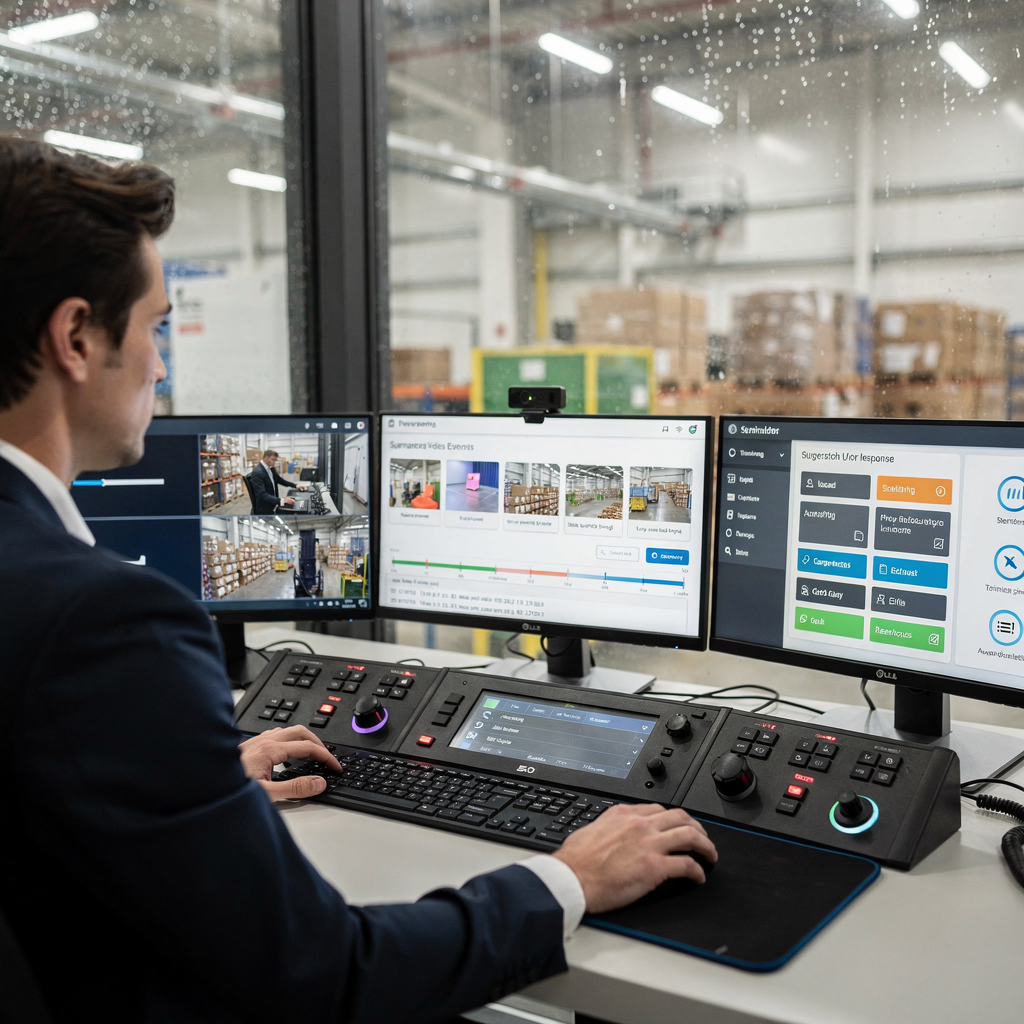
Core features include automated alerts, behavior scoring, and event tagging. The system creates context-rich notifications that summarize what was seen, where, and why it matters. This reduces noise and makes every alert more actionable. For example, behavior scoring can label an event as high-priority when an unauthorized person approaches a critical access point. Then, the operator sees a short summary and supporting clips rather than raw frames.
These capabilities improve operator productivity. With false-alarm reductions reported as high as 70% in some deployments, staff spend less time chasing false positives and more time mitigating verified threats research. The VP Agent Suite from visionplatform.ai further streamlines the process by translating video events into human-readable descriptions and by offering natural-language search for rapid evidence retrieval. As a result, an operator can find a clip by typing “person loitering near gate after hours” and immediately pull the relevant timeline, which simplifies the investigation experience.
Predictive insights free teams for higher-value tasks. Instead of routine verification, security professionals plan interventions, refine policies, and perform proactive patrols. Additionally, enterprise-grade monitoring and role-based access control protect sensitive footage while ensuring authorized users can act. These benefits also extend to post-event workflows: automated report generation, audit trails, and integration with case management reduce administrative load and speed legal or compliance reviews. In short, new capabilities translate detections into decisions and help teams allocate resources where they matter most.
AI vision within minutes?
With our no-code platform you can just focus on your data, we’ll do the rest
automation and intelligent search: Streamlining Response and Investigations
Automation transforms alert handling into repeatable, auditable workflows. First, an incoming alarm is triaged by an ai agent that cross-checks video, access logs, and historical context. Next, the agent can pre-fill incident reports, send a notification to field staff, or escalate to a supervisor depending on policy. This new intelligent automation reduces time-to-action and ensures consistent handling of routine scenarios.
Intelligent search capabilities accelerate investigations. Advanced search capabilities let operators query video archives using natural language and contextual filters. For example, users can locate video evidence of individuals with similar appearances or reconstruct vehicle paths using linked timestamps and access control events. visionplatform.ai’s VP Agent Search demonstrates how natural-language queries simplify forensic review and how operators can find incidents without memorizing camera IDs forensic search. These features simplify the detective work and improve speed.
Automated workflows integrate with notification and alarm systems. When an event is validated, the system triggers a notification to predefined teams and attaches the short evidence clip. This reduces manual steps and helps security teams coordinate response across departments. Contextual linking of events—video to badge reads to prior incidents—creates a single view for investigators. Consequently, the investigation experience becomes faster and more complete, helping resolve cases with fewer blind spots.
integrate: Deployment Strategies and Risk Mitigation
Integrate AI agents with care. Start by mapping use cases, data flows, and compliance zones. Then choose an architecture that balances cloud convenience with on-prem control. For high-sensitivity sites, keep models and video on-prem to reduce data leakage and regulatory risk. visionplatform.ai supports an on-prem Vision Language Model and agent layer that keeps video inside the environment while exposing structured metadata for orchestration. This design helps meet EU AI Act pressures and local cybersecurity rules.
Address risks such as prompt injection or rogue behaviour through governance controls. Define strict policies that constrain agent permissions and maintain audit trails for every decision. Centralized monitoring of AI activity helps spot anomalies early. Gartner highlights the need for policy enforcement and visibility to mitigate AI-specific threats Gartner analysis. Regular model validation, data minimization, and role-based access control further reduce attack surface.
Adopt a phased rollout. Begin with a pilot on a subset of cameras and integrate access control events and alarm feeds. Measure false-alarm reduction and operator time savings. Then scale with clear change control and continuous improvement loops. Finally, document escalation rules and maintain human-in-the-loop options for critical scenarios. New intelligent automation can expand gradually from assisted verification to controlled autonomy, always preserving oversight and an audit trail. In doing so, organizations gain the benefits of AI while keeping control of their security infrastructure and cyber posture.
FAQ
What are AI agents in Genetec Security Center?
AI agents are software components that analyze video and sensor data to provide context, verification, and recommended actions. They process events, correlate multiple sources, and present concise information to an operator for faster decision-making.
How accurate is AI detection in real deployments?
When tuned for the environment, analytics can exceed 90% accuracy for specific detections, and deployments have reported false-alarm reductions up to 70% source. Accuracy depends on camera quality, positioning, and model adaptation to site conditions.
Can AI agents work with existing VMS and access control?
Yes. The platform supports seamless integration with common VMS, access control, and alarm systems through open APIs and event feeds. For specific forensic and search workflows, see our forensic search capabilities forensic search.
Do AI agents require cloud processing?
Not necessarily. Many deployments benefit from on-prem processing to keep video and models local for compliance and latency reasons. visionplatform.ai offers on-prem Vision Language Models to support on-site reasoning and retention policies.
How do AI agents reduce operator workload?
By verifying alarms, scoring behavior, and generating summarized incident reports, agents cut manual verification steps and reduce cognitive load. Operators then focus on higher-value decisions rather than repetitive triage.
What sectors benefit most from these solutions?
Healthcare, government, retail, and transport are common adopters due to their need for multi-site management and rapid incident response. Each vertical uses specific analytics such as people detection or vehicle classification; for example, see our people detection work in airports people detection.
How are risks like data leakage managed?
Risks are mitigated through policy enforcement, on-prem processing options, audit logs, and strict access controls. Regular validation and monitoring of agent behaviour further reduce the chance of rogue actions and ensure traceability.
Can AI agents help investigations?
Yes. Intelligent search and contextual correlations let investigators locate video evidence faster and reconstruct events across multiple cameras and logs. Advanced search capabilities support natural-language queries to locate relevant footage quickly.
What is the rollout strategy for enterprise deployments?
Start with a pilot, measure key metrics like false-alarm reduction, then scale in controlled phases. Maintain human oversight, document policies, and iterate model tuning and procedures as use expands.
How do these systems support compliance and audits?
They include enterprise-grade logging, role-based access control, and auditable decision trails. These features help organizations meet regulatory requirements and to produce defensible evidence in post-event reviews.