AI-Powered surveillance in Genetec: solution and application
Genetec Security Center sits at the heart of modern video management. It combines traditional VMS tools with AI-powered analytics like Omnicast and AutoVu to transform how teams monitor and respond. These modules let operators detect, classify, and track people, objects, and vehicles across multiple camera streams in real-time. For example, AI agents identify suspicious movement, flag abnormal behaviour, and support face matching workflows. This reduces manual review and speeds verification.
First, consider architecture. Cameras send encoded video to on-prem servers or edge devices. Then, processing pipelines apply AI-based models for object detection and tracking. Next, metadata and events stream into the Genetec Security Center console and feed automation logic. Finally, operators receive concise alerts with contextual details. This sequence keeps video data local when required and supports scalable deployment models that suit large sites such as an airport.
Also, visionplatform.ai complements VMS toolsets by adding a reasoning layer on top of detections. Our VP Agent converts video into human-readable descriptions, so teams can search across recorded footage and verify alarms faster. For more on people-focused analytics in high-volume settings, see our people detection in airports resource for practical examples.
Transition words follow to assist clarity and flow: Also then next thus therefore however meanwhile consequently subsequently therefore thus next also consequently then thus therefore meanwhile next therefore also subsequently then thus consequently repeatedly. Also then next thus therefore however meanwhile consequently subsequently therefore thus next also consequently then thus therefore meanwhile next therefore also subsequently then thus consequently. Also then next thus therefore however meanwhile consequently subsequently therefore thus next also consequently then thus therefore meanwhile next therefore also subsequently then thus consequently.
AI agents used in Omnicast perform both pixel-level analysis and object-level reasoning. They mark detection areas, apply custom rules, and generate custom events for the security desk. This lets teams configure simple triggers or craft complex workflows that reduce noise and focus attention where it matters. As a result, organizations can scale monitoring without adding staff, and they can keep sensitive video on-prem to meet privacy requirements.
Readers who want a deeper look at analytic types can review our thermal people detection and ANPR resources, which explain how different sensor classes and models behave in real-world settings. The design balances precise detection with practical handling of environmental change. In short, AI-Powered surveillance in Genetec combines proven video analytics with a platform approach that enables smarter operations and consistent incident handling.
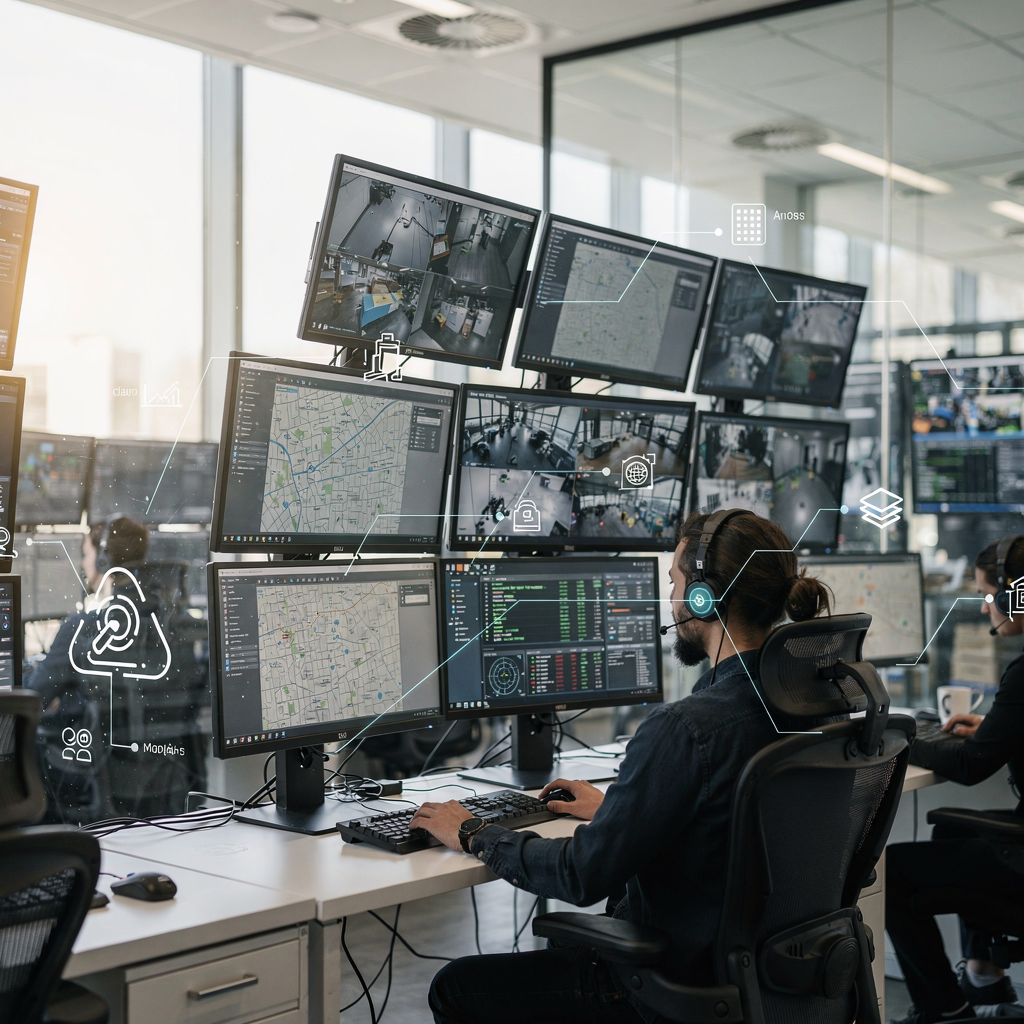
Automation and machine processing for operational security
Automation changes how teams handle routine and urgent events. Rule-based event triggers fire when defined conditions occur. For example, a zone breach or an unattended object in a detection area will create a custom event and an actionable alarm. The VMS then routes that alarm to the security desk, complete with video clips and metadata. This workflow cuts the need for manual triage and reduces operator context switching.
Machine processing plays a central role. AI models classify objects, label behaviours, and infer intent from motion patterns. They can detect suspicious loitering, mark PPE compliance, or escalate when a person behaves abnormally. Facial recognition modules speed identity checks at checkpoints. Likewise, AI-VMD and video motion detection algorithms help to filter out environmental noise from meaningful movement.
In practice, teams configure rules to match local protocols. A simple rule might notify a guard when a vehicle crosses a perimeter after hours. A more advanced flow could aggregate inputs from access control, cameras, and a Vision Language Model to verify an incident before notifying staff. Our VP Agent Actions then either notify the operator or trigger a pre-authorised response, reducing the number of steps needed to resolve a call.
Also, automation allows consistent processing speed. Machines apply the same protocol every time. They do not fatigue. This leads to higher throughput on routine checks. For sites that demand precise control, we provide a config tool and protocols for safe automation and auditing. That includes clear audit trails, escalation rules, and human-in-the-loop options.
We recommend integrating intelligent detection technology with familiar tools to keep operators focused on exceptions. For controlled experiments, sites can run AI models in parallel with existing video management to validate performance. This staged integration supports compliance and operational buy-in while enabling measurable gains in handling and response times.
AI vision within minutes?
With our no-code platform you can just focus on your data, we’ll do the rest
Improving operational efficiency and reducing false alarms
AI-enhanced video systems can cut false alarms dramatically. Industry reports show that AI-enhanced systems reduce false alarm rates by up to 70% [source]. At the same time, incident detection speeds improve by roughly 50% when analytics are tuned and fused with VMS events [source]. These gains translate into measurable operational efficiency for control rooms under pressure.
Automated triage and prioritisation mean that the most critical alarms reach staff first. AI filters send low-confidence alerts for review while high-confidence threats produce immediate notifications. This reduces cognitive load and helps teams respond consistently. In practice, verification workflows compare camera clips, access logs, and historical patterns to validate an incident before escalation. The result is fewer interrupted shifts and faster end-to-end incident handling.
A notable deployment at Tampa International Airport reported a 30% improvement in passenger flow management and screening accuracy after adding AI agents to the control stack [source]. That practical example highlights how analytics can both secure and streamline operations at scale. For operators who focus on investigations, tools like VP Agent Search make it possible to analyze video using natural language queries and cut forensic search times dramatically; see our forensic search in airports resource for details.
Reducing false positives frees staff to handle real incidents. It also reduces cost from repeated dispatches and unnecessary reporting. Moreover, fewer false alarms mean better relationships with stakeholders and less disruption to public services. To achieve these outcomes, teams should tune detection thresholds, train models on site-specific data, and apply algorithm improvements over time. Those steps improve accuracy and keep the system aligned to operational needs.
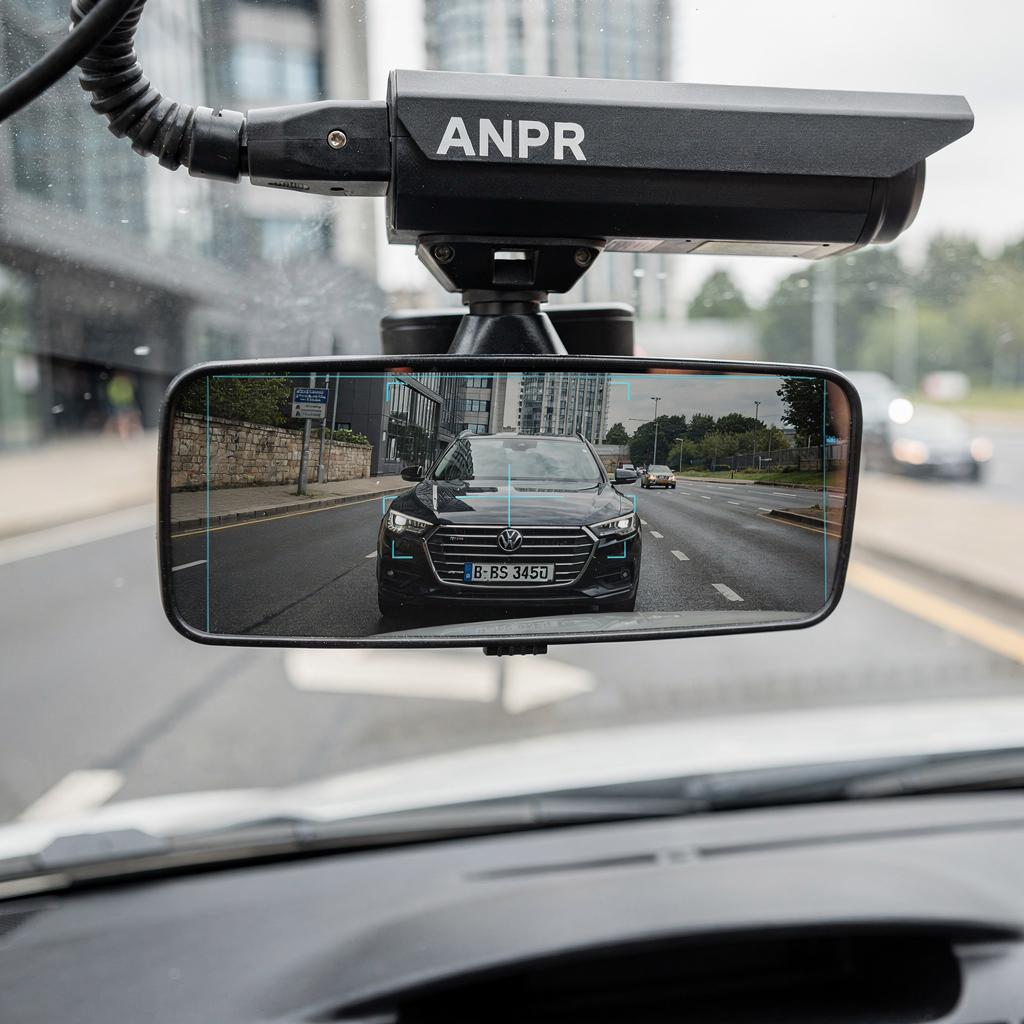
Real-time alarm enable: ai agents in vehicle monitoring
Vehicle monitoring is a high-value AI application. When AI agents analyze streams from IP camera and ANPR devices, they detect vehicle types, classify behaviour, and read licence plates. Genetec AutoVu integrates license-plate recognition with the VMS to create automated alarms for unauthorized entries or suspicious routing. The platform can enable perimeter breach alerts with very low latency, shortening response times for unauthorised vehicle events.
Real-time detection uses a combination of image models and rule logic. For example, a vehicle that stops in a restricted zone may trigger an immediate alert. The system can then pull recent clips, cross-check access logs, and provide an operator with a concise incident summary. That concise summary helps guards decide whether to dispatch a responder or log a false positive. In addition, automated ANPR workflows allow staff to flag known vehicles and to notify external teams when required.
Integration with the Genetec Security Center dashboard ensures a unified view. Operators can view live feeds, historical clips, and confidence metrics without switching tools. For airport environments, our vehicle detection classification in airports resource explains how ANPR and behaviour analytics combine to protect drop-off zones and service roads. This use case shows how smarter automation can protect both people and infrastructure.
Also, systems can trigger escalation protocols. A detected unauthorized vehicle may automatically notify patrols, record heatmap occupancy, and lock gates as policy demands. Those actions are controlled through pre-configured rules and the VMS protocol engine. For organisations that require on-prem processing, systems run on GPU server or edge devices to keep video data local while still enabling fast, precise responses.
AI vision within minutes?
With our no-code platform you can just focus on your data, we’ll do the rest
Privacy and data protection in ai-powered security
Privacy is essential when deploying AI analytics at scale. Operators must meet GDPR obligations and national data-protection frameworks. That includes minimising stored personal data, applying retention policies, and using privacy-by-design controls such as face-blurring or anonymisation. These steps preserve utility while protecting individuals and reducing legal exposure.
Systems should also include secure processing and audit trails. By keeping models and video data on-prem, teams reduce the risk of cloud exfiltration and align with EU AI Act expectations. visionplatform.ai designs VP Agent capabilities with these principles in mind: no mandatory cloud video, auditable actions, and clear provenance for every automated decision. This approach helps organisations demonstrate compliance during audits and investigations.
Operational controls matter too. Access control for video, role-based permissions, and encrypted storage are standard. In addition, teams can configure retention times for different classes of events so that non-essential video is deleted automatically. For high-sensitivity settings, privacy features such as selective masking and redaction can be applied before any human review.
Finally, transparency improves trust. Operators should document algorithms, thresholds, and decision-making protocols. Where possible, provide explainable outcomes for alarms so a security officer understands why an AI flagged an event. As an expert noted, “The integration of AI agents into VMS platforms like Genetec’s Security Center is revolutionizing how organizations monitor and respond to security events, shifting from reactive to proactive security postures” [source]. That openness makes adoption smoother and supports ethical, compliant usage.
Future operational efficiency with ai application: a Genetec solution
Emerging AI applications will continue to reshape operations. Behavioural prediction, crowd analytics, and cross-system correlation are maturing fast. For instance, crowd density analytics can flag developing congestion before it becomes a safety risk. Predictive models will recommend staffing shifts and pre-empt incidents, turning video management into a proactive operations tool.
Algorithm improvements and scalable deployments are part of the roadmap. Cloud-native services, on-prem acceleration, and modular model updates let teams iterate safely. Genetec and partner ecosystems plan tighter toolchains for seamless integration, and strategic partnerships accelerate specialized capabilities. For example, facial recognition and ANPR partners extend core VMS features into identity-aware workflows.
As these advances arrive, organizations must keep control of their data and models. Visionplatform.ai helps by exposing structured inputs for AI agents and by enabling forensic search and reasoning without moving raw video off-site. This preserves compliance while allowing the control room to analyze video and improve decision-making. Use AI in stages: pilot, validate, then deploy at scale.
Looking ahead, smarter automation will enable more consistent handling of routine incidents. Autonomous features will manage low-risk scenarios while escalating novel or high-risk events for human review. This hybrid model increases throughput, reduces operator fatigue, and improves response quality. In short, Genetec VMS platforms, enhanced by reasoning layers and on-prem agent tools, will deliver enhanced security and clearer operational advantages.
FAQ
What is the role of AI agents in Genetec VMS?
AI agents analyze video and metadata to detect objects, classify behaviour, and assist decision-making. They turn raw detections into contextual alerts so operators can act faster and with more confidence.
How do AI agents reduce false alarms?
AI models filter noise and validate detections against multiple cues, which reduces false positives. Industry data shows AI-enhanced systems can reduce false alarm rates by up to 70% [source].
Can AI-based analytics work on-prem?
Yes. Systems can run on local servers or edge devices to keep video data on-site. This supports compliance and reduces the risk of cloud data exposure.
How does ANPR integrate with the VMS?
ANPR engines such as AutoVu read licence plates and feed events into the Genetec Security Center dashboard. This enables automated alarms for unauthorized vehicles and supports rapid verification.
What privacy safeguards are recommended?
Apply anonymisation, face-blurring, and strict retention policies, and keep detailed audit logs. These measures align with GDPR and help show lawful, proportionate processing.
How can visionplatform.ai help control rooms?
visionplatform.ai adds a reasoning layer that turns detections into explanations and recommended actions. That reduces manual steps and accelerates incident resolution.
Are real-time alerts accurate enough for automated responses?
With proper tuning and validation, real-time alerts can reach high accuracy and support human-in-the-loop automation. Start with low-risk workflows and expand as confidence grows.
What deployment options exist for AI models?
Deployments range from edge devices to GPU server racks depending on scale and latency needs. Hybrid strategies allow model updates without moving raw video off-site.
How do I search past video efficiently?
Use forensic search tools that convert video into text descriptions and indexed events. This allows natural language queries for faster investigation.
What is the best way to start a pilot project?
Define a focused use case, such as perimeter breach or vehicle detection, and run AI analytics in parallel with existing processes. Validate results, tune thresholds, and then scale the deployment.