How AI Agents Work: Understanding AI agent in Port Operations
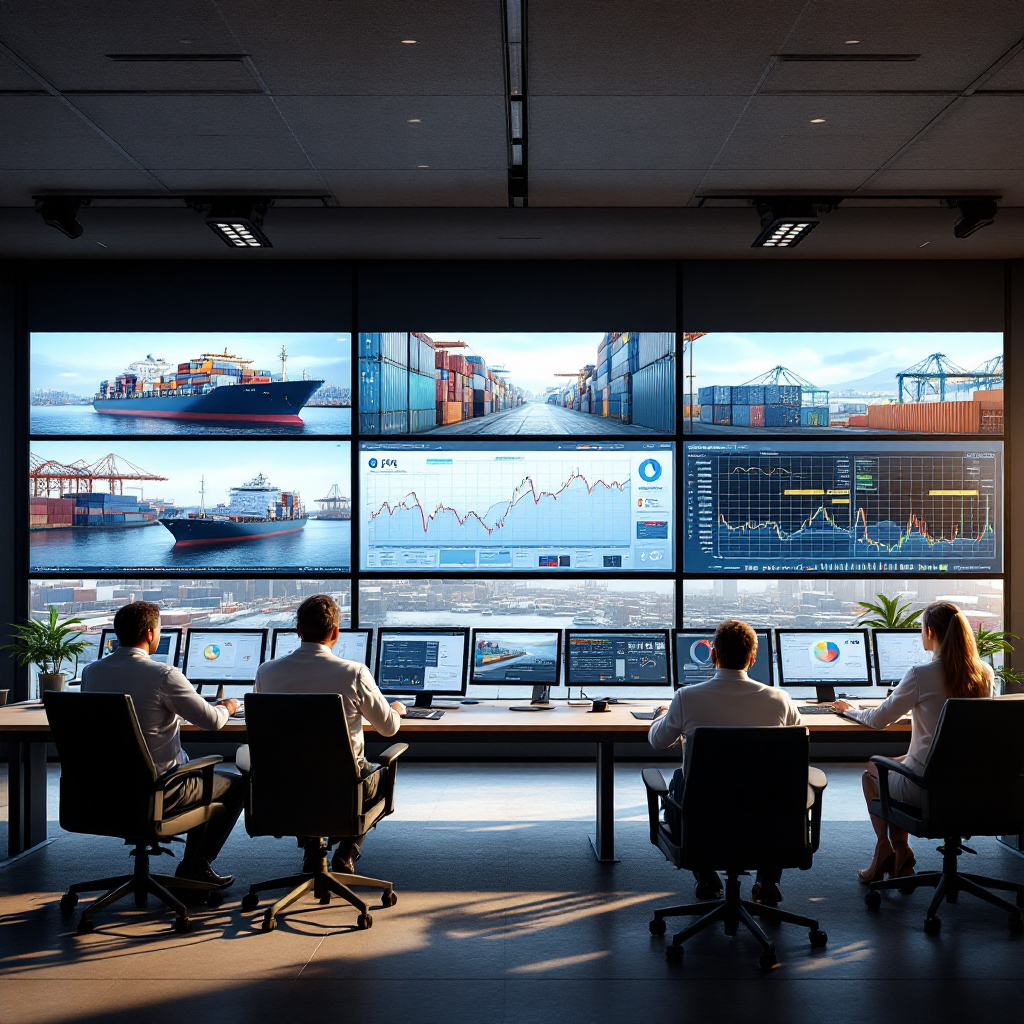
Ports run many concurrent tasks. Port authorities must manage vessel arrivals, cargo movement, security and equipment status. In modern port operations an AI agent acts as a digital assistant. It processes sensor feeds, suggests actions and flags exceptions. AI systems do not replace operators. Instead, they augment human judgement in the control room and across the terminal.
An AI agent combines models, rules and real-time telemetry. It ingests data from RADAR, AIS, TOS logs and CCTV. Then it correlates those inputs to produce alerts, ETA adjustments and actionable recommendations. For example, Visionplatform.ai turns existing CCTV into an operational sensor network so that camera events become structured inputs. This helps teams reduce manual data gathering and speed decision cycles.
Operators keep final authority, so the setup emphasises an AI-assisted control room where humans validate high-risk choices. Systems present clear interfaces and audit trails for accountability and for later review. That design supports GDPR and the EU AI Act by keeping sensitive processing on-premise and auditable.
Key benefits are immediate. Traffic management improves, because berth assignments and ETA updates get faster. Security monitoring gains context from visual detections and anomaly scoring. Data analysis scales, so logistics teams act on trends rather than raw spreadsheets. For example, AI-driven threat detection can cut incident response times by up to 40% in maritime cybersecurity studies. Moreover, ports report fuel efficiency gains near 15% after AI optimisation in sustainable shipping research.
Systems also support existing systems like TOS and ERP. They export status updates and integrate with EDI or booking portals. This reduces manual control and manual data entry, while preserving the human operator role. As AI agents work alongside staff, they free people for higher-value tasks. For ports seeking proven technology, Honeywell solutions and others provide industrial autonomy features and mature interfaces for operators to trust and adopt new tools.
Real-time Container Tracking, Berth ETAs and Exception Handling Use Case
Real-time container tracking starts with multiple data sources. RFID, IoT sensors, CCTV and AIS feeds feed a unified view. These data sources include container ids, yard sensors and truck gate systems. The AI platform normalises those streams and creates a single container status record. That record drives status updates for carriers, brokers and the port authority.
AI agents calculate berth ETAs by combining vessel position, tide models, cargo readiness and berth availability. They use live weather and equipment health data to refine eta and ETAs. When a delay occurs, the system notifies stakeholders automatically. The notification includes cause, predicted impact and corrective actions. Ports can reduce demurrage and berth queuing by reacting quicker. Research suggests AI adoption will be commonplace in over 70% of ports by 2026 market forecasts, which supports the shift to proactive planning.
Exception handling is a defined workflow. First, the agent detects an anomaly like equipment fault or late inbound truck. Then it raises an alert through the portal or via EDI updates. Next, it proposes corrective actions such as reassigning a crane, sequencing a drayage move or updating booking slots. Finally, the agent records the event in audit trails for later review. This flow reduces manual data gathering and cuts downtime.
Use cases include automated rerouting of bookings, predictive maintenance alerts and automated demurrage calculations. One ongoing pilot focused at TotalEnergies Port Arthur shows how a pilot with Totalenergies port arthur integrated berth scheduling with vessel ETA feeds to reduce idle time. That pilot with totalenergies demonstrates how an AI-driven approach saves operational costs and improves gate throughput.
AI vision within minutes?
With our no-code platform you can just focus on your data, we’ll do the rest
Automating Terminal Workflow: Streamline with Agentic AI
Terminal operations include intake, stacking, yard moves and loading. Each stage presents bottlenecks. Manual planning and manual control can cause delays. Agentic AI automates routine tasks and allocates resources across those stages. It improves throughput and reduces errors by coordinating crane schedules, truck slots and stowage plans.
Agent workflows operate on rules and learned patterns. They assign labour and equipment, forecast congestion and trigger intelligent automation for repetitive tasks. For example, an autonomous agents setup can manage repetitive container repositioning. It also schedules maintenance to avoid unexpected downtime. The system produces measurable gains. Case studies report productivity increases up to 25% when automation and AI optimise workflow and resource allocation industry analysis. That kind of improvement translates directly into lower operational costs and faster turnaround.
Terminals often integrate camera events to improve operations. Visionplatform.ai converts CCTV into event streams so that video feeds inform stacking logic, gate throughput and security handoffs. This reduces false alarms and helps teams focus on real exceptions rather than routine motion. Intelligent automation also reduces manual data entry and speeds message passing to TOS and ERP systems.
Operational leaders should prioritise common bottlenecks. First, optimise inbound truck booking and gate processing to cut truck idling. Next, balance crane allocation against container priorities to lower handling moves. Finally, monitor yard density with process analytics to avoid cascading delays. Use of agentic and agentic ai approaches ensures the system adapts to peaks and recovers from incidents. In short, agentic methods let terminals handle more volume with the same workforce.
Connect Agents: APIs, ERP and agents integrate for Smarter Systems
Connect agents use APIs to bridge systems. They pull and push data across TOS, ERP and third-party services. APIs and EDI exchanges provide structured feeds for booking, gate logs and billing. Good integration avoids duplicate entries and reduces manual data entry. As a result, teams spend less time reconciling records and more time on exception handling.
When agents integrate, they must authenticate securely and maintain encryption for sensitive traffic. They also generate audit trails to show who changed what and when. For billing and planning, agents integrate with ERP platforms to provide unified planning and billing. That lets finance teams automate invoicing and reconcile demurrage charges. Brokers and the port authority receive consistent status updates, which improves trust across the supply chain.
System architects should prefer a layered design. First, use secure APIs and message queues to decouple components. Next, implement role-based access so agents operate under strict security rules. Then, use connect agents that map fields between systems, such as container ids and booking numbers. This approach minimises disruption to existing systems and speeds deployment. It also allows agents to authenticate with corporate identity systems and to publish events to a portal or BI tools.
Best practices include centralised encryption keys, strict versioning for APIs and regular audit of agent workflows. Also, design for scalability so agents integrate new data sources like IoT sensors, CCTV and gateway systems. For ports building this architecture, consider hybrid deployments to keep sensitive processing on-premise while supporting cloud analytics. This balances compliance, resilience and long-term flexibility for end-to-end port services.

AI vision within minutes?
With our no-code platform you can just focus on your data, we’ll do the rest
AI Agents Work with Fleet Management and Port Call Optimisation
AI fits fleet management and port call planning. Fleet management covers route planning, fuel use and predictive maintenance. Agents ingest telematics and weather to reduce fuel burn. They also schedule maintenance to avoid unplanned downtime. Those actions cut operational costs and improve schedule reliability.
For port calls, agents predict ETA and recommend berth allocations. They reduce berth waiting time by sequencing ships and coordinating pilots and tugs. One port implementation reported measurable reductions in waiting time after deploying AI-assisted scheduling in sustainability studies. The same research also notes CO2 reductions from smoother operations.
In practice, agents connect to line-haul planners, drayage providers and hinterland services. They coordinate booking and advise on drayage allocation to reduce empty moves. This supports supply-chain visibility from vessel arrival through inland delivery. Agents publish ETA changes and status updates to logistics teams and to brokers. That helped one port reduce idle crane time and lower demurrage exposure.
There are pilots that demonstrate the concept. An ongoing pilot at Port Arthur refinery with TotalEnergies shows how integrated scheduling can improve berth occupancy. The pilot focused on harmonising tanker arrivals with refinery intake windows. It combined port call optimisation with fleet alerts to reduce waiting and to keep tanker berths ready for critical cargo. These early results validate that AI-driven planning yields practical gains.
Finally, operators can tie agents to fleet management dashboards for visibility. That lets planners alter plans in real time and issue notifications to crews. Tools such as the Experion Operations Assistant and similar ai platforms bring contextual awareness to both OT and logistics. When agents work across these boundaries, ports get a cohesive, efficient and resilient flow.
ROI and Agentic Value: Measuring Benefits and Next Steps
Return on investment matters. Ports need clear metrics. Key ROI indicators include cost savings, throughput increases and security improvements. Measure reductions in berth waiting time, decreases in downtime and lower fuel usage. Also track reduced manual work and fewer billing disputes. For example, some implementations report productivity gains of about 25% after adopting agentic solutions industry data. That translates into lower operational costs and faster vessel turnarounds.
Assessing total cost of ownership means comparing upfront investment against long-term savings. Consider software licences, hardware for edge processing, integration with TOS and ERP, and training. Also factor in maintenance, model retraining and the cost of audit and compliance. Intelligent automation reduces manual control overhead and the need for repeated manual data reconciliation. It also cuts downtime and demurrage, which are direct financial levers.
Measure security ROI as well. AI agents that detect anomalies and cyber threats can reduce incident response times by as much as 40% research shows. That reduction lowers potential fines and preserves reputation. Also include measurable benefits like reduced emissions and fuel savings. These support sustainability targets and may attract green financing.
Plan for continuous improvement. Start with a pilot focused on a single workflow, then scale. Use agents connect models to integrate additional data sources and to agents integrate with broader systems. Include audit trails for every action and ensure encryption at rest and in transit. Finally, think beyond short-term gains. Industrial autonomy and autonomous agents will expand, and ports that invest now will gain competitive advantage across the supply-chain.
FAQ
What is an AI agent in a port control room?
An AI agent is software that ingests data and produces recommendations or actions. It helps operators with tasks like berth scheduling, anomaly detection and status updates while humans retain final control.
How does real-time container tracking work?
Real-time container tracking uses RFID, IoT sensors, AIS and CCTV to monitor container ids and container status. The data stream is normalised so TOS and ERP systems receive consistent updates.
Can AI agents reduce berth waiting time?
Yes. AI agents calculate ETAs and suggest berth assignments that cut waiting. Studies and pilots show measurable reductions in idle time and fuel use when agents optimise port call sequencing source.
Are AI systems secure for port use?
Security is essential. Best practice uses encryption, role-based access and comprehensive audit trails to protect data. Systems should also keep sensitive processing on-premise when required for compliance.
How do agents integrate with existing TOS and ERP?
Agents integrate via APIs and EDI messages. They map fields, authenticate with corporate systems and publish events to portals and billing systems so manual data entry decreases.
What savings can ports expect from automation?
Many implementations report throughput gains and lower operational costs. For example, productivity increases near 25% have been observed where automation and AI streamline terminal tasks analysis.
Does human oversight remain necessary?
Yes. Human oversight ensures safety and handles high-risk decisions. AI assists with recommendations while operators exercise manual control when needed.
How are alerts and anomalies handled?
Agents flag anomalies and raise alerts through the portal or notification channels. They suggest corrective actions and log the incident in audit trails for review.
Can small terminals deploy these technologies?
They can. Scalable architectures and connect agents make adoption affordable. Pilots allow testing on a limited scope before wider rollout.
Where can I learn more about vision-based detection for ports?
Vision-based detection platforms can convert CCTV into operational sensors for counting, vehicle classification and anomaly detection. See related resources like people detection and process anomaly pages for technical details: people detection, process anomaly detection, and vehicle detection and classification.