AI and Railway: Evolution in Control Rooms
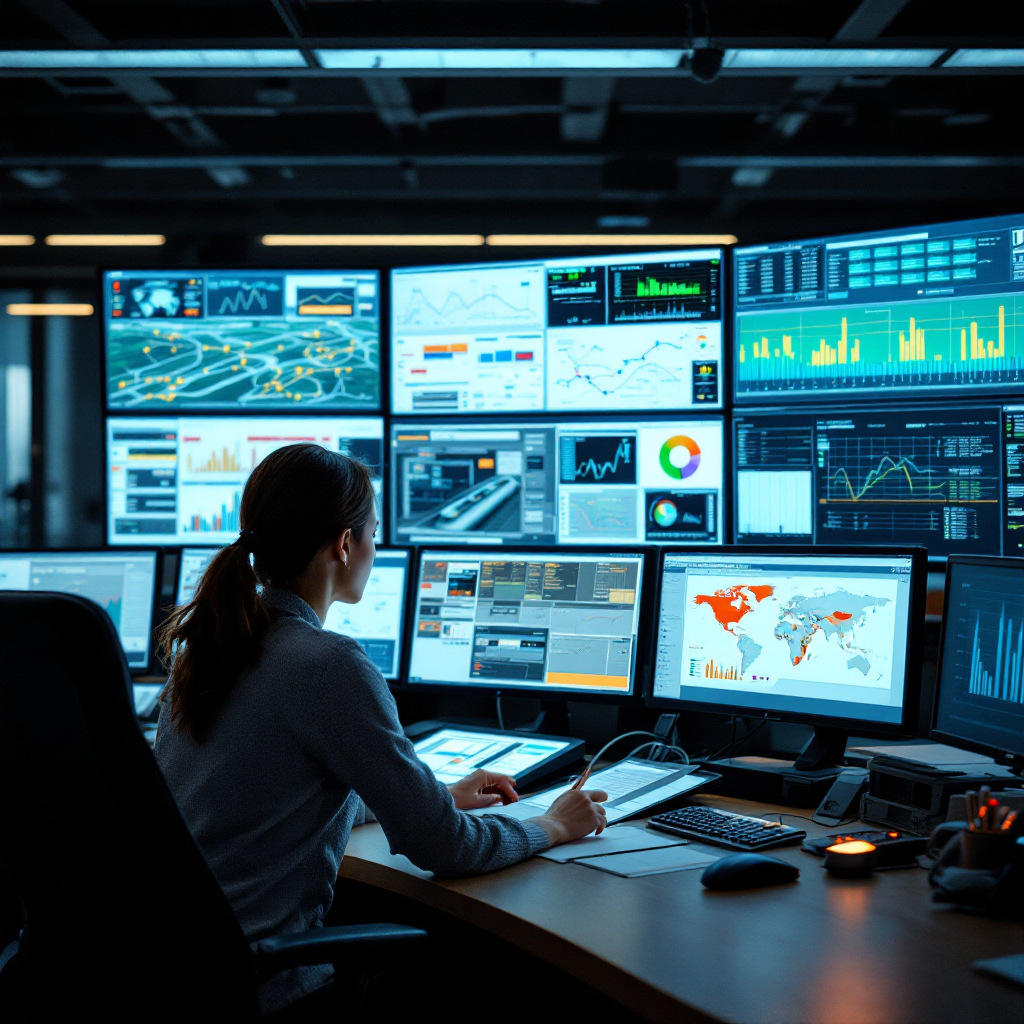
Digital control rooms have transformed how operators manage train movement and safety. First, they gather telemetry, signals, and CCTV feeds. Next, they present consolidated dashboards that support rapid choices. These spaces now host AI to assist decision making and to improve operational outcomes. The shift from manual signalling to computer-assisted routing began decades ago, and artificial intelligence has accelerated the change.
Historically, signallers controlled points and signals by hand. Over time, electronics, computers, and automation reduced routine load. Now, modern control rooms combine human oversight with algorithmic recommendations. For example, Infrabel ran a proof-of-concept decision support pilot that shows how an AI system can advise operational managers in digital railway control rooms on real-time decision support. That trial reported measurable benefits, and studies suggest optimized traffic flow can raise efficiency by 15–20% and predict disruptions with better than 90% accuracy in public transport case studies.
Control rooms now balance safety rules with timetable recovery. Operators view conflict alerts, suggested re-routing, and train status summaries. This operation control blends automation and human judgement. It also feeds into wider rail networks for coordination. For rail infrastructure managers, the advantage is twofold: faster response and fewer cascading delays. The combination of data sources, including track circuits and CCTV, helps teams understand context and act faster.
One clear measure is on-time performance. Early pilots recorded gains in punctuality and fewer human errors. Yet integrating new systems alongside legacy systems demands careful change management. Control room operators must learn new workflows, trust partial automation, and use AI recommendations wisely. For those building real-time dashboards, platforms that turn cameras into operational sensors can help. Visionplatform.ai, for instance, turns existing CCTV into sensors that stream structured events and reduce false alarms, so teams can act on visual evidence without vendor lock-in see people detection use cases.
As a result, the railway control environment keeps evolving. The combination of better tools and improved human training supports safer, more efficient networks. This phase of digital transformation invites more pilots, and it offers a practical path to reshape how centres run day-to-day traffic and incident response.
AI Agent and Control System: Key Technologies
An AI agent in a control system acts as a software teammate. It ingests feeds, analyses patterns, and proposes actions. In rail contexts, an ai agent might flag a track anomaly, predict conflict, or draft a diversion plan. Designers build agents with machine-learning models and decision logic. They also use formal methods to guarantee critical constraints. Prover, for example, highlights how combining LLMs with formal proof assistants can improve assurance in signalling and that application of ai technology supports safer deployments Prover discussion.
Multi-agent systems let many specialised agents coordinate. One agent watches points. Another processes CCTV streams. A third models traffic flows. Together they act as a distributed control system. This approach lets architects scale from a single station to whole railway systems. It also supports digital twins, which mirror the network for simulation and validation.
LLMs and generative ai add natural-language interfaces and report drafting. They help operators by summarising incidents, and by translating complex logs into plain guidance. However, operators must never treat outputs as unquestionable fact. Formal verification and digital twins provide a safety net. They allow verification of sequences, and they help ensure compliance with signalling rules. The combination of rigorous proof tools and data-driven models forms a hybrid approach that reduces risk.
Sensors contribute key inputs. Track circuits, axle counters, and cameras stream data to agents. Integrating ai with these sensors provides early warnings and richer situational awareness. Yet designers must limit failure modes, and they must ensure traceability for audit. For example, a control system that suggests switching a route needs a verifiable safety envelope before an operator can accept it.
Finally, practitioners examine the variety of ai technologies and how they might combine. They study LLMs, reinforcement learning, and formal tools. They also consider edge processing to keep data local. This balance between machine assistance and human oversight is central to safe rollouts. It supports better decision speed while keeping operators in control.
AI vision within minutes?
With our no-code platform you can just focus on your data, we’ll do the rest
Automation and Analytics: Modernising Traffic Management
Automation now helps optimise traffic flow and recover timetables after disruption. Systems compute alternate routes, slot trains, and adjust speeds to minimise delay. These automated routines can streamline decisions during peak hours. They also free human operators to focus on exceptions and safety issues.
Data pipelines gather feed from SCADA, signalling logs, and camera systems. A sensor on a points machine can report vibration trends, while CCTV confirms obstruction. Analytics then fuses these inputs, and it runs anomaly detection to flag unusual events. In practice, anomaly alerts trigger operator prompts and recommendation cards. Operators receive context, predicted impacts, and suggested mitigations. This reduces cognitive load and shortens incident resolution time.
Visionplatform.ai helps extend video streams from security to operations. By turning CCTV into operational sensors, teams get object detection, ANPR, and custom event streams that integrate with dispatch tools see ANPR/LPR examples. These events feed into workflow engines so alarms do not remain siloed in the security stack. Instead, they support on-time decision making and evidence-based incident reviews.
Real-time control demands resilient software. Legacy systems often lack APIs, and upgrades must preserve safety certification. Bridging solutions capture feeds and feed them into modern pipelines. That way, controllers keep familiar interfaces and gain new automated assistance. Control room operators then see a unified picture with suggested actions and clear escalation paths.
Measured outcomes show faster clearance of incidents and better punctuality. Analytics can prioritise conflicting moves and reduce unnecessary speed restrictions. The result is more efficient railway traffic, and better passenger experience. For network managers this translates to lower knock-on delays and improved metric scores. Transition projects focus on operator training and gradual deployment to balance innovation with reliability.
AI Models and Predictive Maintenance for National Rail
Predictive maintenance uses AI models to forecast component failures before they cause service disruptions. These models consume temperature logs, vibration time series, and maintenance history. They predict remaining useful life and suggest interventions. The approach reduces unplanned downtime, and it helps plan works to fit timetables.
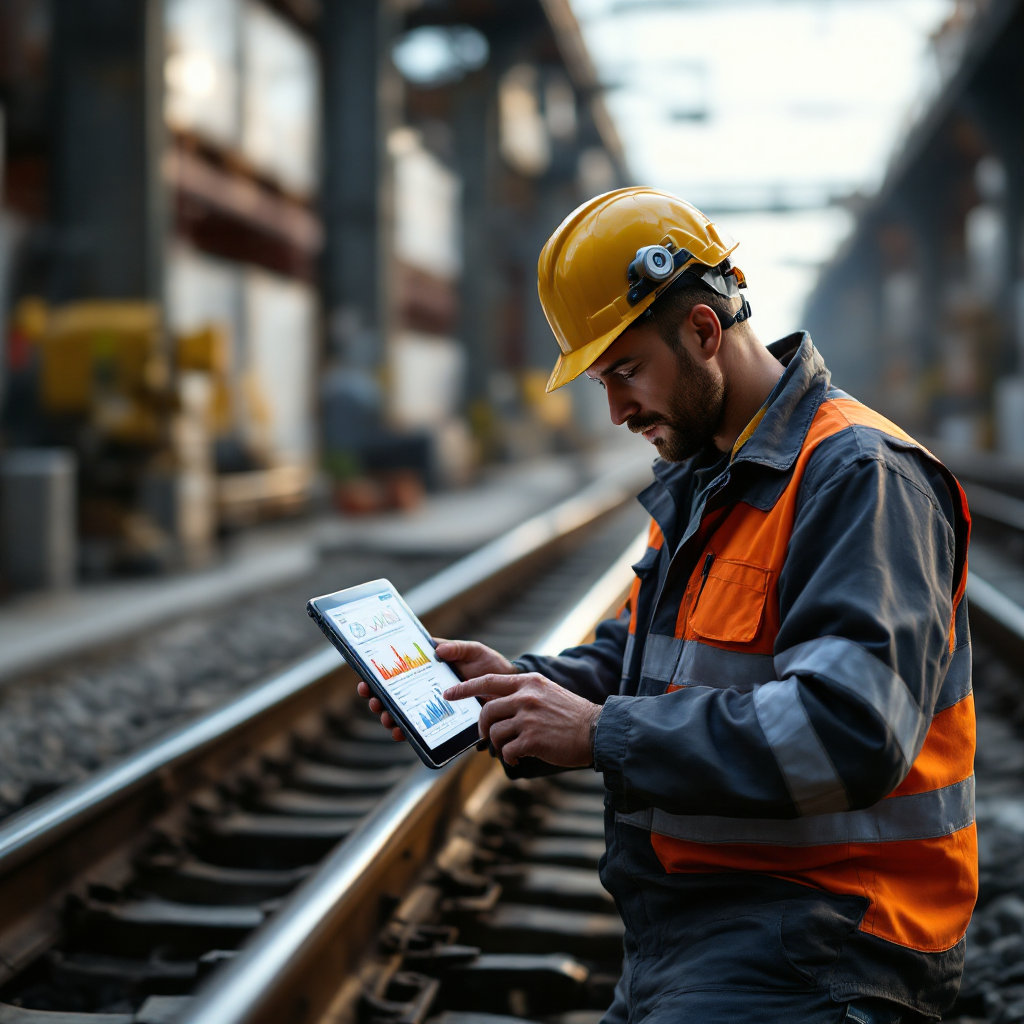
Case studies show strong returns. For instance, trials with public operators reported high accuracy in risk predictions, which allowed targeted interventions that cut costs and improved asset availability public transport case study. Using ai-based forecasting, teams can replace components during planned possessions rather than during emergencies. This approach lowers repair spend and reduces passenger disruption.
National rail programmes aim to scale predictive models across regional depots and yards. They merge on-board telemetry with depot records to produce actionable maintenance windows. These schedules respect resource limits, and they feed back into traffic planning to avoid conflicts. For fleet managers, that means higher asset availability and fewer emergency fixes.
Rail infrastructure benefits when models flag degradation early. Track geometry trends, wear patterns, and drainage performance all indicate future issues. When models detect an anomaly, crews receive a ranked work list and risk assessment. They then schedule interventions to protect railway safety and to maintain reliable service.
This shift requires investment in data platforms and in skills. Teams must validate models and maintain them. They also must protect operational data. Visionplatform.ai’s on-prem approach helps here, because it keeps visual data local for GDPR and EU AI Act readiness. This preserves sensitive feeds while allowing operators to publish structured events for maintenance planning process anomaly detection.
AI vision within minutes?
With our no-code platform you can just focus on your data, we’ll do the rest
Human Factors in Control Rooms: Safety and Decision Support
Human-machine interaction is central in high-pressure control rooms. Operators must interpret alerts, weigh options, and act quickly. Decision-support systems combine operator expertise with AI recommendations. They present ranked options with clear costs and risks. This design respects human judgement and reduces cognitive overload.
Training builds trust. Operators use simulation and replay tools to see how the system behaves. This experiential learning shortens the path to confident use. It also clarifies when to accept automated suggestions and when to override them. Training scenarios often include edge cases and failure modes so teams can rehearse responses.
Trust depends on transparency. Systems should explain why they raised an alert. For instance, a predicted signal failure should show the metrics and sensors that led to the forecast. This transparency supports auditors and gives operators reasoned grounds to act. Interfaces that highlight train status and predicted impacts help teams prioritise tasks.
Cybersecurity is another human-centred concern. Control room staff must operate secure credentials, monitor integrity checks, and follow response playbooks. The goal is to protect safety and security while enabling useful connectivity. Operators also need clear escalation rules so they do not hesitate when networked systems show conflicting advice.
People remain essential for final decisions. The field of train driving and control relies on human skill for many scenarios. Machine suggestions must therefore fit into real-world workflows. That means designing user interfaces that present succinct guidance and that support rapid confirmation. As a result, safety and service reliability improve without sidelining the expertise of train drivers and controllers.
Future Automation and Analytics: The Path to Autonomous National Rail
Looking forward, the railway industry explores broader autonomy and network-level optimisation. Prospects include end-to-end automation across lines and more energy-efficient driving profiles. Digital twins and large-scale simulation help planners test scenarios before live deployment. This reduces risk and supports feasibility and future prospects for automated services UIC roadmap.
Research highlights a range of emerging ai technologies, and AI models that could scale to national networks. Experts consider how to integrate train autonomous driving and control functions with signalling and traffic management. Integrating ai technology more extensively will require standards, certification, and clear operating rules. At the same time, pilots for implemented in training autonomous driving help validate approaches before full rollout.
Policymakers and operators aim to balance innovation with safety. They examine the future prospects of applying automation to freight and passenger flows. They also study how to preserve network resilience during failures. The roadmap for AI-enabled rail companies emphasises safety, passenger experience, and service reliability. It also explores energy-efficient driving and optimal driving profiles for mixed traffic.
For technology providers, the challenge is to deliver certified, auditable, and interoperable solutions. The application of ai technology in planning, service delivery, and operation control can reshape network economics. Yet many solutions are still in its infancy and need rigorous testing. As AI is reshaping the sector, stakeholders must plan for workforce change, standards updates, and long-term maintenance.
Overall, the path to autonomous national rail is incremental. It combines digital transformation, better data, and human-centered design. With careful governance, integrating ai can streamline operations and produce an efficient railway that benefits passengers and operators alike.
FAQ
What is an AI agent in the context of railway control rooms?
An AI agent is a software component that assists operators by analysing data and proposing actions. It can watch sensor feeds, flag anomalies, and suggest routing or speed changes, but final control remains with human operators.
How accurate are AI systems at predicting disruptions?
Studies show high accuracy in pilot deployments, often exceeding 90% for certain predictions when models are trained on rich datasets source. Accuracy depends on data quality, model design, and operational integration.
Can AI improve on-time performance?
Yes. Trials indicate efficiency gains between 15% and 20% through traffic optimisation and faster incident handling research. Those improvements come from better scheduling and faster resolution of conflicts.
How do control room operators interact with AI recommendations?
Operators receive ranked suggestions and contextual details to aid decisions. Good systems present clear reasoning, confidence levels, and possible impacts so staff can accept, modify, or reject suggestions quickly.
Is predictive maintenance cost effective for national rail?
Predictive maintenance reduces emergency repairs and extends asset life, which lowers maintenance spend. Case studies show positive returns when models reliably flag impending faults and maintenance is scheduled efficiently example.
How does video analytics fit into railway operations?
Video can act as an operational sensor to detect people, vehicles, and unusual events. Platforms like Visionplatform.ai convert CCTV into structured events that integrate with operations and maintenance systems, while keeping data local for compliance.
What cybersecurity measures are needed for AI-driven control rooms?
Teams must secure data flows, manage credentials, and implement integrity checks and incident playbooks. Regular audits and segregation of critical subsystems help reduce risk and protect safety and security.
Will AI replace train drivers?
Not in the near term. While automation can assist and in some settings support autonomous routes, train drivers and human controllers remain essential, especially for complex decision making and safety-critical tasks.
How do digital twins support deployment of AI in rail?
Digital twins simulate network behaviour and let teams validate control strategies and safety cases without disrupting live service. They are valuable for testing timetable changes and advanced automation before rollout.
Where can I learn more about practical detection examples used in operations?
Visionplatform.ai publishes applied use cases for people detection, ANPR/LPR, and process anomaly detection that illustrate how video events can feed operations. See pages on people detection and ANPR for concrete examples people detection, ANPR/LPR, and process anomaly detection.