The Rise of AI in Video Surveillance: From Traditional Security to AI-powered Video
Security has changed fast. First came traditional security and rule-based systems that flagged motion or simple line crossings. Then AI advanced. Now AI-powered video delivers intelligent video insights that transform how teams monitor spaces. AI analyzes camera feeds and turns raw video footage into searchable events. For enterprises, that means less time hunting through hours of footage and more time acting on what matters.
Adoption confirms the shift. For example, companies report a 55% increase in operational efficiency and a 35% reduction in costs after they deploy AI in their monitoring stack. These figures show measurable gains that support business cases for upgrading video systems. Also, industry surveys show broad use of AI across workflows, which helps explain why providers invest in ai-powered capabilities and ai analytics.
AI changes the number of cameras that matter. Rather than adding more operators, organizations apply advanced AI models to existing camera systems and cctv arrays. This approach turns cameras into operational sensors. For instance, Visionplatform.ai uses existing CCTV to detect people, vehicles, ANPR/LPR, PPE, and custom objects in real-time. The platform streams events into a unified security ecosystem so teams can use detections beyond alarms. In this way, video monitoring becomes part of operational KPIs, not just an archive for incident review.
Transition matters. First, AI reduces manual review. Next, it automates repetitive tasks. Finally, it helps security teams focus on specific security scenarios where human judgement adds the most value. As a result, modern security benefits from faster detection, clearer context, and smarter allocation of resources. If you want examples, read about our people detection deployments for airports to see how intelligent video scales across high-traffic sites (people detection in airports).
AI Agents and AI Assistant in the Control Room: Empowering the Operator
AI Agents now act as an ai assistant for control room staff. They monitor multiple video feeds and surface the most urgent alert first. Operators see prioritized events, context, and suggested actions. This flow reduces cognitive load and helps control room operators make faster choices. The system flags unusual behavior, and then it links relevant video streams and metadata. As a result, operators respond with more confidence.
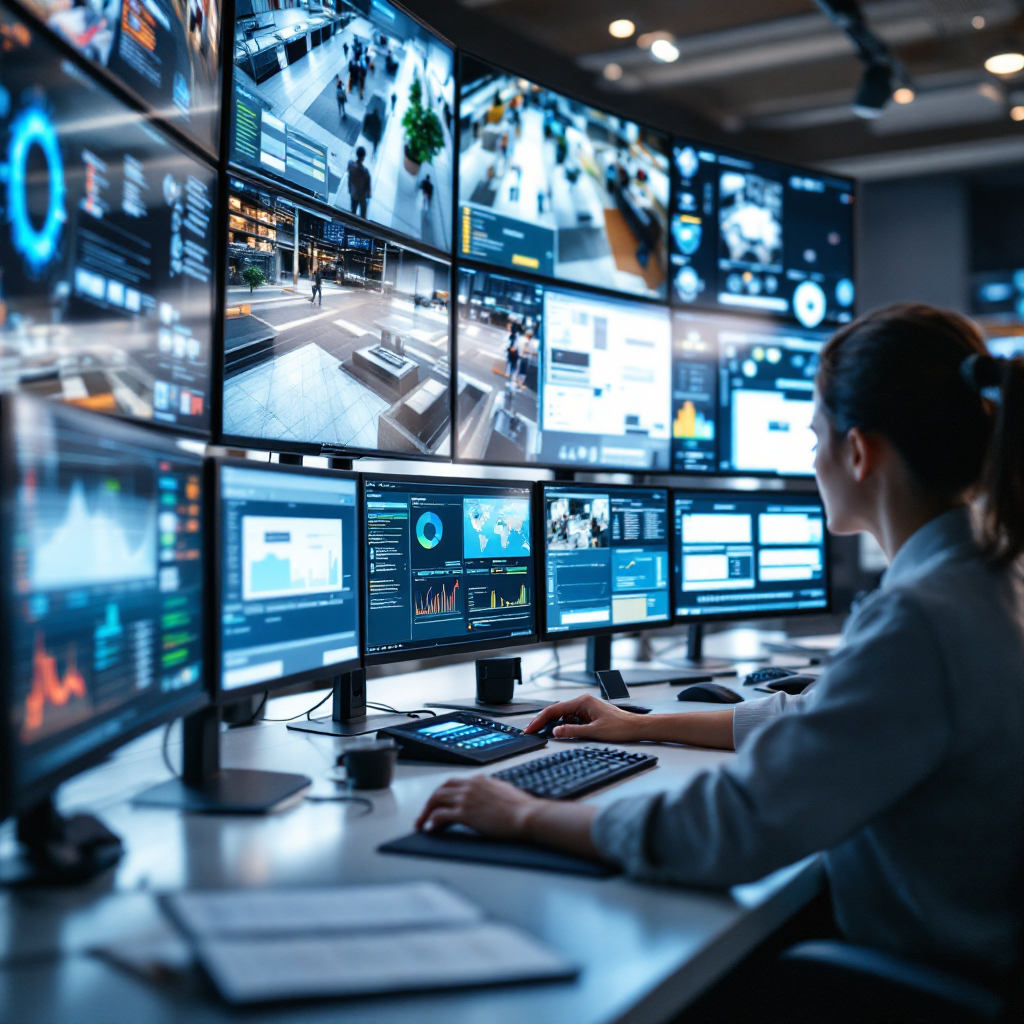
Integration matters because many sites run legacy VMS and camera networks. An effective monitoring system supports ONVIF or RTSP camera inputs and works with existing security infrastructure. Visionplatform.ai connects to common VMS platforms, so operators retain tools they trust. The platform also keeps data local when required to support GDPR and EU AI Act readiness. This design lets teams own their models and training data, and it reduces the risk of vendor lock-in.
The results include fewer routine tasks for humans and more time for high-value work. Operators no longer need to scan dozens of feeds to spot an event of interest. Instead, they receive a concise timeline and the best clips. This setup reduces operator fatigue and improves security effectiveness. At the same time, AI assists with forensic search, so teams can find video footage quickly after an incident. For airport operators, our integrations extend to specialized detectors like ANPR/LPR to track vehicles alongside people and crowd density (ANPR/LPR in airports).
AI vision within minutes?
With our no-code platform you can just focus on your data, we’ll do the rest
Real-time Security through Video Analytics: Detecting Events of Interest and Reducing False Alarms
Real-time video analysis gives control rooms immediate context. Intelligent video analytics track motion patterns, identify loitering, and detect unauthorized access. For critical events, systems generate real-time alerts that show where and when to act. This capability yields faster containment and clearer incident records. Also, analytics for real-time monitoring produce structured event output that security teams can forward to other systems for rapid triage.
Behavior analysis and facial recognition can highlight security threats in real-time. These features find patterns that humans might miss during long shifts. However, designers must balance automation with privacy and accountability. Daniel J. Solove cautions that “existing privacy law falls far short of resolving the privacy problems with AI,” which means deployments must include policy and audit controls (Daniel J. Solove on AI and privacy).
Reducing false alarms remains a primary aim. AI models that learn from site-specific video data lower false positives and make alerts more actionable. In fact, tailored models reduce false alarms and improve alarm quality by focusing on classes that matter at a site. Visionplatform.ai supports flexible model strategies so teams can pick a model, refine it on their own footage, or build a custom model from scratch. This approach cuts noise and increases trust in automated detection.
Finally, the system links detections to response workflows. When an alert occurs, the platform can push a clip to security personnel, update incident trackers, and publish events via MQTT so operations teams can act. This integration turns passive video systems into proactive security tools. If you want to see how perimeter protection and crowd detection operate together, explore our perimeter breach detection work for airport perimeters (perimeter breach detection).
Designing an AI-powered Video Monitoring System: Cameras, Monitoring System and Access Control
Design starts with the right camera hardware. Choose cameras that provide sufficient resolution, frame rate, and low-light performance for your objectives. Also, consider lens type and placement. These choices determine how well an ai camera system recognizes small objects or distant license plates. Next, ensure your network can carry high-quality video streams without introducing latency that undermines real-time security.
At the core sits the monitoring system. It must support AI processing on-prem or at the edge so teams can keep video data inside their environment. Visionplatform.ai works on GPU servers or edge devices like NVIDIA Jetson. This flexibility supports sites that need local processing for compliance. Also, a good monitoring system offers APIs and MQTT outputs so detections become operational signals beyond security monitoring.
Access control matters for end-to-end security. Linking access control systems to video systems creates a richer audit trail. For example, if an access control reader reports a door forced open, the monitoring system should pull the nearest camera feed, attach a timestamped clip, and raise an actionable alert. These linked events speed verification and help prevent security breaches before they occur.
Plan for scale. As the number of cameras grows, so do data volumes and model requirements. Use modular deployments that let you add models or tune existing ones without reworking pipelines. In addition, combine intelligent video analytics with machine learning tuned on your site to ensure detections match your security needs. In short, design the system to turn video content into actionable intelligence that supports both security and operational goals.
AI vision within minutes?
With our no-code platform you can just focus on your data, we’ll do the rest
Use Cases for AI Video Monitoring in Security Operations and Surveillance Systems
AI delivers clear value across use cases. In public-space safety, AI supports crowd management by estimating density and flagging unusual congregations. These alerts help direct staff and prevent escalations. Also, in perimeter protection AI detects breaches and suspicious approach patterns so teams can respond well before an incident grows.
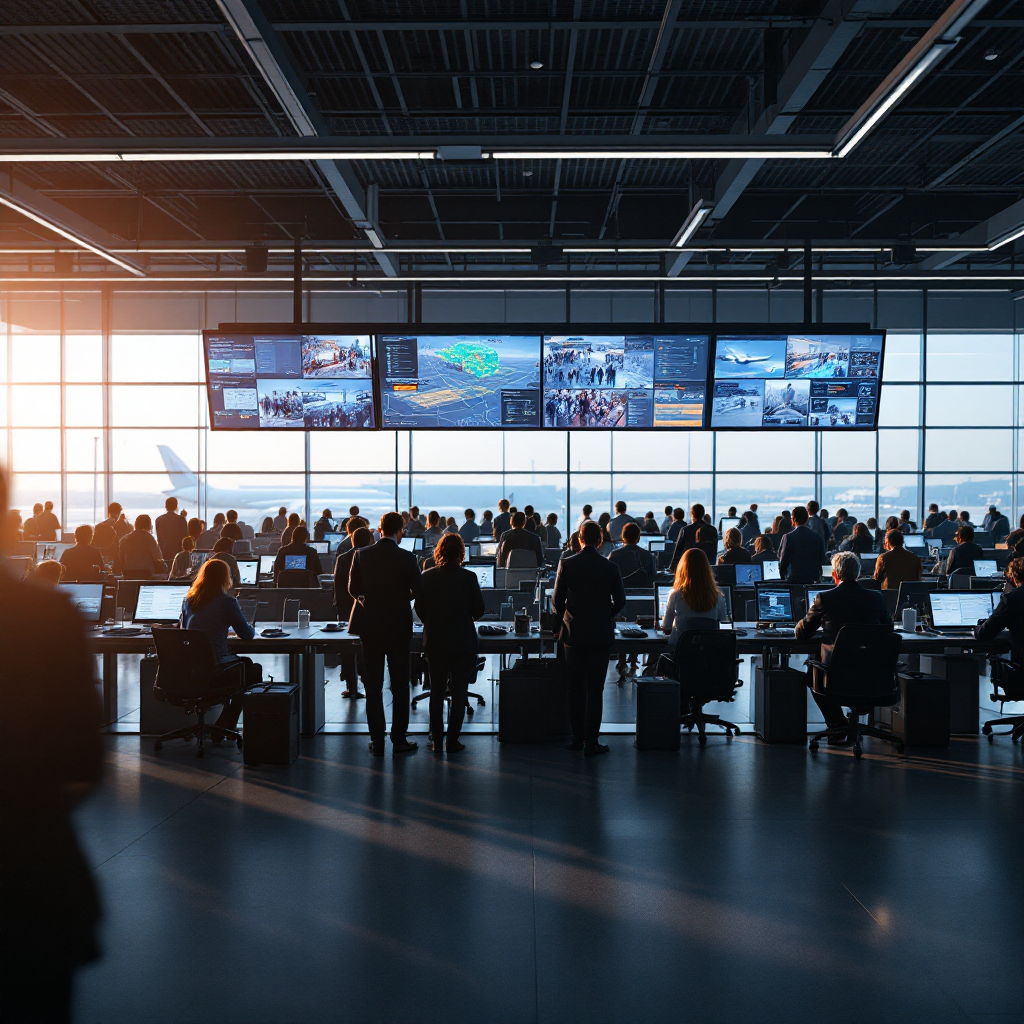
For critical infrastructure, predictive analytics identify process anomalies and send early warnings. This capability reduces downtime and protects assets where failure has high consequences. In commercial environments like retail, AI supports loss prevention, asset tracking, and compliance by tagging suspicious behaviors and linking clips to point-of-sale events. Use cases also include condo security where monitoring for unauthorized access and fall detection helps managers protect residents.
AI video monitoring connects security events to response teams. For example, when a hazardous event triggers, the system creates an incident with video footage, location, and recommended steps. Integrations with access control and VMS let operators verify identity and lock or unlock doors. These workflows improve security effectiveness and reduce time to resolution.
Across settings, AI-powered video surveillance systems help organizations detect, investigate, and prevent incidents. They transform your video into a sensor network that feeds dashboards, BI, and operational systems. If you want details on airport PPE detection and crowd analytics, see our PPE detection and crowd density pages for applied examples (PPE detection and crowd detection and density).
The Future of AI: How AI Gets Smarter Video and Has Transformed Our Security Operations
The future of security points to smarter, more predictive systems. Advanced AI models will tie video analysis to predictive maintenance, threat scoring, and cross-domain analytics. Generative AI will assist with report generation and quick summaries of long incidents. Still, designers must ensure models remain transparent and auditable so teams can trust outputs.
To scale, organizations should pick strategies that keep data and model control local. This approach supports the EU AI Act and GDPR, and helps avoid vendor lock-in. Visionplatform.ai emphasizes on-prem processing and customer-controlled datasets so teams can own their models and training pipelines. That ownership enables continuous improvement without sending sensitive video data to third-party clouds.
At the same time, regulators, privacy experts, and technologists urge care. As Darrell West of the Brookings Institution notes, “AI-enhanced surveillance capabilities could have significant consequences for Americans’ freedoms,” and that calls for clear policy and governance (Brookings on AI and public surveillance). Also, industry reviews after 2025 highlight both advances and challenges as AI becomes more embedded in security monitoring (Fast Company recap of AI agents in 2025).
Finally, plan deployments carefully. Start with pilot projects that test models on your video footage. Then expand with modular, auditable pipelines that publish structured events to operations and BI. If you follow that path, AI gets smarter with site data and your security teams gain stronger, actionable intelligence. For more on how intelligent video supports incident prevention and forensic search, review our forensic search page and intrusion detection documentation to see practical examples (forensic search in airports and intrusion detection).
FAQ
What are AI agents in video surveillance?
AI agents are software components that analyze video streams and surface events of interest. They prioritize alerts, link video clips, and assist control room operators with investigative workflows.
How do AI systems reduce false alarms?
AI systems learn site-specific patterns and object classes, which reduces false positives. They also combine multiple sensors and contextual clues to ensure that alerts are actionable.
Can I use my existing camera systems with AI analytics?
Yes. Many ai-powered solutions work with ONVIF or RTSP camera feeds and common VMS setups. That lets you transform existing camera investments into an ai camera system with minimal hardware change.
How do organisations keep video data private?
Deploying ai processing on-prem or at the edge keeps video data inside your environment. Also, keeping datasets local and using auditable logs supports compliance with GDPR and the EU AI Act.
What is the role of access control with AI video monitoring?
Access control integration links badge or door events with video footage. When a door alarm triggers, the monitoring system can pull the nearest camera clip and create an incident for fast verification.
How quickly do AI models improve?
Models improve once they see site-specific video footage and labels. Platforms that allow retraining on local data speed up model tuning and reduce false alarms.
Are there ethical concerns with AI surveillance?
Yes. Privacy, transparency, and accountability are central concerns. Experts note that laws may not yet fully address AI risks, so governance, clear policies, and audit trails are essential.
What types of use cases suit AI video monitoring?
Use cases include perimeter protection, crowd management, loss prevention, asset tracking, and critical infrastructure monitoring. AI supports both security and operational uses by publishing structured events for dashboards and BI.
How do AI systems help control room operators?
AI prioritizes alerts, bundles related video, and offers suggested responses to speed operator decisions. This reduces fatigue and helps teams focus on specific security scenarios with the most impact.
How can organisations start with AI surveillance?
Begin with a pilot on a subset of cameras and define clear success metrics, such as reduced response time or fewer false alarms. Then scale with modular deployments that keep data and models under your control.